
Undermethylation and Autism: Looking Beyond MTHFR to SAM, SAH and Mitochondrial Function
Undermethylation is an important biochemical pattern in autism, but identifying it is only the beginning. The more useful question is why methylation is impaired. Whole-blood histamine and direct measurement of methionine, SAM, SAH and homocysteine can help distinguish low methyl-donor capacity from methylation inhibition. These patterns can also reveal connections to mitochondrial energy, creatine demand, oxidative stress, zinc and copper balance, and impaired SAH clearance—providing a broader framework for identifying the epigenetic and metabolic drivers that may be contributing to undermethylation.
Undermethylation is an important biochemical pattern described in the Walsh Approach to autism. But identifying undermethylation is only the beginning. The next question is more important: what is causing or perpetuating the impaired methylation?
Whole-blood histamine can help identify the traditional Walsh undermethylation phenotype, while direct methylation testing provides another layer of information by measuring methionine, SAM, SAH, homocysteine and the SAM:SAH relationship.
Together, these markers can help distinguish reduced methyl-donor capacity from methylation inhibition—and can point toward deeper contributors such as mitochondrial stress, creatine demand, oxidative burden, increased methylation demand or impaired SAH clearance.
What Does Undermethylation Mean in Autism?
Methylation is a fundamental biochemical process in which a methyl group is transferred from one molecule to another. These reactions participate in gene regulation, neurotransmitter metabolism, membrane synthesis, creatine production and many other cellular functions.
In the Walsh model, undermethylation describes a biochemical and clinical pattern associated with reduced methylation capacity. It is not synonymous with autism, and autism should not be assumed to represent one methylation state.
The important distinction
“Undermethylation” describes the state. It does not necessarily tell us why the state exists.
Two patients can both demonstrate impaired methylation while having very different underlying biochemical bottlenecks.
That distinction has become increasingly important because direct measurement of methylation metabolites allows us to move beyond simply labeling the phenotype.
Whole-Blood Histamine and the Undermethylation Phenotype
Whole-blood histamine has long been used in the Walsh Approach as a functional marker when evaluating methylation biotypes.
Histamine metabolism involves methylation, and elevated whole-blood histamine can support an undermethylation interpretation when it occurs together with the characteristic clinical pattern.
Undermethylation Pattern
Elevated whole-blood histamine may support an undermethylation phenotype when interpreted with symptoms, history and other biochemical findings.
Overmethylation Pattern
Lower whole-blood histamine has traditionally been associated with the Walsh overmethylation phenotype.
Histamine can help identify the traditional biochemical phenotype. SAM, SAH, methionine and homocysteine allow us to examine the methylation cycle itself.
What Does the Plasma Methylation Panel Measure?
A plasma methylation profile examines several metabolites within the methionine and methylation cycles rather than inferring methylation status from genetics alone.
Methionine
Methionine is an essential amino acid and the precursor from which SAM is produced.
SAM
S-adenosylmethionine is the principal methyl donor for a large number of methyltransferase reactions.
SAH
S-adenosylhomocysteine is produced after SAM transfers its methyl group. Accumulation of SAH inhibits methyltransferase activity.
Homocysteine
Homocysteine can be remethylated toward methionine or directed through transsulfuration toward cysteine and glutathione-related pathways.
A Simplified View of the Methylation Cycle
What Does the SAM:SAH Ratio Actually Tell Us?
The SAM:SAH relationship is useful because methylation depends not only on having enough SAM available to donate methyl groups, but also on keeping SAH low enough that it does not inhibit methyltransferase reactions.
A low SAM:SAH ratio tells us methylation potential is impaired.
It does not, by itself, tell us why.
Pattern A: Low SAM
The numerator is low. There may be inadequate production of SAM or excessive utilization of methyl groups.
Questions to consider:
- Is methionine adequate?
- Is cellular ATP production adequate?
- Is methylation demand unusually high?
- Is endogenous creatine synthesis consuming substantial SAM?
- Are nutrient cofactors limiting the pathway?
Pattern B: Elevated SAH
The denominator is high. Methylation may be inhibited even when SAM is not markedly reduced.
Questions to consider:
- Is homocysteine being cleared efficiently?
- Is adenosine being cleared efficiently?
- Is zinc status adequate?
- Are liver or kidney factors relevant?
- Is metabolic or cellular stress affecting the pathway?
These two patterns may produce a similar low ratio but represent different biochemical problems and potentially different treatment priorities.
Low SAM: Is the Problem Supply, Energy or Demand?
SAM is produced from methionine by methionine adenosyltransferase. Importantly, this reaction requires ATP.
That creates a direct connection between methylation and cellular-energy metabolism.
Low Methionine
Insufficient substrate can limit SAM production. Protein intake, digestion, absorption and broader amino-acid status may therefore be relevant.
Low Cellular Energy
When methionine is adequate but SAM is unexpectedly low, impaired ATP availability becomes one possible contributor worth considering.
High Methylation Demand
Growth, repair, inflammation, phospholipid production, creatine synthesis and other methyl-consuming processes may increase SAM utilization.
Why Mitochondrial Function Matters to SAM Production
Mitochondria produce most of the ATP used by cells. ATP is required for the conversion of methionine to SAM, making cellular-energy availability an important part of the methylation story.
One Possible Low-SAM Pathway
Rather, unexpectedly low SAM in the presence of adequate methionine is one reason to consider whether cellular-energy production, nutrient cofactors or increased metabolic demand may be contributing.
Creatine: Where ATP Demand and Methylation Demand Meet
Creatine is especially relevant because it connects both sides of this metabolic relationship.
The phosphocreatine system helps cells rapidly regenerate ATP during periods of increased energy demand. At the same time, the body's own production of creatine requires a SAM-dependent methylation reaction.
The Creatine Connection
This makes creatine demand a potentially important bridge between undermethylation and mitochondrial energy.
Elevated SAH: When Methylation Is Being Inhibited
Elevated SAH deserves separate attention because SAH is not simply a passive waste product. It is a potent inhibitor of methyltransferase reactions.
After SAM donates its methyl group, SAH is converted by SAH hydrolase toward homocysteine and adenosine.
The reaction is reversible. Therefore, efficient removal of its downstream products—particularly adenosine and homocysteine—helps favor continued clearance of SAH.
SAH Clearance
Why adenosine matters
When SAH is elevated while homocysteine is not elevated, the question should not automatically be, “How do we lower homocysteine?”
Impaired adenosine clearance may deserve consideration. Zinc status is relevant because zinc-dependent enzymes participate in adenosine metabolism.
This provides a very different therapeutic framework from simply adding more methyl donors.
The Five Epigenetic Biotypes of Undermethylation
The traditional Walsh framework helps identify undermethylation. The next step is asking what may be driving or perpetuating that biochemical state.
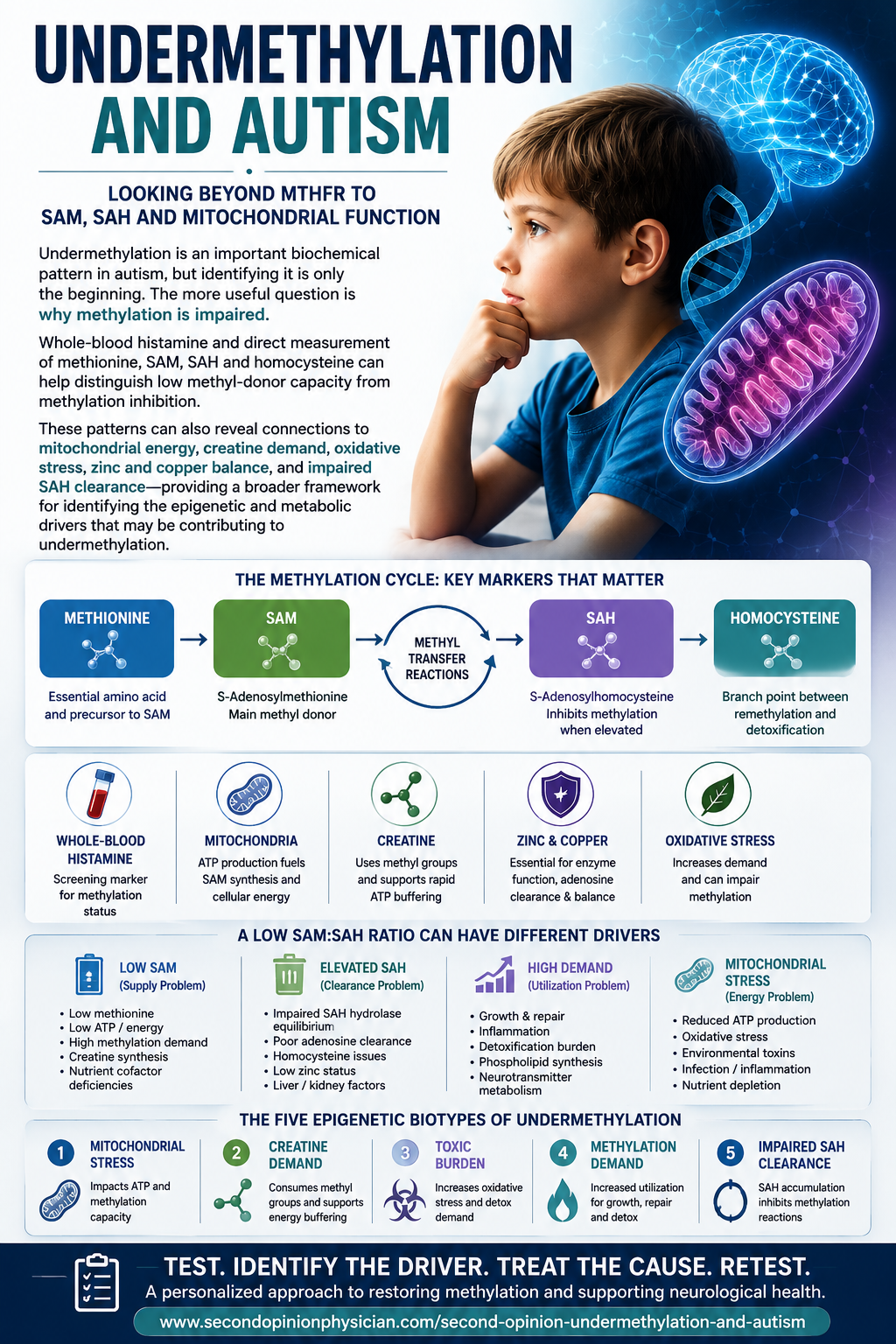
The Five Epigenetic Biotypes framework organizes several recurring contributors into five major patterns.
Mitochondrial Stress
Reduced cellular-energy capacity may place pressure on ATP-dependent SAM production and broader cellular function.
Creatine Demand
Endogenous creatine production consumes methyl groups while creatine also supports rapid cellular-energy buffering.
Toxic Burden
Environmental or metabolic burden may increase oxidative stress, detoxification demand and cellular injury.
Methylation Demand
Growth, inflammation, repair and other methyl-consuming pathways can increase utilization of available methyl groups.
Impaired SAH Clearance
Accumulation of SAH may inhibit methylation even when SAM production is not severely reduced.
The Five Epigenetic Biotypes are intended to help answer the next question: why might it be happening?
Copper, Zinc and Pyroluria Still Matter
The newer methylation and mitochondrial framework does not replace traditional Walsh biochemistry.
Autistic patients may have several overlapping biochemical patterns, and copper-zinc balance and pyroluria can remain clinically important.
Zinc
Zinc participates in antioxidant defense, neurotransmitter-related pathways, immune regulation and adenosine metabolism. Low zinc may therefore intersect with several aspects of the methylation picture.
Copper & Ceruloplasmin
Copper and ceruloplasmin should be interpreted together with zinc rather than viewing serum copper in isolation. Copper imbalance may coexist with undermethylation and contribute to neurological or behavioral symptoms.
Pyroluria
When clinically indicated, urinary pyrroles can help evaluate a pattern associated in the Walsh model with increased zinc and vitamin B6 requirements and oxidative stress.
Why Folate Is Not Automatically the Answer
MTHFR variants can influence folate metabolism, but genotype does not directly measure SAM, SAH or the current functional methylation state.
This distinction is particularly important in autism because two separate questions are often combined:
Is the Patient Undermethylated?
This question is approached through phenotype, whole-blood histamine and, when appropriate, direct methylation markers such as SAM and SAH.
Is Folate Transport Impaired?
Folate receptor autoantibodies and cerebral folate transport represent a separate biochemical issue that may support consideration of folinic acid in selected patients.
These findings can coexist.
A patient can demonstrate an undermethylation phenotype and also have evidence suggesting impaired folate transport. One result should not automatically erase the significance of the other.
For this reason, folic acid, methylfolate and folinic acid should not simply be treated as interchangeable “methylation supplements.”
A Practical Testing Strategy for Undermethylation in Autism
No single laboratory marker explains autism. Testing is most useful when it answers a defined biochemical question and can change what is done next.
| Clinical Question | Testing | What It Helps Clarify |
|---|---|---|
| Walsh Biotype | Whole-blood histamine, plasma zinc, serum copper, ceruloplasmin and urinary pyrroles when indicated | Traditional Walsh undermethylation, overmethylation, copper overload and pyroluria patterns |
| Direct Methylation | SAM, SAH, SAM:SAH relationship, methionine, homocysteine and related metabolites | Low methyl-donor capacity versus methylation inhibition and pathway bottlenecks |
| Mitochondrial Energy | Lactate/pyruvate, CK and free/total carnitine when indicated | Cellular-energy metabolism, muscle involvement and carnitine availability |
| Deeper Mitochondrial Evaluation | Acylcarnitines, GDF-15 and additional studies when indicated | Fatty-acid oxidation and evidence supporting deeper mitochondrial investigation |
| Folate Transport | Folate receptor antibody testing when clinically appropriate | A separate folate-transport issue that may influence treatment decisions |
| Broader Metabolic Context | CBC, CMP, vitamin D, iron, thyroid, organic acids and nutritional/metabolic testing as appropriate | Nutrient, metabolic, inflammatory, gut and organ-function contributors |
Start with the phenotype and the clinical question. Add testing when the result can help distinguish among competing explanations or direct a more specific treatment strategy.
How the Results Begin to Fit Together
High Histamine + Low SAM
This supports the traditional undermethylation phenotype while raising questions about substrate, ATP availability and increased methylation demand.
High Histamine + Elevated SAH
The phenotype may still be undermethylated, but methylation inhibition and SAH clearance become more important treatment questions.
Adequate Methionine + Low SAM
If substrate appears adequate, cellular energy, nutrient cofactors and high methylation demand deserve closer attention.
High SAH + Normal Homocysteine
This pattern raises the possibility that adenosine clearance may deserve greater attention rather than assuming homocysteine is the primary bottleneck.
Low Zinc + Elevated SAH
Zinc status becomes particularly relevant because zinc-dependent adenosine metabolism may influence downstream clearance.
Low SAM + Energy Symptoms
Fatigue, exercise intolerance or poor recovery together with low SAM may justify looking more closely at mitochondrial and cellular-energy metabolism.
Treatment Should Follow the Biochemical Pattern
“Undermethylation” should not automatically produce one standardized supplement protocol.
The treatment priority depends on what the laboratory pattern and clinical history suggest is limiting methylation.
Low SAM
Consider substrate availability, nutrient cofactors, cellular energy and methylation demand before assuming the solution is simply adding methyl donors.
Elevated SAH
Consider downstream clearance, homocysteine, adenosine, zinc status and other metabolic contributors to methylation inhibition.
Mitochondrial Stress
Address measurable cellular-energy abnormalities, nutrient deficiencies, metabolic health and other identified mitochondrial stressors.
Creatine Demand
Consider the relationship between endogenous creatine production, methyl-group utilization and cellular ATP buffering.
Oxidative / Toxic Burden
Identify and address relevant sources of oxidative stress, inflammation, nutrient depletion or environmental burden when supported by the history and testing.
Copper-Zinc Imbalance
Correct documented mineral imbalance as part of the broader Walsh biochemical pattern rather than viewing methylation in isolation.
Test → Identify the Driver → Treat → Retest
Retesting is particularly useful when an abnormal marker has directly influenced treatment. Changes in SAM, SAH, homocysteine, zinc, copper, carnitine or another targeted abnormality can then be compared with changes in symptoms and function.
Biotype + Undermethylation Assessment
The traditional Walsh biotypes remain an important starting point. The expanded undermethylation assessment goes one step further by looking for clues to the biochemical drivers that may be perpetuating the pattern.
That includes the five major areas discussed throughout this article: mitochondrial stress, creatine demand, toxic burden, increased methylation demand and impaired SAH clearance.
Related Guides
Undermethylation
The traditional Walsh phenotype, symptoms, laboratory interpretation and nutrient principles.
Read the Undermethylation Guide →Five Epigenetic Biotypes
Why two undermethylated patients may have very different underlying biochemical drivers.
Explore the Five Epigenetic Biotypes →Mitochondrial Dysfunction
Cellular energy, ATP production, symptoms, testing and a practical treatment framework.
Mitochondrial Dysfunction Guide →Creatine & Methylation
How endogenous creatine production can represent an important methyl-group demand while supporting ATP buffering.
Creatine & Methylation →MTHFR & Folate
Why an MTHFR result does not by itself determine methylation status or the correct folate strategy.
MTHFR, Folate & Methylation →Folate Receptor Antibodies
A separate autism-related question involving folate transport rather than assuming all methylation problems are caused by folate deficiency.
Folate Receptor Antibody Testing →Undermethylation and Autism FAQs
What is undermethylation in autism?
Undermethylation describes a biochemical pattern involving reduced methylation capacity. In the Walsh Approach, it is evaluated using the clinical phenotype and markers such as whole-blood histamine. Direct methylation testing can add information about SAM, SAH, methionine and homocysteine.
Does undermethylation cause autism?
No. Autism is heterogeneous and cannot be explained by one methylation pattern. Undermethylation may be one biochemical finding in a subgroup of autistic individuals.
What does the SAM:SAH ratio show?
The SAM:SAH relationship provides information about methylation potential because SAM supplies methyl groups while SAH inhibits methyltransferase reactions. A low ratio can result from low SAM, elevated SAH or both, so the individual values matter.
What can cause low SAM?
Possible contributors include inadequate methionine, impaired ATP availability, nutrient limitations or increased utilization of methyl groups. The laboratory pattern and clinical context help determine which possibilities deserve further evaluation.
Why is elevated SAH important?
SAH inhibits methyltransferase activity. Its clearance is linked to the reversible SAH hydrolase reaction involving homocysteine and adenosine, so elevated SAH may require a different approach from simply trying to increase SAM.
How are mitochondria connected to methylation?
ATP is required to convert methionine into SAM. Mitochondrial function therefore provides an important cellular-energy connection to methylation, although low SAM alone does not diagnose mitochondrial disease.
Why is creatine important in undermethylation?
Endogenous creatine synthesis uses a SAM-dependent methylation reaction. Creatine also participates in rapid ATP buffering, connecting methylation demand with cellular-energy metabolism.
Does MTHFR testing diagnose undermethylation?
No. MTHFR identifies genetic variants affecting part of folate metabolism but does not directly measure SAM, SAH or current functional methylation status.
Can folate receptor antibodies and undermethylation occur together?
Yes. Folate transport and methylation status are separate biochemical questions. Evidence of impaired folate transport does not automatically determine the patient's overall methylation state.
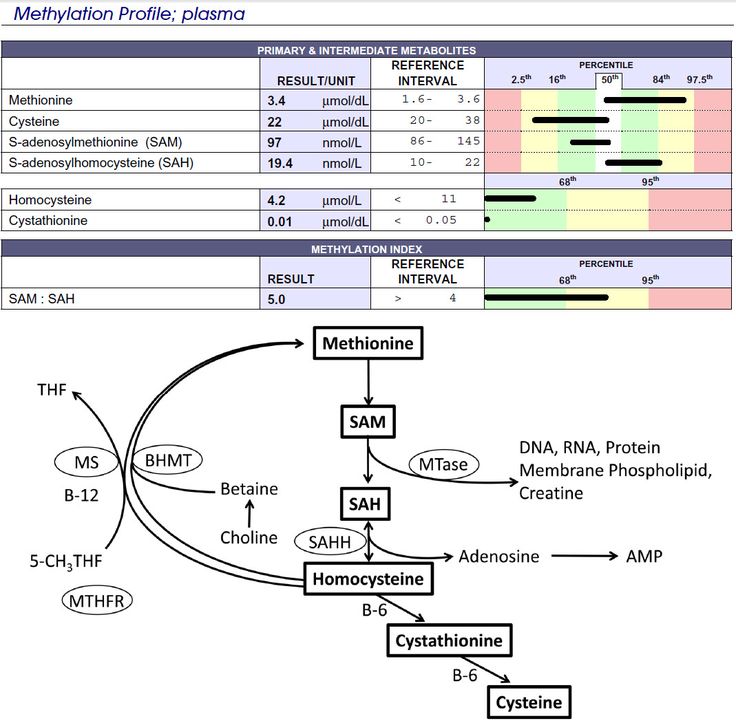
Undermethylation in Autism — What the Plasma Methylation Panel and SAM:SAH Ratio Reveal
Methylation is a core biochemical process that governs mood, energy, and detoxification. In autism, undermethylation is among the most consistent findings — confirmed in clinical studies and in Dr. William Walsh’s analysis showing that nearly 90 percent of individuals on the spectrum are undermethylated. Unlike popular MTHFR folate autism explanations, the true picture emerges through laboratory analysis of whole blood histamine and the plasma methylation panel, which measures methionine, SAM, SAH, and homocysteine. These values show how well the body transfers methyl groups, detoxifies oxidants, and protects mitochondrial energy.
The Role of Whole Blood Histamine in Autism
Whole blood histamine is a reliable screening marker for methylation capacity. Elevated histamine usually signals undermethylation autism — slower breakdown of histamine due to low methyl-group availability. Low histamine suggests overmethylation. In practice, histamine gives a quick view of neurotransmitter balance and guides interpretation of the more detailed plasma methylation panel autism results.
Understanding the Plasma Methylation Panel
This panel maps each step of the methylation cycle — showing whether nutrients and enzymes can move methyl groups efficiently to sustain energy and antioxidant defenses. The key markers include methionine, SAM, SAH, and homocysteine, and the ratio of SAM to SAH (SAM:SAH ratio) provides a single metric for overall methylation potential.
Methionine
Methionine is the entry point for methylation and a precursor to SAM. Low methionine may reflect poor protein absorption or high oxidative demand pulling sulfur toward glutathione production. High methionine with low SAM suggests energy or enzyme limitations within mitochondria.
S-Adenosylmethionine (SAM)
SAM is the body’s main methyl donor. It supports serotonin, dopamine, and phospholipid production. A low SAM or low SAM SAH ratio autism pattern points to fatigue, low mood, and sluggish detoxification. Normal methionine with low SAM often indicates impaired ATP generation or magnesium and B12 deficiency — highlighting the link between methylation and mitochondrial energy.
S-Adenosylhomocysteine (SAH)
SAH forms after SAM donates a methyl group. When SAH accumulates, it blocks further methylation, slowing neurotransmitter and creatine synthesis. Elevated SAH is common in undermethylation autism and may reflect oxidative stress, zinc deficiency, or reduced kidney filtration. The SAM:SAH ratio below 6 is a hallmark of impaired methylation efficiency.
Homocysteine
Homocysteine sits at the branch between methylation and detoxification. High levels suggest poor sulfur conversion or low vitamin B6 and N-acetylcysteine (NAC). Low homocysteine can mean excessive diversion into glutathione during oxidative stress. Balanced levels show that methylation and transsulfuration are working in sync to protect mitochondria.
Why Folate Is Not Always the Answer
The MTHFR folate autism narrative often leads to high-dose methylfolate use, but in undermethylated individuals this can backfire. Excess folate accelerates serotonin and dopamine reuptake, lowering their activity and worsening emotional symptoms. Dr. Walsh’s findings show that most autistic patients need support for methyl transfer and antioxidant balance — not extra folate. Improving SAM production, lowering SAH, and enhancing zinc-dependent enzymes restores a healthier equilibrium.
Clinical Interpretation for Physicians
The plasma methylation panel autism offers a roadmap rather than a supplement list. Patterns help the clinician locate bottlenecks — whether energy limitation (low SAM), oxidative back-pressure (high SAH), or sulfur imbalance (abnormal homocysteine). Integrating these findings with whole blood histamine, zinc–copper balance, and vitamin D status allows a strategic plan tailored to the patient’s biotype. This framework clarifies why undermethylation autism often overlaps with mitochondrial dysfunction and oxidative stress.
From Chemistry to Clarity
Autism’s biochemical complexity can be simplified by tracking how methylation, mitochondria, and metal balance interact. When methylation runs smoothly, SAM donates efficiently, glutathione production stabilizes, and mitochondria regain resilience. The result is improved mood, focus, and detox capacity — achieved by restoring flow through the pathway, not by pushing isolated nutrients.