
Can Toxic Overload Cause Depression? Elevated SAH, Glutathione and Undermethylation
Toxic overload and depression may be connected when environmental exposures, gut-derived toxins, oxidative stress, glutathione depletion and impaired clearance reduce neurological resilience. In susceptible patients, these pressures may increase mitochondrial stress, raise SAH, lower the SAM-to-SAH ratio and create a functional undermethylation pattern that contributes to depression, anxiety, brain fog, fatigue and medication sensitivity.
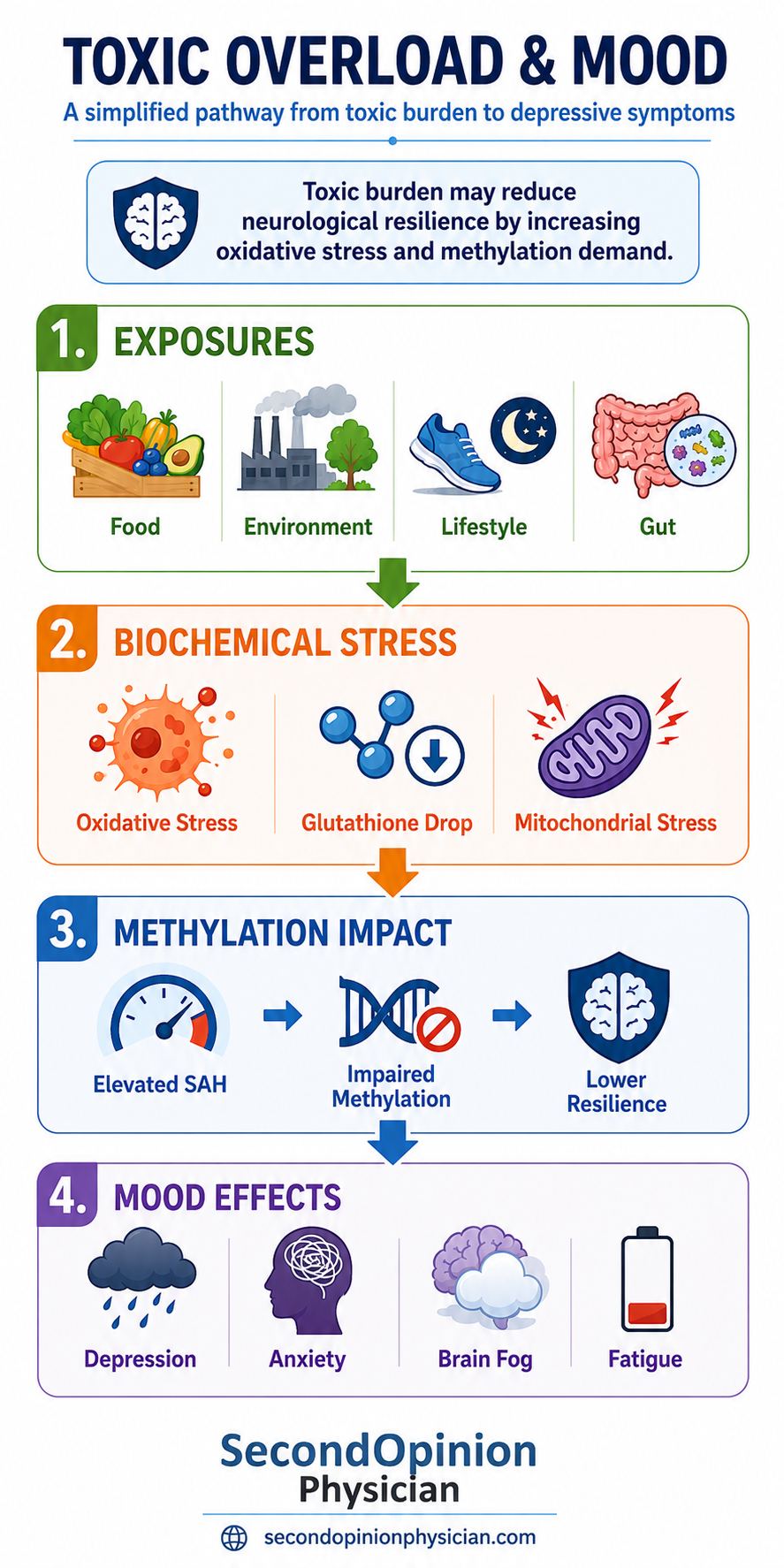

The central clinical idea: toxic overload may affect mood when oxidative stress, inflammation, mitochondrial strain, glutathione depletion and impaired clearance reduce the brain’s biochemical resilience. Elevated SAH may add a second barrier by inhibiting methylation even when methyl donors are present.
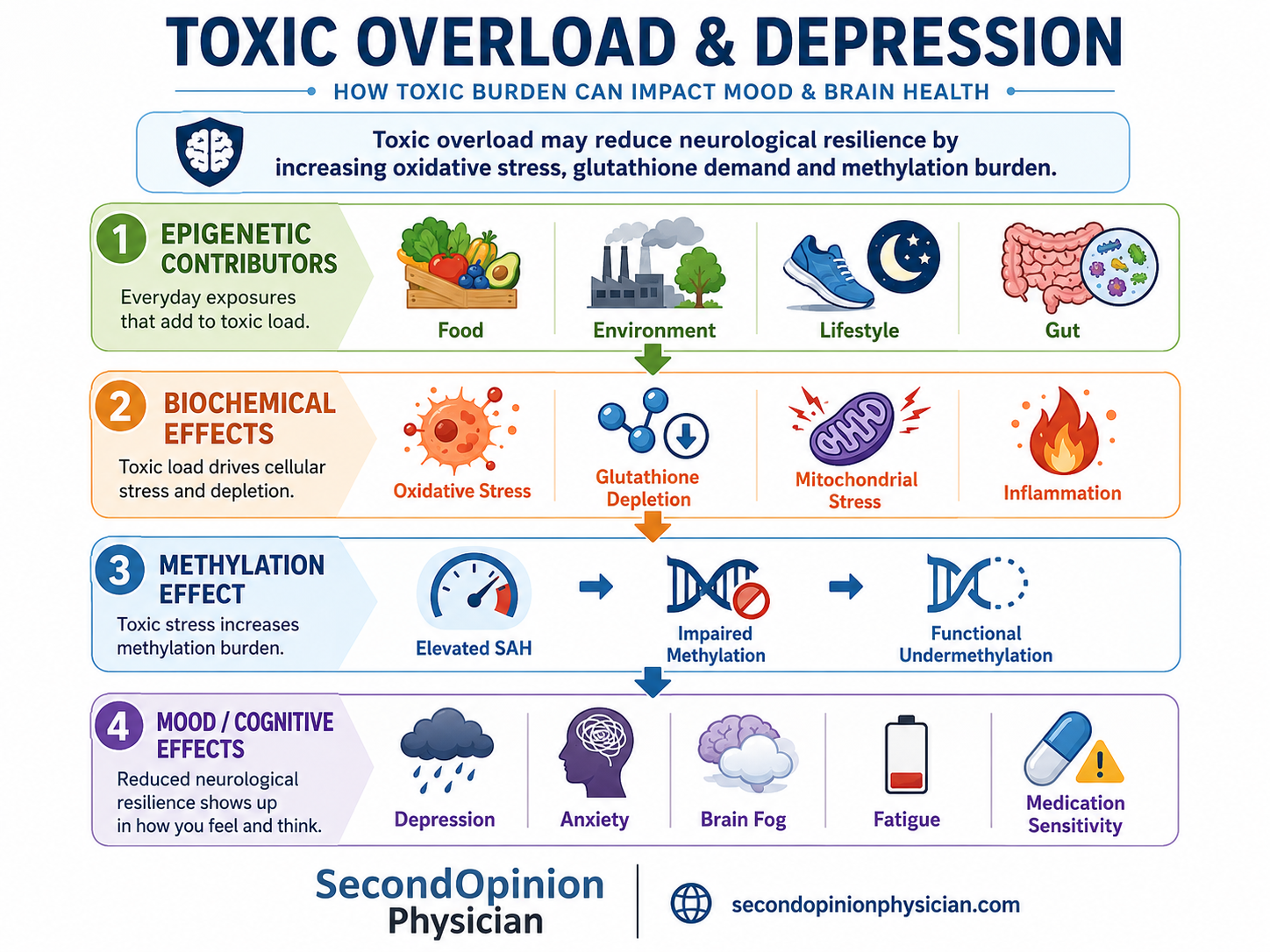
Toxic overload and depression may be connected through oxidative stress, glutathione depletion, mitochondrial strain and elevated SAH.
Can Toxic Overload Cause Depression?
Toxic overload and depression are not synonymous, and toxic burden does not explain every case of depression. It may, however, contribute to depressive symptoms when environmental toxicants, alcohol, medications, gut-derived compounds and normal metabolic waste create more oxidative and inflammatory burden than the body can safely manage.
The resulting stress may affect mitochondrial energy, antioxidant defense, neurotransmitter regulation, sleep, cognition and medication tolerance. In the Walsh framework, toxic overload is one biochemical pattern that may coexist with undermethylation, copper imbalance, pyroluria or other contributors.
This page focuses on depression and mood effects. For the full biochemical definition, toxic-metal discussion, kidney and liver clearance, and comprehensive testing, review the main Toxic Overload guide.
What Are the Symptoms of Toxic Overload Depression?
Depression
Low motivation, emotional flattening, reduced resilience and poor recovery from stress may occur when inflammation and energy demand remain high.
Anxiety and Irritability
Chemical sensitivity, poor sleep, copper imbalance and medication effects may contribute to anxiety, agitation or irritability.
Brain Fog
Poor concentration, slowed thinking and memory difficulty may reflect inflammatory, mitochondrial, metabolic or medication-related stress.
Fatigue
Reduced ATP production, oxidative stress, poor sleep and detoxification demand may lower physical and mental stamina.
These symptoms are nonspecific. They do not identify a particular toxin, metal or detoxification pathway by themselves, but the combination may justify evaluating toxic overload and depression together when the exposure history is credible.
Why Does Toxic Exposure Affect Some People More Than Others?
Toxic overload and depression may become linked when exposure exceeds antioxidant, methylation and clearance capacity. Toxic overload is a capacity problem as much as an exposure problem. Individual response depends on dose and duration, but also on zinc, glutathione, protein intake, mitochondrial reserve, liver metabolism, kidney filtration, bowel elimination, gut health and methylation.
Which Epigenetic Factors Can Increase Toxic Burden?
Food, environment, lifestyle and gut function may all influence gene expression, inflammation, mitochondrial function and methylation without changing the DNA sequence.
Food
Alcohol, ultra-processed foods, low protein intake, nutrient deficiency and contaminated products may increase burden or reduce detoxification capacity.
Environment
Mold, smoke, solvents, pesticides, heavy metals, polluted air and contaminated water may contribute when supported by the history.
Lifestyle
Poor sleep, chronic stress, dehydration, inactivity and medication burden may reduce metabolic reserve and recovery.
Gut
Dysbiosis, intestinal permeability and constipation may increase endotoxin, microbial metabolites and enterohepatic recirculation.
How Can Glutathione Depletion Affect Depression and Brain Function?
Glutathione helps neutralize peroxides, protect membranes and mitochondria, and conjugate selected reactive drug and chemical metabolites. Alcohol, smoke, reactive medication metabolites, metals and environmental toxicants may increase glutathione use.
Low protein intake, limited cysteine or glycine, selenium deficiency, mitochondrial dysfunction and poor glutathione recycling may further reduce antioxidant reserve. The result may be greater oxidative stress and reduced neurological resilience.
Glutathione depletion does not diagnose depression. It is better understood as one possible biochemical contributor that may amplify oxidative stress, mitochondrial dysfunction and medication sensitivity.
How Can Elevated SAH Cause Functional Undermethylation?
SAM donates methyl groups for many cellular reactions. After donation, SAM becomes SAH. When SAH accumulates, it inhibits many methyltransferases and can reduce effective methylation even when folate, methionine or SAM are available.
SAH hydrolase links SAH with homocysteine and adenosine in a reversible reaction. The pathway moves away from SAH only when homocysteine and especially adenosine are adequately metabolized or cleared.
The toxic-overload connection: oxidative stress, mitochondrial strain, poor organ clearance and high metabolic demand may create conditions that favor elevated SAH or a low SAM-to-SAH ratio. This can produce a functional undermethylation pattern without assuming that every patient simply needs more methyl donors.
Related reading: elevated SAH and SAH hydrolase and low SAM versus elevated SAH.
How Can Gut-Derived Toxins Affect Mood?
Dysbiosis and intestinal permeability may increase the delivery of endotoxin, ammonia, aldehydes, phenols and other microbial metabolites to the liver through the portal circulation. These compounds may increase inflammatory signaling, glutathione demand and liver workload.
Constipation may also prolong contact with biliary metabolites and allow more deconjugation and reabsorption. This gut–liver–brain pathway may contribute to fatigue, brain fog and mood symptoms in selected patients.
For the detailed liver pathways involved, review liver detoxification, glutathione and bile.
A simplified pathway from epigenetic exposure to biochemical stress, impaired methylation and mood symptoms.
Why Can Toxic Overload Increase Medication Sensitivity?
Medication response depends on liver enzymes, kidney filtration, nutritional status, drug interactions, age and individual metabolism. Reduced clearance or increased oxidative stress may increase side effects even when a medication is prescribed at a standard dose.
Medication sensitivity does not mean the medication is itself the primary cause of illness, and prescribed treatment should not be stopped abruptly. The pattern may justify reviewing dose, interactions, organ function and the underlying biochemical burden with the prescribing clinician.
Which Tests Help Evaluate Toxic Overload and Depression?
Methylation
- SAM and SAH
- SAM-to-SAH ratio
- Methionine
- Homocysteine
Minerals and Antioxidant Context
- Plasma zinc
- Serum copper
- Ceruloplasmin
- Glutathione-related markers when appropriate
Organ Safety
- CBC and comprehensive metabolic panel
- Creatinine, eGFR and urinalysis
- AST, ALT, GGT and bilirubin
- Serum bicarbonate
Heavy-metal, mold, gut or environmental testing should follow a credible exposure history rather than mood symptoms alone. Review available methylation and functional laboratory testing.
Why Should Depression Be Stabilized Before Detoxification?
Severe depression, suicidal risk, psychosis, mania, dangerous aggression, dehydration, malnutrition or kidney impairment require stabilization before chelation, prolonged fasting, extensive sauna or complex detoxification protocols.
Aggressive detoxification may worsen symptoms. Mobilizing compounds faster than the liver, gut and kidneys can process them may increase fatigue, anxiety, sleep disruption, mineral loss and medication instability.
A safer sequence is to reduce ongoing exposure, restore hydration and nutrition, correct bowel dysfunction, evaluate organ safety, address biochemical deficiencies and then retest before escalating treatment.
Frequently Asked Questions About Toxic Overload and Depression
Can toxic overload cause depression?
Toxic overload does not explain every case of depression, but oxidative stress, inflammation, mitochondrial dysfunction, medication sensitivity and impaired methylation may contribute to depressive symptoms in selected patients.
What are the symptoms of toxic overload depression?
Possible symptoms include depression, anxiety, irritability, brain fog, fatigue, poor concentration, sleep disruption, chemical sensitivity and reduced stress tolerance. These symptoms are nonspecific and require clinical context.
How can elevated SAH affect depression and mood?
Elevated SAH inhibits methyltransferases and may reduce effective methylation. A low SAM-to-SAH ratio may therefore contribute to a functional undermethylation pattern and reduced neurological resilience.
Can glutathione depletion cause brain fog and fatigue?
Low glutathione may increase oxidative stress and reduce protection of mitochondria and cell membranes, potentially contributing to fatigue, poor concentration and reduced stress tolerance.
Can gut-derived toxins contribute to depression?
Dysbiosis and intestinal permeability may increase endotoxin, inflammatory signaling and microbial metabolites delivered to the liver. These factors may contribute to fatigue, brain fog and mood symptoms in susceptible patients.
Which tests help evaluate toxic overload and depression?
Testing may include SAM, SAH, the SAM-to-SAH ratio, methionine, homocysteine, copper, ceruloplasmin, zinc, CBC, comprehensive metabolic panel, kidney function, liver markers and exposure-specific testing when appropriate.
Investigating Toxic Overload and Depression
A targeted history and laboratory assessment may help distinguish environmental exposure from elevated SAH, glutathione depletion, mitochondrial stress, gut-derived burden or impaired organ clearance.
Selected Sources and Further Reading
- Tehlivets O, et al. S-adenosylhomocysteine hydrolase and methylation-related disorders. Review article.
- Gao J, et al. S-adenosylmethionine and transmethylation pathways in neuropsychiatric disease. Review article.
- Pizzino G, et al. Oxidative stress in human health and disease. Review article.
- Juszczyk G, et al. Chronic stress, oxidative stress and depression. Review article.