
Organic Acids

$324.00
An organic acids-based panel that looks at mitochondrial energy production, metabolic efficiency, and gut-related markers such as dysbiosis or digestive imbalance. Helpful for investigating fatigue, brain fog, poor metabolism, and gut-driven biochemical stress.
Description
Cellular Stress & Resilience Panel 4: Mitochondrial & Gut-Metabolic Function
Panel 4 uses the Genova Organix® #3301 – Urine test.
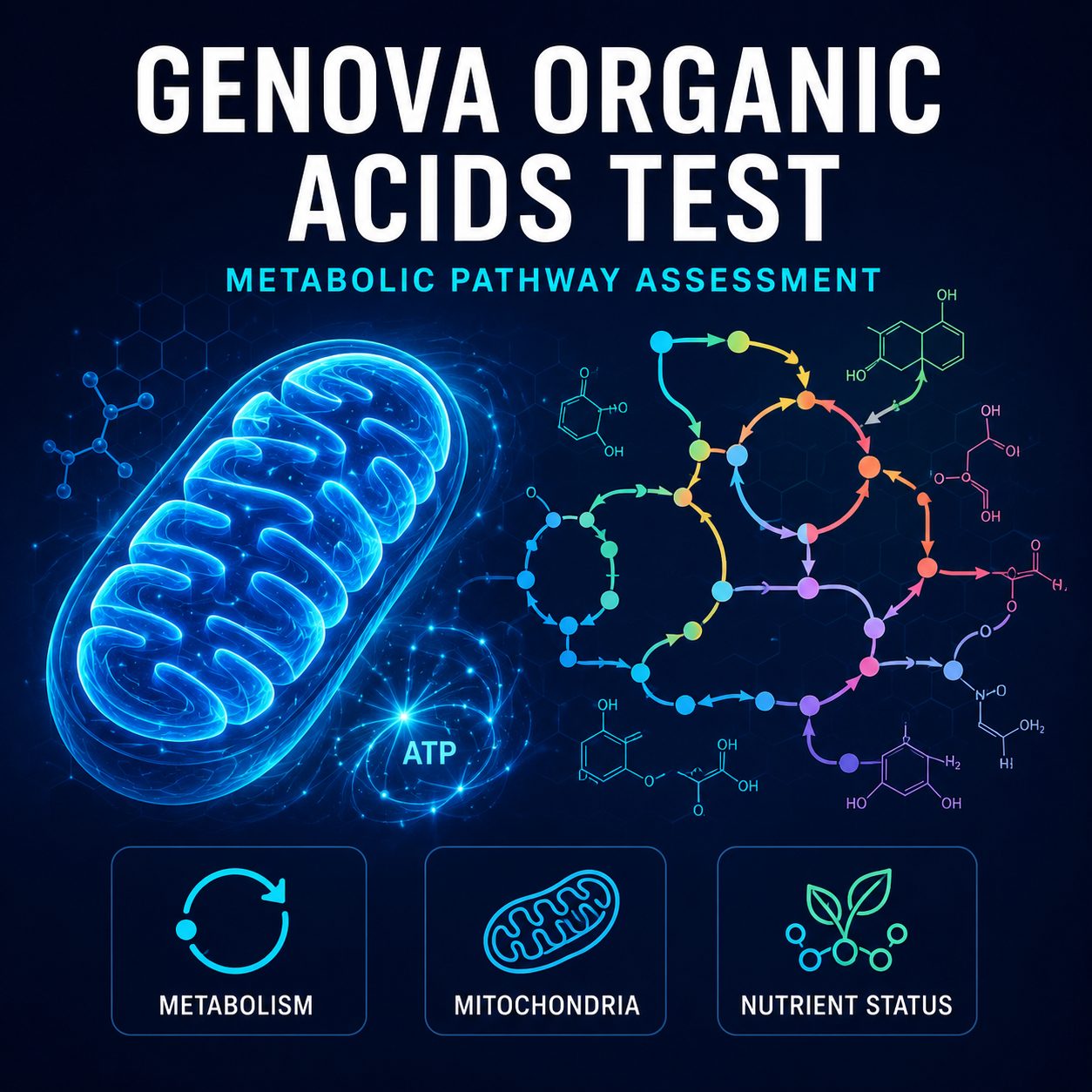
This is an Organic Acids Test, often called an OAT. It is an at-home urine test that evaluates metabolic byproducts produced by the body, gut bacteria, yeast, detoxification pathways, neurotransmitter metabolism, and mitochondrial energy production.
This panel is useful when symptoms suggest that gut imbalance, mitochondrial stress, nutrient cofactor needs, poor detoxification, or metabolic strain may be interfering with recovery.
Genova Organix® #3301 – Urine
Organic acids related to:
- Mitochondrial energy production
- Gut bacterial and yeast activity
- Detoxification burden
- Neurotransmitter metabolism
- Nutrient cofactor needs
- Oxalate metabolism
- Carbohydrate and fatty acid metabolism
What this test does
The Organix test does not directly culture bacteria or identify stool pathogens. Instead, it measures urine metabolites that can reflect how the body is functioning metabolically. Some of these markers come from normal human metabolism, while others may reflect gut yeast or bacterial activity.
This is why the OAT can be very useful for gut-related cases even though it is not a stool test. Gut bacteria and yeast produce metabolic byproducts that can be absorbed, processed by the liver, and then excreted in urine. When those markers are elevated, they may suggest gut fermentation, yeast burden, bacterial imbalance, poor carbohydrate handling, or increased detoxification demand.
Why gut-metabolic function matters
The gut affects nutrient absorption, immune activation, inflammation, methylation, neurotransmitter balance, detoxification, and oxidative stress. When the gut is imbalanced, patients may need more nutrients just to maintain normal function, and they may not respond as well to supplements.
Gut-metabolic stress may contribute to bloating, constipation, diarrhea, food sensitivity, cravings, fatigue, brain fog, poor sleep, irritability, anxiety, attention problems, sensory reactivity, and poor recovery.
Why mitochondrial function matters
Mitochondria produce cellular energy. The brain, nervous system, muscles, immune system, detoxification pathways, and gut lining all require steady mitochondrial output.
When mitochondrial function is stressed, symptoms may include fatigue, brain fog, poor stamina, poor recovery after stress or exertion, sleep disruption, mood instability, anxiety, sensory overload, attention problems, or slower developmental progress.
Why this panel is useful
Panel 4 helps identify hidden metabolic stressors that may not appear on standard bloodwork. It can help explain why symptoms continue despite a reasonable nutrient plan, or why a patient has fatigue, sleep issues, gut symptoms, attention problems, anxiety, irritability, or poor stress tolerance.
This test can also help determine whether the treatment plan should focus more on mitochondrial support, gut repair, yeast or bacterial balance, nutrient cofactors, detoxification support, blood sugar stability, or dietary changes.
Best for
- Patients with fatigue, brain fog, poor recovery, sleep disruption, bloating, constipation, diarrhea, food sensitivity, yeast concerns, gut imbalance, developmental symptoms, speech/language delay, ADHD-type symptoms, anxiety, irritability, sensory reactivity, or poor response to supplements.
- This panel is also useful when copper/zinc imbalance, oxidative stress, methylation concerns, allergy burden, or immune reactivity are present and gut or mitochondrial stress may be limiting progress.
How results may guide treatment
Mitochondrial findings may guide support such as CoQ10, carnitine, magnesium, riboflavin, creatine, B vitamins, alpha-lipoic acid, or other energy-supportive cofactors.
Gut-related findings may guide treatment for yeast, bacterial imbalance, fermentation, constipation, digestion, food reactivity, or poor carbohydrate handling.
Nutrient-related findings may help clarify the need for B vitamins, magnesium, antioxidants, detoxification support, amino acid support, or other cofactors.
Collection
At-home urine collection through Genova.
Clinical note
Panel 4 is not a stool analysis. A stool test looks more directly at digestion, inflammation, microbiome balance, parasites, pathogens, and gut immune markers. The Organix OAT looks at how gut and metabolic byproducts are affecting the body systemically.
In many cases, Panel 4 is a useful first look at gut-metabolic burden. Stool testing can be added when digestive symptoms are more significant or when a deeper microbiome, inflammation, pathogen, or digestive-function assessment is needed.