
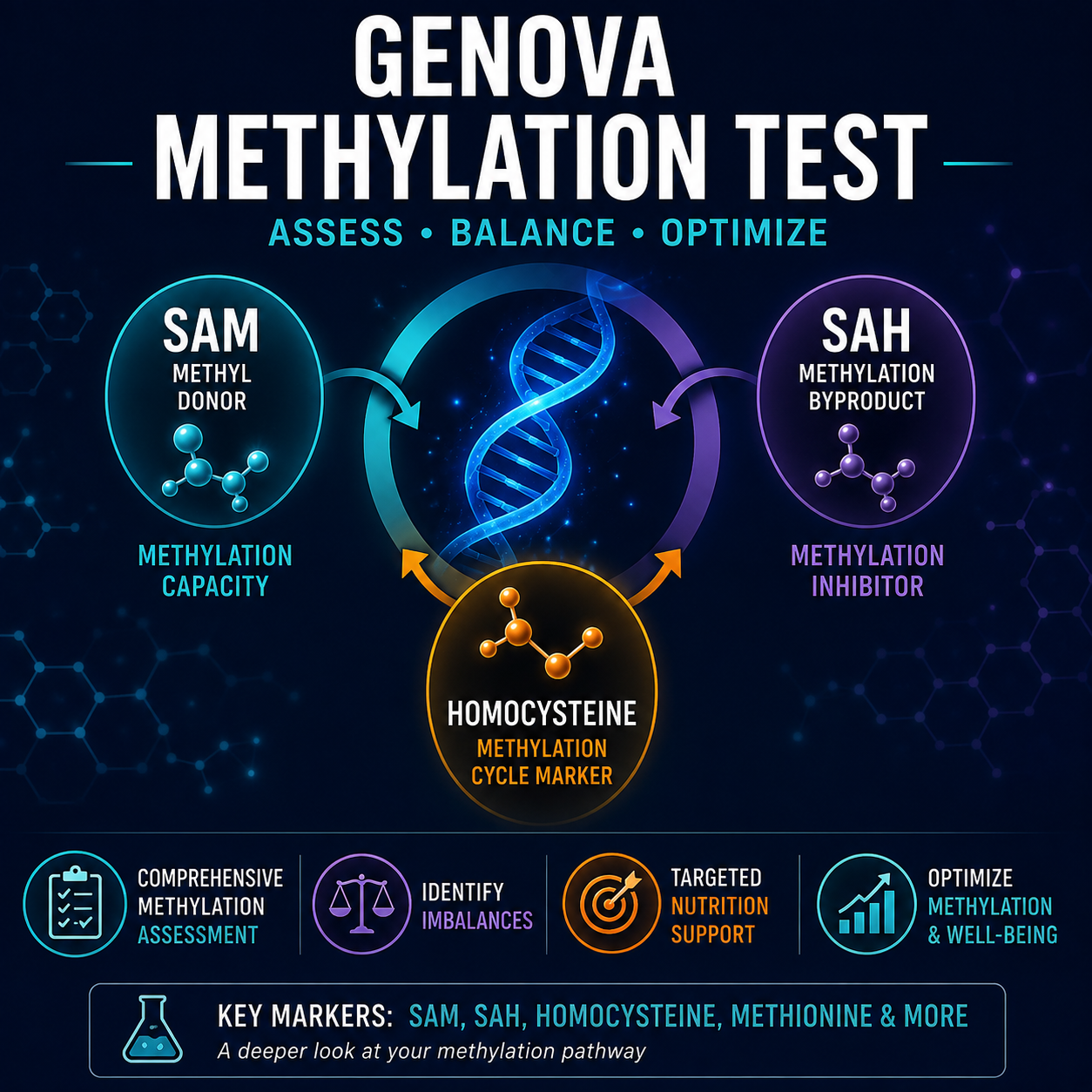
Genova Methylation Test

$295.00
The Genova Methylation Test measures SAM, SAH, methionine, homocysteine, transsulfuration and glutathione-related metabolites to show how methylation is functioning now. Add the optional genetics panel for an additional look at inherited variants that may influence methylation, folate and related pathways. The genetic add-on includes a buccal swab collection kit.
Description
The Genova Methylation Test measures the metabolites that show how your methylation pathway is functioning now. It evaluates SAM, SAH, methionine, homocysteine, transsulfuration, glutathione-related metabolism and other connected pathways rather than relying on genetic predictions alone.
Choose the Basic Methylation Panel for functional biochemical testing alone, or select Panel Plus Genetics to combine current methylation measurements with an additional assessment of inherited genetic variants.
What Is a Methylation Test?
A methylation test evaluates biochemical pathways involved in transferring methyl groups throughout the body. These reactions influence neurotransmitter regulation, DNA and gene regulation, creatine production, detoxification, antioxidant defense and many other cellular processes.
The Genova panel is especially useful because it does not simply ask whether you carry a genetic variant associated with methylation. It measures metabolites produced by the pathway itself.
Basic Methylation Panel vs Panel Plus Genetics
Basic Methylation Panel
SAM SAH Methionine Homocysteine Transsulfuration GlutathioneThis option evaluates current methylation and related biochemical pathways.
Choose this when the primary question is whether methylation, SAH clearance, homocysteine metabolism, transsulfuration or antioxidant function is abnormal now.
Panel Plus Genetics
Functional Panel Genetic Add-On Buccal Swab IncludedThis option combines the functional methylation panel with an additional genetic assessment of inherited variants that may influence methylation and related pathways.
A buccal swab collection kit is included with the genetic add-on. The cheek-swab sample is used for the genetic portion while the functional panel measures current biochemical metabolites.
Why Add Genetics to a Functional Methylation Test?
Genetic and functional methylation testing answer different questions.
Genetic Testing
Genetic testing identifies inherited variants that may affect enzymes or pathways involved in folate metabolism, methylation and related biochemical processes.
Main question:
What methylation-related vulnerabilities did you inherit?
Functional Methylation Testing
Functional testing measures metabolites generated by the pathway and therefore provides information about current methylation capacity and pathway flow.
Main question:
What is the methylation pathway actually doing now?
Two people can carry the same genetic variant yet have very different SAM, SAH, homocysteine and glutathione findings. Adding genetics can help identify inherited susceptibility while the functional panel determines whether those tendencies are actually associated with measurable biochemical abnormalities.
When Might the Genetics Add-On Be Useful?
MTHFR or Folate Questions
Useful when previous MTHFR or other genetic findings have raised questions about folate metabolism but current methylation status has never been measured.
Persistent Abnormal Methylation
May provide additional context when SAM, SAH, homocysteine or related markers remain abnormal despite nutritional intervention.
Family or Inherited Patterns
May be useful when there is interest in understanding whether inherited biochemical tendencies could contribute to the observed functional pattern.
What Does the Genova Methylation Panel Evaluate?
Methylation Capacity
SAM SAH SAM:SAH MethionineThese markers help determine whether methyl groups are adequately available and whether methylation reactions may be restricted by accumulation of SAH, an inhibitor of methyltransferase reactions.
Homocysteine & Pathway Flow
Homocysteine Methionine RemethylationHomocysteine sits at an important metabolic junction. It may be recycled toward methionine or directed toward transsulfuration and antioxidant production.
Transsulfuration
Cystathionine Cysteine TaurineThese markers provide information about sulfur metabolism and movement of homocysteine toward pathways involved in antioxidant defense and cellular protection.
Glutathione & Antioxidant Capacity
Glutathione Glycine CysteineGlutathione is a major intracellular antioxidant. These findings can identify inadequate antioxidant capacity or increased metabolic demand that may need attention before aggressively stimulating methylation.
SAM and SAH: Why This Methylation Test Is Different
The Core Methylation Pathway
SAM is a major methyl donor. After SAM donates a methyl group, it becomes SAH — S-adenosylhomocysteine.
SAH is particularly important because accumulation can inhibit methyltransferase reactions.
If SAH is also elevated, methylation may remain inhibited. SAM and SAH should therefore be interpreted together.
Why Can SAH Become Elevated?
SAH is converted through the SAH hydrolase — SAHH — reaction toward homocysteine and adenosine. This reaction is reversible.
For SAH clearance to proceed efficiently, downstream homocysteine and adenosine must also be adequately handled.
Homocysteine Side
Homocysteine can be remethylated toward methionine or directed through transsulfuration.
Adenosine Side
Adenosine clearance is another important part of the pathway. Impaired downstream clearance may make the reversible SAHH reaction less favorable for removal of SAH.
Genova Methylation Testing and the Walsh Approach
The traditional Walsh assessment uses whole-blood histamine together with symptoms and clinical history to help identify undermethylation and overmethylation patterns.
The Genova methylation test answers a different but complementary question:
Walsh Methylation Screen
Whole-Blood Histamine HomocysteineHelps identify traditional Walsh clinical patterns associated with undermethylation and overmethylation.
Whole-Blood Histamine Methylation ScreenFunctional Methylation Panel
SAM SAH Homocysteine Transsulfuration GlutathioneExamines active pathway metabolites and may reveal methylation bottlenecks that are not apparent from histamine alone.
Methylation, Mood and Neurotransmitter Regulation
Methylation can influence proteins involved in neurotransmitter regulation, including serotonin and dopamine transport systems.
Within the Walsh framework, methylation patterns may help explain why individuals with similar symptoms can respond very differently to nutrients and psychiatric medications.
Creatine and Methylation Demand
Methylation depends not only on the supply of methyl groups but also on how rapidly they are being consumed.
Endogenous creatine synthesis is one of the body's major methyl-consuming processes. During creatine synthesis, SAM is consumed and SAH is generated.
Transsulfuration, Glutathione and Detoxification
Homocysteine also connects methylation to the transsulfuration pathway, ultimately contributing to cysteine and glutathione production.
Cysteine
An important sulfur-containing amino acid and precursor for glutathione synthesis.
Glycine
Another required component of glutathione and an important amino acid in cellular metabolism.
Glutathione
A major intracellular antioxidant involved in redox balance, cellular protection and detoxification.
What Does the Genova Methylation Test Measure?
| Pathway | Markers / Information |
|---|---|
| Methylation | SAM, SAH, SAM/SAH relationship, methionine |
| Homocysteine Metabolism | Homocysteine and related pathway metabolites |
| Methyl Donor Metabolism | Choline, betaine, serine and related metabolites |
| Downstream Metabolites | DMG, sarcosine, glycine and related markers |
| Transsulfuration | Cystathionine, cysteine and taurine |
| Antioxidant Capacity | Glutathione and related precursors |
| Optional Genetics | Inherited genetic variants relevant to methylation and related pathways; buccal swab collection kit included |
Who May Benefit From a Methylation Test?
Functional methylation testing may be useful when evaluating:
Mood & Behavior
Depression, anxiety, OCD, irritability, attention problems, mood instability or unusual responses to psychiatric medications or nutrients.
Cognitive Symptoms
Brain fog, memory problems, impaired concentration, cognitive decline or other neurologic concerns.
Fatigue & Poor Resilience
Chronic fatigue, poor recovery, reduced stress tolerance or symptoms suggesting increased metabolic demand.
Oxidative or Toxic Stress
Chemical sensitivity, oxidative stress, suspected toxic exposure or concern that impaired antioxidant capacity may be affecting methylation.
Which Option Should You Choose?
Choose the Basic Panel When:
- You primarily want to know how methylation is functioning now
- You already have genetic results
- Your main concern is SAM, SAH or homocysteine
- You want to evaluate transsulfuration and glutathione
- You are monitoring response to treatment
Consider Panel Plus Genetics When:
- You want both inherited risk and current biochemical function
- You have never had meaningful methylation-related genetic testing
- You have questions about MTHFR or other inherited pathway variants
- Abnormal methylation persists despite treatment
- You want a more comprehensive genetics-plus-biochemistry assessment
A buccal swab kit is included for the genetic sample.
How Results Can Guide Nutrient Strategy
The purpose of testing is not simply to label someone a “poor methylator.” The results can help identify where the pathway appears to be impaired and what may deserve attention first.
Low Methyl Availability
Findings may suggest inadequate methyl-donor availability or other nutrient limitations.
Elevated SAH
Rather than simply adding methyl donors, attention may need to shift toward factors interfering with SAH clearance.
High Methyl Demand
Reducing unnecessary methyl-group consumption may sometimes be more useful than simply increasing methyl supply.
Oxidative / Transsulfuration Stress
Glutathione precursors, sulfur metabolism and sources of oxidative or metabolic stress may deserve priority.
Sample Collection
Functional Methylation Panel
The functional portion uses the specimen collection required by the Genova methylation panel. Follow all collection, preparation and shipping instructions supplied with the laboratory kit.
Genetic Add-On
The genetics option includes a buccal swab kit. Cells are collected from inside the cheek and submitted for the genetic portion of the assessment.
Frequently Asked Questions About Methylation Testing
What does a methylation test measure?
Functional methylation testing measures metabolites such as SAM, SAH, methionine, homocysteine and related transsulfuration and antioxidant markers to evaluate current pathway function.
What is a SAM SAH test?
A SAM/SAH test measures S-adenosylmethionine and S-adenosylhomocysteine. SAM supplies methyl groups, while SAH can inhibit methyltransferase reactions when it accumulates. Interpreting both provides more information than either result alone.
Does MTHFR testing show whether I am undermethylated?
No. MTHFR identifies inherited variants affecting folate metabolism but does not directly measure SAM, SAH or current methylation capacity.
What is the difference between a genetic methylation test and a functional methylation test?
Genetic testing identifies inherited variants that may influence methylation. Functional testing measures metabolites generated by the pathway and shows what the biochemistry is doing at the time of testing.
Why would I add genetics to the Genova methylation panel?
The genetics add-on provides another layer of information by showing inherited susceptibility while the functional panel measures current methylation. Combining both can help distinguish genetic potential from acquired biochemical dysfunction.
How is the genetic sample collected?
A buccal swab kit is included with the genetics option. The genetic sample is collected from cells inside the cheek.
Can this test help evaluate elevated SAH?
Yes. Direct measurement of SAH is one of the important advantages of functional methylation testing. Elevated SAH can inhibit methyltransferase reactions and may warrant assessment of downstream pathway clearance and related metabolic factors.
Functional Methylation or Functional + Genetics?
Choose the basic panel when your main question is what methylation is doing now. Add genetics when you also want information about inherited variants that may help explain why a particular biochemical pattern developed.
For patients undergoing a broader Walsh or functional assessment, results can also be reviewed alongside whole-blood histamine, copper, zinc, ceruloplasmin and other biochemical findings.
View Consultation Options Free Pre-ConsultationAdditional information
| Methylation Panel | Basic Panel, Panel plus Genetics |
|---|