
Vitamin D Therapy Interview: Testing, Dosage, Immunity, Serotonin, Sleep & Mood
Vitamin D functions more like a steroid hormone than a simple nutritional vitamin, influencing immune regulation, gene expression, brain signaling, inflammation, sleep and serotonin biology. In this interview, Dr. John Campbell speaks with physician and vitamin D researcher Dr. David Grimes about why blood levels—not simply a fixed supplement dose—matter, why requirements vary substantially among individuals, and why vitamin D status deserves more attention in clinical medicine.

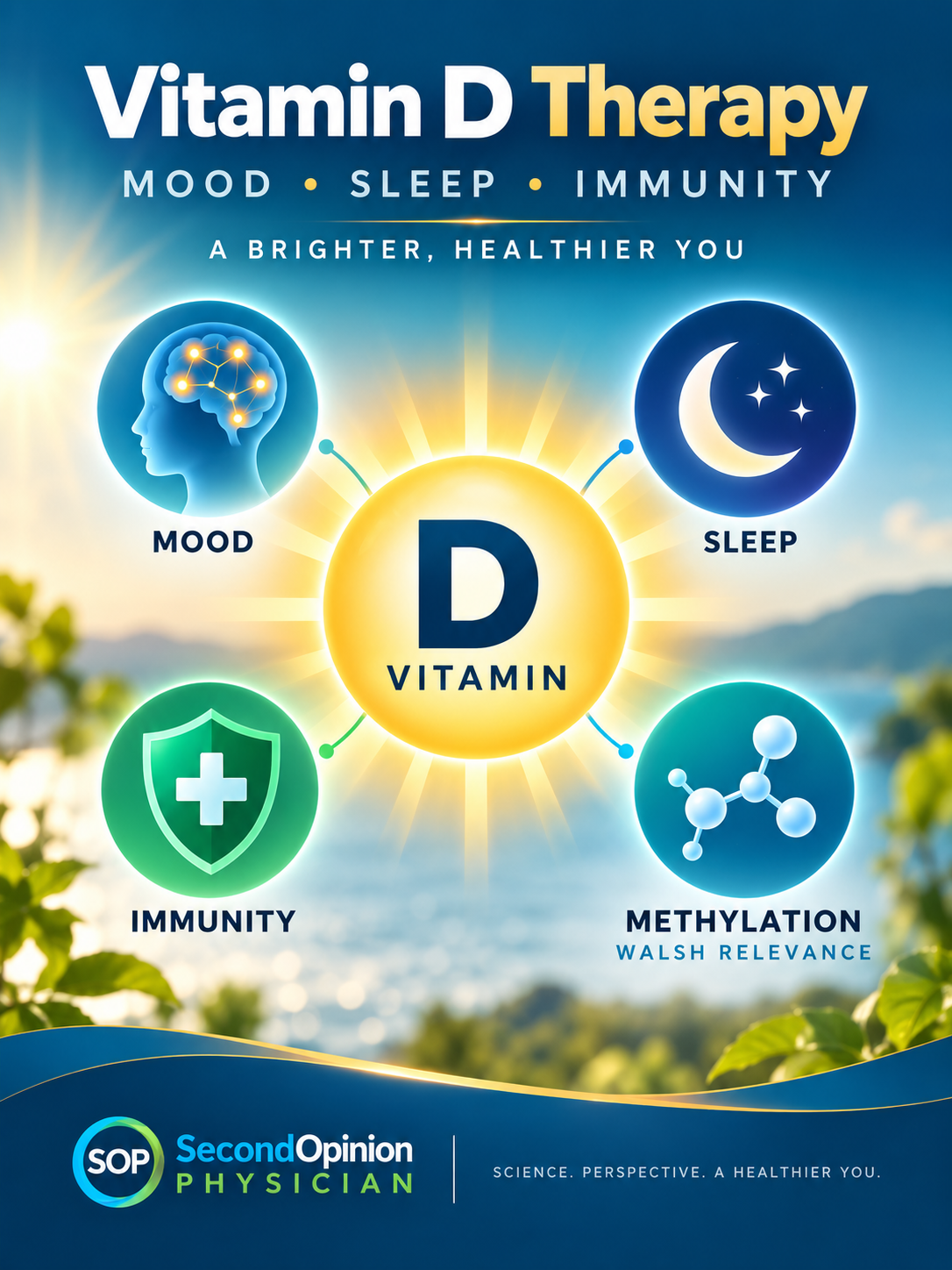
For Second Opinion Physician, vitamin D is also an important component of the Walsh Biotype and mood/behavior workup because deficiency can create a modifiable biochemical stressor that may affect serotonin synthesis, immune balance, sleep, cognition and treatment response. Dr. Grimes emphasizes individualized measurement and argues for substantially higher vitamin D levels and doses than many conventional guidelines; those targets remain debated, so the discussion below separates his clinical perspective from areas where evidence and professional guidelines remain less certain.
Vitamin D has effects far beyond bone and calcium metabolism. Its active form functions as a steroid hormone that binds the vitamin D receptor, or VDR, and influences gene expression in immune cells, neurons and many other tissues.
In this interview, Dr. John Campbell speaks with retired consultant physician and vitamin D researcher Dr. David Grimes about vitamin D testing, individualized dosing, immunity, obesity, aging, infection and the difference between ordinary vitamin D and its partially activated form, calcifediol.
One of Dr. Grimes' central points is simple: rather than assuming one supplement dose is appropriate for everyone, vitamin D therapy should be considered in relation to the individual's actual blood level, body size, absorption, health status and clinical objective.
Watch the Vitamin D Interview
Measure 25-Hydroxyvitamin D
Dr. Grimes emphasizes testing rather than assuming a supplement dose has produced an adequate blood level. Individual response to the same dose can vary substantially.
One Dose Does Not Fit Everyone
Body weight, adiposity, sun exposure, skin pigmentation, absorption, age, diet and other biological differences may influence vitamin D status.
Immune & Brain Effects
Vitamin D participates in immune-cell function, inflammatory regulation, gene expression, serotonin biology, sleep and neurologic health.

Vitamin D influences mood, sleep, immunity, serotonin biology and methylation-related physiology, making 25-hydroxyvitamin D useful in a broader biochemical and Walsh Biotype assessment.
Dr. Grimes' Main Point: Treat the Blood Level, Not Just the Dose
A supplement dose does not tell us what vitamin D blood concentration has actually been achieved.
Two people taking the same amount can develop very different 25-hydroxyvitamin D levels. Dr. Grimes compares this with other measurable therapies: the biologic response matters more than simply knowing the amount prescribed.
Why Vitamin D Response Varies
- Body weight and adiposity
- Baseline vitamin D level
- Sun exposure
- Skin pigmentation
- Age-related reduction in skin production
- Dietary intake
- Malabsorption
- Liver and kidney function
- Medication effects
- Individual metabolic differences
The interview particularly emphasizes obesity. Vitamin D is fat soluble, and people with greater adiposity frequently have lower circulating 25-hydroxyvitamin D concentrations and may require more vitamin D to achieve the same blood level.
What Vitamin D Test Should Be Ordered?
For routine assessment of vitamin D status, the most useful measurement is:
This is the main circulating form of vitamin D and reflects vitamin D obtained from sunlight, food and supplementation.
The active hormone, 1,25-dihydroxyvitamin D or calcitriol, is tightly regulated by calcium, phosphorus, parathyroid hormone and kidney physiology. It can remain normal or even become elevated despite low vitamin D stores and is therefore generally not the preferred test for routine vitamin D assessment.
25-Hydroxyvitamin D
Provides the most useful measurement of overall vitamin D status and is the value generally used when evaluating deficiency and monitoring supplementation.
1,25-Dihydroxyvitamin D
Can be useful in selected kidney, parathyroid, calcium, granulomatous and metabolic disorders but does not replace 25-hydroxyvitamin D for evaluating vitamin D stores.
How Much Vitamin D Is Optimal?
This is one of the major subjects Dr. Grimes addresses in the interview.
He argues that traditional vitamin D recommendations were developed largely around preventing rickets and may not fully reflect vitamin D requirements for broader functions such as immune regulation.
His practical approach is to measure 25-hydroxyvitamin D and adjust intake according to the blood response rather than assuming the same dose is appropriate for every patient.
Dr. Grimes discusses blood concentrations in the range of approximately 100–150 nmol/L, or roughly 40–60 ng/mL, as a desirable range for broader physiologic and immune support.
The amount required to reach a target can vary considerably. Body size, adiposity, absorption, sun exposure and baseline status can all influence the dose-response relationship.
Why Vitamin D Is Included in a Walsh Biotype Workup
Second Opinion Physician includes 25-hydroxyvitamin D in the standard Walsh Biotype laboratory assessment.
Vitamin D is not itself a Walsh Biotype marker in the same way that whole-blood histamine, copper, ceruloplasmin or zinc help characterize biochemical patterns. Instead, it is an important modifiable physiologic factor that may influence mood, behavior, cognition, sleep, inflammation and immune symptoms.
Serotonin Biology
Active vitamin D interacts with the vitamin D receptor and can regulate tryptophan hydroxylase 2 (TPH2), the neuronal enzyme responsible for the rate-limiting step in brain serotonin synthesis.
Inflammation
Vitamin D influences T cells, macrophages and inflammatory signaling. Inflammation can affect mood, cognition, fatigue and neurotransmitter metabolism.
Sleep
Vitamin D receptors are found in brain regions involved in sleep regulation, and low vitamin D has repeatedly been associated with poorer sleep quality.
Immune Resilience
Vitamin D signaling is involved in innate and adaptive immunity, including T-cell function, macrophage activity and antimicrobial defense.
Vitamin D and Serotonin: Why It Matters for Mood and Behavior
One reason vitamin D is particularly relevant to mood and behavior is its influence on central serotonin biology.
Serotonin synthesis begins with tryptophan:
TPH2 is the neuronal form of tryptophan hydroxylase and controls the rate-limiting first step in serotonin production within the brain.
Vitamin D response elements have been identified in relation to the TPH2 gene, and active vitamin D can influence TPH2 expression.
This provides a biologically important connection between vitamin D status and serotonin-dependent functions such as:
- Mood regulation
- Anxiety and stress response
- Impulse control
- Social behavior
- Attention and executive function
- Appetite
- Sleep-wake regulation
Vitamin D, Serotonin Transport and Receptor Function
Vitamin D's relationship with serotonin goes beyond production alone.
Vitamin D signaling may influence several components of serotonergic physiology, including:
- Expression of neuronal TPH2
- Serotonin synthesis
- Expression of the serotonin transporter, SERT
- Serotonin breakdown through monoamine oxidase pathways
- Inflammatory pathways that affect tryptophan metabolism
- Gene expression within serotonin-responsive neural networks
This makes vitamin D relevant in a Walsh-oriented mood and behavior assessment, especially when symptoms suggest altered serotonin function.
Vitamin D, Inflammation and the Tryptophan-Kynurenine Pathway
Serotonin can also be affected indirectly by immune activation.
Inflammatory signaling can activate indoleamine 2,3-dioxygenase (IDO), redirecting tryptophan away from serotonin production and toward the kynurenine pathway.
Because vitamin D helps regulate immune activity and inflammatory signaling, low vitamin D may contribute to an environment in which more tryptophan is directed toward kynurenine rather than serotonin.
This becomes particularly relevant when mood symptoms coexist with chronic infection, autoimmune activity, gastrointestinal inflammation or other inflammatory stressors.
Vitamin D and Sleep
Vitamin D receptors are present in brain regions involved in sleep regulation.
Low vitamin D has been associated with:
- Poorer sleep quality
- Fatigue
- Shorter sleep duration in some populations
- Daytime tiredness
- Inflammatory sleep disturbance
- Greater sleep problems in people with obesity or limited daylight exposure
Vitamin D may influence sleep through several mechanisms, including brain VDR signaling, inflammatory regulation, serotonin biology and the relationship between serotonin and melatonin production.
Vitamin D and Immunity
The interview places particularly strong emphasis on the immune role of vitamin D.
Vitamin D is involved in both innate and adaptive immune regulation. Macrophages, dendritic cells and T lymphocytes express vitamin D receptors, and several immune-cell populations can locally activate vitamin D.
Innate Defense
Vitamin D signaling contributes to antimicrobial peptide production and the body's early response to infectious organisms.
T-Cell Function
Vitamin D affects T-cell activation, differentiation and the balance between inflammatory and regulatory immune responses.
Inflammation Control
Vitamin D helps regulate the transition from an aggressive inflammatory response toward a more controlled immune and healing response.
Dr. Grimes makes the important point that normal numbers of white blood cells or lymphocytes do not necessarily prove that immune-cell function is optimal.
A CBC measures the number and distribution of circulating cells. It does not directly measure whether T cells, macrophages or other immune cells have adequate vitamin D signaling for optimal function.
Can Infection Lower Vitamin D?
Immune activation increases the utilization of many nutrients and hormonal signals involved in host defense, including vitamin D.
Inflammatory illness can also alter vitamin D metabolism and circulating vitamin D-binding proteins.
This helps explain why vitamin D status may become particularly important in people experiencing:
- Frequent respiratory infections
- Chronic viral infections
- Persistent inflammatory illness
- Post-infectious fatigue
- Autoimmune activation
- Reduced immune resilience
Testing the actual 25-hydroxyvitamin D level is more useful than assuming a supplement dose has maintained adequate status.
Vitamin D, Obesity and Body Weight
Dr. Grimes emphasizes obesity as an important reason vitamin D requirements vary.
Vitamin D is fat soluble. People with greater adiposity frequently have lower circulating 25-hydroxyvitamin D concentrations after equivalent sun exposure or supplement intake.
A dose that produces an adequate blood concentration in one person may therefore produce a considerably lower level in someone with substantially greater body mass.
Vitamin D Production Declines With Age
The skin contains 7-dehydrocholesterol, which absorbs ultraviolet-B energy and is converted toward vitamin D3 production.
The skin's ability to produce vitamin D declines with age. Older adults may also spend less time outdoors and have medical conditions affecting absorption, liver metabolism or kidney function.
This helps explain why substantial sun exposure does not necessarily guarantee an adequate vitamin D level in an older person.
Skin Pigmentation, Latitude and Sun Exposure
Melanin reduces penetration of ultraviolet radiation into the skin. This protects against UV damage but can also reduce vitamin D production under the same sunlight conditions.
Other important variables include:
- Latitude
- Season
- Cloud cover
- Time of day
- Amount of exposed skin
- Indoor lifestyle
- Age
- Skin pigmentation
These variables explain why sun exposure alone cannot reliably predict a person's vitamin D blood level.
Vitamin D3, Calcifediol and Calcitriol: What Is the Difference?
| Form | What It Is | Clinical Meaning |
|---|---|---|
| Vitamin D3 Cholecalciferol |
Vitamin D produced in the skin or commonly taken as a supplement. | Must undergo hydroxylation in the liver before becoming circulating 25-hydroxyvitamin D. |
| 25-Hydroxyvitamin D Calcifediol |
The major circulating form produced primarily through liver hydroxylation. | This is the form ordinarily measured to determine vitamin D status. |
| 1,25-Dihydroxyvitamin D Calcitriol |
The hormonally active form produced through additional hydroxylation, classically in the kidney and locally in several other tissues. | Acts through the vitamin D receptor to regulate gene transcription and cellular physiology. |
Why Dr. Grimes Discusses Calcifediol
One of the more interesting points in the interview is the distinction between ordinary vitamin D3 and calcifediol.
Vitamin D3 must first undergo liver hydroxylation before significantly increasing circulating 25-hydroxyvitamin D.
Calcifediol is already 25-hydroxylated and therefore raises circulating 25-hydroxyvitamin D more directly and rapidly.
Dr. Grimes discusses this difference in the context of acute illness, where waiting for ordinary vitamin D3 to undergo normal metabolic conversion may take considerably longer than administering the already hydroxylated form.
Daily vs Weekly Vitamin D
Because 25-hydroxyvitamin D has a relatively long circulating half-life, vitamin D3 can be administered in different schedules.
Dr. Grimes describes using weekly dosing for convenience. Other patients prefer daily dosing.
The most important practical issue is not whether the schedule is daily or weekly but whether the regimen produces an appropriate and stable 25-hydroxyvitamin D concentration for that individual.
Why More Vitamin D Is Not Always Better
Vitamin D is fat soluble and excessive supplementation can eventually produce toxicity.
The primary concern is excessive calcium absorption and hypercalcemia.
- Nausea or vomiting
- Weakness
- Excessive thirst
- Frequent urination
- Confusion
- Kidney stones
- Kidney injury
- Abnormal calcium deposition in severe cases
When substantial doses are used over time, measurement of 25-hydroxyvitamin D provides a much more rational approach than continuing to increase a dose without knowing the resulting blood level.
Common Causes of Low Vitamin D
Low Production
- Indoor lifestyle
- Limited UVB exposure
- Winter or northern latitude
- Higher skin pigmentation
- Older age
Reduced Absorption
- Celiac disease
- Inflammatory bowel disease
- Pancreatic disorders
- Bariatric surgery
- Fat-malabsorption disorders
Metabolic Factors
- Obesity
- Liver disease
- Kidney disease
- Selected medications
- Chronic inflammation
- Repeated or chronic infections
Vitamin D in Mood, Behavior and Cognitive Assessment
Vitamin D is especially useful in mood and behavioral medicine because it influences several systems that overlap with psychiatric and cognitive symptoms.
- Serotonin synthesis and regulation
- Neuroimmune signaling
- Inflammatory control
- Sleep quality
- Brain development and function
- Oxidative stress
- Physical energy and muscle function
- Immune resilience
This is why Second Opinion Physician includes vitamin D alongside the more biotype-specific laboratory markers in the Walsh workup.
Vitamin D as Part of the Biochemical Picture
Whole-blood histamine, copper, ceruloplasmin, zinc and related markers help identify Walsh biochemical patterns. Vitamin D adds another important layer by showing whether a common hormonal and nutritional factor may be contributing to mood, behavioral, cognitive, immune or sleep symptoms.
Vitamin D and Methylation
Vitamin D also interacts with epigenetic regulation.
The vitamin D receptor regulates transcription of numerous genes, while DNA methylation and other epigenetic mechanisms can influence expression of vitamin D pathway genes.
Vitamin D may therefore influence the broader biochemical environment in which methylation, inflammation and neurotransmitter regulation occur.
When a methylation problem is suspected, vitamin D can be interpreted alongside:
- Whole-blood histamine
- Homocysteine
- SAM
- SAH
- Methionine
- Zinc
- Copper
- Ceruloplasmin
- Oxidative-stress markers
What Should Be Taken From the Interview?
Know the Blood Level
Supplement dose alone does not tell you the resulting vitamin D status. 25-hydroxyvitamin D provides the clinically useful measurement.
Requirements Vary
Body weight, adiposity, sun exposure, age, skin pigmentation, absorption and underlying health can significantly alter vitamin D requirements.
Vitamin D Influences the Biochemical Picture
Vitamin D can influence serotonin biology, inflammation, immune activity, sleep and mood and is therefore useful in the broader Walsh Biotype assessment.
Vitamin D Is a Hormonal Signal
Its active form regulates genes and interacts with immune, neural and metabolic pathways throughout the body. Bone health is only one component of its physiology.
Frequently Asked Questions
What is the best blood test for vitamin D?
25-hydroxyvitamin D, also called 25(OH)D or calcifediol, is the standard test for assessing vitamin D status. The active hormone, 1,25-dihydroxyvitamin D or calcitriol, is not usually the appropriate test for routine assessment of vitamin D stores.
Why is vitamin D included in Walsh testing?
Vitamin D can influence serotonin biology, immune regulation, inflammation, sleep, fatigue and brain function. These effects can modify the way a Walsh biochemical pattern is expressed and may affect treatment response.
Does vitamin D increase serotonin?
Vitamin D can influence neuronal serotonin biology through the vitamin D receptor and regulation of TPH2, the rate-limiting enzyme involved in brain serotonin synthesis. Vitamin D status may therefore affect serotonin production and related mood and behavioral functions.
Does vitamin D affect serotonin receptors?
Vitamin D influences serotonergic physiology through several mechanisms, including serotonin synthesis, gene transcription, transport and degradation. Its role is broader than simply increasing receptor sensitivity.
Can vitamin D affect sleep?
Yes. Vitamin D receptors are present in brain regions involved in sleep regulation, and low vitamin D has been associated with poorer sleep quality. Vitamin D may also interact with serotonin and inflammatory pathways involved in normal sleep-wake regulation.
Why is vitamin D important for immunity?
Vitamin D receptors are present in multiple immune-cell types. Vitamin D participates in innate antimicrobial defense, T-cell activity, macrophage function and regulation of inflammatory responses.
Why can obese individuals require more vitamin D?
Vitamin D is fat soluble, and greater adiposity is associated with lower circulating 25-hydroxyvitamin D concentrations. As a result, the same oral dose may produce a smaller rise in blood level in someone with substantially greater body mass.
Should vitamin D dose be based only on body weight?
No. Body weight is important, but baseline vitamin D level, absorption, diet, sun exposure, medications, liver and kidney function and other health factors also affect response. Measuring 25-hydroxyvitamin D provides the clearest assessment.
What is calcifediol?
Calcifediol is 25-hydroxyvitamin D, the major circulating form of vitamin D and the form normally measured in blood. Because it is already hydroxylated, pharmacologic calcifediol raises circulating 25-hydroxyvitamin D more directly than ordinary vitamin D3.
What is calcitriol?
Calcitriol is 1,25-dihydroxyvitamin D, the hormonally active form that binds the vitamin D receptor and regulates gene expression. It is tightly controlled by the body and has different clinical uses from routine vitamin D3 supplementation.
Interviewer: Dr. John Campbell
Dr. John Campbell is known for his educational content on health, nursing, and science topics, particularly on platforms like YouTube. He holds a PhD in nursing and health sciences and has a background in teaching and research in higher education. His work often involves analyzing current health studies, public health policies, and providing insights into various health-related issues, including the COVID-19 pandemic. His approachable style and ability to break down complex medical information into understandable content have earned him a wide audience. While he is not a medical doctor, his expertise lies in his analysis and discussion of peer review published research.
Interviewee: Dr. David Grimes
Dr. David Grimes is a retired consultant physician with a long-standing career in gastroenterology and general internal medicine. He has published extensively on Vitamin D and its implications for human health beyond bone metabolism, including its effects on immunity, chronic disease prevention, and its potential role in mitigating complications from infections like COVID-19. Dr. Grimes has been a vocal advocate for recognizing the broader health benefits of Vitamin D and the need for higher supplementation doses than currently recommended by many health authorities. His expertise is based on years of clinical practice, research, and a critical review of the literature concerning Vitamin D's role in health and disease.
Their discussion bridges practical clinical experience and a thorough review of scientific literature, aiming to shed light on the nuances of Vitamin D supplementation and its potential impact on public health.
- Need for Testing: A controversial point is the need for regular blood level testing of Vitamin D. Dr. Grimes advocates for testing to ensure individuals reach a blood level of Vitamin D considered protective against infections and chronic diseases (100-150 nanomoles per liter). However, routine testing is not widely practiced or recommended by all health authorities, leading to a lack of standardized approaches to Vitamin D supplementation and monitoring.
- Dosage: One of the most debated aspects is the appropriate dosage of Vitamin D for optimal health benefits. While some recommendations suggest a modest intake of around 400 units daily to prevent conditions like rickets, Dr. Grimes argues for much higher doses (up to 6,000 units daily for an average adult) to maintain immunity and overall health. This discrepancy in dosage recommendations stems from differing interpretations of Vitamin D's role beyond bone health, including its impact on immunity and chronic disease prevention. Overdose is rare. Calcium is not required when taking vitamin D. In fact, vitamin D removes the need for calcium supplementation.
- Benefits Beyond Bone Health: Vitamin has proven to be effective reducing the risk of infections like influenza and COVID-19, chronic diseases such as certain cancers, and autoimmune conditions. The role of Vitamin D in modulating the immune response, especially in reducing inflammation and enhancing the body's defense against pathogens, is highlighted as a significant area of interest and debate.
- Optimal Levels for Different Populations: The discussion touches on how optimal Vitamin D levels might vary among individuals based on factors like body weight, age, and skin color. The need for higher doses in certain populations, such as obese individuals or those with darker skin living in less sunny climates, underscores the complexity of establishing universal dosage recommendations.
- Vitamin D Deficiency in Healthcare Settings: Dr. Grimes points out a critical gap in healthcare practice regarding the management of Vitamin D deficiency, especially in acute settings like hospitals and during the pre- and post-operative periods. The potential benefits of administering active forms of Vitamin D to rapidly improve immune function in patients with infections or undergoing surgery is presented as an underutilized intervention.
Effect of Vitamin D on Methylation and Serotonin Receptor Sensitivity
Association of Low Vitamin D Methylation of DNA:
Vitamin D has been implicated in the regulation of epigenetic events, including DNA methylation. DNA methylation is a process that controls gene expression and can be influenced by various factors, including nutrition and exposure to certain environmental conditions.
Research has shown that vitamin D can affect DNA methylation patterns, particularly within genes associated with autoimmune diseases, cancers, and cardiovascular diseases. It is postulated that vitamin D influences the methylation process through the vitamin D receptor (VDR), which interacts with enzymes responsible for adding or removing methyl groups to the DNA molecule. However, the specific mechanisms and outcomes of these interactions are complex and not yet fully understood. Deficiency in vitamin D might affect normal methylation patterns, potentially contributing to disease development.
Vitamin D and Serotonin Receptor Activity:
Serotonin, a key neurotransmitter, plays an essential role in numerous biological processes, including mood regulation, social behavior, appetite, digestion, sleep, and memory. Vitamin D appears to influence serotonin synthesis and signal transduction.
Vitamin D can influence the production of serotonin by regulating the expression of tryptophan hydroxylase 2 (TPH2), an enzyme involved in the synthesis of serotonin in the brain. When vitamin D binds to its receptor (VDR), it may promote the transcription of the gene for TPH2, thereby increasing the synthesis of serotonin.
Furthermore, vitamin D might play a role in the function of serotonin receptors. Some research suggests that vitamin D may help to upregulate serotonin receptor expression and enhance serotonin-mediated responses, though more research is needed to fully understand these mechanisms.
The relationship between vitamin D, DNA methylation, and serotonin receptor activity underscores the complexity of vitamin D's roles in the body and its potential relevance to conditions like depression, schizophrenia, cardiovascular disease, and certain cancers. It's important to note, though, that while these relationships are supported by some research, they are still areas of active study and not yet fully understood.
Why Doctors Recommend Ordering Calcifediol vs Calcitriol:
When testing for vitamin D levels in the body, healthcare providers typically measure the amount of 25-hydroxyvitamin D, also known as calcifediol, rather than 1,25-dihydroxyvitamin D or calcitriol, the active form of the vitamin. This is due to several reasons:
- Higher Concentration: Calcifediol is present in the blood at higher concentrations than calcitriol.
- Longer Half-Life: Calcifediol has a longer half-life in the body than calcitriol (approximately 2 weeks compared to 4 to 6 hours for calcitriol). Therefore, calcifediol levels provide a more stable and accurate reflection of vitamin D status over time.
- Regulatory Mechanisms: The kidneys tightly control the conversion of calcifediol to calcitriol as part of the body's regulation of calcium and phosphorus. Even if a person is deficient in vitamin D, their calcitriol levels could be normal or even elevated due to these regulatory mechanisms. Therefore, calcitriol levels are not a reliable indicator of total body vitamin D status.
It's important to note that while measuring calcifediol is the standard method of assessing vitamin D status, it does not provide a measure of all aspects of vitamin D health, such as its conversion to its active form or its effects on cellular signaling and gene expression. Therefore, a comprehensive evaluation of a person's health and other tests might be necessary for a complete understanding of a person's health status.
Causes of Vitamin D Deficiency
Limited Exposure to Sunlight:
- Due to lifestyle (indoors most of the time, wearing clothing that covers most of the skin)
- Living in northern latitudes where there is less sun exposure, especially in winter.
- Using sunscreen, which blocks the sun's rays that the skin needs to produce vitamin D.
Dietary Factors:
- Following a strict vegan diet. Most natural sources of vitamin D are animal-based.
- Malabsorption issues due to conditions like celiac disease, Crohn’s disease, and cystic fibrosis, which affect the intestine's ability to absorb fat (vitamin D is a fat-soluble vitamin).
Health Conditions:
- Obesity: Fat cells extract vitamin D from the blood, altering its release into circulation.
- Kidney and liver diseases: These conditions can affect the ability to convert vitamin D into its active form.
- Hyperparathyroidism: Overactive parathyroid glands can cause excessive calcium absorption, which can result in vitamin D deficiency.
Age:
- Older people have thinner skin, which may result in less vitamin D being produced when they're exposed to sunlight.
- The ability to convert vitamin D into its active form decreases with age.
Genetics:
- Variations in genes related to vitamin D metabolism (e.g., GC genes, which produce a vitamin D-binding protein, or CYP2R1, CYP27B1, and CYP24A1 genes, which are involved in the conversion of vitamin D into its active form).
Other Factors:
- Certain medications can alter vitamin D metabolism, such as anticonvulsants, glucocorticoids, antifungals, and HIV/AIDS medicines.
- Infections, especially those that result in prolonged inflammation, might influence vitamin D status. Chronic infections could lead to lower vitamin D levels due to increased inflammation and metabolic demand.
- Chronic stress and high cortisol levels may also potentially impact vitamin D levels
Vitamin D Deficiency and Treatment Options
- Symptoms of Deficiency: Symptoms can include fatigue, bone pain, muscle weakness, mood changes, and frequent illness.
- Treatment: Treatment typically involves increasing sun exposure, altering diet, or taking supplements. Dosages will depend on the severity of the deficiency, age, weight, and other individual factors.