


Description
This Walsh Protocol consultation is the primary initial assessment for patients seeking a physician-guided, biochemical and nutrient-based approach to depression, anxiety, OCD, ADHD, mood instability, behavioral symptoms, stress intolerance, sleep problems, and related concerns.
The assessment combines the WalshDoc Biotype Questionnaire, detailed clinical history, medication and supplement response, and relevant laboratory findings to identify likely Walsh biochemical patterns and develop an individualized nutrient and supplement plan.
What Is a Walsh Protocol Consultation?
A Walsh Protocol consultation evaluates whether recurring biochemical patterns may help explain differences in mood, anxiety, behavior, attention, cognition, medication response, and nutrient requirements.
Rather than assuming that every patient with depression or anxiety has the same underlying biology, the Walsh Approach looks for patterns involving undermethylation, overmethylation, copper overload, pyroluria, mineral imbalance, and related nutrient factors.
Two patients may both have depression or anxiety yet show very different symptom patterns, laboratory findings, and nutrient needs. The Walsh Biotype assessment is intended to help identify those differences before developing a nutrient strategy.
How Does a Walsh Biotype Assessment Work?
A Walsh Biotype assessment combines symptom-pattern recognition with relevant biochemical laboratory findings. The questionnaire identifies which Walsh patterns are supported by the patient's history and symptoms, while laboratory testing provides objective information that may confirm, challenge, or refine the initial impression.
Undermethylation
Evaluates characteristic mood, behavioral, personality, family-history, physical, and treatment-response findings associated with the traditional Walsh undermethylation pattern.
Overmethylation
Looks for features that may be more consistent with overmethylation and helps distinguish this pattern from undermethylation before selecting nutrients.
Copper Overload
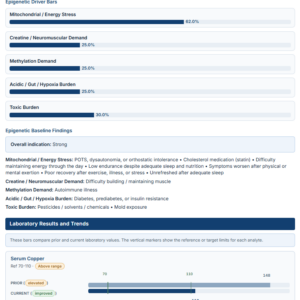
Evaluates symptoms and laboratory findings associated with copper/zinc imbalance, including copper, zinc, ceruloplasmin, and calculated free copper when appropriate.
Pyroluria
Reviews characteristic stress-tolerance, cognitive, behavioral, and zinc/B6-related patterns, with urinary pyrrole testing when clinically appropriate.
Learn more about these patterns in The Five Biotypes of Depression.
Looking for a Walsh Practitioner Near Me?
Patients searching for a Walsh practitioner near me often discover that clinicians experienced with the Walsh Approach are not available locally.
Second Opinion Physician provides Walsh-oriented assessment by telemedicine. Appropriate patients can complete the questionnaire, arrange laboratory testing, submit prior records, receive physician interpretation, and review the completed assessment remotely.
Telemedicine allows patients in many locations to obtain a structured Walsh Biotype assessment without traveling to the practice. Laboratory availability and medical requirements may differ according to patient location.
Can Nutrient Therapy for Depression Be Individualized?
Yes. Nutrient therapy for depression is one of the major reasons patients seek a Walsh Protocol consultation.
The Walsh model does not assume that all depression represents the same biochemical problem. One patient may show a strong undermethylation pattern, another may demonstrate copper overload, another may have pyroluria, and another may show a different or overlapping biochemical presentation.
These differences matter because nutrients that may be useful for one biochemical pattern may be ineffective—or occasionally counterproductive—for another.
- chronic versus episodic depression;
- anxiety accompanying depression;
- rumination, obsessive thinking, or perfectionism;
- medication response or intolerance;
- family history;
- hormonal or reproductive patterns;
- zinc and copper balance;
- whole blood histamine and homocysteine;
- pyroluria indicators;
- nutrient deficiencies and prior supplement response.
Can Nutrient Therapy for Anxiety Be Guided by Biochemistry?
Nutrient therapy for anxiety can also be approached through biochemical pattern recognition rather than using the same supplement combination for every patient.
Anxiety may occur alongside undermethylation, copper overload, pyroluria, overmethylation, hormonal changes, mineral imbalance, or other biochemical factors. The clinical history helps determine which patterns deserve the most attention.
For example, anxiety associated with copper overload may present very differently from anxiety occurring in a patient with a strong undermethylation pattern. Identifying the broader Biotype can therefore influence both laboratory interpretation and nutrient selection.
What Conditions Are Commonly Evaluated in a Walsh Protocol Consultation?
Depression
Chronic or recurrent low mood, loss of motivation, emotional sensitivity, seasonal patterns, obsessive features, or incomplete medication response.
Anxiety
Persistent worry, inner tension, panic tendencies, irritability, stress sensitivity, hormonal anxiety, or sleep-related anxiety.
OCD & Rumination
Obsessive thinking, perfectionism, intrusive thoughts, repetitive mental patterns, and related symptoms that may correlate with particular Biotypes.
ADHD & Attention
Attention, concentration, impulsivity, motivation, cognitive endurance, or medication-response patterns that may have a biochemical component.
Mood & Behavioral Symptoms
Mood instability, irritability, emotional reactivity, aggression, poor stress tolerance, and other behavioral concerns.
Sleep & Cognitive Concerns
Insomnia, non-restorative sleep, brain fog, memory difficulties, or other symptoms occurring as part of the broader biochemical presentation.
Which Labs Are Used for a Walsh Biotype Assessment?
The primary laboratory option for this consultation is the Comprehensive Biotype Panel.
Depending on the patient's history and prior findings, relevant testing may include:
Copper, Zinc & Ceruloplasmin
Used to evaluate copper/zinc balance, zinc status, ceruloplasmin, and calculated free copper when appropriate.
Whole Blood Histamine
Used within the traditional Walsh framework as one laboratory marker that can add context to the clinical methylation pattern.
Homocysteine
Adds biochemical context regarding methylation-related pathways and may help determine whether more detailed methylation testing is needed.
Vitamin D
Identifies an important nutrient deficiency that may influence mood, immune function, and overall treatment planning.
CBC & CMP
Provide broader hematologic and metabolic information relevant to interpretation and nutrient therapy.
Urinary Pyrroles When Appropriate
Pyrrole testing may be added separately when the questionnaire and clinical presentation strongly support pyroluria.
Why Combine the WalshDoc Questionnaire With Laboratory Testing?
The WalshDoc Biotype Questionnaire organizes the patient's symptom pattern before laboratory interpretation.
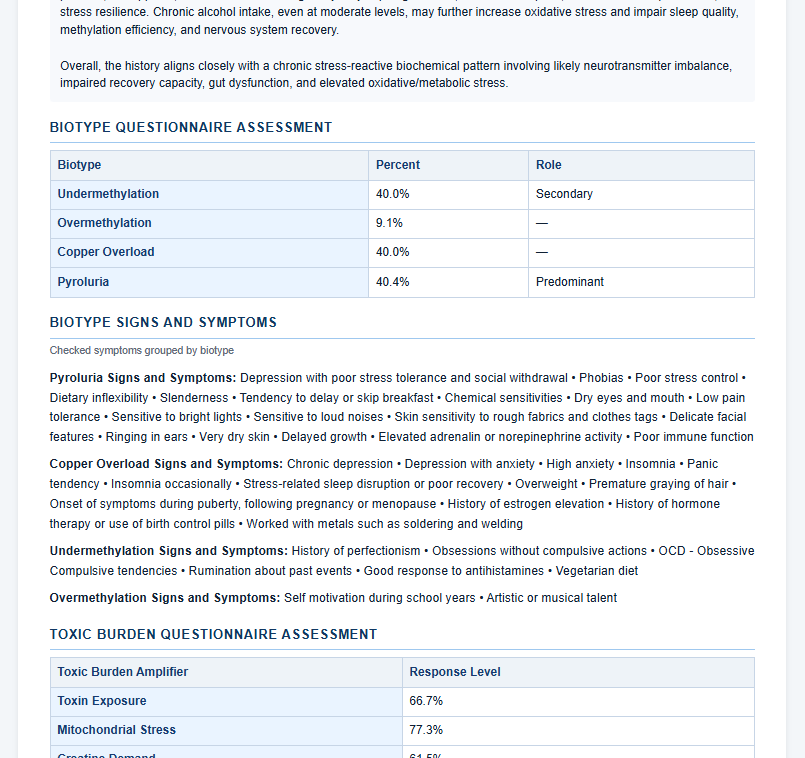
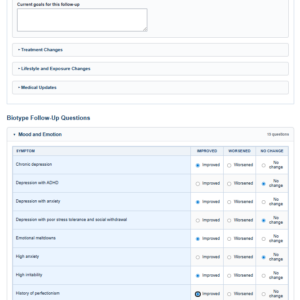
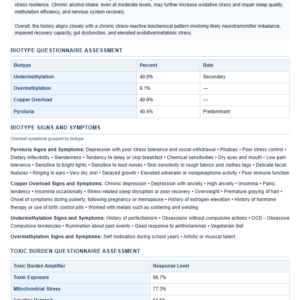
The questionnaire evaluates reported findings associated with undermethylation, overmethylation, copper overload, and pyroluria and produces a structured support score for each pattern.
The strongest Biotype assessment comes from comparing questionnaire findings, clinical history, treatment response, and objective laboratory results rather than relying on any one source of information.
What Is Included in the Walsh Protocol Biotype Assessment?
Biotype scores and the individual symptoms supporting each pattern are reviewed.
Relevant medical and psychiatric history, family history, medications, supplements, treatment response, and other important clinical information are considered.
Relevant biochemical laboratory findings are reviewed alongside the questionnaire and clinical presentation.
The most clinically relevant Walsh patterns and nutrient imbalances are identified and interpreted together.
The relevant findings are summarized with individualized nutrient and supplement recommendations.
The report is reviewed with Dr. Epstein and focused questions about the assessment and recommendations can be discussed.
Is the Walsh Protocol an Alternative to Psychiatric Medication?
The Walsh Approach provides a nutrient-based biochemical treatment strategy, but it should not be viewed as a reason to abruptly stop psychiatric medication.
Many patients seeking a Walsh Protocol consultation are already taking antidepressants, anxiety medications, stimulants, mood stabilizers, or other psychiatric medications. The initial priority is to understand and stabilize the biochemical picture while clinically necessary medications are continued.
When biochemical and nutrient status improve, medication needs can be reassessed with the prescribing clinician. Any medication reduction should be gradual and physician-supervised.
What if I Cannot Obtain Walsh Laboratory Testing?
Some patients—particularly international patients or those without access to specialized testing—may not be able to obtain the recommended Biotype labs.
The WalshDoc Questionnaire-Only Biotype Assessment + Supplement Plan uses the Biotype questionnaire, clinical history, and physician review without laboratory interpretation.
What if I Need Direct Methylation Testing and SAM/SAH Interpretation?
This consultation is primarily a Walsh Biotype assessment. It does not provide the broader direct methylation-pathway evaluation available through the separate Biotype + Methylation service.
Patients who need interpretation of SAM, SAH, methionine, homocysteine, glutathione, cysteine, cystathionine, betaine, taurine, and related methylation and transsulfuration markers should consider the Walsh Biotype + Methylation Assessment.
Can I Provide Laboratory Results From Another Doctor?
Standard Consultation — $299
Choose this option when relevant testing is ordered through Second Opinion Physician or the Biotype results are already provided in the expected format.
Consultation With Outside Labs — $399
Choose this option when laboratory results come from another physician, clinic, or laboratory and require additional organization and reconciliation across different formats, dates, reference ranges, or incomplete panels.
How Do I Start a Walsh Protocol Consultation?
The questionnaire provides the symptom-pattern information that will later be correlated with your clinical history and laboratory findings.
Take the WalshDoc Biotype Questionnaire View the Comprehensive Biotype PanelNot Sure Which Assessment You Need?
If you are uncertain whether you need the standard Walsh Biotype Assessment, questionnaire-only assessment, methylation testing, or a broader functional medicine consultation, you can discuss the available options before ordering.
Free Walsh Protocol Pre-ConsultationWalsh Protocol Consultation FAQs
What is a Walsh Protocol consultation?
A Walsh Protocol consultation combines clinical history, Walsh Biotype questionnaire findings, relevant laboratory testing, physician interpretation, and individualized nutrient recommendations to identify biochemical patterns that may influence mood, behavior, cognition, and treatment response.
How do I find a Walsh practitioner near me?
A local practitioner is not always necessary. Second Opinion Physician provides appropriate Walsh-oriented assessment by telemedicine, allowing patients to complete questionnaires, laboratory testing, physician review, and consultation remotely.
What is included in a Walsh Biotype assessment?
The assessment includes WalshDoc questionnaire review, clinical-history review, relevant Biotype laboratory interpretation, physician assessment, a written report, individualized nutrient and supplement recommendations, and a physician consultation.
Can nutrient therapy be used for depression?
Depression is one of the most common reasons patients seek a Walsh Biotype assessment. The goal is to identify the patient's biochemical pattern so nutrient recommendations can be individualized rather than using the same supplement approach for every patient.
Can nutrient therapy be used for anxiety?
Yes. Anxiety may occur with several different biochemical patterns, including copper overload, undermethylation, pyroluria, and overmethylation. The assessment helps determine which pattern appears most relevant.
Does the assessment evaluate copper overload?
Yes. Symptoms and clinical history are reviewed alongside zinc, copper, ceruloplasmin, and calculated free copper when those laboratory results are available.
Does the assessment evaluate undermethylation?
Yes. The Biotype questionnaire, clinical history, whole blood histamine, homocysteine, and related findings are considered when evaluating a traditional Walsh undermethylation pattern.
Can pyroluria be evaluated?
Yes. Questionnaire findings associated with pyroluria are assessed, and urinary pyrrole testing may be added when clinically appropriate.
Can I use outside laboratory results?
Yes. Select the outside-lab option when relevant laboratory results are being supplied from another physician, clinic, or laboratory.
What if I cannot obtain laboratory testing?
A separate questionnaire-only Walsh Biotype Assessment is available for patients who cannot obtain appropriate laboratory testing or who prefer to begin with symptom and clinical-history assessment.
Walsh Protocol Biotype Assessment (Initial Consultation)
This consultation is designed for individuals seeking a structured, nutrient-based approach to mental health, emotional wellness, behavioral symptoms, and biochemical imbalances.
The assessment uses principles developed by the Walsh Research Institute to identify underlying biochemical patterns that may contribute to depression, anxiety, OCD, ADHD, autism spectrum disorders, mood instability, behavioral symptoms, poor stress tolerance, insomnia, and cognitive difficulties.
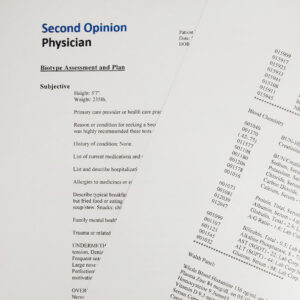
Dr. David Epstein reviews symptom patterns, medical history, family history, current medications, supplements, and available laboratory data to identify likely biotypes and nutrient imbalances. Particular attention is given to patterns involving methylation status, copper/zinc balance, pyroluria, toxic burden, inflammation, and nutrient deficiencies that may affect neurotransmitter function and emotional regulation.
This assessment includes:
- Detailed review of symptom questionnaire and clinical history
- Physician interpretation of available laboratory findings
- Identification of likely Walsh biotypes and biochemical patterns
- Written report with clinical impressions
- Personalized nutrition and supplement recommendations
- Guidance regarding additional testing when appropriate
- Approximately 20–30 minutes of physician review and consultation time
Common conditions evaluated:
- Depression
- Anxiety
- OCD
- ADHD
- Autism spectrum disorders
- Mood instability
- Behavioral concerns
- Stress intolerance
- Insomnia
- Brain fog and cognitive concerns
Important Notes
This service is intended as an initial Walsh Protocol assessment. It is not a comprehensive methylation consultation, functional medicine evaluation, hormone consultation, toxin evaluation, cardiovascular assessment, or medication-management service.
When additional laboratory interpretation is requested beyond the Walsh Protocol assessment, a more comprehensive consultation or follow-up service may be recommended.
This consultation provides educational and clinical guidance but does not replace emergency psychiatric care or ongoing treatment with a patient's personal physician.
Outside Laboratory Review Fee
Base consultation prices assume that testing was ordered through Second Opinion Physician or that only standard SOP lab results are being reviewed. If labs were ordered elsewhere, an additional outside lab review fee applies because outside reports vary in format, completeness, relevance, and clinical usefulness.
For Walsh or methylation assessments, the outside lab review add-on is $100.
For comprehensive functional medicine reviews involving multiple outside lab categories, the outside lab review add-on is $200.

Additional information
| Consultation | Consultation, Consultation with Labs Provided by Patient |
|---|