
Dysautonomia in Autism: Symptoms, Causes, Testing and Treatment
Dysautonomia is impaired regulation of automatic body functions. In children and adolescents, it may cause dizziness, rapid heart rate, fainting, heat intolerance, sweating changes, digestive symptoms, fatigue, headaches, sleep problems or exercise intolerance.
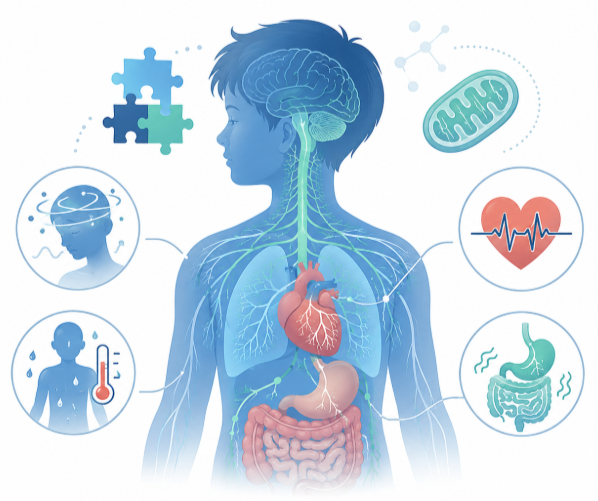
Dizziness, rapid heart rate, heat intolerance, fatigue, exercise intolerance, gastrointestinal symptoms and sudden loss of stamina can sometimes reflect dysautonomia in autistic children. The diagnosis begins with the autonomic pattern—but understanding why it is occurring may require looking deeper.
The more useful questions are which autonomic system is affected, whether the pattern represents POTS or another form of orthostatic intolerance, and what is driving it.
Low blood volume, dehydration, deconditioning, hypermobility, infection, medications and nutritional deficiencies should be considered first. In selected children, mitochondrial dysfunction, oxidative stress, methylation abnormalities and other epigenetic/metabolic pressures may contribute to the larger clinical picture.
What Does Dysautonomia Mean?
The autonomic nervous system regulates functions that normally occur without conscious effort, including heart rate, blood pressure, blood-vessel tone, sweating, temperature regulation, digestion, bladder function and aspects of breathing.
Dysautonomia is an umbrella term rather than one diagnosis. It describes impaired regulation of one or more of these automatic functions.
Circulation
Heart rate, blood pressure, vascular constriction and return of blood to the heart.
Temperature
Sweating, heat tolerance, skin circulation and the ability to regulate body temperature.
Gut & Bladder
Motility, nausea, early fullness, constipation, diarrhea and urinary function.
Stress Response
Sympathetic activation, parasympathetic recovery, sleep, startle and physiological adaptation.
What Can Dysautonomia Look Like in an Autistic Child?
Standing & Circulation
- Dizziness or lightheadedness
- Rapid heartbeat after standing
- Fainting or near-fainting
- Leg discoloration or blood pooling
- Weakness after standing
- Difficulty tolerating showers
Energy & Brain Function
- Fatigue
- Exercise intolerance
- Brain fog
- Headaches
- Visual dimming
- Poor recovery after exertion
Temperature, Gut & Stress
- Heat intolerance
- Abnormal sweating
- Nausea or abdominal discomfort
- Constipation
- Sleep disruption
- Increased sensory or stress reactions
A child who cannot easily describe dizziness, palpitations, nausea or presyncope may instead suddenly lie down, refuse a shower, avoid walking, become distressed after standing, appear pale or sweaty, or show a dramatic decline in function later in the day.
That behavior should not automatically be assumed to be psychiatric or behavioral.
POTS and Other Forms of Orthostatic Intolerance
| Pattern | Typical Feature | Important Distinction |
|---|---|---|
| POTS | Excessive sustained heart-rate increase after standing with orthostatic symptoms. | In adolescents, an increase of at least 40 beats per minute within 10 minutes is commonly used, without orthostatic hypotension and after excluding other causes. |
| Orthostatic Hypotension | Blood pressure falls significantly after standing. | This is different from POTS even though symptoms can overlap. |
| Vasovagal Syncope | A reflex fall in blood pressure and/or heart rate causes fainting. | Often occurs with prolonged standing, pain, emotional stress or medical procedures. |
| Inappropriate Sinus Tachycardia | Sinus heart rate remains abnormally elevated outside the standing response. | Fever, anemia, thyroid disease, dehydration and medication effects should be excluded. |
| Autonomic Neuropathy | Autonomic nerve fibers do not function normally. | May affect sweating, circulation, digestion, heart rate and bladder function. |
What Causes Dysautonomia?
Dysautonomia often reflects several interacting vulnerabilities rather than one universal cause.
Blood Volume
- Inadequate fluids
- Low sodium intake
- Blood loss or anemia
- Low calorie intake
Deconditioning
- Illness
- Prolonged inactivity
- Bed rest
- Reduced leg-muscle pump
Connective Tissue
- Joint hypermobility
- Hypermobility spectrum disorders
- Hypermobile EDS
- Venous pooling
Post-Infectious / Immune
- Viral illness
- Post-viral syndromes
- Long COVID
- Autoimmune autonomic neuropathy
Medication & Metabolic
- Stimulants
- Blood-pressure medications
- Thyroid disease
- Glucose instability
Cellular Stress
- Mitochondrial dysfunction
- Oxidative stress
- Inflammation
- Nutrient insufficiency
Mitochondria, ATP and Autonomic Regulation
The autonomic nervous system has substantial and continuous energy requirements. Neurons must maintain ion gradients, release neurotransmitters, regulate vascular tone and rapidly adapt circulation to changes in posture, temperature, digestion and stress.
All of these processes depend on ATP.
How Mitochondrial Stress May Amplify Dysautonomia
A child may have low blood volume, hypermobility, venous pooling, autonomic neuropathy or another primary autonomic problem with completely different treatment needs.
Mitochondrial evaluation becomes particularly relevant when dysautonomia occurs together with marked fatigue, exercise intolerance, poor recovery, heat intolerance, regression after illness or other evidence of impaired cellular resilience.
Could the Autonomic Problem Be Part of a Larger Epigenetic Pattern?
This is where dysautonomia can connect to the broader framework used throughout Second Opinion Physician.
A child may have a recognizable autonomic disorder and also have biochemical pressures that affect cellular energy, methylation, oxidative balance and neurological resilience.
When an undermethylation pattern is also present, we look beyond the label and ask what may be perpetuating it.
Mitochondrial Stress
Reduced ATP availability may affect autonomic adaptation while also placing pressure on ATP-dependent methylation pathways.
Creatine Demand
Creatine supports rapid ATP regeneration while endogenous creatine production consumes methyl groups.
Toxic Burden
Environmental or metabolic burden may increase oxidative stress, inflammation and detoxification demand.
Methylation Demand
Growth, inflammation, repair and chronic physiological stress may increase methyl-group requirements.
Impaired SAH Clearance
Elevated SAH can inhibit methyltransferase activity even when SAM production appears relatively adequate.
Dysautonomia may be one manifestation of physiological stress rather than the entire problem. The goal is not to call dysautonomia an “epigenetic disease,” but to identify measurable biochemical contributors that may be occurring alongside it.
Undermethylation, Copper and Walsh Biochemistry
The Walsh biotypes are not diagnostic categories for POTS or dysautonomia. They can, however, provide a useful biochemical framework when autonomic symptoms occur together with mood, behavioral, sensory or cognitive symptoms.
Undermethylation
Whole-blood histamine and direct methylation markers such as SAM and SAH can provide different information about methylation.
ATP availability, protein intake, zinc status, creatine demand and other metabolic factors may influence the larger methylation picture.
Copper & Zinc
Copper, ceruloplasmin and zinc can be measured when anxiety, irritability, sensory symptoms, hormonal history, oxidative stress or other clinical features suggest that copper-zinc balance may be relevant.
Pyroluria & Oxidative Stress
When clinically appropriate, urinary pyrroles and nutrient assessment may help identify zinc/B6 depletion or antioxidant stress that could coexist with the autonomic presentation.
The purpose is not to treat every autistic child with the same methylation or nutrient protocol. Treatment should follow the measured biochemical pattern.
Which Tests Are Used for Dysautonomia?
A mitochondrial or functional panel should not replace basic dysautonomia evaluation. The first objective is to document the autonomic abnormality and exclude common medical explanations.
| Test | What It Evaluates | Clinical Use |
|---|---|---|
| Orthostatic Vital Signs | Heart rate and blood pressure while supine and during up to 10 minutes of standing. | First-line assessment for POTS, orthostatic hypotension and orthostatic intolerance. |
| ECG | Cardiac rhythm and conduction. | Helps exclude rhythm and conduction abnormalities. |
| Tilt-Table Testing | Controlled heart-rate and blood-pressure response to upright tilt. | May be useful when standing measurements are unclear or syncope requires additional evaluation. |
| Autonomic Reflex Testing | Adrenergic, cardiovagal and sweating responses. | Useful when autonomic neuropathy or complex dysautonomia is suspected. |
| CBC, Ferritin, CMP | Anemia, iron status, electrolytes, liver and kidney function. | Identifies common causes or aggravators of weakness, dizziness and tachycardia. |
| Thyroid & Glucose | Endocrine and metabolic contributors. | Helps distinguish autonomic symptoms from thyroid or glucose disorders. |
A Focused Mitochondrial Testing Strategy
When fatigue, exercise intolerance, heat intolerance, muscle symptoms, poor recovery or regression after illness suggest a cellular-energy component, mitochondrial testing can be added to—not substituted for—the autonomic workup.
Core Cellular-Energy Testing
Consider lactate/pyruvate, CK and free/total carnitine when clinically appropriate.
Deeper Mitochondrial Investigation
Acylcarnitines, GDF-15 and other studies may be considered when symptoms or initial abnormalities justify further evaluation.
Broader Metabolic Assessment
Organic acids and comprehensive nutritional/metabolic testing may help identify Krebs-cycle, nutrient, oxidative, gut or metabolic contributors.
Testing is most useful when it identifies a measurable abnormality that changes treatment or provides a baseline that can later be retested.
When Should Methylation Testing Be Added?
Methylation testing addresses a different question from mitochondrial testing.
It becomes particularly useful when the phenotype suggests undermethylation, there is an unusual response to folate or methyl donors, whole-blood histamine suggests a Walsh methylation pattern, or the clinical picture raises the possibility of an epigenetic driver.
Traditional Walsh Assessment
Whole-blood histamine, copper, ceruloplasmin, zinc, homocysteine and urinary pyrroles when appropriate can help identify the traditional biochemical patterns.
Direct Methylation Assessment
SAM, SAH, SAM/SAH ratio, methionine, homocysteine and related metabolites can help distinguish reduced methyl-donor capacity from methylation inhibition.
How Is Pediatric Dysautonomia Treated?
Treatment begins with the autonomic disorder itself. A large supplement program should not replace basic measures for blood volume, circulation, conditioning or the specific dysautonomia subtype.
Fluids & Sodium
- Consistent hydration
- Additional sodium when medically appropriate
- Electrolyte solutions in selected patients
- Consider kidney and blood-pressure issues
Physical Reconditioning
- Begin recumbent when necessary
- Build leg and core strength gradually
- Reduce prolonged inactivity
- Use rehabilitation support when needed
Daily Management
- Compression when tolerated
- Slow position changes
- Cooler showers
- Heat avoidance
- Regular meals and adequate protein
Medication
Depending on the dysautonomia subtype and cardiovascular findings, clinicians may use medications such as fludrocortisone, midodrine, beta blockers, ivabradine or pyridostigmine. These medications are not interchangeable, and treatment depends on blood pressure, heart rate, age, hydration status and the specific autonomic pattern.
Targeted Nutrient and Metabolic Support
Once deficiencies or metabolic abnormalities are identified, treatment can be directed toward the affected pathway rather than giving every patient the same “mitochondrial” supplement combination.
Cellular Energy
Nutrient cofactors, carnitine status, creatine/ATP buffering and other energy pathways may be addressed when testing and clinical findings support their use.
Oxidative Stress
Antioxidant reserve, glutathione pathways, inflammation and toxic burden may be considered when oxidative stress appears clinically relevant.
Methylation
Low SAM, elevated SAH, homocysteine, Walsh biotype and folate response should be distinguished before selecting methylation-directed treatment.
There is no universal dysautonomia supplement protocol.
A child with low blood volume, another with hyperadrenergic POTS and another with mitochondrial disease may have similar symptoms but require very different treatment.
Test → Treat → Retest
When Is Urgent Evaluation Needed?
- Chest pain or severe shortness of breath
- Fainting during exercise
- Sustained abnormal heart rhythm
- New weakness, paralysis or seizures
- Major neurological change
- Severe dehydration or inability to maintain intake
- Unexplained weight loss
- Family history of sudden cardiac death
- Rapid developmental regression
- Symptoms suggesting severe anemia, infection or metabolic disease
When Dysautonomia, Autism and Undermethylation Overlap
Dysautonomia should first be diagnosed and treated as an autonomic disorder. But when it occurs alongside fatigue, exercise intolerance, oxidative stress, unusual nutrient responses, behavioral symptoms or an undermethylation phenotype, it may be useful to investigate the larger biochemical picture.
The Biotype + Undermethylation Assessment is designed to identify the traditional Walsh patterns while also looking for clues to the five epigenetic drivers that may be perpetuating undermethylation—including mitochondrial stress.