
Five Biotypes of Depression: The Walsh Approach to Biochemical Treatment Differences
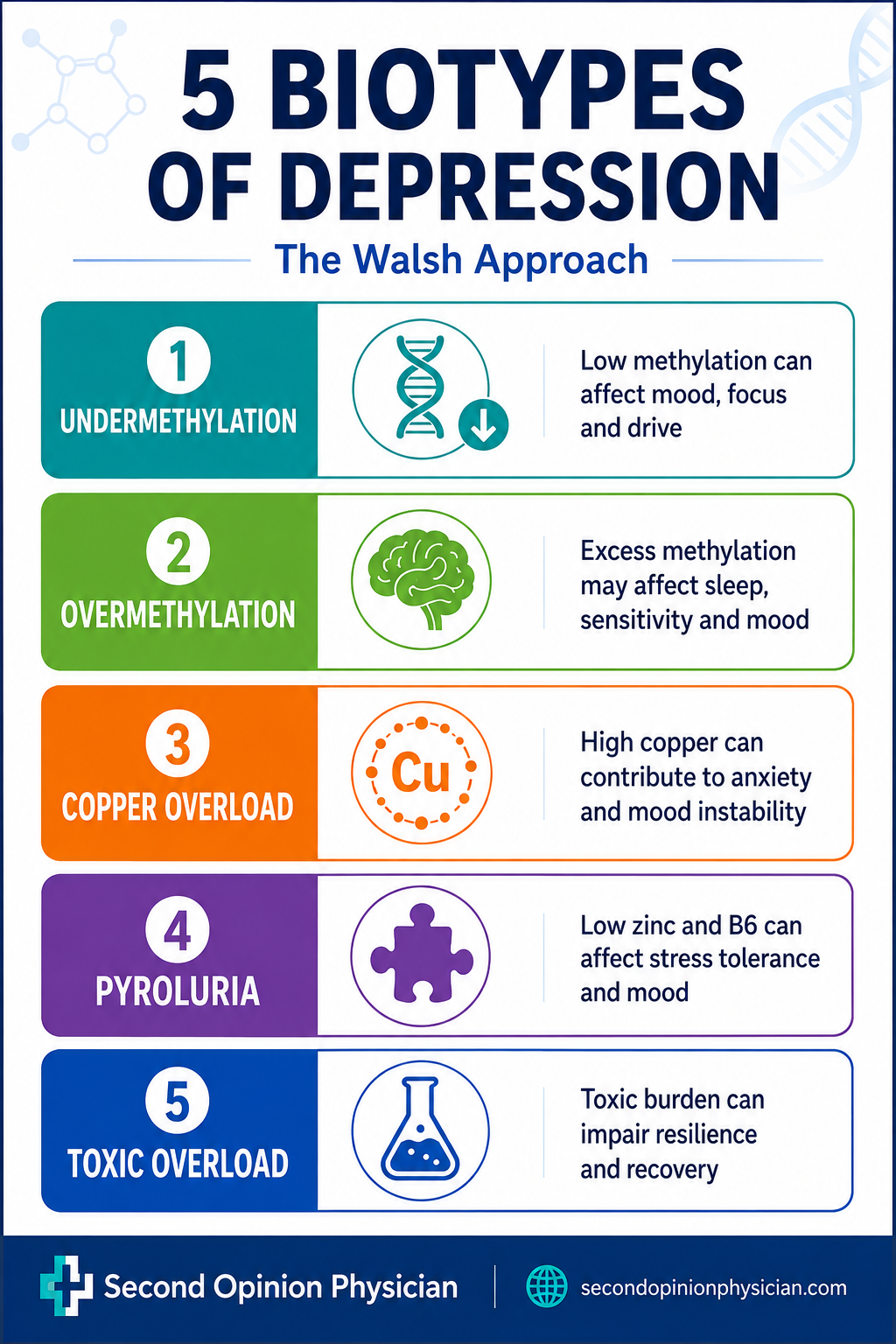
The Walsh Approach recognizes that depression is not one uniform biochemical condition. Patients with similar symptoms may have very different patterns involving undermethylation, overmethylation, copper overload, pyroluria or toxic overload—and may therefore respond differently to antidepressants, folate, zinc, vitamin B6 and other nutrient therapies. This guide explains the five Walsh depression biotypes, their common traits and laboratory focus, while introducing how WalshDoc can further evaluate epigenetic factors that may contribute to undermethylation and impaired methylation.

Why the Five Biotypes of Depression Matter
The Walsh Approach recognizes recurring biochemical patterns that can produce similar depressive symptoms through different mechanisms. These patterns help explain why one patient may improve with an antidepressant or nutrient while another develops anxiety, agitation, insomnia, emotional flattening or no meaningful response.
The five-biotype model combines symptom patterns with targeted laboratory testing. It is not a replacement for psychiatric diagnosis. It is a way to identify biochemical differences that may affect medication response, nutrient selection and long-term treatment strategy.
Take the Biotype Questionnaire View Walsh Protocol Testing Free Pre-ConsultationA core Walsh principle: nutrient therapy must match the biochemical pattern. A nutrient that helps one biotype may aggravate another. This is why the patient’s symptom pattern, prior treatment response and laboratory findings should be interpreted together.
The Five Biotypes of Depression
Undermethylation
Undermethylation is commonly associated with low functional monoamine activity, especially serotonin and dopamine. Many patients show perfectionism, obsessive or repetitive thinking, rumination, inner tension, seasonal allergies, strong achievement drive or anger under stress.
In the Walsh model, elevated whole-blood histamine is an important clue. Folate may worsen depression or anxiety in susceptible undermethylated patients by increasing serotonin and dopamine transporter activity, while selected patients may respond well to serotonin reuptake inhibition.
Common laboratory focus
- Whole-blood histamine
- SAM, SAH and SAM:SAH ratio
- Homocysteine and methionine
- Zinc, copper and ceruloplasmin
Overmethylation
Overmethylation is often associated with high or poorly regulated monoamine activity, nervous energy, anxiety, panic, sensory sensitivity, chemical sensitivity, insomnia and emotional reactivity. Low whole-blood histamine can be an important marker in this pattern.
Patients may tolerate antidepressants, methyl donors and stimulating nutrients differently from undermethylated patients. Folate and niacin may be calming in selected cases, while SAMe, methionine or serotonin precursors may be poorly tolerated.
Common laboratory focus
- Whole-blood histamine
- Methylation markers when clinically useful
- Zinc and copper balance
- Medication and supplement sensitivity history
Copper Overload
Copper overload is characterized by excess free copper relative to zinc and ceruloplasmin. It often presents with anxiety-dominant depression, panic, emotional volatility, irritability, poor stress tolerance, insomnia and hormone-related worsening.
Copper can increase norepinephrine activity. The pattern is especially important in patients with low zinc, postpartum depression, estrogen-related mood changes or marked anxiety accompanying depression.
Common laboratory focus
- Serum copper
- Plasma zinc
- Ceruloplasmin
- Calculated non-ceruloplasmin-bound copper pattern
Pyroluria
Pyroluria reflects a stress-related vulnerability associated with increased zinc and vitamin B6 needs. It is often accompanied by poor stress tolerance, inner tension, social anxiety or withdrawal, irritability under pressure and slow recovery after stressful events.
Physical clues may include poor wound healing, white spots on the fingernails, frequent infections, poor dream recall and difficulty tolerating prolonged emotional or physical stress.
Common laboratory focus
- Urinary pyrroles or HPL
- Zinc, copper and ceruloplasmin
- B6-related symptom and response pattern
- Oxidative-stress and inflammation context
Toxic Overload: Metal Burden and Elevated SAH
In the Walsh framework, toxic overload primarily refers to toxic-metal burden and methylation inhibition associated with elevated SAH. SAH is a potent inhibitor of methylation and may remain elevated even when methyl donors appear adequate.
A key biochemical concern is impaired movement through the reversible SAH hydrolase step. Forward clearance depends on adequate disposal of homocysteine and especially adenosine. Zinc is relevant because normal adenosine metabolism depends on zinc-supported enzymatic activity.
This is not simply a general glutathione or oxidative-stress category. The defining Walsh concern is toxic burden, impaired SAH disposal and the resulting inhibition of methylation.
Common laboratory focus
- SAH and SAM:SAH ratio
- Homocysteine and methionine context
- Zinc and copper balance
- Toxic-metal exposure and clearance history
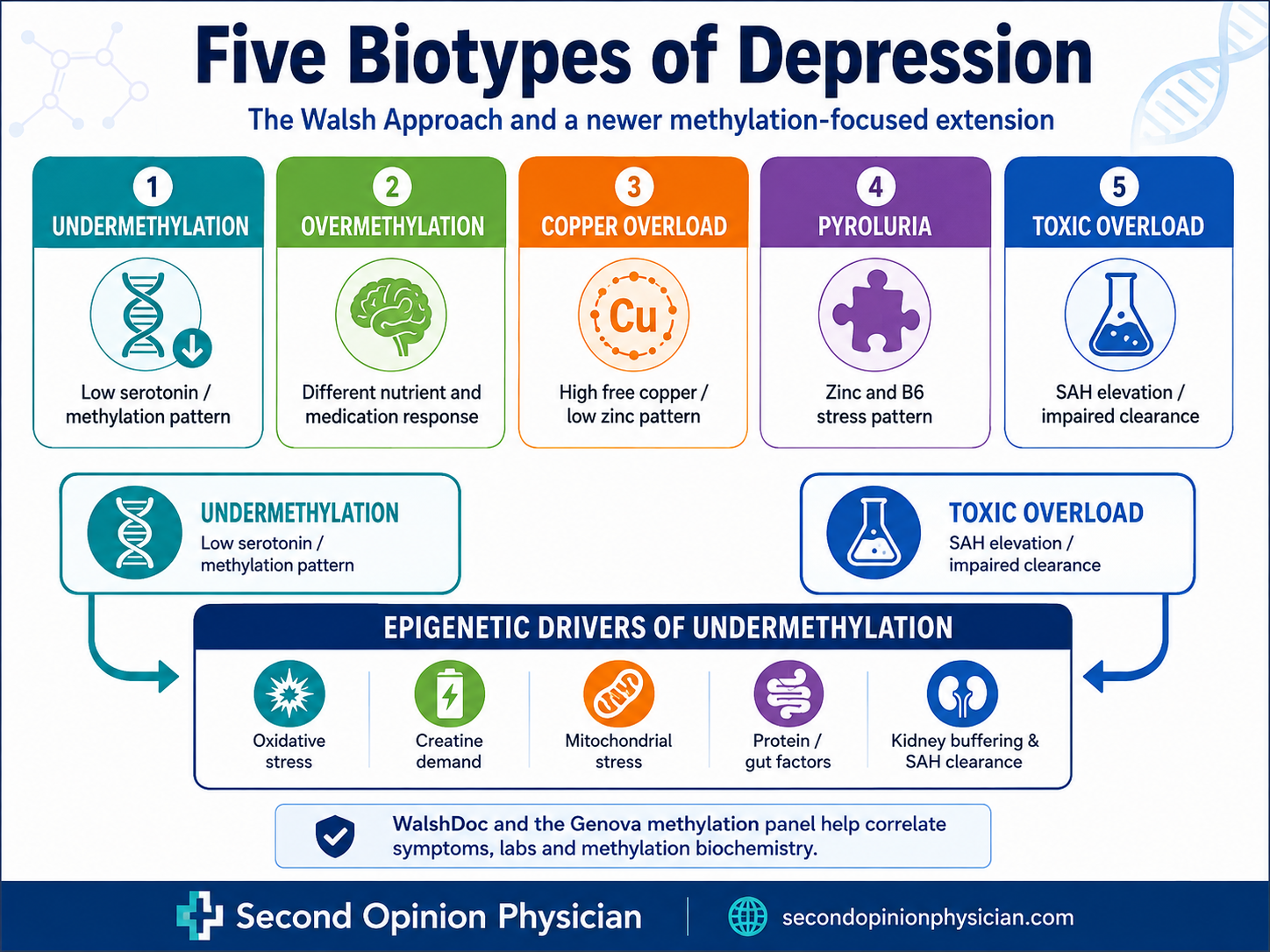
Epigenetic Drivers of Undermethylation
Second Opinion Physician and WalshDoc extend the Walsh framework by asking why an undermethylation pattern is present and why SAM may be low or SAH elevated. This is a separate analytical layer—not a sixth Walsh biotype.
The combined questionnaire and Genova methylation panel help examine factors that may influence methylation performance, including SAH disposal, zinc-dependent adenosine metabolism, mitochondrial strain, kidney buffering capacity, creatine demand, oxidative stress, glutathione demand, protein intake and absorption, gut function, inflammation and environmental exposure.
WalshDoc calculates the relative influence of these epigenetic drivers so the laboratory pattern can be interpreted in context and used to develop a more targeted nutrient-therapy plan.
Learn about the Epigenetic Drivers of Undermethylation
Take the Biotype + Methylation Questionnaire
Biotype Comparison
| Biotype | Common pattern | Testing direction |
|---|---|---|
| Undermethylation | Perfectionism, rumination, obsessive thinking, inner tension, allergies, low mood and possible previous SSRI benefit | Whole-blood histamine, SAM/SAH, homocysteine, methionine and zinc-copper status |
| Overmethylation | Anxiety, panic, sensory sensitivity, chemical sensitivity, insomnia and emotional reactivity | Whole-blood histamine, methylation context, zinc-copper status and medication-sensitivity history |
| Copper Overload | Anxiety-dominant depression, irritability, panic, postpartum or hormone-related worsening and poor stress tolerance | Copper, zinc, ceruloplasmin and calculated free-copper pattern |
| Pyroluria | Poor stress control, social withdrawal, inner tension, slow recovery and zinc/B6 depletion pattern | Urinary pyrroles, zinc, copper, ceruloplasmin and B6-related response pattern |
| Toxic Overload | Toxic-metal burden, elevated SAH, methylation inhibition, cognitive slowing and poor treatment response | SAH, SAM:SAH ratio, homocysteine, methionine, zinc status and toxic-exposure context |
Laboratory-Guided Nutrient Therapy
Walsh-style treatment is not a generic supplement list for depression. It depends on matching the nutrient strategy to the patient’s biochemical pattern and avoiding nutrients that may aggravate the wrong biotype.
Whole-Blood Histamine
Used as an important functional clue when distinguishing classic undermethylation from low-histamine patterns.
Copper, Zinc and Ceruloplasmin
Helps identify copper-zinc imbalance and estimate the free-copper pattern associated with anxiety, panic, irritability and insomnia.
SAM, SAH and Related Analytes
The Genova methylation panel can distinguish low SAM from elevated SAH and provide additional analytes that help clarify the methylation pattern.
Pyrroles and B6/Zinc Demand
Pyrrole testing and symptom patterns can identify increased zinc and vitamin B6 needs associated with stress intolerance.
Vitamin D, CBC and CMP
These tests add context for anemia, inflammation, immune regulation, liver and kidney function, protein status, glucose and mineral balance.
Epigenetic Driver Analysis
WalshDoc uses the combined questionnaire and methylation panel to examine factors that may contribute to low SAM, elevated SAH or impaired methylation.
How WalshDoc Extends the Assessment
WalshDoc preserves the five-biotype framework while adding a deeper analysis of undermethylation. The questionnaire evaluates symptoms, physical traits, treatment response and environmental or metabolic influences. The Genova methylation panel then helps correlate those findings with SAM, SAH, methionine, homocysteine and related analytes.
The goal is not to rename the Walsh biotypes. It is to determine which factors may be driving or maintaining the undermethylation pattern and to use that information to prioritize nutrient therapy, dietary changes, clearance support and follow-up testing.
Read the Epigenetic Drivers of Undermethylation guide | Start the combined questionnaire
Start With a Questionnaire or Laboratory Panel
Biotype + Methylation Questionnaire
Screen the five Walsh biotypes and assess the likely influence of epigenetic drivers on undermethylation.
Start the QuestionnaireWalsh Protocol Testing
Review laboratory panels designed to support biotype and methylation interpretation.
View Test PanelsFree Pre-Consultation
Ask which questionnaire, testing panel or consultation best fits the symptom pattern and available laboratory results.
Schedule a CallFAQ's Nutrient Therapy in Depression - The Five Biotypes of Depression
Why Is the Walsh Protocol a Keystone for Nutrient Therapy in Depression and Anxiety?
The Walsh Protocol is a foundational framework for nutrient therapy for mood disorders because it links symptoms to measurable biochemical patterns. It explains why nutrients for depression and anxiety must be selected, avoided, or titrated based on biotype—and why generic supplementation often fails or worsens symptoms.
How Does Nutrition and Depression Differ by Biotype?
In the Walsh model, nutrition and depression are inseparable, but nutrition is never generic. The same nutrient may help one biotype and harm another. Effective treatment depends on understanding how diet and supplements interact with methylation, neurotransmitter transporters, mineral balance, and detoxification in each biotype.
What Is Undermethylation Depression and How Does It Affect Mood?
Undermethylation depression is characterized by low functional serotonin and dopamine activity, high histamine, and a low SAM:SAH ratio. These individuals often experience rumination, rigidity, seasonal depression, and inner tension. Certain nutrients—especially folates—can worsen symptoms by further reducing neurotransmitter availability.
What Is Overmethylation and Why Is It Linked to Anxiety and Panic?
Overmethylation depression and anxiety involve efficient or excessive methylation, low histamine, and heightened serotonergic activity. Panic, sensory sensitivity, insomnia, and emotional overstimulation are common. This biotype often responds differently to nutrients for depression and anxiety than undermethylation, highlighting the need for correct classification.
How Does Copper Overload Cause Anxiety and Emotional Instability?
Copper overload depression is driven by excess free copper relative to zinc and ceruloplasmin. Copper increases norepinephrine activity and weakens inhibitory control, producing anxiety, panic, agitation, and insomnia. Hormonal factors, genetics, and zinc deficiency commonly contribute to this biotype.
Why Is Pyrrole Disorder So Closely Linked to Copper and Zinc Imbalance?
Pyrrole disorder (pyroluria) causes chronic loss of zinc and vitamin B6, which destabilizes copper regulation and often leads to secondary copper overload. The clinical impact depends less on pyrroles alone and more on the resulting zinc, copper, and ceruloplasmin imbalance, making mineral assessment essential before treatment.
What Is Toxic Overload Depression and Why Do Supplements Sometimes Fail?
Toxic overload depression occurs when inflammation, metals, or environmental stress elevate SAH and suppress methylation efficiency. Even with adequate nutrients, methylation cannot function properly. This explains fatigue-dominant depression, brain fog, and poor response to supplements unless detoxification pathways are supported.
Why Can the Wrong Nutrients Worsen Depression or Anxiety?
In nutrient psychiatry, nutrients act like regulators, not vitamins. Folates, methyl donors, zinc, niacin, and amino acids can all worsen symptoms if used in the wrong biotype. The Walsh Protocol explains why supplements must be individualized to avoid increasing anxiety, depression, or emotional instability.
Why Is Individualized Nutrient Therapy Essential for Mental Health?
The Walsh Protocol shows that nutrient deficiency and mental health are governed by biochemical individuality. Identifying the correct biotype allows nutrients to be used precisely—to stabilize mood, reduce anxiety, and restore resilience—rather than applied generically with unpredictable or harmful effects.