
Foods High in Glutamate: Food List, Hidden Sources & Brain Effects
Glutamate is an important excitatory neurotransmitter involved in learning, memory and normal brain signaling, but some people appear more sensitive to high dietary glutamate exposure. Foods naturally rich in glutamate—and processed foods containing MSG, yeast extract, hydrolyzed proteins and other concentrated sources—may aggravate symptoms such as anxiety, OCD-like rumination, insomnia, headaches, irritability or sensory overstimulation in susceptible individuals.
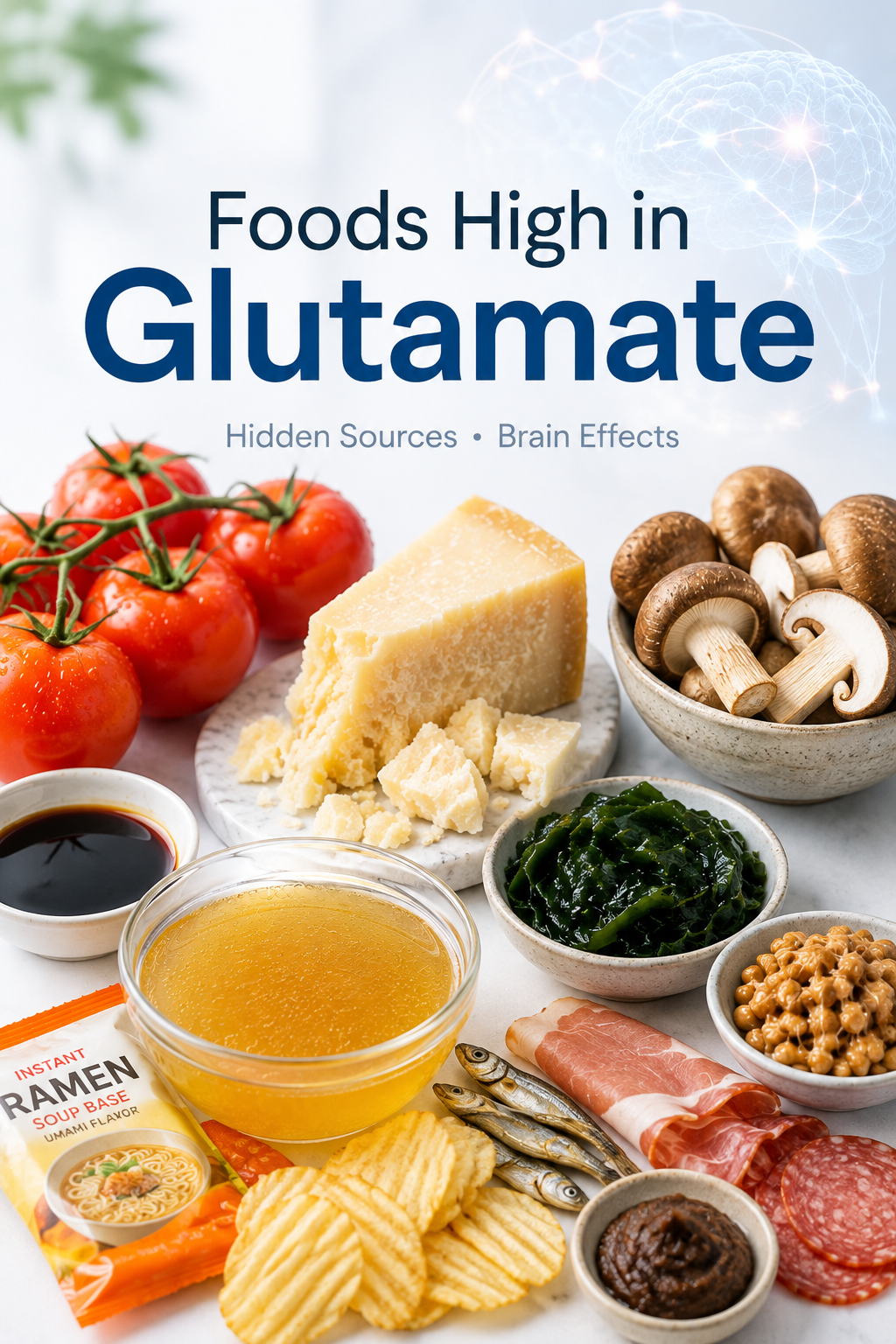
Foods High in Glutamate: Food List, Hidden Sources & Brain Effects
Glutamate is an important excitatory neurotransmitter involved in learning, memory and normal brain signaling, but some people appear more sensitive to high dietary glutamate exposure.
Foods naturally rich in glutamate—and processed foods containing MSG, yeast extract, hydrolyzed proteins and other concentrated sources—may aggravate symptoms such as anxiety, OCD-like rumination, insomnia, headaches, irritability or sensory overstimulation in susceptible individuals.
Why High-Glutamate Foods Can Be a Problem
Glutamate is an excitatory neurotransmitter involved in learning, memory, attention and normal brain signaling. The problem is not glutamate itself. Problems may occur when excitatory signaling is excessive or when glutamate sensitivity overlaps with inflammation, poor clearance, toxic burden, histamine reactivity, gut dysfunction or an already overstimulated nervous system.
In sensitive individuals, high-glutamate foods may add to an already overstimulated nervous system. Symptoms can include racing thoughts, intrusive thoughts, rumination, anxiety, irritability, insomnia, headaches, sensory sensitivity or feeling “wired but tired” after certain meals.
This can be especially relevant when glutamate sensitivity overlaps with histamine intolerance, toxic burden, mitochondrial stress, undermethylation, pyroluria, gut dysbiosis, inflammation or OCD symptoms.
Why glutamates in food can be a problem
Glutamate is an excitatory neurotransmitter. In a balanced brain, glutamate is essential for learning, signaling, memory, and alertness. The problem is not glutamate itself. The problem is excess stimulation, poor clearance, inflammatory priming, toxic burden, histamine reactivity, gut stress, or an already overactive nervous system.
In sensitive patients, glutamate foods can add fuel to an already overstimulated system. Patients may describe racing thoughts, intrusive thoughts, OCD-like loops, anxiety, insomnia, agitation, headaches, sensory sensitivity, or feeling “wired but tired” after high-glutamate meals.
This is especially relevant when glutamate sensitivity overlaps with histamine intolerance, toxic burden, mitochondrial stress, undermethylation, pyroluria, gut dysbiosis, inflammation, or OCD symptoms.
Common symptoms linked to glutamate sensitivity
OCD and intrusive thoughts
Glutamate and NMDA overactivity can aggravate repetitive thought loops, mental scanning, rumination, and intrusive thoughts in sensitive patients.
Anxiety and irritability
High glutamate foods can worsen nervous-system stimulation, tension, agitation, panic tendency, or emotional reactivity.
Insomnia and wired fatigue
Some patients feel mentally overstimulated at night after MSG, yeast extract, aged foods, broths, or highly seasoned processed foods.
Brain fog, headaches, and sensory symptoms
Glutamate reactions can overlap with histamine, inflammation, toxic burden, migraine-like symptoms, and sensory sensitivity.
Foods high in glutamates naturally
Some foods contain naturally occurring glutamates. These foods are not “bad” for everyone, but they can be important to track when a patient is trying to identify dietary triggers for OCD, anxiety, insomnia, headaches, histamine symptoms, or nervous-system overstimulation.
Foods with higher natural glutamate levels
- Tomatoes and tomato products: ripe tomatoes, tomato paste, tomato sauce, and tomato juice
- Aged cheeses: parmesan, roquefort, blue cheese, sharp cheese, and long-aged cheeses
- Soy sauce and fermented soy: soy sauce, tamari, miso, and some soy-based products
- Mushrooms: especially mature or concentrated mushroom products
- Broths and stocks: meat, poultry, fish, and bone broths, especially long-simmered
- Fish sauce and anchovies: concentrated savory foods rich in umami compounds
- Dried seaweed: kelp, kombu, and other seaweed products used for umami flavor
- Cured or aged meats: prosciutto, cured ham, salami, aged meats, and dried meats
- Grapes, walnuts, and peas: naturally higher-glutamate foods in some sensitive patients
Foods that can become higher in glutamates with aging
Glutamate content can rise as proteins break down, foods ferment, leftovers age, or foods spoil. This is one reason some patients react more strongly to leftovers, aged foods, fermented foods, broths, or slow-cooked meals than to freshly prepared food.
Foods that may become more reactive over time
- Leftover meats, poultry, fish, and slow-cooked dishes
- Cheese that continues to age after opening
- Fish as it ages or begins to spoil
- Homemade broths and stocks stored for long periods
- Tomatoes, mushrooms, and vegetables as they age or spoil
- Beans, legumes, grains, sourdough, and fermented foods
Fresh food may be better tolerated
Patients with glutamate sensitivity often do better testing freshly cooked, simpler meals first before adding aged, fermented, concentrated, leftover, or heavily seasoned foods.
- Cook smaller portions
- Freeze leftovers promptly if needed
- Track symptoms after broths, sauces, aged meats, and fermented foods
- Watch nighttime symptoms after high-glutamate dinners
Hidden glutamates on food labels
MSG is only one form. Hidden glutamates often appear under ingredient names that sound harmless or natural. Patients trying to reduce glutamate foods should learn the most common label terms.
Common names for added glutamates
- Monosodium glutamate / MSG
- Hydrolyzed vegetable protein
- Hydrolyzed soy, wheat, corn, or pea protein
- Autolyzed yeast extract
- Yeast extract, torula yeast, brewer’s yeast extract
- Natural flavors, meat flavor, chicken flavor, beef flavor
Protein-derived glutamate sources
- Soy protein isolate or soy protein concentrate
- Textured vegetable protein / TVP
- Wheat gluten
- Whey protein isolate or concentrate
- Collagen peptides and gelatin in some sensitive patients
- Caseinate, sodium caseinate, calcium caseinate
Ingredients that intensify savory flavor
- Disodium inosinate
- Disodium guanylate
- Calcium glutamate
- Magnesium glutamate
- Potassium glutamate
- Monoammonium glutamate
Where hidden glutamates often appear
- Flavor packets, seasoning blends, bouillon cubes, and soup bases
- Chips, crackers, instant noodles, frozen meals, and boxed dinners
- Salad dressings, barbecue sauce, teriyaki sauce, gravy mixes, and dipping sauces
- Deli meats, sausages, jerky, meat substitutes, and marinated meats
Most common glutamate foods in everyday diets
Common high-glutamate processed foods
- Potato chips, flavored tortilla chips, flavored popcorn, and seasoned crackers
- Instant noodles, flavor packets, boxed rice mixes, and packaged meal kits
- Frozen pizza, boxed mac and cheese, instant mashed potatoes, and flavored beans
- Jerky, flavored pretzels, pita chips, rice cakes, and savory snack foods
Savory sauces and broths
- Bouillon cubes, canned soups, broths, stocks, and gravy mixes
- Soy sauce, teriyaki sauce, barbecue sauce, hot sauce, and dipping sauces
- Salad dressings, flavored mayonnaise, seasoning mixes, and marinade packets
- Fish sauce, miso, yeast extract spreads, and umami seasoning blends
Aged, cured, flavored, and processed foods
- Processed cheese, cheese dips, aged cheeses, and flavored cream cheese
- Sausages, deli meats, flavored turkey or ham, bacon bits, and seasoned burger patties
- Marinated poultry, flavored seafood, meatballs, and plant-based meat substitutes
- Protein powders, meal replacement shakes, and flavored nutrition products
Foods that look clean but may still trigger
- Flavored waters, teas, coffee blends, and specialty beverages
- Flavored oatmeal packets and instant breakfast mixes
- Seasoned vegetable dips and “natural flavor” snack foods
- Health foods with yeast extract, protein isolate, collagen, or flavor concentrates
Glutamate, histamine, toxic burden, and OCD overlap
Glutamate sensitivity rarely exists in isolation. It often overlaps with other biochemical and functional patterns that Second Opinion Physician evaluates through the Walsh Approach and WalshDoc questionnaires.
Histamine and methylation
Patients with high histamine or undermethylation patterns may also describe obsessive thinking, allergies, tension, and food reactivity.
Toxic burden and inflammation
Toxic burden and inflammation can increase oxidative stress and make the brain more reactive to excitatory inputs.
OCD and NMDAR activity
OCD symptoms may involve glutamate/NMDA overactivity, metabolic stress, inflammation, and methylation-related patterns.
Gut and immune triggers
Gut dysbiosis, immune activation, histamine reactions, and inflammatory foods can amplify food-triggered brain symptoms.
How to test whether glutamate foods are a problem
Related resources and next steps
Glutamate and OCD
Read how glutamate, NMDAR activity, methylation, and biochemical patterns may relate to OCD symptoms.
Read OCD ArticleHistamine and Undermethylation
Learn how whole blood histamine is used in the Walsh Approach to evaluate undermethylation patterns.
Read Histamine ArticleToxic Burden Questionnaire
Use WalshDoc when food reactions, chemical sensitivity, inflammation, and detoxification stress may overlap.
Toxic Burden AssessmentStart a Functional Review
Use the questionnaire hub if diet, glutamate, histamine, OCD, toxic burden, or metabolic patterns are part of a broader case.
Questionnaire HubFrequently asked questions
What foods are high in glutamates?
Foods high in glutamates include aged cheeses, soy sauce, fermented soy, mushrooms, tomatoes, broths, stocks, fish sauce, seaweed, anchovies, cured meats, bone broth, and many seasoned processed foods.
Is MSG the only hidden glutamate?
No. Hidden glutamates may appear as yeast extract, autolyzed yeast, hydrolyzed proteins, natural flavors, meat flavors, protein isolates, caseinate, disodium inosinate, and disodium guanylate.
Can glutamate foods worsen OCD symptoms?
In sensitive patients, glutamate foods can worsen mental overstimulation, rumination, intrusive thoughts, insomnia, anxiety, or OCD-like symptoms.
Do glutamate foods affect everyone?
No. Many people tolerate glutamate foods well. The issue is individual sensitivity, especially when glutamate reactions overlap with histamine, toxic burden, inflammation, gut dysfunction, or methylation problems.
This page is educational and does not diagnose food sensitivity, OCD, histamine intolerance, toxic burden, or neurologic disease. Severe psychiatric symptoms, neurologic symptoms, allergic reactions, or rapid clinical changes should be reviewed with a qualified clinician.