
Low Ceruloplasmin: Symptoms, Causes, Free Copper Calculation & How to Increase It
Low ceruloplasmin can mean very different things depending on your total copper, zinc, nutrition, liver function, kidney function and symptoms. It may occur with true copper deficiency, excessive zinc, malabsorption, low protein intake, vitamin A deficiency, liver or kidney problems, or inherited copper disorders. In other cases, ceruloplasmin may be too low relative to total copper, producing a higher free copper calculation even when serum copper itself is not low.
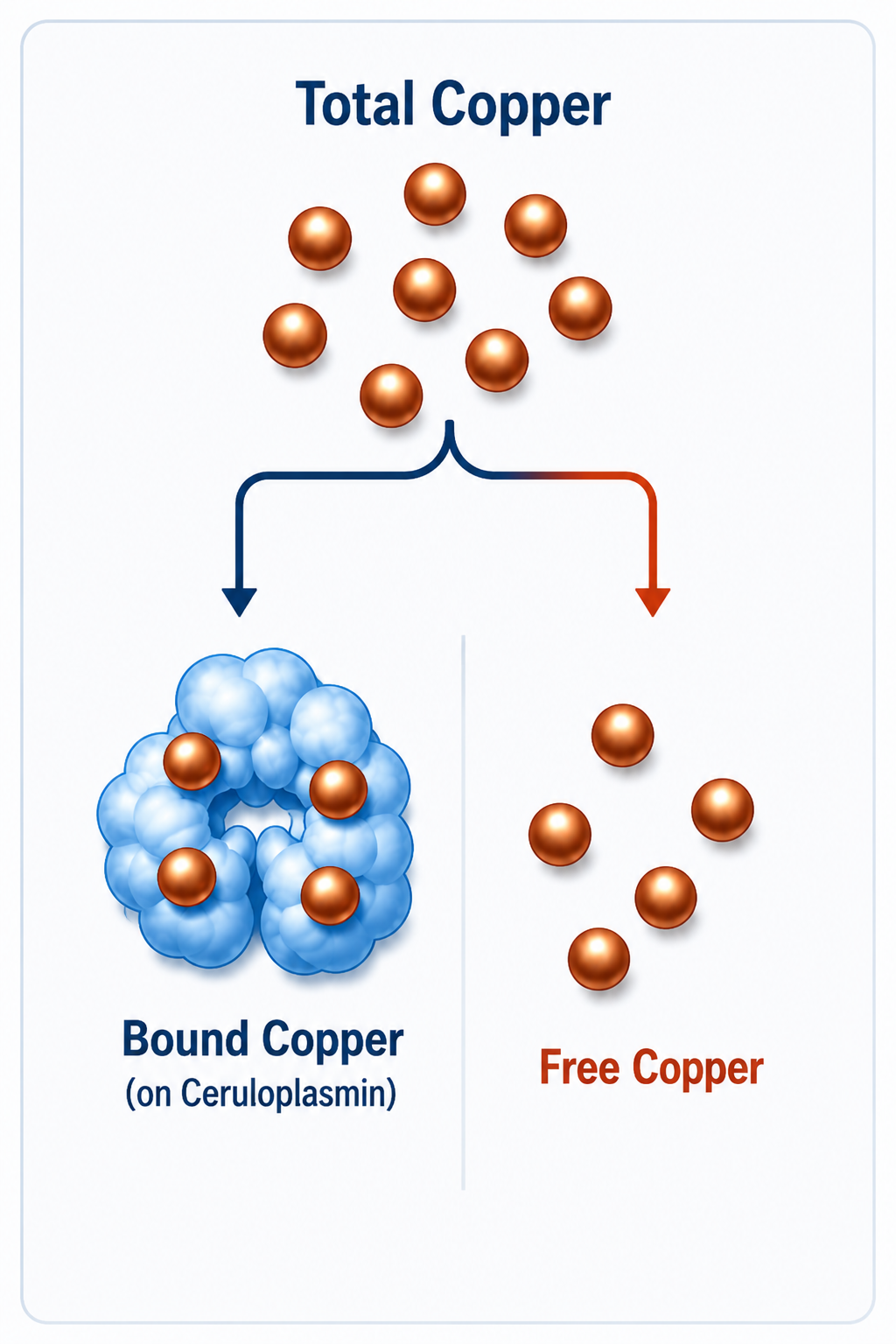
The key is not simply whether ceruloplasmin is below the laboratory range. The more useful question is whether you have low copper and low ceruloplasmin, or adequate/high copper with insufficient ceruloplasmin to bind it. Those patterns can require very different treatment.
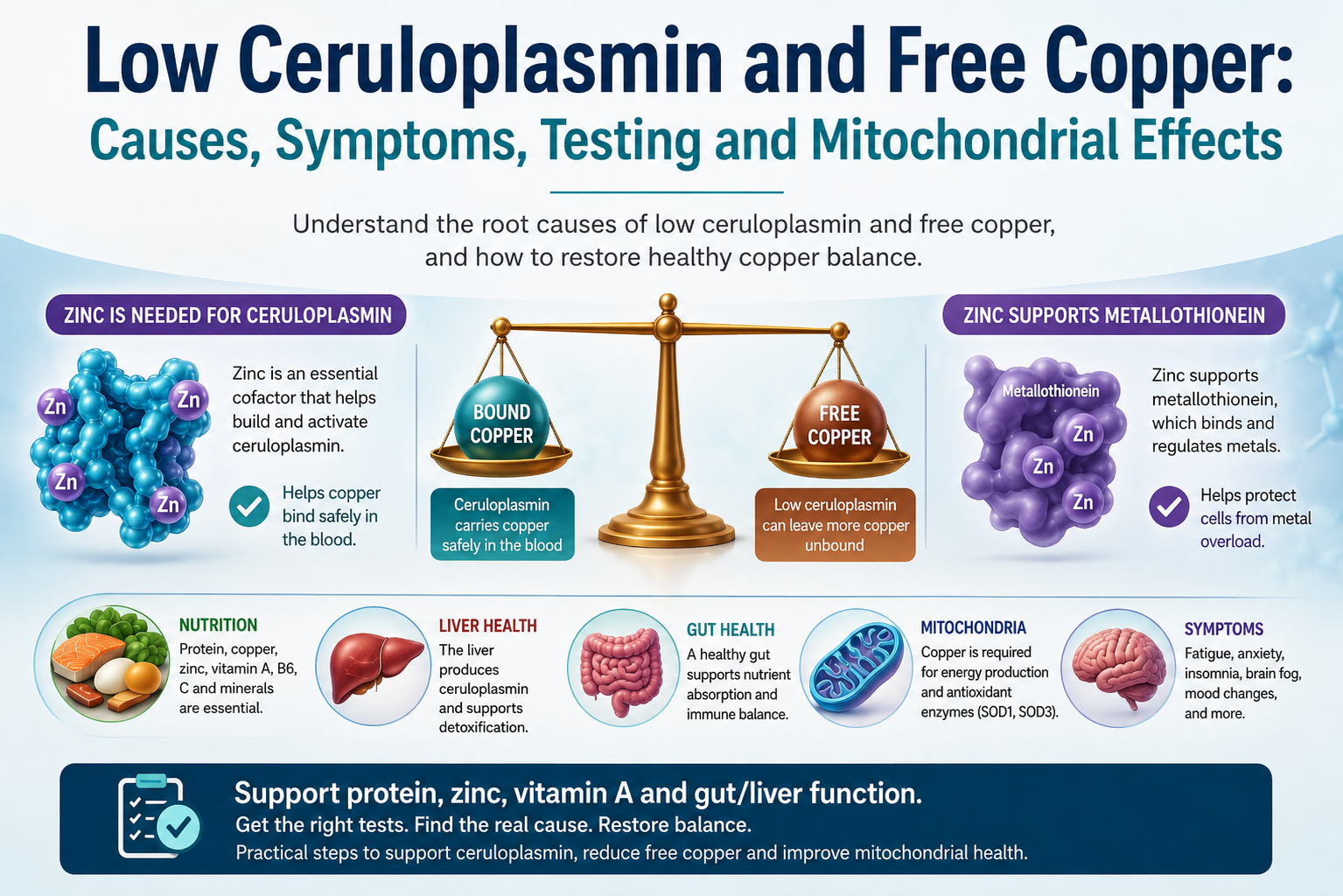
What Does Low Ceruloplasmin Mean?
Low ceruloplasmin does not automatically mean you need more copper. The first distinction is whether both copper and ceruloplasmin are low, or whether copper is normal/high while ceruloplasmin is relatively inadequate.
Serum copper, ceruloplasmin and plasma zinc can also be used to calculate estimated free copper, the copper/ceruloplasmin ratio and the zinc/copper ratio.
What Is Ceruloplasmin?
Ceruloplasmin is a copper-containing protein produced mainly by the liver. After copper is incorporated into ceruloplasmin, the protein is released into the bloodstream.
Ceruloplasmin performs several important functions:
- Carries most circulating copper
- Keeps much of circulating copper protein-bound
- Supports normal iron metabolism
- Helps iron bind to transferrin
- Participates in antioxidant and redox physiology
Ceruloplasmin is also an acute-phase protein. Levels may rise with inflammation, infection, pregnancy and estrogen exposure.
How Much Copper Does Ceruloplasmin Carry?
Ceruloplasmin is commonly described as carrying approximately 90% or more of circulating plasma copper, although the exact percentage varies with physiology and laboratory methods.
Copper outside ceruloplasmin may be associated with albumin, amino acids and other small molecules.
The clinically useful question is not only whether ceruloplasmin is low. It is whether ceruloplasmin is appropriate for the amount of copper present.
Low Ceruloplasmin and Low Copper vs High Free Copper
Low Copper + Low Ceruloplasmin
This pattern is more consistent with inadequate copper availability.
- Low copper intake
- Low food intake
- Low protein or malnutrition
- Malabsorption
- Excessive zinc supplementation
- Gastrointestinal disease
- Impaired liver synthesis
More copper may eventually be appropriate when true copper deficiency is confirmed.
Normal/High Copper + Inadequate Ceruloplasmin
Ceruloplasmin may be technically inside the laboratory range while still being low relative to total copper.
- Estimated free copper may be elevated
- The copper/ceruloplasmin relationship may be abnormal
- Oxidative stress may increase
- Neurological or mood symptoms may coexist
This pattern generally does not call for simply adding more copper.
What Causes Low Ceruloplasmin?
What causes low ceruloplasmin depends partly on whether copper itself is also low and on nutritional, gastrointestinal, liver and kidney status.
Low Copper Intake
Very restricted food intake or a diet providing inadequate copper may eventually reduce copper availability and ceruloplasmin.
Low Protein or Malnutrition
Ceruloplasmin is synthesized in the liver. Poor calorie intake, inadequate protein and poor nutritional status may interfere with production.
Too Much Zinc
High zinc intake stimulates intestinal metallothionein, which binds copper strongly and can reduce copper absorption.
Gut Disease or Malabsorption
Celiac disease, inflammatory bowel disease, chronic diarrhea, bariatric surgery and other digestive problems may impair nutrient absorption.
Liver Dysfunction
Because ceruloplasmin is synthesized primarily by the liver, significant liver disease can lower production.
Kidney Protein Loss
Some kidney disorders cause protein loss and can contribute to reduced blood ceruloplasmin.
Vitamin A Deficiency
Vitamin A status may influence hepatic copper handling and ceruloplasmin synthesis.
Inherited Copper Disorders
Wilson disease, Menkes syndrome, aceruloplasminemia and other uncommon inherited disorders can produce abnormal copper and ceruloplasmin findings.
Can Vitamin A Deficiency Cause Low Ceruloplasmin?
Vitamin A deficiency and low ceruloplasmin have been linked in experimental and nutritional research because vitamin A influences hepatic protein synthesis and copper metabolism.
Retinol status becomes more relevant when the person also has:
- Poor overall nutrition
- Fat malabsorption
- Restrictive diets
- Chronic gastrointestinal disease
- Liver dysfunction
- Multiple micronutrient deficiencies
Vitamin A should not be supplemented aggressively simply because ceruloplasmin is low. Retinol status, diet, liver function and the broader clinical picture should be considered.
Low Ceruloplasmin Symptoms: What Can It Cause?
Low ceruloplasmin symptoms depend heavily on why ceruloplasmin is low.
Low Copper / Low Ceruloplasmin Symptoms
- Fatigue
- Weakness
- Anemia
- Low white blood cells
- Poor exercise tolerance
- Numbness or tingling
- Balance problems
- Neurological symptoms
Possible High-Free-Copper Symptoms
- Anxiety
- Panic
- Agitation
- Severe insomnia
- Racing thoughts
- Irritability
- Poor stress tolerance
- Sensory overstimulation
- Postpartum or estrogen-related mood symptoms
These symptoms are not specific to ceruloplasmin or copper. Laboratory findings should be interpreted with symptoms rather than diagnosing copper imbalance from symptoms alone.
What Is a Free Copper Calculation?
A free copper calculation estimates the portion of serum copper that is not accounted for by ceruloplasmin binding.
It may also be called an unbound copper calculation or non-ceruloplasmin-bound copper calculation.
The estimate uses serum copper and ceruloplasmin, but it should be interpreted together with the original laboratory values and plasma zinc rather than treated as a stand-alone measurement.
The most useful question is not simply “What is my free copper?” It is whether total copper, ceruloplasmin, calculated free copper, and the zinc/copper ratio are all pointing toward the same copper-dominant pattern.
Calculate Free Copper, Zinc/Copper & Copper/Ceruloplasmin Ratios
If you already have serum copper, ceruloplasmin and plasma zinc, enter the values into our calculator to estimate free copper and evaluate the relationships among all three markers.
- Estimated free copper
- Estimated free copper percentage
- Copper/ceruloplasmin ratio
- Zinc/copper ratio
- Visual copper-impact pattern
Zinc/Copper Ratio: Why Copper and Zinc Should Be Interpreted Together
Copper and zinc are biologically interrelated, which is why the zinc/copper ratio can add useful information beyond either mineral alone.
Within the Walsh Approach, plasma zinc is evaluated with serum copper and ceruloplasmin. Our calculator uses approximately 1.25 as a Walsh-oriented zinc/copper target.
Lower Zinc/Copper Ratio
Indicates relatively greater copper compared with zinc and may support a more copper-dominant pattern.
Near 1.25
Represents the zinc/copper balance point used in our calculator.
Higher Zinc/Copper Ratio
Indicates relatively greater zinc compared with copper. Excessively high zinc, however, can impair copper absorption.
Can Ceruloplasmin Be Normal and Free Copper Still Be High?
Yes.
Ceruloplasmin can fall within the laboratory reference range yet still be relatively low for the amount of total copper present.
This is why serum copper, ceruloplasmin and plasma zinc should be interpreted together rather than evaluating ceruloplasmin by itself.
Why High Free Copper May Matter
Copper is essential for health, but poorly regulated copper can participate in oxidation reactions.
When copper is high relative to ceruloplasmin, the more exchangeable copper fraction may contribute to:
- Oxidative stress
- Mitochondrial stress
- Neurological vulnerability
- Neurotransmitter dysregulation
Within the Walsh Approach, copper, ceruloplasmin and zinc are especially relevant when anxiety, panic, severe insomnia, postpartum mood changes, agitation, and selected neurodevelopmental or cognitive patterns are present.
How Low Copper Can Affect Mitochondrial Function
Copper is not simply something the body needs to eliminate. Copper is essential for normal mitochondrial energy production.
Copper is required for cytochrome-c oxidase, or mitochondrial Complex IV, one of the final components of the electron transport chain.
Copper is also required for antioxidant enzymes including SOD1 and SOD3.
- ATP production
- Antioxidant defense
- Iron handling
- Exercise capacity
- Neurological function
Can Gut Problems Cause Low Ceruloplasmin?
Yes. Gastrointestinal dysfunction may contribute indirectly to low ceruloplasmin by impairing absorption of copper, protein, amino acids and vitamins.
- Chronic diarrhea
- Celiac disease
- Inflammatory bowel disease
- Post-bariatric malabsorption
- Dysbiosis
- Poor digestion
- Restricted diets
- Low protein intake
What Is Metallothionein and How Does It Affect Copper?
Metallothionein is a cysteine-rich intracellular protein involved in zinc and copper regulation, antioxidant defense and metal binding.
Ceruloplasmin
A circulating liver-produced protein that carries most plasma copper.
Metallothionein
An intracellular metal-binding protein involved in zinc/copper regulation and cellular defense.
Zinc is an important regulator of metallothionein, but excessive zinc can also reduce copper absorption.
What Is Walsh MT Promoter?
MT Promoter is not simply a supplement designed to raise ceruloplasmin.
William Walsh, Ph.D. developed the strategy to support metallothionein production and copper-zinc regulation using nutritional and antioxidant support.
How to Increase Ceruloplasmin
How to increase ceruloplasmin depends on why the level is low. There is no single supplement appropriate for every low result.
Improve Protein Intake
Adequate complete protein supports hepatic protein synthesis.
Correct True Copper Deficiency
If both serum copper and ceruloplasmin are low, copper intake and absorption should be evaluated.
Reduce Excessive Zinc
High-dose zinc can suppress copper absorption.
Improve Gut Absorption
Treating malabsorption may be more important than simply adding nutrients.
Review Vitamin A
Vitamin A deserves consideration when poor nutrition or fat malabsorption is present.
Evaluate Liver & Kidney Function
Impaired synthesis or protein loss requires treatment of the underlying problem.
Which Tests Help Explain Low Ceruloplasmin?
| Test | Why It Matters |
|---|---|
| Serum Copper | Shows whether circulating copper is low, normal or elevated. |
| Ceruloplasmin | Measures the primary circulating copper-carrying protein. |
| Plasma Zinc | Important because both low and excessive zinc can affect copper regulation. |
| Free Copper Calculation | Estimates non-ceruloplasmin-bound copper. |
| Zinc/Copper Ratio | Helps identify a relatively copper-dominant mineral pattern. |
| Copper/Ceruloplasmin Ratio | Shows the relationship between total copper and its major transport protein. |
| CBC | Can identify anemia or low white blood cells seen with copper deficiency. |
| CMP / Liver Markers | Provides information about hepatic and metabolic function. |
| Cystatin C / Kidney Markers | Useful when kidney filtration or protein loss is a concern. |
| Retinol / Vitamin A | Worth considering with poor diet or malabsorption. |
| Mitochondrial / Oxidative Markers | Helpful when fatigue or impaired cellular energy are prominent. |
| Methylation Testing | Provides SAM, SAH and related metabolic information. |
| Gut Testing | May help identify malabsorption, inflammation or dysbiosis. |
When Low Ceruloplasmin Is Part of a Copper-Overload Pattern
Low ceruloplasmin does not itself diagnose copper overload. Concern becomes more relevant when the broader pattern includes:
- Normal or elevated serum copper
- Elevated estimated free copper
- Low plasma zinc
- A low zinc/copper ratio
- Copper that appears high relative to ceruloplasmin
- Symptoms compatible with copper dysregulation
The dedicated Copper Overload guide explains how copper, zinc, ceruloplasmin, norepinephrine, estrogen, anxiety, insomnia, irritability and postpartum symptoms may fit together.
Frequently Asked Questions About Low Ceruloplasmin
What does low ceruloplasmin mean?
Low ceruloplasmin may reflect copper deficiency, poor nutrition, malabsorption, excessive zinc, vitamin A deficiency, liver or kidney disease, or an inherited copper disorder.
What causes low ceruloplasmin?
Causes include low copper intake, malnutrition, low protein, excessive zinc, malabsorption, liver disease, kidney protein loss, vitamin A deficiency and inherited copper disorders.
What are low ceruloplasmin symptoms?
Symptoms depend on the underlying pattern. True copper deficiency may cause fatigue, anemia, weakness, neurological symptoms and poor exercise tolerance. High copper relative to ceruloplasmin may produce a different pattern.
Does low ceruloplasmin always mean copper deficiency?
No. Ceruloplasmin may be relatively inadequate even when total copper is normal or elevated.
What is a free copper calculation?
A free copper calculation estimates copper that is not accounted for by ceruloplasmin binding. It is an estimate rather than a direct measurement.
Is there a free copper calculator?
Yes. Our Free Copper Calculator estimates free copper and also calculates zinc/copper and copper/ceruloplasmin ratios.
Can ceruloplasmin be normal while free copper is high?
Yes. A ceruloplasmin result can be inside the laboratory reference range while still being relatively low for the amount of serum copper present.
What is the ideal zinc/copper ratio?
Our calculator uses approximately 1.25 as a Walsh-oriented zinc/copper target.
Can too much zinc cause low ceruloplasmin?
Yes. High zinc intake can reduce copper absorption and eventually produce low serum copper and low ceruloplasmin.
How do you increase ceruloplasmin?
The answer depends on the cause and may involve adequate protein, correcting true copper deficiency, reducing excessive zinc, treating malabsorption, reviewing vitamin A, or addressing liver or kidney disease.
Low Ceruloplasmin Requires Copper and Zinc Context
Low ceruloplasmin is not a diagnosis and does not automatically mean you need copper.
- Low copper + low ceruloplasmin may suggest copper deficiency
- Normal/high copper + relatively low ceruloplasmin may increase calculated free copper
- Plasma zinc and the zinc/copper ratio add important context
Protein intake, vitamin A, liver function, kidney function, gastrointestinal absorption, metallothionein, mitochondrial function and oxidative stress may all contribute.
Continue the Low Ceruloplasmin Assessment
Selected Medical References
Educational information only. Low ceruloplasmin can occur with nutritional deficiency, liver or kidney disease, Wilson disease, Menkes syndrome and other medical conditions. New neurological symptoms, unexplained anemia, liver abnormalities, or suspected inherited copper disorders require appropriate medical evaluation.