
Low Zinc and Copper Imbalance: Causes, Anxiety, ADHD and Brain Effects
Low zinc can affect far more than skin, hair or immunity. Zinc is required for neurotransmitter regulation, antioxidant defense, inflammatory control, gut integrity, hormone function, memory and the proteins that help regulate copper. The most important distinction is whether zinc is low while copper is also low, or whether low zinc coexists with elevated copper and a high copper-to-zinc imbalance. In the Walsh Approach, that difference can help explain anxiety, ADHD symptoms, insomnia, irritability, postpartum depression, poor stress tolerance and incomplete response to psychiatric treatment. A plasma zinc result is therefore most useful when interpreted with copper, ceruloplasmin, symptoms, gut health, pyroluria and the broader biochemical pattern.
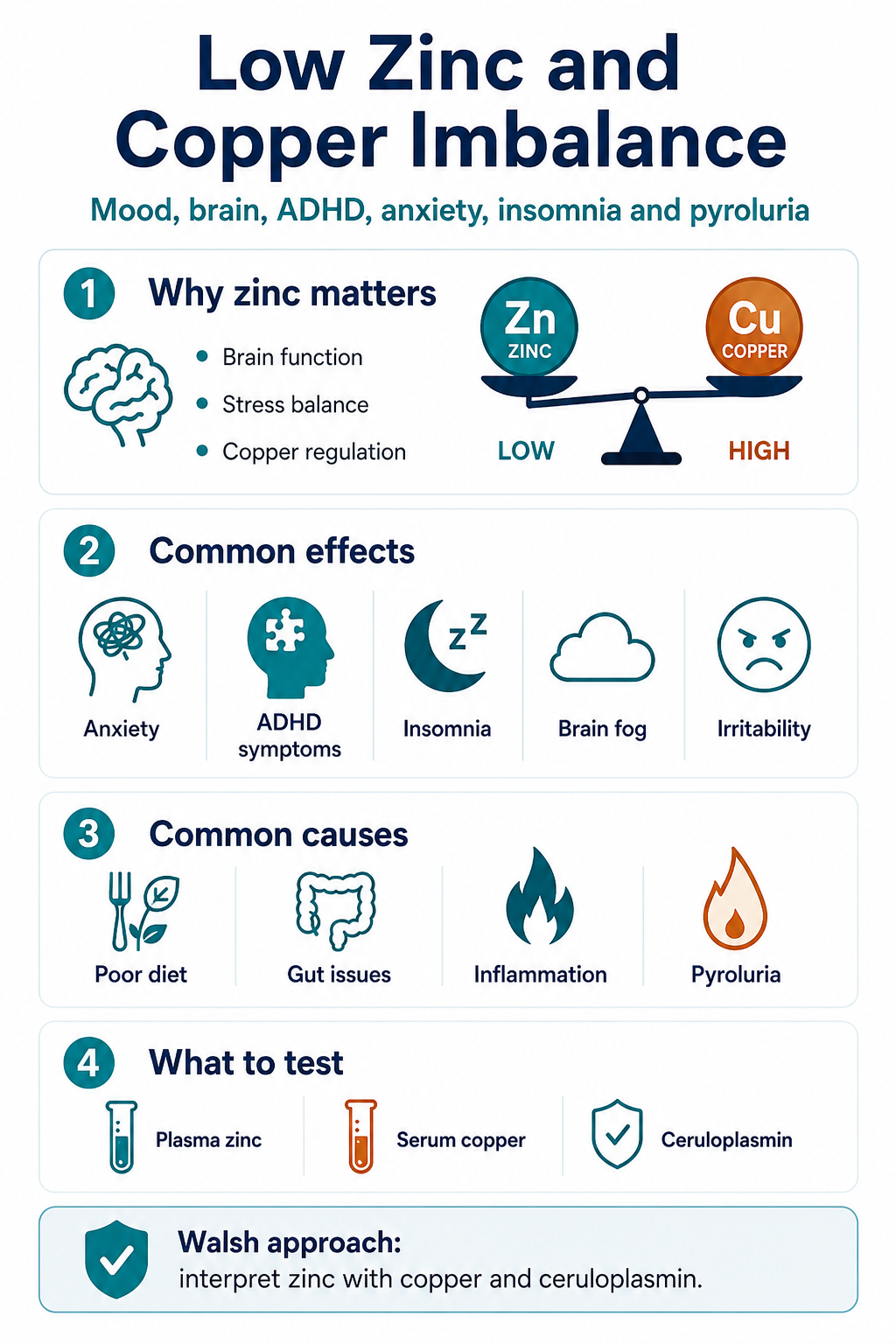
Low zinc is often most clinically important when interpreted with copper. Low zinc with low copper suggests broad mineral depletion, poor intake or malabsorption. Low zinc with elevated copper suggests a different pattern—one that may increase free-copper activity, norepinephrine stress, anxiety, irritability, insomnia and postpartum vulnerability.
Zinc is required for hundreds of catalytic, structural and regulatory proteins. It supports antioxidant enzymes, immune control, DNA repair, intestinal integrity, synaptic signaling, serotonin-related pathways, learning, memory and the proteins involved in copper handling. The goal is not simply to “raise zinc,” but to identify why it is low and whether copper, ceruloplasmin, pyroluria, gut disease, inflammation or increased demand is driving the imbalance.
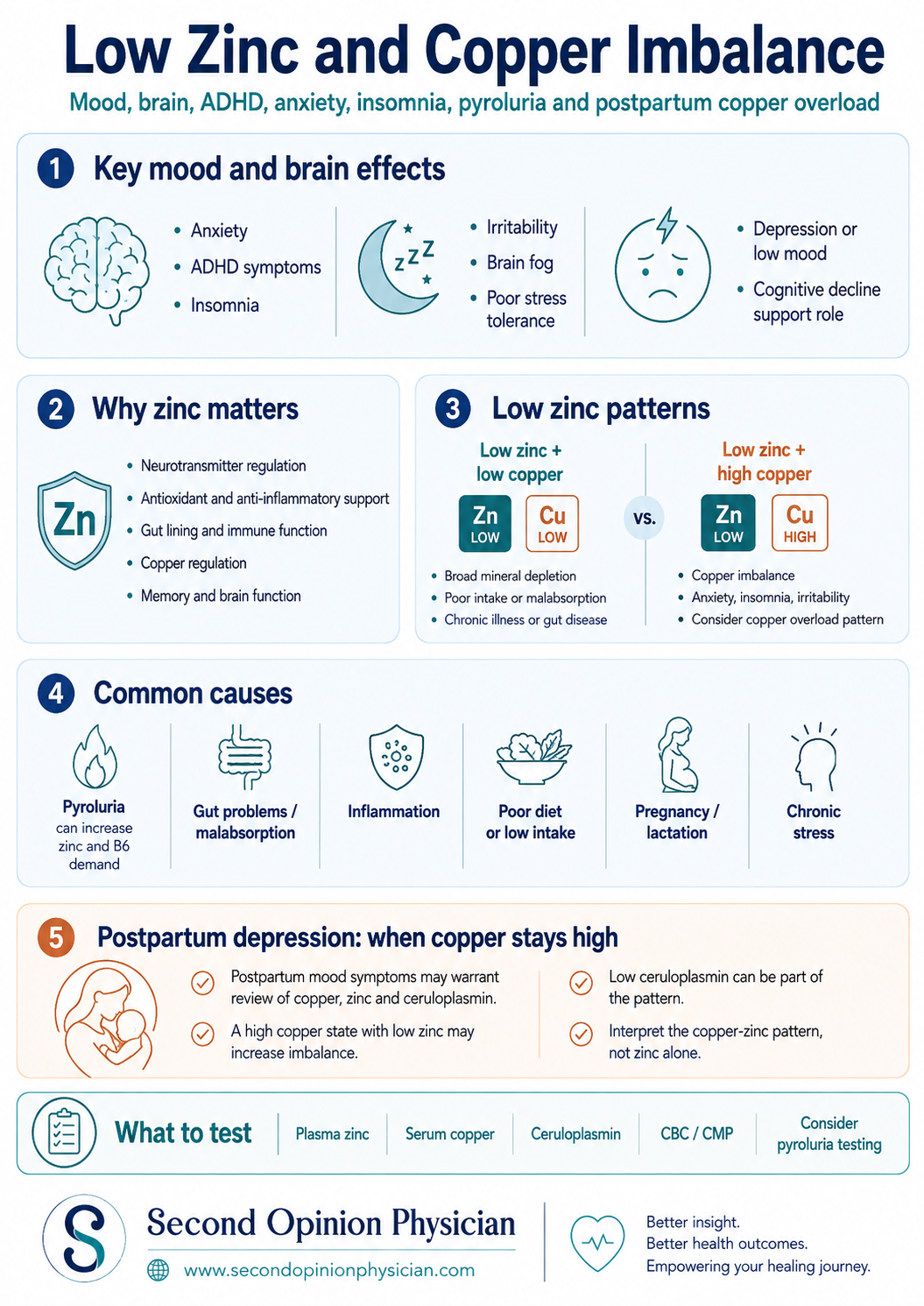
Low zinc should be interpreted with copper, ceruloplasmin, symptoms and the reason zinc became depleted.
Why Is Zinc So Important?
Zinc is not simply a skin or immune nutrient. It is built into hundreds of enzymes and regulatory proteins and influences thousands of zinc-binding proteins. It helps control gene expression, DNA and protein synthesis, cell growth, membrane stability, wound healing, immune signaling, reproduction, taste and smell, intestinal integrity and nervous-system function.
Brain and neurotransmitters
Zinc modulates glutamate, GABA, serotonin-related signaling, neuroplasticity, BDNF pathways and synaptic function involved in mood, attention, learning and memory.
Antioxidant protection
Zinc supports copper-zinc superoxide dismutase, metallothionein and other defenses that help limit oxidative injury to membranes, mitochondria and DNA.
Inflammation and immunity
Zinc helps regulate innate and adaptive immune responses, cytokine signaling, barrier function and recovery from infection.
Gut and absorption
Zinc supports epithelial renewal, tight junctions, digestion and repair of the intestinal lining. Gut disease can both cause and perpetuate deficiency.
Hormones and reproduction
Zinc contributes to reproductive function, pregnancy, lactation, testosterone physiology, ovarian function and tissue growth.
Copper regulation
Zinc influences intestinal metallothionein and copper absorption, making the zinc-copper relationship more informative than either mineral alone.
Why supplementation is often considered: low intake, phytate-rich diets, gut dysfunction, inflammation, pregnancy, lactation, growth, chronic stress and pyroluria can increase the gap between zinc intake and zinc demand. Low-zinc soils and low-zinc staple crops are also recognized contributors to human deficiency in some regions. The broader Walsh hypothesis that modern food systems commonly fail to restore adequate zinc is clinically plausible, but soil zinc varies greatly by region and crop.
Can Zinc Deficiency Cause Anxiety, ADHD Symptoms, Insomnia or Depression?
Low zinc does not explain every mood or behavior disorder, but it can weaken several systems that stabilize the brain. Research links lower zinc status with depression and anxiety, while ADHD trials have produced mixed results and appear most relevant when deficiency or a high-risk nutritional pattern is present.
Zinc deficiency and anxiety
Low zinc may increase glutamate excitability, neuroinflammation, HPA-axis stress and poor GABA-related regulation, contributing to tension, panic, sensory overload or poor stress tolerance.
Zinc deficiency and ADHD
Zinc may affect attention through dopamine, norepinephrine, melatonin, fatty-acid metabolism and antioxidant pathways. Low zinc can coexist with stimulant sensitivity, poor appetite and pyroluria.
Zinc deficiency and insomnia
Sleep may be affected through stress signaling, melatonin biology, copper-related norepinephrine excess, restless legs, inflammation or poor recovery.
Zinc deficiency and depression
Depression may involve altered glutamate, serotonin receptors, BDNF, oxidative stress and inflammation. Zinc is better described as a neuromodulator than as a direct serotonin precursor.
Brain aging and dementia
Zinc homeostasis supports synaptic function, antioxidant protection and memory. Both deficiency and abnormal zinc distribution may be relevant in neurodegenerative disease.
Medication response
Low zinc may be one reason antidepressants or stimulants help only partly, but zinc should be corrected within the broader copper, pyroluria, diet and gut context.
Can Low Zinc and High Copper Contribute to Dementia and Cognitive Decline?
Low zinc does not independently explain every case of dementia, but chronic zinc deficiency can weaken several protective systems required for memory, neuronal survival and healthy brain aging. Lower circulating zinc and a less favorable copper-to-zinc balance have been reported in many patients with Alzheimer’s disease and cognitive impairment. These findings suggest a relevant biochemical pattern, but they do not prove that zinc deficiency alone causes dementia.
Neuronal Apoptosis
Zinc supports neurogenesis, neuronal growth and cell survival. Deficiency can activate apoptotic pathways—the programmed cell-death signals that remove injured neurons—and may reduce the brain’s ability to preserve or rebuild neural connections.
Reduced Antioxidant Defense
Zinc supports copper-zinc superoxide dismutase, metallothionein, membrane protection and other antioxidant systems. Low zinc may leave neurons more vulnerable to oxidative damage affecting mitochondria, lipids, proteins and DNA.
Inflammation and Microglial Stress
Zinc helps regulate inflammatory signaling and immune-cell activity. Deficiency may promote persistent neuroinflammation, interfere with repair and increase neuronal susceptibility to metabolic and toxic stress.
Synaptic and Memory Impairment
Zinc participates in glutamate signaling, neuroplasticity, learning, memory and BDNF-related pathways. Too little available zinc can impair synaptic communication, although excessive or abnormally distributed zinc within the brain can also be harmful.
Mitochondrial Dysfunction
Neurons require continuous ATP production to maintain membranes, neurotransmission and repair. Zinc deficiency can increase oxidative pressure and weaken mitochondrial resilience, potentially accelerating cognitive fatigue and neuronal loss.
Loss of Copper Regulation
Zinc supports metallothionein and helps regulate intestinal copper absorption. When zinc remains low, copper may become relatively high, especially when inflammation, estrogen exposure or impaired ceruloplasmin regulation is also present.
Why the copper-to-zinc pattern matters: low zinc does not automatically cause high copper, but the two frequently coexist. Low zinc may reduce normal control of copper absorption, while inflammation can simultaneously lower circulating zinc and raise ceruloplasmin-bound copper. The resulting high copper-to-zinc ratio may reflect greater inflammatory and oxidative burden.
How Excess or Poorly Bound Copper May Compound the Problem
Copper is essential for energy production, antioxidant enzymes and neurotransmitter metabolism. However, excessive non-ceruloplasmin-bound copper can participate in oxidation reactions, increase mitochondrial stress and promote neuronal injury. Studies have reported lower serum zinc and higher serum copper in Alzheimer’s disease groups, but results vary and should not be interpreted as proof that copper overload is present in every patient with cognitive decline.
Walsh-oriented evaluation: cognitive decline accompanied by low zinc should prompt assessment of serum copper, ceruloplasmin, calculated non-ceruloplasmin-bound copper, CBC, CMP, inflammation, diet, gut absorption and medication or supplement use. Zinc should not be raised aggressively without monitoring copper because excessive zinc can cause copper deficiency and neurological injury.
Which Biochemical Pathways Require Zinc?
| System | Zinc-dependent role | Possible clinical effect when zinc is low |
|---|---|---|
| Serotonin and mood signaling | Modulates serotonin receptors, transport, BDNF, inflammatory tone and neural plasticity | Depression, rumination, anxiety or poor antidepressant response |
| Glutamate and NMDA regulation | Acts as a synaptic modulator and helps restrain excessive excitatory signaling | Sensory overload, agitation, insomnia and cognitive fatigue |
| GABA and stress control | Supports inhibitory balance and stress-system regulation | Inner tension, panic and poor stress tolerance |
| Antioxidant defense | Supports Cu/Zn superoxide dismutase, metallothionein and membrane protection | Oxidative stress, inflammation and slower recovery |
| DNA, protein and cell repair | Required for transcription factors, DNA repair enzymes and protein synthesis | Poor healing, impaired growth and reduced cellular resilience |
| Immune function | Regulates lymphocytes, cytokines, innate defense and barrier integrity | Frequent infection, prolonged illness and inflammation |
| Gut lining | Supports epithelial renewal and tight-junction integrity | Malabsorption, diarrhea and worsening nutrient loss |
| Copper handling | Induces intestinal metallothionein and changes copper absorption | High copper when zinc is low, or copper deficiency when zinc is excessive |
What Causes Zinc Deficiency?
Low intake
Low-protein diets, restrictive eating, highly processed foods and limited animal foods may provide inadequate absorbable zinc.
Phytate-rich diets
Phytate in grains, legumes, nuts and seeds binds zinc and can reduce absorption, especially when overall intake is marginal.
Gastrointestinal disease
Celiac disease, inflammatory bowel disease, chronic diarrhea, pancreatic disease, dysbiosis and bariatric surgery can reduce absorption.
Inflammation and infection
Inflammation shifts circulating zinc into tissues and can make plasma zinc appear low while increasing biological demand.
Pregnancy and lactation
Fetal growth, placental development and breast-feeding increase zinc needs while pregnancy also raises copper and ceruloplasmin.
Alcohol and chronic illness
Alcohol use, liver disease, kidney disease and chronic illness can alter intake, absorption, distribution and losses.
Medications and supplements
Acid suppression, selected diuretics, iron competition and poorly balanced supplement programs may affect zinc status.
High demand and recovery
Growth, injury, infection, exercise, wound healing and oxidative stress can increase requirements.
Pyroluria
Within the Walsh model, persistent pyrrole elevation is associated with increased need for zinc and vitamin B6.
Pyroluria: A Major Cause of Persistent Low Zinc in the Walsh Approach
Pyroluria is used in the Walsh model to describe a pattern of elevated urinary pyrrole compounds associated with increased zinc and vitamin B6 requirements. Patients may present with poor stress tolerance, social anxiety, episodic mood instability, sensory sensitivity, poor dream recall, pale skin, stretch marks or intolerance of inexpensive metals.
The key point is not that every anxious patient has pyroluria. It is that unexplained low zinc may persist despite supplementation when the underlying demand, absorption problem or pyrrole pattern has not been identified.
How Gut Problems Cause Low Zinc
Zinc deficiency and gut dysfunction can reinforce each other. Poor absorption lowers zinc, while low zinc weakens intestinal repair and barrier integrity. Celiac disease, inflammatory bowel disease, chronic diarrhea, low stomach acid, pancreatic insufficiency, dysbiosis and prior bariatric surgery should be considered when zinc remains low despite adequate intake.
Clinical clue: zinc that barely rises despite a reasonable elemental dose should prompt review of supplement form, timing, phytate intake, inflammation, diarrhea, celiac disease, gut infection and medication-related malabsorption.
Low Zinc With Low Copper vs Low Zinc With High Copper
Low zinc + low copper
This pattern more often suggests broad mineral depletion, inadequate intake, malabsorption, excessive zinc use, gastrointestinal disease or impaired nutritional status. Treatment may require rebuilding both minerals rather than using zinc to lower copper.
Low zinc + elevated copper
This pattern may occur with pregnancy, estrogen exposure, inflammation, low metallothionein activity, pyroluria or chronic zinc deficiency. It may be associated with anxiety, irritability, panic, insomnia and a high free-copper pattern.
The ratio is not enough. Copper, ceruloplasmin, calculated non-ceruloplasmin-bound copper, plasma zinc, CBC, inflammation and the clinical pattern should be reviewed together.
Does Zinc Help Make Ceruloplasmin and Bind Free Copper?
Ceruloplasmin is a copper-containing protein synthesized primarily by the liver. Zinc is not part of the ceruloplasmin molecule. However, adequate zinc supports protein synthesis, antioxidant defense, metallothionein and the broader environment required for orderly copper handling.
In a low-zinc, high-copper pattern, restoring zinc can reduce intestinal copper absorption and improve the zinc-copper balance. But excessive zinc can push copper too low, reduce copper available for ceruloplasmin and cause anemia, neutropenia or neurological injury.
Practical conclusion: zinc may help normalize copper regulation when zinc is deficient, but ceruloplasmin should be measured rather than assumed to rise automatically.
Low Zinc, Copper Overload and Postpartum Depression
Pregnancy normally increases copper and ceruloplasmin to support fetal growth and blood-vessel development. After delivery, copper regulation must readjust while zinc needs remain high because of tissue recovery, lactation, stress and sleep disruption.
Walsh-associated research reported a higher copper-to-zinc ratio in women with a history of postpartum depression, driven mainly by higher copper. This does not prove that copper causes every case of postpartum depression, but it supports testing copper, ceruloplasmin and zinc when anxiety, agitation, insomnia or depression develop during pregnancy or after delivery.
Zinc supplementation alone has not consistently prevented postpartum depression in controlled trials. The useful clinical step is identifying the actual pattern—low zinc, high copper, inflammation, thyroid dysfunction, iron deficiency, sleep loss or a combination.
Physical Signs of Zinc Deficiency
Skin, hair and immune signs remain useful supporting clues, but they should not dominate the assessment of a patient whose main concern is mood, anxiety, ADHD, insomnia or cognitive decline.
Skin and healing
Dermatitis, slow wound healing, dry or inflamed skin and recurrent skin infection.
Hair and nails
Hair shedding, thinning, brittle nails and poor tissue growth.
Taste and appetite
Reduced taste or smell, poor appetite and altered food enjoyment.
Immune function
Frequent infections, slower recovery and persistent inflammation.
Growth and reproduction
Impaired fertility, low libido, delayed growth or increased needs during pregnancy and lactation.
Neurologic clues
Brain fog, reduced concentration, irritability, poor stress tolerance and mood change.
How Should Low Zinc and Copper Imbalance Be Tested?
Plasma zinc
The practical starting test, interpreted with fasting status, inflammation, albumin, timing and recent supplementation.
Serum copper
Shows circulating copper but must be interpreted with ceruloplasmin and the clinical setting.
Ceruloplasmin
Helps estimate how much copper is protein-bound and whether the pattern is high copper, low ceruloplasmin or both.
CBC and CMP
Identify anemia, neutropenia, liver or kidney factors and complications of excessive zinc.
Urinary pyrroles
Considered when persistent zinc/B6 demand, social anxiety or stress intolerance suggests pyroluria.
Inflammation and gut testing
Useful when zinc remains low or symptoms suggest malabsorption, infection, dysbiosis or inflammatory disease.
Why Zinc Supplementation Is Often Needed—and How to Use It Safely
Food-first correction is appropriate when intake is marginal, but diet alone may be insufficient when there is pyroluria, gut malabsorption, pregnancy, lactation, chronic inflammation, copper overload or a documented laboratory deficiency.
Use elemental zinc
Compare products by elemental zinc rather than the total weight of zinc picolinate, gluconate, citrate or sulfate.
Match the dose to the pattern
Low zinc with high copper may require a different strategy from low zinc with low copper or malabsorption.
Separate competing minerals
Iron, calcium and high-phytate meals may reduce absorption. Timing can matter.
Monitor copper
Higher or prolonged zinc doses should be followed with copper, ceruloplasmin and CBC.
Treat the cause
Correct gut disease, dietary restriction, inflammation, pyroluria or ongoing losses rather than escalating zinc indefinitely.
Retest
Use the same laboratory and similar preparation when possible to judge response.
High-dose zinc is not routine self-care. Excess can cause nausea, copper deficiency, anemia, neutropenia and neurological injury.
Why Zinc Is Central to the Walsh Approach
The Walsh Approach treats zinc as a core regulator of copper balance, metallothionein, oxidative stress, neurotransmitter function, gut integrity and stress tolerance. Zinc is rarely interpreted in isolation.
Copper overload
Low zinc may permit greater copper absorption and contribute to anxiety, irritability, insomnia and postpartum vulnerability.
Pyroluria
Persistent zinc and B6 demand may impair serotonin, dopamine, GABA, stress tolerance and copper regulation.
Undermethylation
Zinc supports antioxidant, histamine, neurotransmitter and adenosine-related pathways that may influence the larger methylation pattern.
Toxic burden
Metallothionein and antioxidant systems require adequate zinc to help regulate selected metals and oxidative stress.
ADHD and behavior
Low zinc can overlap with poor attention, impulsivity, stress intolerance and altered response to stimulant treatment.
Alzheimer’s and brain aging
Low zinc may impair antioxidant defense, DNA repair, synaptic function and neuronal survival, while a high copper-to-zinc pattern may add oxidative and inflammatory stress. Both deficiency and abnormal mineral distribution can be harmful.
Frequently Asked Questions About Low Zinc and Copper
Can zinc deficiency cause anxiety?
Low zinc may contribute to anxiety through glutamate, GABA, HPA-axis, inflammatory and antioxidant pathways. Anxiety is not specific to zinc deficiency, so copper, thyroid, cortisol, pyroluria and other causes should also be reviewed.
Can zinc deficiency cause ADHD symptoms?
Low zinc may affect attention, dopamine, norepinephrine, melatonin and stimulant response. Evidence for routine zinc treatment in ADHD is mixed, but testing is more relevant when diet, pyroluria or deficiency risk is present.
What causes low zinc?
Common causes include low intake, phytate, gastrointestinal disease, chronic diarrhea, inflammation, pregnancy, lactation, alcohol use, chronic illness, increased demand and pyroluria.
What does low zinc with high copper mean?
It may indicate a copper-zinc imbalance associated with pregnancy, estrogen exposure, inflammation, pyroluria, low metallothionein activity or chronic zinc deficiency.
What does low zinc with low copper mean?
It more often suggests broad mineral depletion, malabsorption, restrictive diet, chronic illness or excessive zinc use and may require support for both minerals.
Does zinc make ceruloplasmin?
Ceruloplasmin is a copper-containing liver protein, not a zinc protein. Adequate zinc supports broader protein synthesis and copper regulation, but excessive zinc can reduce copper and lower ceruloplasmin.
Can low zinc contribute to postpartum depression?
Low zinc may worsen copper-zinc imbalance during pregnancy and postpartum recovery. Research has found higher copper-to-zinc ratios in women with a history of postpartum depression, but this is one contributor among many.
Should copper be tested before taking zinc?
Copper and ceruloplasmin are especially useful before prolonged or higher-dose zinc therapy and whenever anxiety, postpartum symptoms, anemia or copper imbalance is suspected.
Can low zinc cause dementia?
Low zinc is not a proven stand-alone cause of dementia, but chronic deficiency may contribute through impaired antioxidant defense, apoptosis, inflammation, mitochondrial stress and weaker synaptic function. Copper and ceruloplasmin should be interpreted with zinc.
Test the Zinc-Copper Pattern—not Zinc Alone
Plasma zinc may be sufficient for a basic screen. When anxiety, ADHD, insomnia, postpartum depression, pyroluria or copper overload is suspected, zinc is more informative when tested with copper, ceruloplasmin and related Walsh markers.
Selected Sources and Further Reading
- NIH Office of Dietary Supplements: Zinc Fact Sheet
- Zinc Deficiency — StatPearls
- The Function and Regulation of Zinc in the Brain
- Copper and Zinc Metabolism: Metallothionein and Ceruloplasmin
- Zinc Deficiency, Neuronal Apoptosis and Neurodegeneration
- Serum Copper and Zinc in Alzheimer’s Disease: Systematic Review and Meta-Analysis