
Low-Glycemic Mediterranean Diet for Depression, Bipolar Disorder and Metabolic Health
A practical whole-food eating plan to stabilize blood sugar and insulin, reduce dietary inflammation, improve cholesterol and weight, and provide the protein, healthy fats, minerals and antioxidants needed to support mood, methylation, brain function and long-term cardiovascular health.

A low-glycemic Mediterranean diet is an excellent starting point for patients with depression, bipolar disorder, anxiety, poor energy, weight gain, insulin resistance or inflammation. It emphasizes vegetables, adequate protein, olive oil, fish, legumes, nuts and minimally processed carbohydrates while reducing added sugar, refined starch and ultra-processed foods.
This is not a cure for a psychiatric disorder, and it does not replace medication or psychotherapy when those are needed. Its purpose is to improve the metabolic and nutritional environment in which the brain must function.
Why Diet Matters in Depression and Bipolar Disorder
Many patients with chronic mood symptoms also have irregular meals, high sugar intake, low protein, limited vegetables, inadequate omega-3 intake, weight gain or medication-related metabolic changes. These problems can worsen fatigue, cravings, sleep disruption and cardiovascular risk.
More stable energy
Meals built around protein, fiber and minimally processed carbohydrates may reduce sharp swings in hunger, energy and concentration.
Lower dietary inflammatory load
Replacing refined foods with vegetables, olive oil, fish, legumes and nuts improves overall diet quality and antioxidant intake.
Protect long-term health
Weight, blood pressure, glucose, triglycerides, fatty liver and ApoB deserve attention in patients receiving long-term psychiatric care.
What Makes This Diet “Low Glycemic”?
A Mediterranean diet does not require eliminating all carbohydrates. The low-glycemic version changes the type, portion and pairing of carbohydrates so that meals are less likely to produce rapid glucose spikes.
Use carbohydrates mainly from
- Non-starchy vegetables
- Beans and lentils
- Whole fruit rather than juice
- Small portions of intact whole grains
- Root vegetables according to glucose tolerance
Reduce carbohydrates mainly from
- Sugar-sweetened beverages
- Candy, pastries and desserts
- White bread and refined cereals
- Large portions of pasta, rice or potatoes
- Ultra-processed snack foods
- Artificial or “natural” flavorings, flavor enhancers and MSG
Pairing carbohydrate with protein, vegetables and healthy fat generally slows digestion and improves satiety.
How to Build the Plate
Non-starchy vegetables
Leafy greens, broccoli, cauliflower, cabbage, Brussels sprouts, zucchini, peppers, mushrooms, onions, garlic, tomatoes, cucumbers and herbs.
Protein
Fish, seafood, eggs, poultry, Greek yogurt, beans, lentils or modest portions of unprocessed meat according to individual needs.
Slow carbohydrate
Lentils, beans, chickpeas, sweet potato, squash, barley, steel-cut oats, quinoa or another minimally processed grain in a portion that fits the glucose response.
Protein, Fats and Carbohydrates
Protein
Adequate protein supports muscle, satiety, liver proteins, enzymes and neurotransmitter precursors. Many patients with poor diets eat too little protein early in the day.
Fats
Emphasize extra-virgin olive oil, fatty fish, nuts, seeds and avocado. These replace rather than merely add to processed fats and excessive saturated fat.
Carbohydrates
Carbohydrate quantity should be individualized. A patient with diabetes, severe insulin resistance or medication-related weight gain may need smaller portions than a lean, active patient.
How This Eating Pattern Supports Methylation and Antioxidant Defense
A Mediterranean pattern does not directly diagnose or correct a methylation disorder. It does, however, provide many of the raw materials needed for normal enzyme function, glutathione production and antioxidant defense.
Complete protein
Eggs, fish, poultry, dairy, legumes and meat provide amino acids used in methionine metabolism, tissue repair and neurotransmitter synthesis.
Sulfur-containing foods
Eggs, onions, garlic and cruciferous vegetables provide sulfur compounds relevant to glutathione and normal cellular defense.
Minerals and B vitamins
Vegetables, legumes, nuts, seeds, seafood and protein foods contribute magnesium, potassium, zinc and B vitamins, though targeted supplements may still be needed when testing shows a deficiency.
Gut Health Without Making the Diet Overly Restrictive
Vegetables, legumes, nuts, seeds and intact grains provide fiber that supports intestinal function and microbial diversity. Fermented foods may help some patients, but they are optional and can aggravate histamine intolerance.
Emphasize
- Vegetable variety
- Beans or lentils when tolerated
- Whole fruit instead of juice
- Water and adequate hydration
- Regular bowel habits
Investigate when symptoms persist
- Severe bloating or chronic diarrhea
- Unexplained weight loss
- Celiac disease or malabsorption
- Food-triggered flushing or histamine symptoms
- Medication-related constipation
Foods to Minimize
Most important reductions
- Sugar-sweetened beverages
- Refined flour and starch
- Ultra-processed snacks
- Frequent fast food
- Processed meats
- Trans fats and repeatedly heated oils
- Packaged foods with chemical flavorings, hydrolyzed proteins or glutamate additives
Use judgment rather than perfection
The goal is a consistent pattern, not a diet that fails because it is unaffordable, culturally inappropriate or impossible to maintain. Frozen vegetables, canned beans, canned fish and simple store-brand foods can still fit when sodium, additives and portion size are considered.
A Simple Day of Eating
Eggs, greens and avocado
Sauté onion, garlic and greens in olive oil. Add eggs and serve with avocado. Berries or a small serving of oats may be added according to glucose tolerance.
Mediterranean protein bowl
Combine cucumber, tomato, pepper, broccoli, herbs, olives and chicken, salmon or chickpeas. Dress with olive oil, lemon and oregano.
Lemon-herb chicken and vegetables
Serve chicken or fish with roasted or pressure-cooked vegetables and a small portion of sweet potato, lentils or brown rice when appropriate.
Practical Meals, Snacks and Family-Friendly Food Preparation
The best eating plan is one that patients can prepare repeatedly. These examples emphasize organic whole foods when practical, adequate protein, vegetables, olive oil, low added sugar and simple seasonings without artificial flavorings, “natural flavors,” hydrolyzed proteins or MSG.
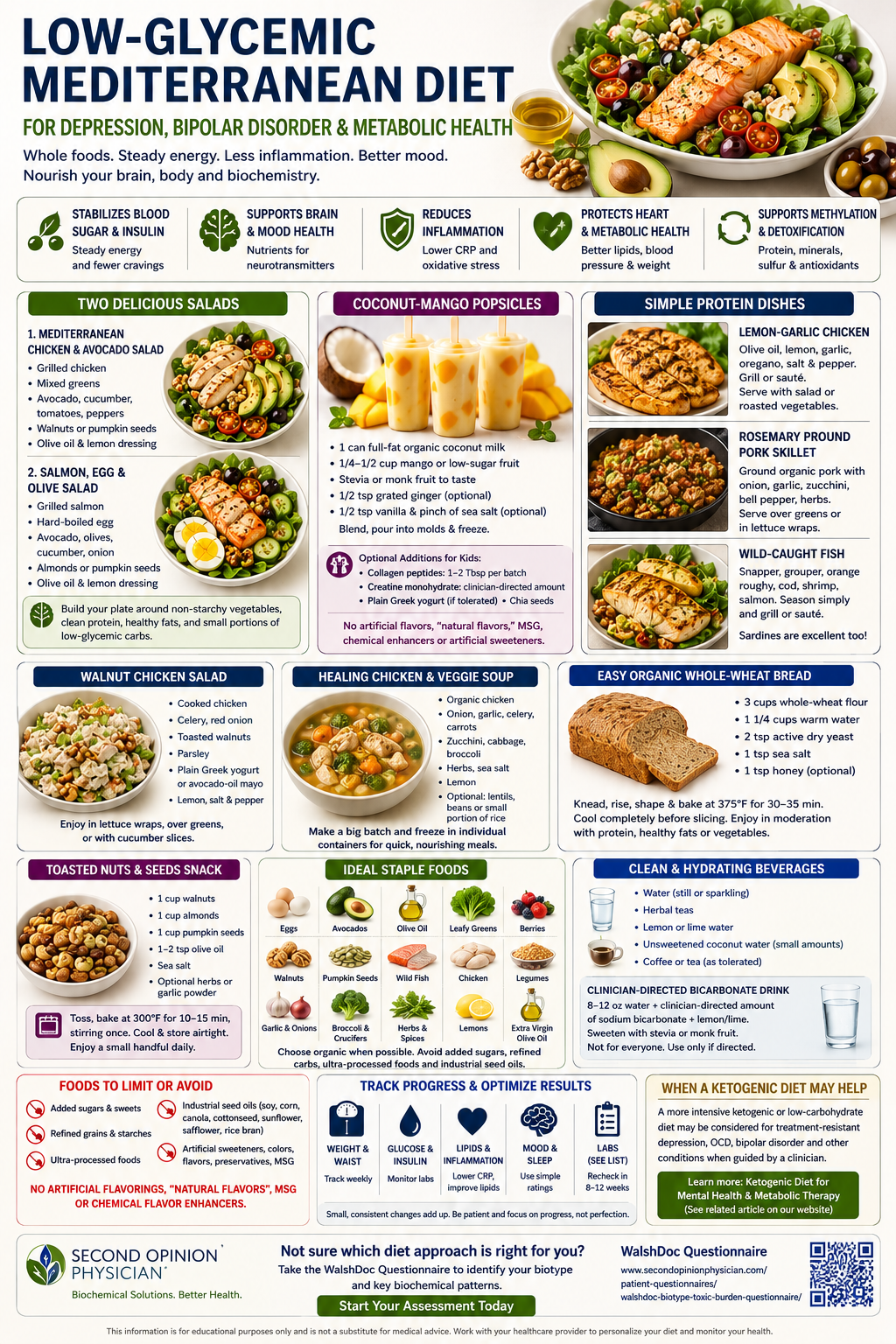
Mediterranean Chicken and Avocado Salad
Ingredients: 4–6 ounces grilled or sautéed organic chicken, mixed organic greens, ½ avocado, cucumber, bell pepper, cherry tomatoes, toasted walnuts or pumpkin seeds, parsley or basil.
Dressing: extra-virgin olive oil, lemon juice, sea salt, pepper, garlic and oregano.
Method: Place warm sliced chicken over the vegetables, add avocado and toasted nuts or seeds, and dress immediately before serving.
Wild Fish, Egg and Olive Salad
Ingredients: 4–6 ounces grilled or air-fried wild-caught fish, romaine or arugula, one organic hard-boiled egg, avocado, cucumber, red onion, olives and toasted almonds or pumpkin seeds.
Dressing: extra-virgin olive oil, lemon juice, sea salt and pepper.
Fish options: wild-caught snapper, grouper, cod, salmon, shrimp or orange roughy when available. Sardines may also be used when tolerated.
Organic Coconut-Mango or Berry Popsicles
Ingredients: one can full-fat concentrated organic coconut milk, ¼–½ cup mango, berries, peach or another lower-sugar fruit, stevia or monk fruit to taste, grated ginger or vanilla if desired, and a pinch of sea salt.
Method: Blend until smooth, pour into molds and freeze.
Optional additions: collagen peptides, chia seeds, plain Greek yogurt when tolerated, cinnamon or ginger. Creatine may be added only in a clinician-directed amount, especially for children.
Avoid: artificial flavorings, “natural flavors,” dyes, chemical sweeteners, hydrolyzed proteins and MSG.
Lemon-Garlic Organic Chicken
Season organic chicken thighs or breasts with olive oil, lemon, garlic, oregano, sea salt and pepper. Grill or sauté until fully cooked. Serve over mixed salad, roasted vegetables or a small portion of lentils, sweet potato or brown rice.
Rosemary Organic Ground-Pork Skillet
Brown organic ground pork with onion and garlic. Add zucchini, bell pepper, rosemary, thyme, sea salt and pepper. Serve in lettuce cups, over mixed greens or with roasted cruciferous vegetables.
Walnut Chicken Salad
Ingredients: chopped cooked organic chicken, celery, toasted walnuts, red onion, parsley or rosemary, plain Greek yogurt or avocado-oil mayonnaise, lemon juice, sea salt and pepper.
Serve in lettuce wraps, over mixed greens or with cucumber slices. A small amount of chopped apple or grapes may be added when glucose control allows.
Organic Chicken and Vegetable Soup
Simmer a whole organic chicken or bone-in chicken pieces with onion, garlic, celery, carrots, zucchini, cabbage, broccoli or cauliflower, herbs, sea salt and pepper. Remove the bones, shred the meat and return it to the broth.
Optional additions include lentils, white beans, sweet potato, leafy greens or a small amount of brown rice. Freeze extra portions promptly.
Simple Wild-Caught Fish
Frozen, individually packaged wild ocean-caught fish can be convenient and economical. Grocery freezer sections often carry snapper, grouper, shrimp, cod, salmon and orange roughy. Thaw in the refrigerator, pat dry, season with olive oil, lemon, garlic, sea salt and herbs, then grill, air-fry or sauté until opaque and cooked through.
Simple Organic Whole-Wheat Bread
Ingredients: 3 cups organic whole-wheat flour, 1¼ cups warm water, 2 teaspoons active dry yeast and 1 teaspoon sea salt. A small amount of honey or sugar may be used only to activate the yeast.
Method: Mix, knead 8–10 minutes, allow to rise until doubled, shape, rise again and bake at 375°F for approximately 30–35 minutes.
Serve modest portions with eggs, avocado, fish, olive oil or another protein rather than eating bread alone.
Toasted Walnuts, Almonds and Pumpkin Seeds
Toss raw walnuts, almonds and pumpkin seeds with a small amount of extra-virgin olive oil and sea salt. Add rosemary, garlic powder, paprika or cinnamon if desired.
Bake at 300°F for 10–15 minutes, stirring once. Cool and divide into small portions.
Ideal Foods to Keep Available
Organic eggs and avocados
Extra-virgin olive oil
Walnuts, almonds and pumpkin seeds
Wild-caught frozen fish and sardines
Organic chicken and ground pork
Frozen organic vegetables and mixed greens
Broccoli, cabbage, cauliflower, onions and garlic
Lentils, beans and modest whole-food starches
Berries and small portions of lower-sugar fruit
Full-fat unsweetened organic coconut milk
Plain Greek yogurt when tolerated
Lemons, herbs and whole spices
Beverages
- Plain water
- Sparkling mineral water
- Water with lemon, lime, cucumber, mint or berries
- Unsweetened herbal tea
- Unsweetened coconut water in modest amounts
- Coffee or tea according to tolerance
- Stevia- or monk-fruit-sweetened drinks without artificial or “natural” flavorings
How to Track Progress
Improvement should be measured rather than assumed. Use the same home measures, symptom scales and laboratories before and after the intervention.
Track at home
- Weight once weekly
- Waist circumference monthly
- Blood pressure
- Sleep duration and quality
- Energy and cravings after meals
- Exercise and bowel function
- Daily mood stability
Use repeatable symptom measures
- PHQ-9 for depression
- GAD-7 for anxiety
- Daily mood and sleep chart
- Days with agitation or impulsivity
- Concentration and functional capacity
- Medication and supplement changes
Laboratory Monitoring
| Measure | Why it matters | Typical timing |
|---|---|---|
| Fasting glucose and hemoglobin A1c | Glucose regulation and diabetes risk | Baseline and approximately 8–12 weeks, depending on the clinical situation |
| Fasting insulin | May reveal insulin resistance before A1c becomes markedly abnormal | Baseline and follow-up when clinically useful |
| Lipid panel and ApoB | Triglycerides, HDL, LDL-related risk and atherogenic particle burden | Baseline and 8–12 weeks after a meaningful dietary change |
| CMP, ALT, AST and GGT | Liver, kidney and metabolic context | Baseline and follow-up according to abnormal findings or medications |
| hs-CRP | Nonspecific marker of systemic inflammation | Baseline and follow-up when elevated or clinically relevant |
| Weight, waist and blood pressure | Practical markers of cardiometabolic progress | Home tracking plus office review |
Additional tests when indicated
Homocysteine, SAM, SAH and methionine
Copper, ceruloplasmin and plasma zinc
Vitamin D, B12 and folate
Ferritin and iron studies
Thyroid testing
Leptin or omega-3 index in selected cases
A Practical 12-Week Plan
Measure before changing
Record a three-day food history, weight, waist, blood pressure, mood score and baseline laboratory markers.
Review adherence and tolerance
Assess cravings, energy, sleep, digestion, meal preparation, mood variability and medication-related appetite or weight changes.
Repeat key measures
Repeat metabolic laboratories and symptom scales, then adjust carbohydrate portions, protein intake, meal timing and activity.
When a Ketogenic Diet May Be Considered
A ketogenic diet is a separate, more restrictive metabolic intervention. It may be considered in selected patients with treatment-resistant mood symptoms, OCD or serious metabolic dysfunction, but the evidence in psychiatric illness remains emerging.
Use Diet as Part of the Biochemical Assessment
A healthier eating pattern may improve metabolic risk and nutrient intake, but persistent depression, anxiety, OCD traits, bipolar instability or poor medication response still require a broader assessment. WalshDoc screening can help identify whether undermethylation, overmethylation, copper overload, pyroluria or toxic and functional burdens may also be contributing.
Frequently Asked Questions
Is a Mediterranean diet helpful for depression?
A Mediterranean-style eating pattern may improve overall diet quality, metabolic health and possibly depressive symptoms, but research is not uniform and diet should be used as an adjunct to appropriate mental health treatment.
Is this diet appropriate for bipolar disorder?
It is generally a practical long-term eating pattern, but it does not replace mood stabilizers or psychiatric care. Mood, sleep, energy and metabolic markers should be monitored.
Does a Mediterranean diet have to be high in carbohydrates?
No. Carbohydrate quantity can be individualized. The low-glycemic version emphasizes vegetables, legumes, whole fruit and modest portions of minimally processed starch according to metabolic response.
Which laboratory tests should be followed?
Common measures include glucose, A1c, fasting insulin, lipids, ApoB, liver enzymes, GGT, hs-CRP, blood pressure, weight and waist circumference. Other testing depends on the biochemical pattern.
How long should the diet be tried before evaluating results?
Early changes in energy, cravings and digestion may appear within weeks, while a structured 8–12 week period is useful for repeating many metabolic markers and symptom scales.
Is this the same as a ketogenic diet?
No. A ketogenic diet usually restricts carbohydrate enough to produce nutritional ketosis. A low-glycemic Mediterranean diet is less restrictive and is designed as a sustainable whole-food pattern.
Selected References
- American Diabetes Association: Standards of Care in Diabetes—2026
- ADA: Mediterranean eating pattern and cardiometabolic health
- Mediterranean diet interventions and depressive symptoms: systematic review
- Dietary patterns and depression: evidence limitations
- American Heart Association: Mediterranean diet
- National Institute on Aging: diet and cognitive health
Educational information only. Dietary changes can affect glucose, blood pressure, weight, gastrointestinal symptoms and medication needs. Patients with diabetes, eating disorders, kidney disease, pregnancy, severe mental illness or complex medication regimens should make major dietary changes with appropriate clinical supervision.