
Free Copper Calculator: Copper Overload, Low Ceruloplasmin & Zinc/Copper Ratio
Use this free copper calculator to evaluate serum copper, ceruloplasmin, plasma zinc, estimated free copper, the copper/ceruloplasmin ratio, and the zinc/copper ratio. These values can help identify a copper-dominant pattern that may not be obvious from serum copper alone—particularly when ceruloplasmin is low or zinc is relatively low.
Low ceruloplasmin can substantially change the interpretation of a copper result. A person may have normal or only moderately elevated serum copper while calculated free copper is elevated, the copper/ceruloplasmin relationship is abnormal, or the zinc/copper ratio is low. This is why copper, ceruloplasmin, and plasma zinc are most useful when interpreted together.
Copper–Zinc Balance & Free Copper Calculator
Copper overload is more than a high serum copper result. A more useful Walsh-oriented assessment reviews serum copper, plasma zinc, ceruloplasmin, estimated free copper, and the zinc:copper relationship together.
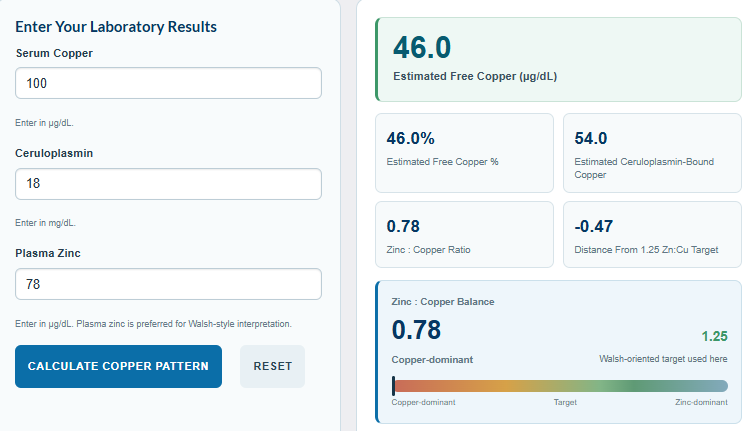
Enter your laboratory results below to calculate estimated free copper and see how your zinc:copper balance compares with the 1.25 target used on this calculator.
Enter Your Laboratory Results
Estimated ceruloplasmin-bound copper = Ceruloplasmin × 3
Estimated free copper = Total serum copper − estimated bound copper
Estimated free copper % = Free copper ÷ total copper × 100
Zinc : Copper ratio = Plasma zinc ÷ serum copper
What Is Copper Overload?
Copper overload is more than simply having a high serum copper result. A more useful assessment considers serum copper, ceruloplasmin, plasma zinc, calculated free copper, the copper/ceruloplasmin ratio, and the zinc/copper ratio together.
A copper-dominant biochemical pattern may occur when copper is elevated, zinc is relatively low, ceruloplasmin binding is inadequate, or calculated free copper is increased.
How to Calculate Free Copper
Most circulating copper is associated with ceruloplasmin. A free copper calculation estimates the amount of serum copper that is not accounted for by ceruloplasmin binding.
For example, if serum copper is 100 µg/dL and ceruloplasmin is 20 mg/dL:
- Estimated ceruloplasmin-bound copper = 20 × 3 = 60 µg/dL
- Estimated free copper = 100 − 60 = 40 µg/dL
- Estimated free copper percentage = 40%
Calculated free copper is an estimate rather than a direct measurement of labile copper, which is why the original serum copper and ceruloplasmin values remain important.
Copper and Ceruloplasmin: Why They Should Be Tested Together
Copper and ceruloplasmin should be interpreted together because ceruloplasmin is the major copper-carrying protein in blood. A serum copper result by itself does not show how much copper is associated with ceruloplasmin.
Two people can therefore have the same serum copper level but very different calculated free copper values if their ceruloplasmin levels differ.
Higher Copper + Adequate Ceruloplasmin
A larger proportion of circulating copper may be accounted for by ceruloplasmin binding.
Higher Copper + Low Ceruloplasmin
A larger fraction of serum copper may remain outside the estimated ceruloplasmin-bound fraction.
Low Ceruloplasmin: Why It Changes the Copper Overload Picture
Low ceruloplasmin does not automatically mean copper overload. However, low ceruloplasmin can significantly change how a serum copper result should be interpreted.
Because ceruloplasmin carries most circulating copper, a low ceruloplasmin level may result in a higher calculated free copper fraction even when total serum copper is not dramatically elevated.
This is why a patient with low ceruloplasmin and apparently normal copper may still have a very different biochemical pattern from someone with the same copper level and normal ceruloplasmin.
Low Ceruloplasmin
May reduce the amount of copper accounted for by its primary transport protein.
Calculated Free Copper
Helps estimate how much serum copper is not explained by ceruloplasmin binding.
Plasma Zinc
Adds another important measure of whether the overall mineral pattern is copper-dominant.
What Causes Low Ceruloplasmin?
There is no single cause of low ceruloplasmin. Interpretation depends on the complete clinical and laboratory picture.
Possible contributors may include differences in copper status, liver synthesis, protein status, genetic disorders of copper metabolism, nutritional factors, or other medical conditions.
A low ceruloplasmin result therefore should not be interpreted in isolation. Serum copper, plasma zinc, liver-related laboratory findings, symptoms, and medical history may all provide important context.
Low Ceruloplasmin Symptoms
There are no symptoms that specifically diagnose low ceruloplasmin. Symptoms generally relate to the underlying cause and to whether copper metabolism is abnormal.
When low ceruloplasmin occurs as part of a copper-dominant pattern, symptoms may overlap with those associated with elevated copper, anxiety, mood instability, sleep problems, or hormonal sensitivity.
When low ceruloplasmin instead accompanies copper deficiency, the clinical picture may be very different. This distinction is one reason copper and ceruloplasmin should always be reviewed together.
How to Increase Ceruloplasmin
The first step is determining why ceruloplasmin is low. Trying to raise ceruloplasmin without understanding the underlying copper pattern can be misleading.
For example, low ceruloplasmin with low copper represents a different biochemical situation from low ceruloplasmin with elevated free copper. Treatment should therefore be based on the underlying laboratory pattern rather than the ceruloplasmin number alone.
For a more complete discussion of causes and treatment considerations, see our guide to low ceruloplasmin and how to increase ceruloplasmin .
Copper/Ceruloplasmin Ratio and Free Copper
The copper/ceruloplasmin ratio provides another way to examine the relationship between circulating copper and its major transport protein.
The copper/ceruloplasmin ratio and calculated free copper should not be viewed as identical measurements.
Calculated Free Copper
Estimates how much serum copper is not accounted for by ceruloplasmin binding.
Copper/Ceruloplasmin Ratio
Compares the amount of circulating copper with the amount of ceruloplasmin available to carry it.
Zinc/Copper Ratio: Why 1.25 Matters in the Walsh Approach
The zinc/copper ratio compares plasma zinc directly with serum copper. This calculator uses approximately 1.25 as its Walsh-oriented zinc/copper target.
When the zinc/copper ratio falls below 1.25, copper becomes progressively more dominant relative to zinc.
Lower Zinc/Copper Ratio
Indicates relatively greater copper compared with zinc.
Near 1.25
Represents the Walsh-oriented balance point used by this calculator.
Higher Zinc/Copper Ratio
Indicates relatively greater zinc compared with copper.
Elevated Copper Symptoms
Elevated copper symptoms cannot diagnose copper overload by themselves. However, certain symptoms are commonly considered when laboratory testing also shows elevated copper, low zinc, increased free copper, or a low zinc/copper ratio.
Anxiety & Mood
- Anxiety
- Panic symptoms
- Irritability
- Emotional volatility
- Agitation
- Difficulty tolerating stress
Sleep & Cognitive Symptoms
- Insomnia
- Racing thoughts
- Internal tension
- Poor concentration
- Difficulty calming down
Hormonal Patterns
- Premenstrual symptom worsening
- Postpartum mood changes
- Symptoms changing with estrogen exposure
- Hormone-related anxiety or irritability
Laboratory Clues
- Elevated serum copper
- Low plasma zinc
- Low zinc/copper ratio
- Elevated calculated free copper
- Low or inadequate ceruloplasmin relative to copper
Can You Have Copper Overload With Normal Serum Copper?
Yes. Total serum copper is only one part of the copper-overload pattern.
A person may have an apparently normal serum copper result while also having:
- Low ceruloplasmin
- Low plasma zinc
- A low zinc/copper ratio
- Elevated calculated free copper
- An abnormal copper/ceruloplasmin relationship
This is why copper, ceruloplasmin, and plasma zinc testing is usually more informative than serum copper alone.
Blood Tests for Copper Overload
The most useful initial blood tests for a copper-overload assessment are serum copper, ceruloplasmin, and plasma zinc. Together they allow calculation of free copper, copper/ceruloplasmin relationships, and zinc/copper balance.
Copper Overload Panel
Includes serum copper, ceruloplasmin, and plasma zinc—the three laboratory values used by this calculator.
Order Copper Overload Testing →Serum Copper
Measures total circulating copper and becomes much more informative when interpreted with ceruloplasmin and zinc.
Order Serum Copper →Ceruloplasmin
Measures the major copper-carrying protein and is required to estimate free copper.
Order Ceruloplasmin →Plasma Zinc
Provides the zinc measurement needed to calculate the zinc/copper ratio.
Order Plasma Zinc →Comprehensive Walsh Biotype Panel
Adds whole-blood histamine, homocysteine, vitamin D, CBC, CMP, and other markers used in a broader biochemical assessment.
View Comprehensive Biotype Testing →Learn More About Copper Overload and the Walsh Approach
Copper Overload Symptoms & Signs
Learn about elevated copper symptoms, low zinc, ceruloplasmin, anxiety, insomnia, hormone sensitivity, and the Walsh copper-overload pattern.
Read the Copper Overload Guide →The Walsh Approach
Learn how copper overload fits with undermethylation, overmethylation, pyroluria, toxic burden, and other biochemical patterns.
Explore the Walsh Approach →Five Biotypes of Depression
See how copper overload fits into the broader Walsh biochemical model for mood and behavioral symptoms.
Read About the Five Biotypes →About Second Opinion Physician
Learn how Dr. David Epstein combines the Walsh Approach with laboratory-guided functional and methylation assessment.
About Second Opinion Physician →Frequently Asked Questions About Free Copper, Ceruloplasmin & Copper Overload
What does low ceruloplasmin mean?
Low ceruloplasmin means the measured concentration of the major copper-carrying protein is below the laboratory reference or expected range. The significance depends on serum copper, zinc, liver and protein status, medical history, and other findings.
What causes low ceruloplasmin?
Low ceruloplasmin can occur for several reasons, including abnormalities of copper metabolism, liver synthesis, nutritional or protein status, genetic conditions, and other medical causes. Copper and ceruloplasmin should therefore be evaluated together.
What are low ceruloplasmin symptoms?
There are no symptoms specific to low ceruloplasmin itself. Symptoms depend on the underlying cause and whether copper is deficient, elevated, or abnormally distributed.
Can ceruloplasmin be low when serum copper is normal?
Yes. This is one reason calculated free copper and the copper/ceruloplasmin relationship can add useful information beyond total serum copper alone.
How do you increase ceruloplasmin?
The appropriate approach depends on why ceruloplasmin is low. Low ceruloplasmin with low copper is a different biochemical problem from low ceruloplasmin with elevated calculated free copper. The cause should be clarified before attempting to change the laboratory value.
Why should copper and ceruloplasmin be tested together?
Ceruloplasmin carries most circulating copper. Measuring both allows the relationship between copper and its major transport protein to be evaluated and enables calculation of estimated free copper.
How do you calculate free copper?
This calculator estimates free copper as serum copper minus three times the ceruloplasmin concentration.
What is the ideal zinc/copper ratio?
This calculator uses approximately 1.25 as its Walsh-oriented zinc/copper target. Lower ratios indicate progressively greater copper dominance relative to zinc.
Can you have copper overload with normal serum copper?
Yes. A person may have apparently normal serum copper while having low zinc, low ceruloplasmin, a reduced zinc/copper ratio, or increased calculated free copper.
Why Zinc:Copper Balance Matters
Total copper tells only part of the story. Zinc helps regulate copper absorption, distribution, antioxidant protection, and metallothionein activity.
Within the Walsh framework, a patient with moderately elevated copper and low zinc may have a more significant copper-dominant pattern than someone with the same copper level and stronger zinc status.
The Four Main Measures
Total Serum Copper
Measures the total circulating copper in serum, including copper carried by ceruloplasmin.
Estimated Free Copper
Estimates the portion of copper not accounted for by ceruloplasmin binding. This can add useful context when total copper alone appears only mildly abnormal.
Plasma Zinc
Walsh emphasizes plasma zinc rather than serum zinc. Zinc is important for copper regulation and antioxidant protection.
Zinc : Copper Ratio
Compares zinc directly with copper. A ratio below the 1.25 target reflects progressively greater copper dominance.
How the Copper Impact Pattern Is Calculated
The overall bar is designed to help users visualize the pattern across several laboratory markers rather than focusing on a single result.
| Component | Weight | Why It Matters |
|---|---|---|
| Estimated Free Copper | 35% | Reflects copper not accounted for by ceruloplasmin binding. |
| Zinc : Copper Ratio | 30% | Shows whether the mineral pattern is copper-dominant relative to the 1.25 target. |
| Total Copper | 20% | Provides the overall circulating copper burden. |
| Plasma Zinc | 15% | Low zinc may worsen copper dominance and reduce antioxidant protection. |
Tests Used to Evaluate Copper Overload
Copper Overload Panel
Includes serum copper, plasma zinc, and ceruloplasmin—the three values required for this calculator.
Order the Copper Overload Panel →Serum Copper
Measures total circulating copper and should be interpreted with zinc and ceruloplasmin.
Order Serum Copper →Ceruloplasmin
Measures the primary copper-carrying protein and is needed to estimate non-ceruloplasmin-bound copper.
Order Ceruloplasmin →Plasma Zinc
Provides the zinc value needed to evaluate Zn:Cu balance and possible zinc deficiency.
Order Plasma Zinc →Comprehensive Walsh Biotype Panel
Adds whole-blood histamine, homocysteine, vitamin D, CBC, CMP, and other markers used in a broader Walsh assessment.
View Comprehensive Biotype Testing →Learn More About Copper and the Walsh Approach
Copper Overload Symptoms & Testing
Learn how copper, zinc, ceruloplasmin, dopamine, norepinephrine, anxiety, insomnia, hormones, and oxidative stress may fit together.
Read the Copper Overload Guide →The Walsh Approach
Learn how copper overload fits with undermethylation, overmethylation, pyroluria, oxidative stress, and other biochemical patterns.
Explore the Walsh Approach →Five Biotypes of Depression
See how copper overload is evaluated within the larger Walsh biochemical model for mood and behavioral symptoms.
Read About the Five Biotypes →About Second Opinion Physician
Learn how Dr. David Epstein combines the Walsh Approach with lab-guided functional and methylation assessment.
About Second Opinion Physician →Frequently Asked Questions
Why use Zinc:Copper instead of Copper:Zinc?
Both ratios describe the same relationship in reciprocal form. This calculator uses Zinc:Copper because it makes the target intuitive: approximately 1.25 means zinc is about 25% higher than copper numerically when both are expressed in µg/dL.
What does a Zinc:Copper ratio below 1.25 mean?
A ratio below the target indicates relatively greater copper compared with zinc. The farther the ratio falls below 1.25, the more copper-dominant the mineral pattern becomes.
Why calculate free copper too?
Zinc:Copper balance and estimated free copper answer different questions. The ratio evaluates mineral balance, while free copper estimates how much copper is not accounted for by ceruloplasmin binding.
Can normal total copper still accompany a copper-dominant pattern?
Yes. Total copper may appear relatively ordinary while zinc is low, the Zn:Cu ratio is depressed, or calculated free copper is elevated. This is why the three laboratory markers are more informative when interpreted together.
Why is plasma zinc preferred?
The Walsh Approach traditionally uses plasma zinc. Dr. Walsh has publicly described approximately 80–120 µg/dL as a healthy plasma-zinc range.
Is the Copper Impact Pattern a medical diagnosis?
No. It is an educational visualization combining several laboratory relationships. Copper overload should be interpreted from the underlying laboratory values, symptoms, history, hormone status, inflammation, medications, and treatment response.
Should I start zinc based on this calculator?
Not from the calculator alone. Excessive zinc can lower copper too far. Copper, zinc, and ceruloplasmin should be interpreted together before substantial supplementation changes are made.