Depression with fatigue or slowed function
Norepinephrine supports alertness, effort, attention and goal-directed behavior. An SNRI may be chosen when depression includes marked fatigue, psychomotor slowing, poor concentration or reduced initiative.

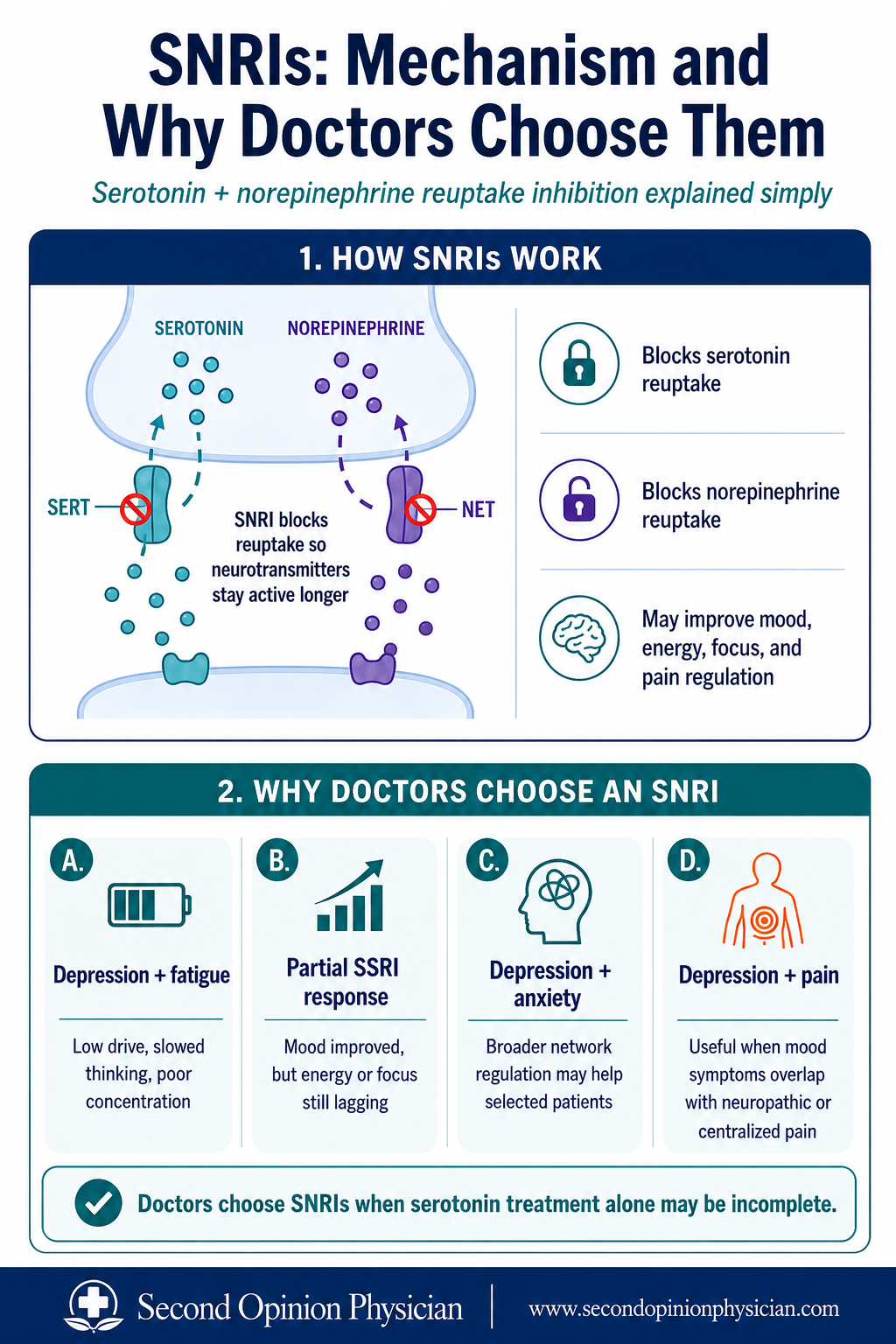
SNRIs are often chosen when a physician believes serotonin treatment alone may be incomplete. By slowing the reuptake of both serotonin and norepinephrine, these medications may improve depression, anxiety, energy, concentration and certain pain syndromes. That broader mechanism can be useful when a patient has low drive, cognitive slowing, incomplete benefit from an SSRI or depression accompanied by chronic pain. It also creates additional tradeoffs because norepinephrine can worsen sweating, palpitations, blood pressure, insomnia, agitation or panic when the patient is already in an overactivated state.
The larger clinical question is therefore not simply whether an SNRI is approved for depression, anxiety or pain. It is whether the symptom pattern truly indicates a need for more norepinephrine activity—or whether anxiety, fatigue or pain is being driven by copper overload, pyroluria, low zinc, cortisol imbalance, Hashimoto thyroiditis, inflammation, toxic burden, glutamate sensitivity, NMDA receptor hyperactivity, poor sleep or epigenetic pressure on methylation. A comprehensive approach explains how the medication works while also identifying the metabolic and biochemical factors the drug may not correct.
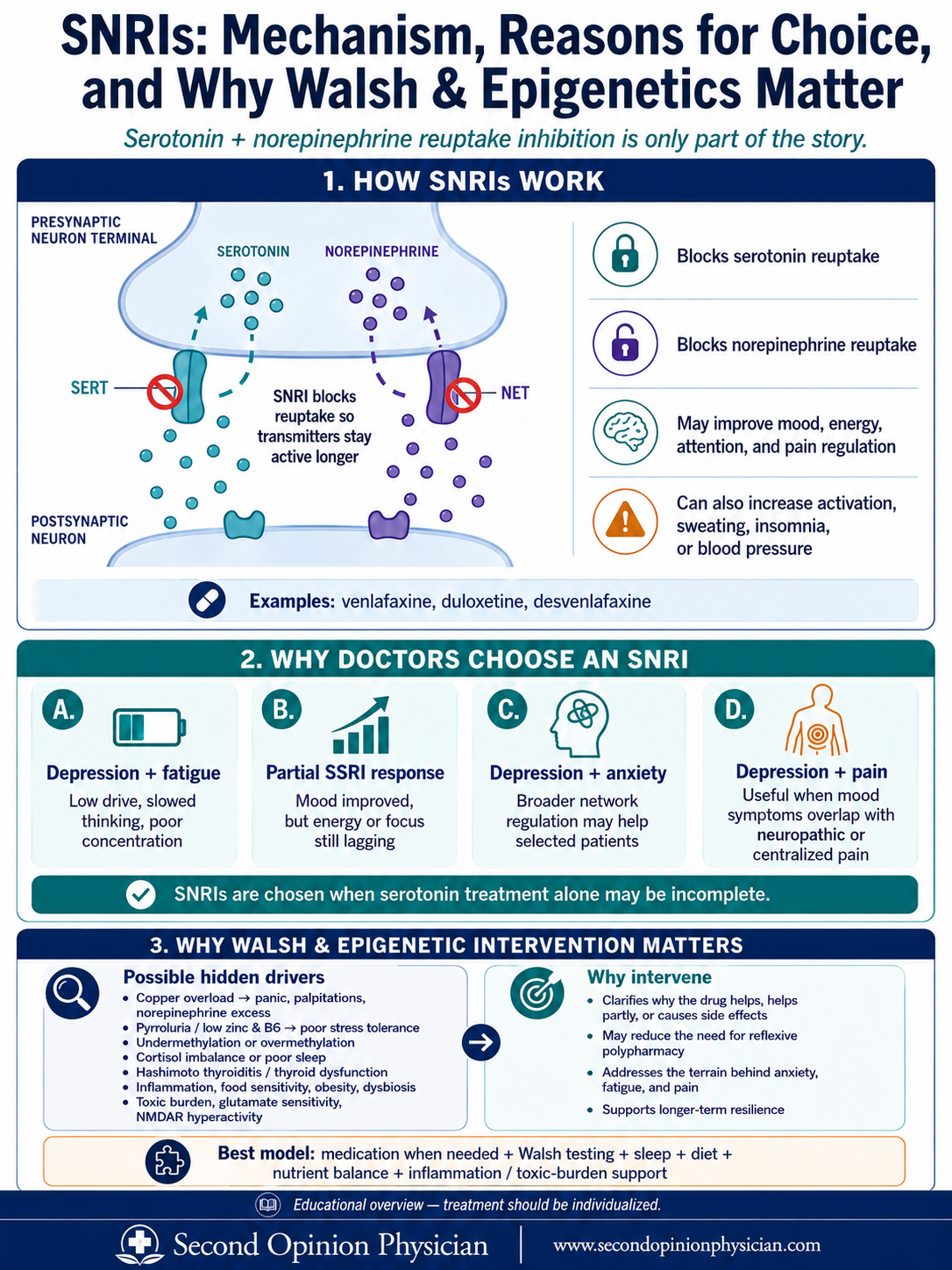
SNRIs are often selected when a physician believes serotonin treatment alone may be incomplete. The additional norepinephrine effect may improve energy, concentration, stress regulation and descending pain control. It may also worsen anxiety, sweating, palpitations, insomnia or blood pressure when norepinephrine activity is already excessive or poorly regulated.
The practical question is therefore not simply whether an SNRI is approved for depression, anxiety or pain. It is whether the patient’s symptom pattern truly fits a need for combined serotonin and norepinephrine treatment—or whether anxiety, fatigue or pain is being driven by a biochemical, thyroid, inflammatory, toxic or metabolic problem that should be identified directly.
SNRI stands for serotonin-norepinephrine reuptake inhibitor. These medications inhibit transporters that normally return serotonin and norepinephrine to the neurons that released them. Blocking reuptake allows both neurotransmitters to remain active in the synapse longer.
The transporter effect occurs quickly, but improvement generally takes longer because receptors, stress circuits, pain pathways and neural networks gradually adapt. This is why a patient may experience early activation or side effects before the intended mood or anxiety benefit becomes clear.
SNRIs are not automatically stronger or better. They are usually selected because the physician believes that a broader mechanism may fit the patient’s symptom pattern better than serotonin reuptake inhibition alone.
Norepinephrine supports alertness, effort, attention and goal-directed behavior. An SNRI may be chosen when depression includes marked fatigue, psychomotor slowing, poor concentration or reduced initiative.
A patient may become less sad or less obsessive on an SSRI but remain tired, mentally slowed or unable to initiate activity. An SNRI may be used to retain serotonin benefit while adding norepinephrine activity.
Venlafaxine and duloxetine are used for anxiety disorders as well as depression. The goal is long-term regulation of fear, stress and cognitive-control networks—not simply stimulation of the fight-or-flight response.
Serotonin and norepinephrine participate in descending pain-control pathways. Duloxetine is often selected when depression or anxiety overlaps with neuropathic pain, fibromyalgia or chronic musculoskeletal pain.
A physician may select an SNRI when sedation, low drive or daytime impairment is a major concern. Helpful activation must be distinguished from nervous energy, panic, irritability or loss of sleep.
Past benefit from venlafaxine, duloxetine or a related medication may be more informative than a diagnostic label alone. Previous side effects and withdrawal history are equally important.
An SNRI makes the most sense when low-serotonin symptoms coexist with low energy, poor concentration, reduced drive or a pain-processing problem. It makes less sense when anxiety already reflects excessive sympathetic activation, copper-related norepinephrine excess, severe insomnia, hyperthyroid physiology, stimulant exposure or an overmethylated pattern.
The balance is not identical across drugs or doses. Venlafaxine tends to be more serotonergic at lower doses and becomes more noradrenergic as the dose rises. Duloxetine has clinically meaningful effects on both systems and is often chosen when pain is part of the presentation.
Anxiety is not simply “too much norepinephrine everywhere.” Norepinephrine follows a functional range: too little may impair alertness, attention and prefrontal control, while too much may produce hypervigilance, palpitations, tremor and panic. Anxiety can therefore reflect poorly regulated signaling across different circuits rather than a uniform excess.
Early treatment can feel activating because serotonin and norepinephrine rise before the larger neural system has adapted. Nervousness, sweating, insomnia or internal restlessness may temporarily increase.
With continued treatment, receptor sensitivity, locus-coeruleus signaling, prefrontal control and fear-network activity may become more stable. Better mood, attention and cognitive control can reduce chronic worry and anticipatory fear.
The anxiety benefit is not proof that the patient needed more fight-or-flight chemistry. It means that combined serotonin and norepinephrine modulation improved the larger anxiety network. The same medication may worsen anxiety when norepinephrine was already excessive.
Primarily inhibits serotonin reuptake. Often selected when depression, OCD, panic, generalized anxiety or PTSD symptoms appear predominantly serotonergic and when avoiding additional norepinephrine activation is desirable.
Inhibits serotonin and norepinephrine reuptake. Often selected when depression includes fatigue, impaired concentration, low drive, chronic pain or incomplete benefit from an SSRI.
The extra norepinephrine effect creates extra tradeoffs. It may improve energy and pain control, but may also increase sweating, pulse, blood pressure, agitation, insomnia and withdrawal intensity.
An SNRI may reduce neuropathic or centralized pain by strengthening descending inhibitory pain pathways. That can be clinically useful, but it does not establish why the patient developed pain or inflammation.
Food reactions, histamine activity, environmental allergies and immune activation may contribute to inflammation, sleep disruption, fatigue and diffuse pain.
A high-sugar processed diet, excess visceral fat and poor glucose regulation can sustain inflammatory signaling and worsen pain, fatigue and mood.
Dental, sinus, gastrointestinal or other chronic infections and altered gut ecology may increase inflammatory and toxic burden.
Joint disease, deconditioning, weakness, injury, posture and repetitive strain still require appropriate physical and structural evaluation.
Hashimoto thyroiditis and thyroid dysfunction may overlap with depression, anxiety, fatigue, muscle pain, cognitive slowing and medication sensitivity.
Poor sleep lowers pain tolerance and cellular recovery, while mitochondrial dysfunction may contribute to fatigue, exercise intolerance and widespread symptoms.
An SNRI can reduce pain signaling while the inflammatory driver remains active. A broader assessment may review diet, food reactions, allergies, obesity, insulin resistance, chronic infection, dysbiosis, autoimmune thyroid disease, sleep, toxic burden and physical contributors.
Related reading: Histamine Intolerance and Testing, Toxic Overload and Diet, Inflammation and Glutamate.
When anxiety is prominent or the norepinephrine response appears erratic, the reason for selecting an SNRI should be examined more carefully. Several metabolic patterns can create anxiety, poor concentration or fatigue without indicating that the patient needs more norepinephrine.
Copper is involved in dopamine beta-hydroxylase, the enzyme that converts dopamine to norepinephrine. A copper-zinc imbalance may contribute to panic, internal agitation, insomnia, irritability and palpitations.
Pyroluria may increase the need for zinc and vitamin B6, weakening serotonin, dopamine and GABA synthesis while reducing stress tolerance.
Abnormal diurnal cortisol, chronic stress activation or a flattened stress response can produce anxiety, insomnia, fatigue, sugar cravings and poor recovery that may be mistaken for a simple neurotransmitter deficiency.
Autoimmune thyroiditis and thyroid dysfunction may overlap with anxiety, depression, cognitive slowing, palpitations, fatigue and pain. Thyroid review should not stop at assuming every symptom is psychiatric.
Anxiety with depression can occur in an overmethylated, low-histamine and chemically sensitive patient who may become more activated with serotonergic and noradrenergic medication.
An undermethylated patient may benefit from serotonin treatment yet still have anxiety from copper overload, pyroluria, low zinc, cortisol disturbance, inflammation or sleep loss.
Many patients who benefit from serotonergic antidepressants share a pattern of rumination, OCD traits, perfectionism, guilt, high internal tension, seasonal allergies and past SSRI response that fits the Walsh undermethylation model. An SNRI may add norepinephrine support when fatigue, concentration or pain is also prominent.
The deeper treatment question is why serotonin and stress-system resilience became inadequate. Sleep loss, processed food, poor protein intake, inflammation, toxic exposure, increased creatine or repair demand, mitochondrial strain, alcohol, cannabis and chronic emotional stress can all increase methylation demand or reduce recovery.
Review the Five Epigenetic Biotypes of Undermethylation, including toxin exposure, mitochondrial strain, creatine demand, increased methylation demand and acidic load with impaired clearance.
Anxiety, sensory overload, agitation, poor sleep and “wired” cognition may involve more than serotonin and norepinephrine. Toxic burden, gut inflammation, oxidative stress, low zinc or magnesium, mitochondrial strain and concentrated free-glutamate exposure may increase glutamate signaling and NMDA receptor activity.
In that situation, adding more norepinephrine may improve low mood while leaving the excitatory driver untouched—or may worsen internal tension. The broader treatment plan may need to address diet, histamine, gut health, antioxidants, minerals, toxic burden and mitochondrial support.
Possible clues include intrusive or looping thoughts, sensory overload, insomnia, irritability, exaggerated reactions to processed foods and increased symptoms during inflammation.
Possible clues include chemical sensitivity, mold exposure, brain fog, headaches, gut symptoms, poor exercise tolerance, anxiety and slow recovery from physical or emotional stress.
Patients should understand both the intended mechanism and the additional risks created by norepinephrine reuptake inhibition.
Anxiety, agitation, tremor, internal restlessness, irritability or insomnia.
Sweating, dry mouth, increased pulse, palpitations and blood-pressure elevation.
Nausea, reduced appetite, constipation or diarrhea.
Reduced libido, delayed orgasm, erectile difficulty or emotional flattening.
Insomnia, vivid dreams, fragmented sleep or daytime somnolence.
Reduced need for sleep, racing thoughts, impulsivity, unusual energy or mania in susceptible patients.
Other serotonergic agents, stimulants, decongestants, heavy caffeine and selected supplements may amplify adverse effects.
Kidney, liver, blood-pressure, glaucoma, bleeding and sodium risks differ by medication and patient.
Rapid reduction may produce dizziness, electrical sensations or “brain zaps,” nausea, imbalance, anxiety, irritability, insomnia, vivid dreams and flu-like symptoms. Venlafaxine is particularly known for noticeable discontinuation symptoms because missing a dose can rapidly change drug exposure.
Withdrawal can be mistaken for immediate relapse. Symptoms beginning soon after a dose reduction—especially dizziness, disequilibrium and electrical sensations—often reflect nervous-system adaptation to the medication change.
| Clinical question | Possible contributor | Testing direction |
|---|---|---|
| Why did the SNRI improve energy but worsen anxiety? | Excess norepinephrine effect, copper overload, cortisol activation or poor sleep | Copper, ceruloplasmin, zinc, cortisol profile, thyroid and sleep review |
| Why is depression accompanied by pain? | Inflammation, allergy, dysbiosis, insulin resistance, Hashimoto disease or structural pain | CBC/CMP, thyroid antibodies, glucose/A1c, inflammation, allergy and gut assessment |
| Why did serotonin treatment help but only partly? | Undermethylation plus pyroluria, copper imbalance, low vitamin D or toxic burden | Histamine, methylation panel, zinc, copper, pyrroles, vitamin D and SAH |
| Why is the patient wired, sensory-sensitive or food-reactive? | Glutamate/NMDAR activation, histamine, gut inflammation or toxic burden | Diet history, minerals, histamine, gut and toxic-burden evaluation |
| Brand | Generic | Common reasons selected | Important practical issue |
|---|---|---|---|
| Effexor XR | Venlafaxine XR | Depression, generalized anxiety, social anxiety, panic | More noradrenergic as dose rises; blood pressure and withdrawal deserve attention |
| Cymbalta | Duloxetine | Depression, generalized anxiety, neuropathic pain, fibromyalgia, musculoskeletal pain | Often selected when pain and mood overlap; review liver, kidney and medication factors |
| Pristiq | Desvenlafaxine | Major depressive disorder | Kidney function affects dosing and exposure |
| Fetzima | Levomilnacipran | Major depressive disorder with low energy or executive symptoms | Relatively strong norepinephrine effect; pulse, blood pressure and urinary symptoms may matter |
| Savella | Milnacipran | Fibromyalgia in the United States | Used primarily as a pain/fibromyalgia medication rather than an FDA-approved depression drug in the U.S. |
An SNRI may be selected when depression includes low energy, poor concentration, reduced drive, chronic pain or incomplete benefit from serotonin treatment alone.
Anxiety can involve dysregulated rather than uniformly excessive norepinephrine. Long-term treatment may improve prefrontal control, attention and fear-network regulation even though early treatment can initially feel activating.
It may be a poor fit when anxiety is already accompanied by severe insomnia, palpitations, stimulant sensitivity, copper-related norepinephrine excess, hyperthyroid physiology, overmethylation or bipolar activation.
When anxiety, panic, irritability, sweating, palpitations or insomnia are prominent, copper, ceruloplasmin and zinc may provide useful context because copper imbalance may favor excessive norepinephrine activity.
Serotonin and norepinephrine participate in descending pain-control pathways. This can reduce neuropathic or centralized pain, but the medication does not necessarily correct inflammation, dysbiosis, food sensitivity, obesity, infection or structural causes.
Yes. Autoimmune thyroiditis and thyroid dysfunction may overlap with mood symptoms, fatigue, cognitive slowing, palpitations and pain. Thyroid testing may be important when the clinical pattern fits.
Yes. Toxic burden, gut inflammation, oxidative stress and NMDA receptor hyperactivity may contribute to agitation, insomnia, sensory overload and food-triggered symptoms that serotonin-norepinephrine treatment does not fully address.
An undermethylated patient may benefit from the serotonin component, while norepinephrine may help fatigue or concentration. Persistent anxiety may still reflect copper overload, pyroluria, low vitamin D, poor sleep or another epigenetic burden.
Rapid reduction can produce dizziness, electrical sensations, imbalance, nausea, anxiety and insomnia as the nervous system adapts to the loss of serotonin and norepinephrine reuptake blockade.
Whole-blood histamine, a plasma methylation panel, zinc, copper, ceruloplasmin, pyrroles, vitamin D, cortisol, thyroid studies, CBC/CMP, glucose regulation and selected inflammatory, allergy, gut or toxic-burden tests may be considered.
An SNRI can be an appropriate treatment for depression, anxiety or pain. The strongest evaluation also asks whether norepinephrine support fits the patient and whether copper imbalance, pyroluria, cortisol, thyroid disease, inflammation, glutamate sensitivity, toxic burden, sleep or epigenetic methylation pressure are still driving symptoms.