
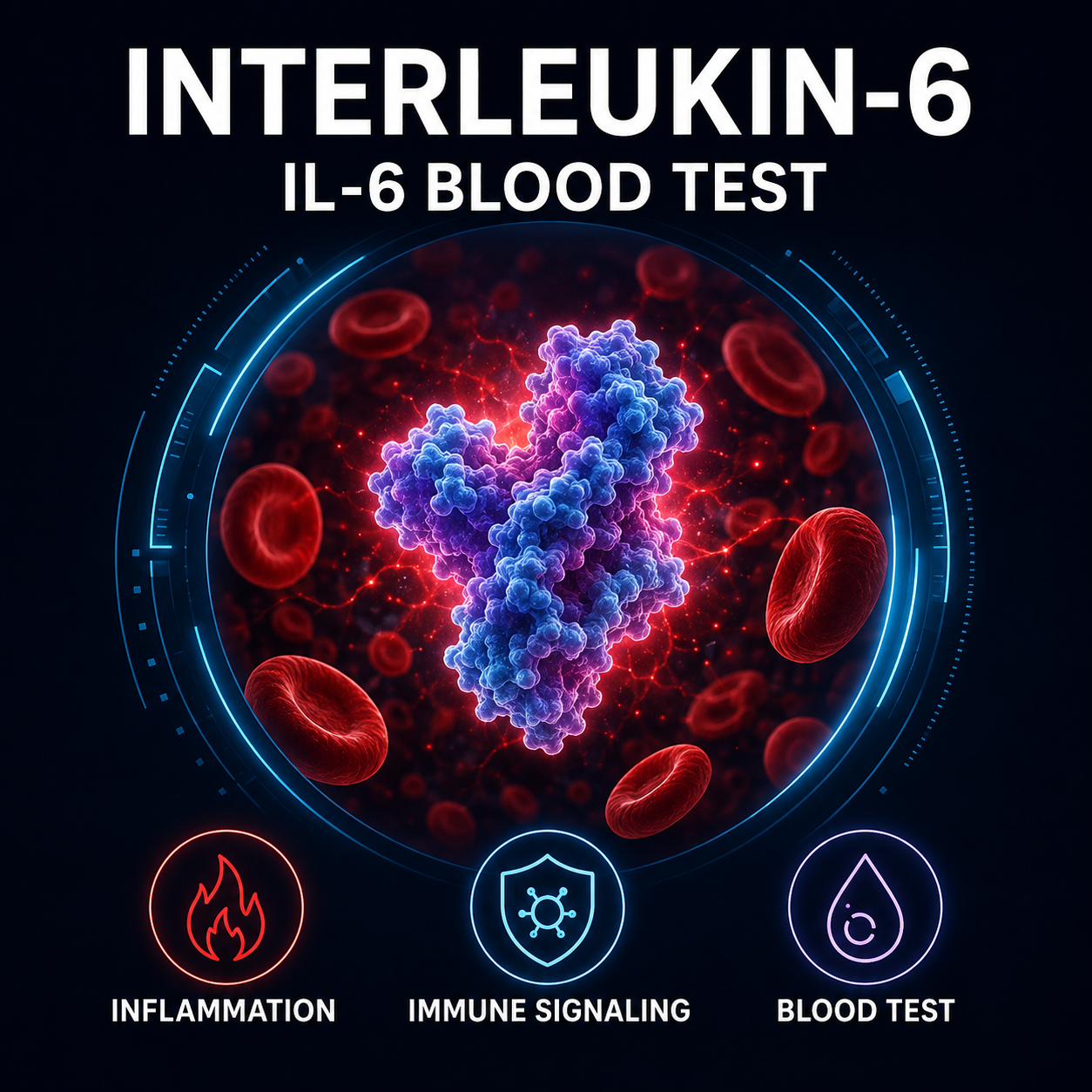
Interleukin 6, IL6
$225.00
The Interleukin-6 (IL-6) Test measures a key inflammatory cytokine involved in immune activation, systemic inflammation, neuroinflammatory signaling, metabolic stress, and age-related inflammation.
IL-6 can provide information that is not always captured by routine inflammatory markers such as CRP. It may be useful for establishing a baseline, monitoring inflammatory burden over time, and evaluating how inflammation may be interacting with epigenetic regulation, mitochondrial stress, methylation demand, immune function, and healthy aging.
Description
Interleukin-6 (IL-6) is an important cytokine involved in immune signaling, inflammatory regulation, tissue repair, metabolic stress, and communication between the immune system and the brain.
The IL-6 blood test can help identify inflammatory activity that may not be fully reflected by standard markers such as C-reactive protein (CRP). It is particularly useful when evaluating chronic low-grade inflammation, immune activation, neuroinflammatory processes, metabolic dysfunction, treatment response, and age-related inflammatory signaling.
This test is performed through Labcorp as Interleukin-6, Serum — Test #140916.
What Does the IL-6 Test Measure?
Interleukin-6 is a signaling protein released by multiple cell types in response to infection, tissue injury, metabolic stress, immune activation, and other physiologic challenges.
IL-6 participates in both normal immune regulation and inflammatory signaling. Persistent elevation may indicate that inflammatory pathways remain activated even when symptoms are nonspecific or routine testing is relatively unremarkable.
Testing can therefore provide a more focused view of cytokine-level inflammatory activity.
Who May Benefit From IL-6 Testing?
This test may be useful when evaluating:
- Chronic or low-grade inflammation
- Immune system activation
- Unexplained fatigue or poor recovery
- Neuroinflammatory or cognitive symptoms
- Metabolic dysfunction
- Inflammatory contributions to mood or neurologic symptoms
- Environmental or toxic burden
- Response to anti-inflammatory interventions
- Changes during recovery from illness or physiologic stress
- Healthy-aging and longevity-oriented inflammatory assessment
Why IL-6 Can Add Information Beyond CRP
CRP is a useful general marker of systemic inflammation, but it does not measure the upstream inflammatory signaling that helps drive CRP production.
IL-6 is one of the cytokines involved in stimulating the liver to produce acute-phase proteins such as CRP. Measuring IL-6 may therefore provide a different perspective on inflammatory activity.
A normal CRP does not always mean that cytokine signaling is completely quiet. In selected patients, IL-6 may provide additional information about inflammatory activity that warrants further clinical assessment.
The two markers are often most useful when interpreted together rather than viewed as interchangeable tests.
IL-6, Chronic Inflammation and “Inflammaging”
Persistent low-grade inflammatory signaling tends to become more common with aging and is sometimes described as “inflammaging.”
Chronic inflammatory signaling can affect multiple systems, including:
- Vascular health
- Glucose regulation
- Insulin sensitivity
- Muscle maintenance
- Brain and cognitive function
- Immune regulation
- Mitochondrial function
- Cellular repair
IL-6 can therefore be useful as one component of a broader healthy-aging or longevity assessment, particularly when the goal is to identify potentially modifiable inflammatory burden before it becomes more clinically apparent.
It should not be interpreted as a stand-alone “biological age” test. Its value is in showing whether inflammatory signaling appears unusually active in the context of the rest of the metabolic picture.
IL-6, Epigenetics and Methylation
Inflammation and epigenetic regulation interact closely. Persistent cytokine signaling can influence gene expression, oxidative stress, mitochondrial activity, nutrient requirements, and cellular repair pathways.
Within a Walsh-oriented and epigenetic assessment, chronic inflammation may also increase methylation demand by increasing the metabolic resources required for immune regulation, repair, antioxidant defense, and detoxification.
This can be particularly relevant when IL-6 elevation occurs alongside:
- Elevated SAH
- A reduced SAM-to-SAH ratio
- Undermethylation
- Oxidative stress
- Toxic burden
- Mitochondrial dysfunction
- Poor response to methylation support
IL-6 does not measure methylation directly. Instead, it can help identify inflammation as one of the physiologic stresses contributing to increased methylation demand or an acquired epigenetic pattern.
IL-6 and Mitochondrial Stress
Chronic inflammation and mitochondrial dysfunction can reinforce one another.
Inflammatory cytokines may increase oxidative stress and interfere with cellular energy production, while damaged or stressed mitochondria can generate signals that further activate inflammatory pathways.
An elevated IL-6 result may therefore provide useful context when investigating:
- Persistent fatigue
- Poor exercise recovery
- Brain fog
- Metabolic dysfunction
- Oxidative stress
- Chronic inflammatory symptoms
- Suspected mitochondrial impairment
IL-6 is not a mitochondrial-function test, but it may help identify an inflammatory environment that could be contributing to mitochondrial stress.
IL-6 in Neurologic and Cognitive Assessment
Inflammatory signaling can affect the central nervous system as well as peripheral tissues.
When clinically appropriate, IL-6 may contribute useful information in the assessment of inflammatory influences on:
- Brain fog
- Cognitive decline
- Mood changes
- Fatigue
- Sleep disruption
- Post-infectious symptoms
- Other neurologic complaints
The finding should be interpreted with the clinical history and, when appropriate, other markers of inflammation, oxidative stress, metabolism, and nutrient status.
Using IL-6 to Monitor Inflammation Management
One of the practical uses of IL-6 testing is establishing a baseline and then following the marker over time.
Depending on the clinical situation, repeat testing may help assess changes associated with:
- Dietary changes
- Weight reduction
- Improved metabolic control
- Exercise and physical conditioning
- Sleep improvement
- Reduction of environmental exposures
- Antioxidant and nutrient support
- Other physician-directed anti-inflammatory strategies
The goal is not simply to lower one laboratory number. The value of monitoring is to determine whether changes in IL-6 correspond with improvements in the broader clinical and metabolic picture.
IL-6 and Cancer-Related Inflammation
IL-6 has been widely studied in oncology because many cancers can produce or stimulate inflammatory cytokine signaling.
Across multiple cancer types, higher circulating IL-6 has been associated in research with more aggressive disease and poorer outcomes. Published studies have often used values near or above 10 pg/mL when examining higher-risk groups, although thresholds vary substantially among cancer types, laboratories, treatment settings, and individual studies.
IL-6 is not a cancer screening or diagnostic test. It should not be used by itself to determine whether cancer is present, progressing, or responding to treatment.
When used in an oncology setting, IL-6 is best regarded as an inflammatory biomarker that may provide additional context alongside established imaging, tumor markers, pathology, and oncology-directed testing.
How Results Are Interpreted
In general:
- Elevated IL-6 may indicate increased inflammatory or immune signaling.
- A lower or normal IL-6 suggests less active circulating IL-6 signaling at the time of the blood draw.
However, IL-6 can fluctuate. Interpretation should consider recent infection, exercise, inflammatory illness, metabolic conditions, medications, weight, smoking, environmental exposures, and other factors that may temporarily or chronically influence cytokine production.
A single result is therefore most useful when considered together with symptoms and complementary laboratory findings.
Useful Complementary Tests
Depending on the reason for testing, IL-6 may be interpreted with markers such as:
- High-sensitivity CRP
- CBC
- Comprehensive metabolic panel
- Ferritin
- Fasting glucose and insulin
- Hemoglobin A1c
- Homocysteine
- Vitamin D
- Oxidative-stress markers
- Methylation testing
- Organic acids or mitochondrial testing when indicated
For example, Labcorp offers Interleukin-6, Serum Test #140916, which can be combined with other inflammatory and metabolic markers when a more comprehensive assessment is desired.
Before Your Blood Draw
- This is a standard blood test performed through Labcorp.
- Follow any preparation instructions included with your requisition.
- Provide an accurate list of medications and supplements.
- Recent infection, fever, strenuous exercise, vaccination, surgery, or inflammatory flare may affect cytokine levels and should be considered during interpretation.
- Do not discontinue prescription medications solely for testing unless instructed by your treating clinician.
What Information Will This Test Provide?
The IL-6 test may help answer:
- Is there evidence of increased cytokine-level inflammatory signaling?
- Could inflammation be contributing to fatigue, cognitive, neurologic, or metabolic symptoms?
- Is inflammatory stress potentially increasing oxidative or methylation demand?
- Could inflammation be contributing to mitochondrial stress?
- Would additional inflammatory, metabolic, or epigenetic testing be useful?
- Has inflammatory signaling changed during treatment or lifestyle intervention?
How the Test Works
1. Order the IL-6 Test
After purchase, a Labcorp requisition is provided with specimen-collection instructions.
2. Visit Labcorp
The blood sample is collected at an appropriate Labcorp patient service center.
3. Receive Your Result
Your IL-6 level is reported in the laboratory results and can be interpreted in the context of symptoms and other inflammatory or metabolic findings.
4. Use the Result as Part of a Broader Assessment
The result can help establish an inflammatory baseline, identify areas requiring additional investigation, or monitor changes over time.
Frequently Asked Questions
What does a high IL-6 level mean?
An elevated IL-6 level may reflect increased immune or inflammatory signaling. The cause can vary and should be interpreted alongside symptoms, recent illness, metabolic health, medications, and other laboratory findings.
Can IL-6 be elevated if CRP is normal?
Yes. IL-6 and CRP reflect different parts of the inflammatory response, so they do not always rise and fall together. IL-6 may sometimes provide additional information when routine inflammatory markers are not clearly elevated.
Is IL-6 useful for anti-aging or longevity assessment?
IL-6 is not a biological-age test, but persistent low-grade inflammatory signaling is relevant to healthy aging. IL-6 can therefore be useful as one marker in a broader longevity-oriented assessment of inflammation, metabolism, and cellular stress.
Does IL-6 tell me whether I am undermethylated?
No. IL-6 does not measure methylation directly. Elevated inflammatory signaling can, however, increase oxidative and metabolic demand and may contribute to acquired methylation stress in susceptible individuals.
Can IL-6 be used to monitor treatment?
Yes. When an IL-6 level is elevated, repeat testing may be useful for determining whether inflammatory signaling changes over time in response to treatment, recovery, or lifestyle intervention.
Can IL-6 diagnose or monitor cancer?
IL-6 has been extensively studied as a prognostic inflammatory marker in cancer, but it is not a stand-alone cancer screening, diagnostic, or progression test. Oncology decisions should rely on established cancer-specific testing and specialist evaluation.