From Symptoms to Biochemistry: Predict, Confirm, Treat and Refine
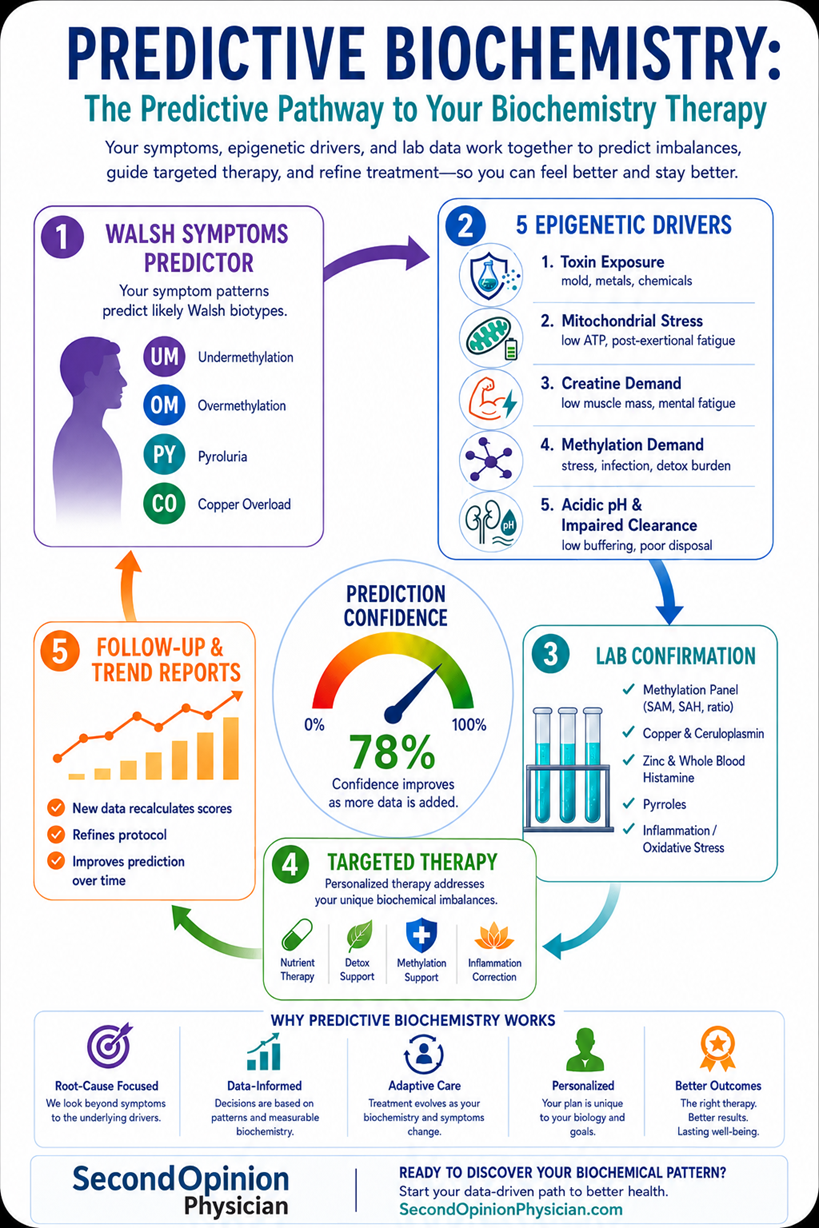
WalshDoc Predictive Biochemistry uses physical and emotional symptom patterns to estimate likely Walsh biotypes, then adds five epigenetic drivers of undermethylation to explain why methylation may be impaired. Targeted laboratory testing confirms or revises those predictions, therapy is matched to the supported biochemical pattern, and follow-up questionnaires, repeat labs and trend analysis are used to refine both the protocol and the prediction over time.
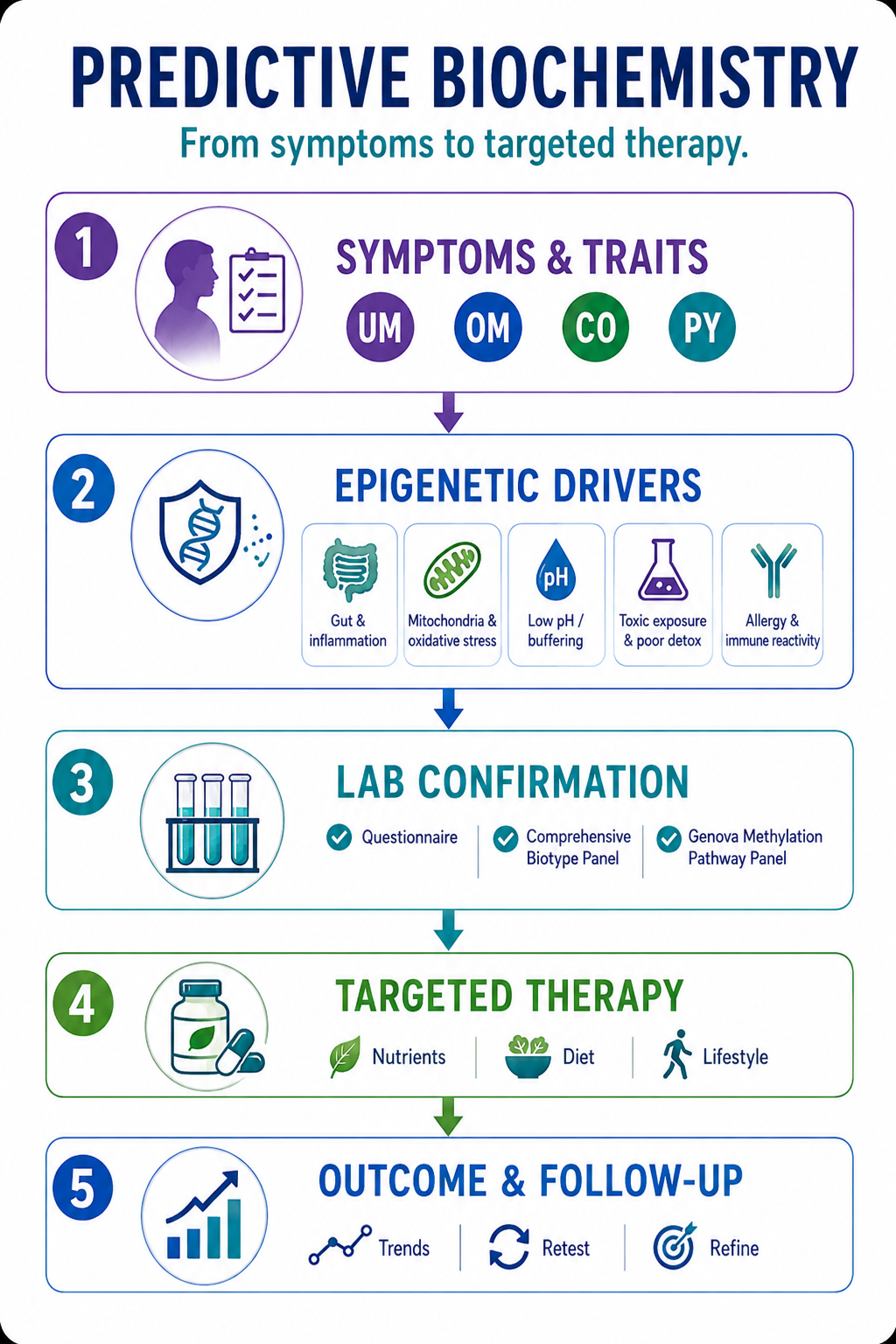
Biochemistry influences neurotransmitter regulation, cellular energy, oxidative balance, mineral handling, detoxification and methylation. Because these systems affect both the brain and body, biochemical imbalances may appear as recognizable clusters of physical, emotional, cognitive and behavioral signs.
WalshDoc combines those signals instead of treating any one symptom as proof of an imbalance. The system estimates the most likely biochemical pattern, identifies the laboratory findings expected to support it, and then uses treatment response and follow-up trends to refine the analysis.
What Is Predictive Biochemistry?
Predictive Biochemistry is a structured clinical pathway for estimating which biochemical patterns are most likely to be contributing to symptoms and then testing those predictions against measurable laboratory findings and real treatment outcomes.
Can Physical and Emotional Symptoms Predict Biochemical Patterns?
They can provide useful predictive clues, although they do not confirm an imbalance by themselves. Neurotransmitter activity, mineral balance, methylation, cellular energy and oxidative stress affect both physical function and emotional regulation. Persistent biochemical pressures may therefore produce recurring combinations of signs and symptoms.
Signals from the body
- Sleep pattern and energy
- Allergy history and stress tolerance
- Body composition and muscle recovery
- Hormonal sensitivity and copper-related traits
- Connective-tissue, skin and nutrient-deficiency clues
Signals from mood and behavior
- Rumination, perfectionism and obsessive traits
- Anxiety, panic and irritability
- Medication activation or poor tolerance
- Attention, motivation and cognitive stamina
- Response to folate, methyl donors, zinc or B6
WalshDoc combines multiple findings into probability-based pattern scores rather than accepting one symptom as proof of one biochemical state.
Which Walsh Biotypes Can the Symptom Pattern Predict?
Undermethylation and Overmethylation
Physical traits, emotional patterns, medication response and whole-blood histamine can help distinguish a low-methylation pattern from a pattern associated with excessive or poorly regulated neurotransmitter activity.
Copper Overload and Pyroluria
Copper, ceruloplasmin, plasma zinc and urinary pyrroles help clarify overlapping patterns involving anxiety, irritability, insomnia, stress intolerance, nutrient depletion and treatment sensitivity.
What Are the Five Epigenetic Drivers of Undermethylation?
A symptom pattern may suggest undermethylation without revealing why effective methylation is impaired. WalshDoc therefore evaluates five physiological drivers that may create or sustain a low-methylation state.
Toxin Exposure
Mold, metals, chemicals, solvents and other exposures may increase detoxification demand, oxidative stress and glutathione utilization.
Mitochondrial Stress
Reduced cellular energy may limit ATP-dependent methylation, detoxification, recycling and recovery.
Creatine Demand
Endogenous creatine synthesis consumes methyl groups. High demand or inadequate dietary creatine may increase the drain on available SAM.
Methylation Demand
Stress, inflammation, infection, tissue repair, alcohol, medications and detoxification can increase methyl-group requirements.
Acidic pH & Impaired Clearance
Poor buffering or impaired homocysteine and adenosine disposal may favor SAH accumulation and inhibit methyltransferase activity.
How Do Laboratory Tests Confirm or Refine the Predicted Pattern?
Laboratory testing tests the prediction against objective biochemical findings. A result may support the original pattern, reveal a mixed biotype, identify an overlooked driver or show that the initial prediction needs to be revised.
| Test or marker | What it helps clarify | Why it can change therapy |
|---|---|---|
| Whole-Blood Histamine & Homocysteine | Classic Walsh methylation tendency and one-carbon pathway context. | May change folate, methyl-donor and serotonergic treatment decisions. |
| Copper, Ceruloplasmin & Plasma Zinc | Copper burden, copper binding, zinc deficiency and mixed-pattern risk. | May indicate that mineral correction should precede other interventions. |
| Urinary Pyrroles | Possible pyrrole-related zinc and vitamin B6 demand. | Supports or weakens a pyroluria-focused nutrient strategy. |
| Genova Methylation Panel | SAM, SAH, ratio, homocysteine and related methylation metabolites. | Helps distinguish inadequate methyl-donor availability from SAH-related inhibition and other pathway problems. |
| Inflammation, Nutrient & Oxidative Markers | Drivers that may increase demand, impair energy production or reduce antioxidant reserve. | May explain why a standard methylation protocol is incomplete or poorly tolerated. |
How Does Targeted Biochemistry Therapy Help?
Once the symptom pattern and laboratory findings point in the same direction, therapy can be matched to the supported imbalance and to the driver maintaining it. The objective is not simply to add more supplements. It is to improve pathway function in the right sequence.
Correct Deficiencies and Mineral Imbalance
Zinc, vitamin B6, vitamin D and other nutrients may be used when the laboratory and symptom patterns support a need.
Improve Methylation Flow
Treatment may address inadequate methyl-donor availability, elevated SAH, excess methylation demand, creatine demand or impaired clearance.
Reduce the Burden Driving the Pattern
Diet, mitochondrial support, oxidative-stress reduction, exposure reduction and metabolic support may be necessary before direct methylation support is effective.
The desired outcome is measurable improvement in the domains that were abnormal at baseline: mood, sleep, focus, stress tolerance, energy, behavior, physical function and—where applicable—laboratory markers.
How Do Follow-Up Trends Improve the Prediction and Fine-Tune the Protocol?
Therapy produces an outcome. Follow-up determines whether that outcome matches what the biochemical model predicted and whether treatment should be continued, reduced, expanded or redirected.
Measure the Clinical Response
- Improved, worsened or unchanged symptoms
- New symptoms or adverse effects
- Medication, supplement and diet changes
- Treatment tolerance and adherence
- Which symptom domains changed first
Measure the Biochemical Response
- Repeat the key laboratory markers
- Compare current values with baseline
- Recalculate pattern confidence
- Adjust dosages and treatment sequence
- Investigate another driver when progress stalls
Prediction Confidence Should Change with New Data
Confidence increases when symptoms, laboratory values and treatment response tell the same story. It should decrease when the outcome contradicts the original hypothesis.
What Can Repeat Questionnaires and Retesting Tell Us?
The Prediction Was Likely Correct
Expected symptoms and laboratory markers improve together. The protocol can usually continue with dose and timing refinement.
The Pattern Was Correct but Incomplete
Some domains improve while others remain unchanged. A second biotype, epigenetic driver or treatment barrier may need to be addressed.
The Treatment or Dosage Does Not Fit
Worsening symptoms, adverse effects or contradictory laboratory movement may indicate excessive dosing, poor sequencing or an incorrect prediction.
Who Is the Predictive Biochemistry Assessment For?
Patients With Persistent or Mixed Symptoms
The approach may be useful when depression, anxiety, OCD, ADHD, insomnia, irritability, cognitive symptoms or medication sensitivity do not fit one simple pattern.
Patients Who Want Objective Follow-Up
The system is designed for patients who want symptom trends and laboratory changes evaluated together rather than relying only on subjective impressions of whether treatment is working.
Start with the Combined Biotype and Methylation Assessment
The combined questionnaire evaluates Walsh biotype patterns together with the five epigenetic drivers of undermethylation. The Comprehensive Biotype Panel and Genova Methylation Panel can then be used to confirm or refine the prediction before physician interpretation and individualized treatment.
Predictive Biochemistry FAQs
What is Predictive Biochemistry?
Predictive Biochemistry combines symptom patterns, epigenetic drivers, laboratory findings and treatment-response trends to estimate which biochemical patterns are most likely and which treatment strategies may be the best fit.
Can symptoms predict a biochemical imbalance?
Symptoms cannot confirm an imbalance by themselves, but recurring physical, emotional and behavioral patterns can generate a biochemical hypothesis that can then be tested against targeted laboratory findings.
What are the five epigenetic drivers of undermethylation?
The five drivers are toxin exposure, mitochondrial stress, creatine demand, methylation demand, and acidic pH with impaired clearance.
How do laboratory tests improve the prediction?
Laboratory results can support, weaken or revise the predicted pattern. They can also reveal mixed biotypes or a physiological driver that changes treatment priorities.
How does therapy test the biochemical prediction?
When a laboratory-supported therapy produces the expected clinical and biochemical response, confidence in the prediction increases. An unexpected response suggests that the dosage, treatment sequence or original hypothesis should be reconsidered.
Why are follow-up questionnaires and trend reports important?
Follow-up questionnaires and repeat laboratories show what improved, worsened or remained unchanged. This allows the protocol to be adjusted and the biochemical prediction to become more precise over time.
Which assessment evaluates both Walsh biotypes and undermethylation drivers?
The combined questionnaire evaluates the Walsh biotype pattern together with the five epigenetic drivers of undermethylation. Laboratory testing and physician interpretation can then confirm or refine the predicted pattern.
Educational information only. WalshDoc questionnaires and probability-based biochemical predictions do not establish a psychiatric or medical diagnosis. Laboratory and treatment recommendations require individualized clinical review. Psychiatric medication should not be stopped abruptly.