


Follow-Up Walsh Protocol Biotype Assessment


$199.00
Physician interpretation of repeat copper, zinc, ceruloplasmin, whole blood histamine, homocysteine and other Walsh Biotype labs for established patients. Includes symptom and treatment-response comparison, written assessment, updated nutrient recommendations, and a phone review.
Useful for copper overload treatment monitoring, zinc/copper balance, undermethylation, pyroluria, and determining whether the current Walsh nutrient plan is producing the intended biochemical response.
$199 for labs ordered through Second Opinion Physician or provided in the expected panel format. $299 for outside laboratory records requiring additional organization and review.
Description
This assessment is for established patients who have already completed a Walsh Biotype evaluation and now need copper, zinc, ceruloplasmin, whole blood histamine, homocysteine, vitamin D, CBC, CMP, or related Biotype laboratory results interpreted in the context of treatment response.
The goal is to determine whether the original biochemical pattern is improving, persisting, or changing—and whether the current nutrient and supplement strategy still fits the patient's symptoms and laboratory findings.
How Do I Know if My Walsh Protocol Is Working?
Biochemical treatment should be evaluated using more than symptoms alone. A patient may feel better while important mineral or methylation-related abnormalities are still correcting, or laboratory markers may improve while symptoms remain only partially resolved.
This assessment compares current symptoms, supplement response, repeat laboratory findings, and prior results when available to determine whether treatment appears to be moving in the intended direction.
Symptoms Are Improving
Determine whether laboratory trends support the clinical improvement and whether the existing nutrient plan should be continued.
Improvement Is Incomplete
Identify whether the original biochemical imbalance is still present or whether another factor may need closer attention.
New Symptoms or Side Effects
Review whether supplement dose, tolerance, mineral balance, or another change may be contributing.
Labs Have Changed
Compare repeat values with earlier testing to determine whether the biochemical pattern is improving, overshooting, or remaining unchanged.
What Does Copper, Zinc and Ceruloplasmin Interpretation Show?
Copper, zinc, and ceruloplasmin are interpreted together rather than as isolated laboratory values. This is especially important for patients previously assessed with copper overload, copper/zinc imbalance, anxiety, irritability, hormonal sensitivity, or other copper-related patterns.
- serum copper;
- plasma zinc;
- ceruloplasmin;
- zinc-to-copper relationship;
- calculated free copper when appropriate;
- symptom changes and supplement tolerance.
The purpose of zinc copper ceruloplasmin interpretation is to determine whether the balance is moving toward the intended range and whether the current nutrient strategy should be maintained or modified.
Learn more about Copper Overload Testing.
How Is Copper Overload Treatment Monitored?
Copper overload treatment monitoring is based on trends. A single copper level does not provide the entire picture.
Repeat zinc, copper, and ceruloplasmin results are considered together with the patient's symptoms and prior laboratory findings. Depending on the case, calculated free copper may also provide useful additional context.
The more useful question is whether copper and zinc balance, ceruloplasmin, symptoms, and treatment tolerance are moving in a clinically appropriate direction.
What Does Whole Blood Histamine Interpretation Tell Us?
Whole blood histamine interpretation is part of the traditional Walsh framework for evaluating methylation tendency. In an established patient, repeat histamine may provide another point of comparison with the original Biotype assessment.
Whole blood histamine should not be interpreted in isolation. It is considered alongside symptoms, prior biochemical pattern, homocysteine, treatment response, and other available laboratory findings.
If more detailed methylation chemistry is needed—including SAM, SAH, methionine, or related methylation markers—a dedicated methylation or combined Biotype + Methylation assessment is more appropriate.
How Is Undermethylation Monitored After Treatment?
For patients previously assessed with undermethylation, the review may consider symptom response, whole blood histamine, homocysteine, nutrient tolerance, and whether the original clinical pattern remains consistent with undermethylation.
The purpose is not simply to repeat the original label. It is to determine whether the biochemical pattern still appears relevant and whether additional methylation testing or a change in nutrient strategy may be appropriate.
For more information, see What Causes Undermethylation? and Understanding the Methylation Test.
When Should Pyroluria Be Retested?
Patients previously assessed with pyroluria may benefit from repeat review when symptoms have improved only partially, stress tolerance remains poor, supplement tolerance has changed, or zinc/B6-related treatment needs to be reassessed.
Urinary pyrroles may be repeated when clinically appropriate, but not every patient requires repeated pyrrole testing. Symptoms, zinc status, treatment response, and prior results also influence whether repeat testing adds useful information.
Which Biotype Labs May Be Reviewed?
This service is designed for repeat laboratory testing associated with the Comprehensive Biotype Panel and related Walsh biochemical markers.
Zinc, Copper & Ceruloplasmin
Used to evaluate mineral balance, copper overload patterns, zinc status, and calculated free copper when relevant.
Whole Blood Histamine
Provides additional information about the traditional Walsh methylation tendency when interpreted in clinical context.
Homocysteine
May help identify changes relevant to methylation, nutrient status, or the need for more detailed methylation testing.
Vitamin D
Helps determine whether prior vitamin D correction remains adequate.
CBC & CMP
Provides general hematologic and metabolic information relevant to ongoing nutrient therapy and overall clinical interpretation.
Urinary Pyrroles When Indicated
May be incorporated when repeat pyroluria testing is clinically appropriate.
What Does This Biochemical Lab Review Include?
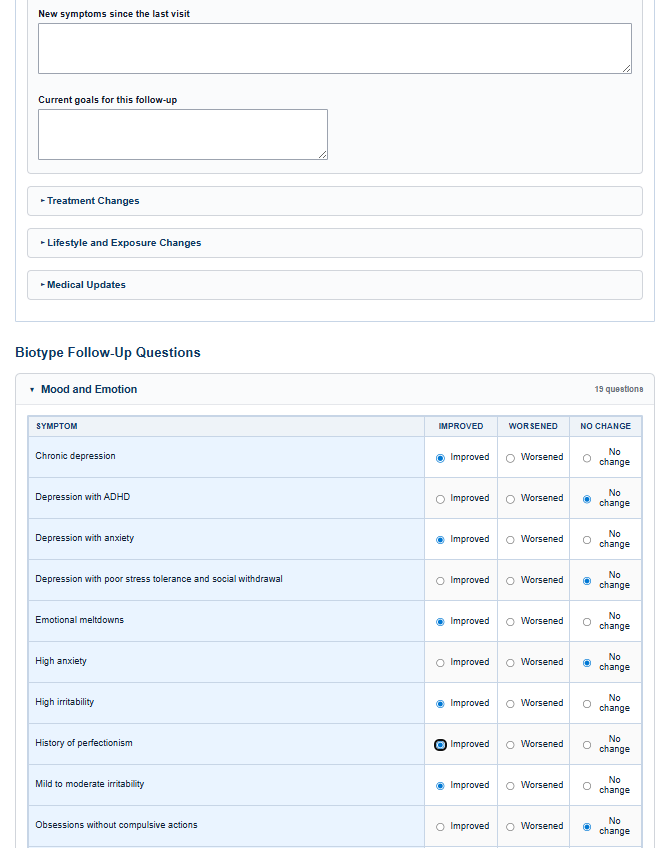
- review of the submitted symptom update or Follow-Up Biotype Questionnaire;
- interpretation of repeat Biotype-related laboratory findings;
- comparison with prior laboratory results when available;
- review of response and tolerance to the existing nutrient plan;
- written physician assessment;
- updated nutrient and supplement recommendations as appropriate;
- a phone discussion to review the findings and answer focused questions.
Complete the Biotype Symptom Update Before Your Review
Established patients should complete the WalshDoc Biotype follow-up questionnaire before the physician review. This provides current information about symptoms, treatment response, supplement tolerance, and areas that have not improved as expected.
Complete the questionnaire before your laboratory review so current symptoms can be compared with prior findings.
Complete the Biotype QuestionnaireWhat if My Labs Improve but I Still Do Not Feel Better?
Laboratory improvement and clinical improvement do not always occur at the same rate.
If copper/zinc balance, histamine, homocysteine, or other Biotype markers have improved but symptoms remain significant, the next step may be to reconsider whether the original biochemical pattern fully explains the presentation.
Depending on the case, additional evaluation may include methylation chemistry, medication effects, hormonal factors, gastrointestinal issues, inflammation, environmental exposures, or other biochemical contributors.
What if I Feel Better but My Labs Are Still Abnormal?
Symptomatic improvement is important, but persistent biochemical abnormalities may indicate that treatment is incomplete or that continued monitoring is appropriate.
For example, a patient may experience improvement before zinc, copper, ceruloplasmin, histamine, or homocysteine reaches the desired range. This is one reason repeat laboratory interpretation can be useful even when the patient is feeling substantially better.
When Should a Walsh Nutrient Plan Be Changed?
A nutrient plan may need reconsideration when laboratory findings stop improving, symptoms plateau, new symptoms appear, supplement tolerance changes, or the biochemical pattern no longer fits the original assessment.
The purpose of repeat review is to avoid continuing the same supplement doses indefinitely without considering whether the patient's biochemical needs have changed.
Which Lab Review Option Should I Select?
Standard Lab Review — $199
Select this option when your testing was ordered through Second Opinion Physician or the results are already organized in the expected Comprehensive Biotype Panel format.
Outside Laboratory Review — $299
Select this option when laboratory results come from another physician, clinic, or laboratory and require additional sorting, reconciliation, or interpretation across different dates, formats, or reference ranges.
What if I Am Also Repeating a SAM/SAH Methylation Panel?
This service is focused on Biotype-related laboratory interpretation and does not include a full methylation-panel review.
Choose the Biotype + Methylation Assessment when SAM, SAH, methionine, homocysteine, or related methylation markers also need detailed interpretation.
What Is Not Included in This Assessment?
- a new-patient comprehensive Walsh assessment;
- full SAM/SAH methylation-panel interpretation;
- extensive review of multiple unrelated functional-medicine lab panels;
- medication management;
- ongoing case management;
- emergency or psychiatric crisis care.
If the main concern has expanded beyond Biotype treatment monitoring to significant gastrointestinal, hormonal, inflammatory, metabolic, mold-related, or other complex functional-medicine issues, a broader assessment may be more appropriate.
Copper, Zinc & Histamine Lab Interpretation FAQs
How do I know if the Walsh Protocol is working?
Treatment response is evaluated by comparing symptoms, supplement tolerance, repeat laboratory findings, and prior results. Improvement in both clinical symptoms and the relevant biochemical pattern generally provides the most useful evidence of progress.
How are copper, zinc and ceruloplasmin interpreted together?
These markers are reviewed as a group to evaluate zinc/copper balance, ceruloplasmin status, and calculated free copper when appropriate. Interpretation also considers symptoms and prior results.
What does whole blood histamine interpretation show?
Whole blood histamine is used within the traditional Walsh framework as one indicator of methylation tendency. It should be interpreted alongside symptoms, homocysteine, previous findings, and treatment response.
When should copper and zinc be retested?
Timing depends on the original imbalance, treatment plan, symptoms, and prior results. Repeat testing is generally most useful after sufficient time has passed for a meaningful biochemical change to occur.
Should pyroluria be retested?
Not every patient requires repeat urinary pyrrole testing. Retesting may be useful when the prior result remains clinically relevant, symptoms persist, or the response to zinc and B6-related support needs reassessment.
What if my labs improve but my symptoms do not?
Persistent symptoms despite improved Biotype laboratory findings may suggest that another biochemical, medication-related, hormonal, gastrointestinal, inflammatory, or functional factor deserves consideration.
What if I am also repeating SAM and SAH?
A combined Biotype + Methylation assessment is more appropriate when the plasma methylation panel also requires detailed interpretation.
Additional information
| Consultation | Consultation, Consultation with Labs Provided by Patient |
|---|