Walsh Biotype Questionnaire
Reviews mood, behavior, cognition, sleep, physical traits, allergy patterns, family history and past responses to medications or nutrients to identify likely Walsh biotype patterns.

Undermethylation is a Walsh biotype associated with rumination, perfectionism, internal tension, seasonal allergies and low functional serotonin activity. The SOP approach extends this model by identifying epigenetic drivers—such as toxic burden, mitochondrial strain, increased creatine demand, increased methylation demand and impaired clearance—that may contribute to low SAM or elevated SAH and help determine the most appropriate testing and treatment.
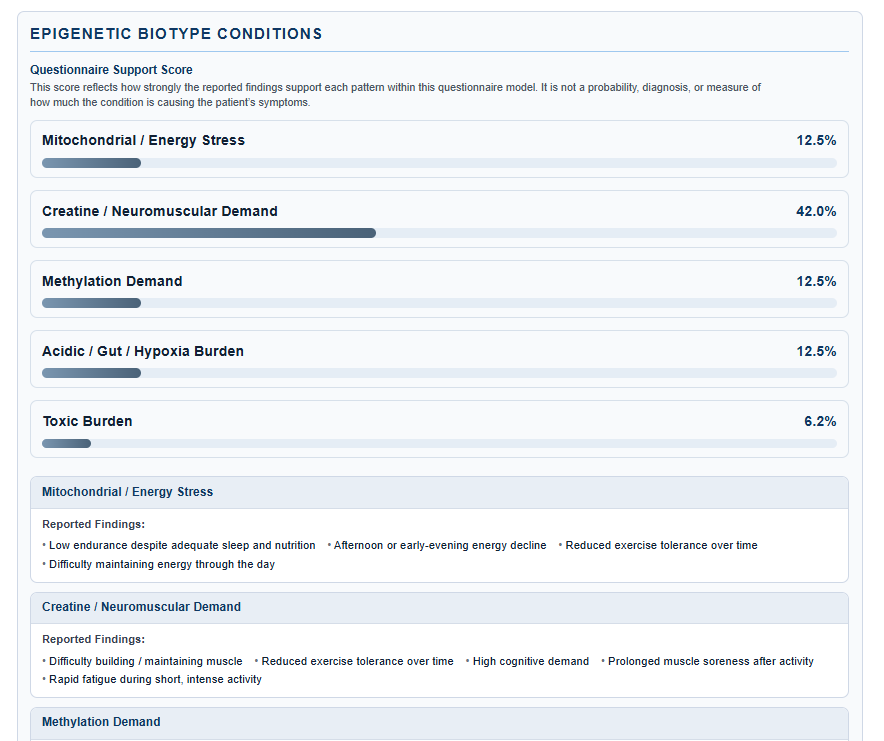

This is a combined Biotype Questionnaire and Methylation Questionnaire. It collects mood and behavior symptoms, physical traits, family patterns, health history, diet, stress, environmental exposures and relevant laboratory findings.
The purpose is not to label one condition from symptoms alone. The combined information helps prepare a detailed analysis of likely Walsh biotype patterns, possible contributors to methylation imbalance and the laboratory testing or treatment direction most relevant to the patient.
The assessment combines two related questionnaires that examine different layers of the same clinical picture.
Reviews mood, behavior, cognition, sleep, physical traits, allergy patterns, family history and past responses to medications or nutrients to identify likely Walsh biotype patterns.
Reviews diet, stress, exercise, inflammation, toxic exposure, gut health, energy production and clearance factors that may be associated with low SAM, elevated SAH or other methylation abnormalities.
The questionnaires are designed to accompany a comprehensive biotype laboratory panel and a methylation panel. Symptoms and exposures provide context; laboratory findings help confirm or refine the biochemical interpretation.
The biotype portion looks for recognizable combinations of emotional, behavioral and physical traits rather than treating every symptom as a separate diagnosis.
Depression, anxiety, panic, irritability, emotional intensity and changes in motivation or resilience.
Rumination, OCD traits, impulsivity, distractibility, aggression, perfectionism and stress tolerance.
Allergies, sleep patterns, body type, pain sensitivity, skin findings, appetite and other supporting clues.
Family patterns, childhood traits, medication response, supplement response and major changes over time.
The methylation portion asks what may be influencing methylation demand, methyl-donor availability, SAH accumulation or metabolic clearance.
Mold, chemicals, smoke, metals, occupational exposure and other factors that may increase detoxification and antioxidant demand.
Fatigue, poor recovery, exercise intolerance, sleep loss and other clues suggesting reduced cellular energy reserve.
Dietary creatine intake, muscle mass, growth, exercise and recovery demands that may increase endogenous creatine production.
Chronic stress, inflammation, hormones, neurotransmitter turnover, repair demands and other pressures that consume methylation reserve.
Kidney, liver, gut, mineral and acid-base factors that may influence homocysteine, adenosine and SAH handling.
Protein intake, processed food, alcohol, nutrient adequacy, digestive function and dietary patterns relevant to methylation.
The questionnaire does not replace laboratory testing. It gives the laboratory results meaning by showing how the biochemical findings relate to the patient’s symptoms, exposures, history and treatment response.
May include rumination, OCD traits, perfectionism, high achievement, seasonal allergies and a low-serotonin-type depression pattern.
May include anxiety, sensory sensitivity, emotional intensity, chemical sensitivity and poor tolerance of selected serotonergic or activating therapies.
May include anxiety, panic, irritability, insomnia, hormonal associations and symptoms linked to copper-zinc imbalance.
May include poor stress tolerance, social withdrawal, episodic worsening and traits associated with zinc and vitamin B6 depletion.
May include fatigue, cognitive symptoms, chemical sensitivity, inflammation and patterns suggesting impaired clearance or elevated SAH.
Many patients show more than one biotype or a primary pattern complicated by copper, pyroluria, inflammation, thyroid, gut or methylation factors.
The methylation questionnaire does not assume that every patient with mood symptoms is undermethylated. It examines the upstream factors associated with methylation imbalance and then compares them with laboratory findings.
Diet, protein intake, absorption, methionine-cycle function and nutrient status may influence SAM production.
SAH can inhibit methylation when homocysteine or adenosine clearance is impaired.
Stress, inflammation, repair, hormones, neurotransmitter turnover and creatine production may consume reserve.
Low ATP may reduce the ability to maintain repair, detoxification and stable biochemical cycling.
Environmental and gut-derived burdens may increase antioxidant, detoxification and repair requirements.
Kidney, liver, gut, mineral and acid-base factors may prevent the pathway from moving forward efficiently.
| Laboratory area | Examples | How it contributes to the analysis |
|---|---|---|
| Walsh biotype markers | Whole-blood histamine, copper, ceruloplasmin, plasma zinc, urinary pyrroles | Supports or challenges the symptom-based biotype pattern. |
| Methylation markers | SAM, SAH, methionine, homocysteine and adenosine | Shows whether methylation is limited by low donor supply, SAH inhibition or impaired clearance. |
| Supporting metabolic markers | CBC, CMP, vitamin D, thyroid, glucose and selected inflammatory markers | Identifies common conditions that may alter mood, energy, nutrient status or treatment tolerance. |
| Driver-specific testing | Gut, allergy, cortisol, toxic burden or mitochondrial evaluation when indicated | Investigates questionnaire findings that suggest a specific upstream contributor. |
The dominant and supporting Walsh patterns suggested by symptoms, traits and laboratory findings.
Environmental, dietary, inflammatory, mitochondrial, hormonal or clearance factors that may be amplifying symptoms.
How histamine, copper, zinc, pyrroles, SAM, SAH and related findings fit together.
The testing, treatment priorities and follow-up measurements most relevant to the identified pattern.
Undermethylation may be identified when the biotype portion shows rumination, perfectionism, internal tension, high achievement, seasonal allergies and other classic traits. The methylation portion then examines whether toxic burden, mitochondrial strain, creatine demand, increased methylation demand or impaired clearance may be associated with low SAM, elevated SAH or both.
The same assessment also evaluates overmethylation, copper overload, pyroluria, toxic burden and mixed biochemical patterns. This prevents the report from forcing every patient into an undermethylation explanation.
It is a combined Walsh biotype and methylation assessment that reviews symptoms, physical traits, health history, environmental exposures and laboratory findings.
No. Undermethylation is one possible biotype pattern. The assessment also reviews overmethylation, copper overload, pyroluria, toxic burden and mixed patterns.
It looks for combinations of mood, behavior, cognition, allergy, physical, family-history and treatment-response traits associated with Walsh biotypes.
It looks for diet, stress, toxic exposure, inflammation, mitochondrial strain, creatine demand and clearance factors that may be associated with methylation imbalance.
Symptoms can suggest a pattern, but whole-blood histamine, copper, zinc, pyrroles, SAM, SAH and supporting markers help confirm or refine the biochemical interpretation.
The analysis summarizes the likely biotype pattern, possible contributors, key laboratory findings and the most relevant testing and treatment priorities.
No. MTHFR is one genetic influence. It does not show whether SAM is low, SAH is elevated, histamine is high or which treatment direction is most appropriate.
Yes. It is designed to provide symptom and exposure context for a comprehensive biotype panel and a methylation panel.
The combined questionnaire helps prepare a more complete biochemical analysis and guides the laboratory testing and treatment direction most relevant to the patient’s pattern.