
Toxic Elements, Minerals & Glutathione
$334.00
A combined Doctor’s Data Hair Elements and Erythrocyte Glutathione assessment evaluating toxic metal exposure, essential mineral patterns, antioxidant reserve, mitochondrial stress and biochemical factors that may impair methylation.
Description
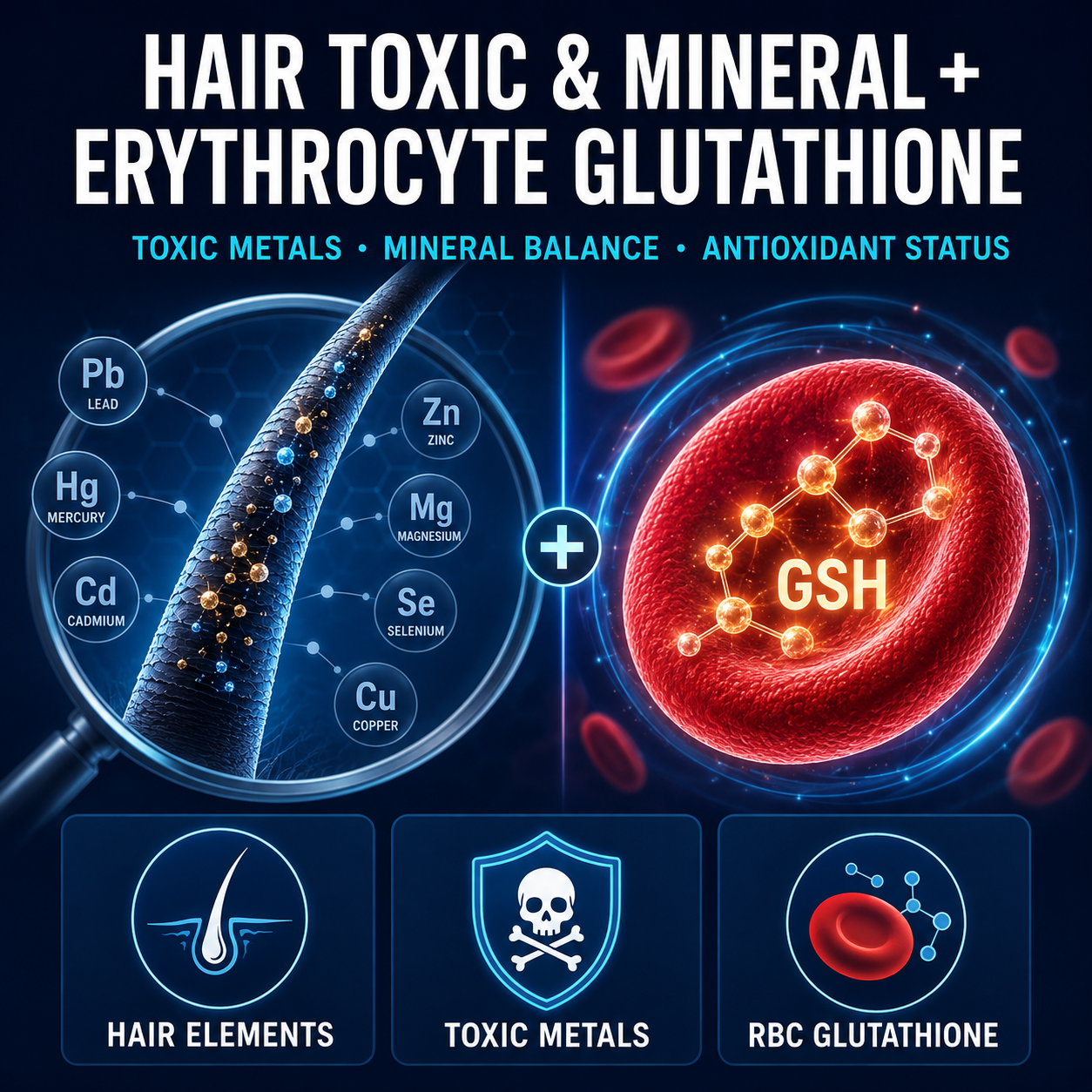
The Toxic Elements, Essential Minerals & Glutathione Reserve test combines Doctor’s Data Hair Elements with Doctor’s Data Glutathione, Erythrocytes to evaluate toxic-element exposure patterns, essential mineral balance, and intracellular antioxidant reserve.
This assessment is designed for patients in whom environmental exposure, oxidative stress, mitochondrial strain, abnormal mineral patterns, or reduced glutathione reserve may be contributing to persistent symptoms or impaired methylation.
Unlike routine blood testing, this test adds a longer-term view of toxic and essential elements together with a direct measurement of red blood cell glutathione status.
Toxic Elements
Looks for longer-term exposure patterns involving mercury, lead, arsenic, cadmium and other environmental elements.
Essential Elements
Provides additional information about zinc, copper, manganese, selenium and other minerals relevant to antioxidant and mitochondrial function.
Erythrocyte Glutathione
Measures glutathione within red blood cells to help assess intracellular antioxidant reserve and oxidative-stress resilience.
Why Glutathione Is Important to Methylation
Glutathione is closely connected to the methionine and methylation pathways through the transsulfuration pathway.
SAM, or S-adenosylmethionine, is the body’s major methyl donor. After SAM donates a methyl group, it becomes SAH and then homocysteine.
Homocysteine then sits at an important metabolic branch point.
When oxidative stress increases, the body may require more glutathione. That can increase demand for cysteine, glycine, vitamin B6-dependent reactions, ATP production, and other nutrients needed to produce and recycle glutathione.
Why Optimizing Glutathione Matters
Glutathione is one of the body’s most important intracellular antioxidant systems. It is especially important in tissues with high metabolic activity, including the liver, immune system, brain and mitochondria.
- Neutralizes reactive oxygen species
- Maintains cellular redox balance
- Protects mitochondrial membranes and enzymes
- Reduces lipid and protein oxidation
- Supports glutathione peroxidase activity
- Supports normal immune-cell function
- Participates in detoxification and conjugation reactions
- Helps process certain environmental chemicals and reactive metabolites
Low glutathione may reflect increased consumption, inadequate substrate availability, oxidative stress, inflammation, toxic exposure, nutrient insufficiency, impaired recycling, or reduced cellular energy.
Glutathione and Mitochondrial Function
Mitochondria generate reactive oxygen species as a normal consequence of energy production. Under healthy conditions, antioxidant systems keep these molecules under control.
When mitochondrial function becomes impaired, oxidative stress can rise and glutathione demand may increase.
Glutathione synthesis itself requires ATP. If energy production is impaired, the body may have more difficulty replenishing glutathione at the same time antioxidant demand is increasing.
Why Hair Elements Add Useful Information
Hair grows gradually and incorporates elements over time. This makes hair element analysis useful as an additional way to look for longer-term patterns of environmental exposure and mineral balance.
Doctor’s Data Hair Elements evaluates both toxic elements and essential elements, providing information that complements rather than replaces blood testing.
Environmental Exposure Patterns
- Mercury
- Lead
- Arsenic
- Cadmium
- Aluminum
- Other environmental elements
Mineral Balance
- Zinc
- Copper
- Manganese
- Selenium
- Magnesium
- Calcium
- Chromium
- Molybdenum
How Toxic Metals May Increase Oxidative Stress
Depending on the element and degree of exposure, toxic metals may:
- Increase reactive oxygen species
- Bind sulfhydryl groups
- Increase glutathione consumption
- Interfere with antioxidant enzymes
- Disrupt mitochondrial enzymes
- Compete with essential minerals
- Alter membrane and neurologic function
- Increase inflammatory and immune signaling
- Increase detoxification demand
Why Zinc, Copper, Manganese and Selenium Matter
Zinc
Zinc supports antioxidant enzymes, metallothionein, immune regulation, intestinal barrier function, DNA synthesis and numerous metabolic enzymes.
It is also important when evaluating copper balance and Walsh biochemical patterns.
Copper
Copper is required for cytochrome c oxidase, dopamine beta-hydroxylase, connective-tissue enzymes, iron metabolism and copper/zinc superoxide dismutase.
Excess biologically available copper or an abnormal zinc:copper relationship may contribute to oxidative and neurotransmitter stress.
Manganese
Manganese is required for mitochondrial manganese superoxide dismutase, or MnSOD/SOD2, one of the mitochondria’s principal defenses against superoxide generated during energy production.
Selenium
Selenium is required for glutathione peroxidase enzymes, which use glutathione to neutralize peroxides.
This directly links selenium status with glutathione-dependent antioxidant defense.
Magnesium
Magnesium participates in hundreds of enzymatic reactions and supports ATP-dependent metabolism, including processes involved in antioxidant defense and methylation.
Molybdenum
Molybdenum is a cofactor for enzymes involved in sulfur and aldehyde metabolism and may provide additional context when evaluating detoxification and sulfur-handling pathways.
Hair Minerals Do Not Replace Blood Testing
Hair analysis should not be used as a substitute for serum or plasma testing when blood measurements are clinically indicated.
Hair elements provide a different type of information: a longer-term exposure and mineral pattern that can add context when blood results, symptoms and oxidative-stress findings are interpreted together.
How This Test Relates to Methylation
This assessment can be particularly useful when methylation problems appear to be influenced by acquired biochemical stress rather than nutrient intake alone.
- High oxidative stress increasing glutathione demand
- Increased transsulfuration demand
- Greater cysteine and glycine requirements
- Increased use of antioxidant cofactors
- Mitochondrial ATP limitations affecting glutathione synthesis
- Toxic metal exposure increasing oxidative and detoxification burden
- Mineral imbalance affecting antioxidant enzymes
- Inflammatory and immune activation affecting cellular metabolism
For patients with abnormal SAM, SAH, homocysteine, methionine, or other methylation findings, this test can help determine whether oxidative and environmental factors may be contributing to the pattern.
Why This Test Is Useful
- Is there evidence of toxic-element exposure?
- Are important essential mineral patterns abnormal?
- Is intracellular glutathione reserve adequate?
- Could environmental burden be increasing antioxidant demand?
- Could oxidative stress be contributing to mitochondrial dysfunction?
- Could mineral imbalance be impairing antioxidant enzymes?
- Could increased oxidative demand be affecting methylation physiology?
- Is an unresolved environmental or metabolic stressor contributing to poor treatment response?
Who May Benefit From This Test?
- Suspected environmental or occupational metal exposure
- Neurologic symptoms
- Developmental or speech/language concerns
- ADHD-type symptoms
- Sensory sensitivity
- Chemical sensitivity
- Persistent fatigue
- Poor exercise or stress recovery
- Chronic inflammation
- Immune activation
- Suspected mitochondrial dysfunction
- Oxidative-stress concerns
- Abnormal methylation findings
- Elevated SAH or a reduced SAM:SAH relationship
- Poor response to otherwise appropriate supplementation
- Difficulty tolerating antioxidant or detoxification protocols
How This Test Fits With Other Testing
Longer-Term Exposure & Mineral Patterns
Provides a screening perspective for toxic-element exposure and selected essential mineral patterns.
Intracellular Antioxidant Reserve
Provides information about glutathione within red blood cells and the body’s ability to maintain an important antioxidant and detoxification system.
When combined with blood copper, zinc, ceruloplasmin, methylation markers, mitochondrial testing, inflammatory findings, symptoms and environmental history, these results can help explain why oxidative stress remains elevated or treatment response remains incomplete.
Clinical Purpose
The goal of the Toxic Elements, Essential Minerals & Glutathione Reserve test is to determine whether environmental element exposure, altered mineral patterns, or reduced glutathione reserve may be contributing to oxidative stress, mitochondrial strain, inflammation, or impaired methylation physiology.
Results may help guide decisions regarding:
- Glutathione support
- NAC or cysteine support
- Glycine intake
- Selenium and antioxidant cofactors
- Zinc and copper balance
- Mitochondrial support
- Environmental exposure reduction
- Diet and lifestyle changes
- Additional toxic-metal testing
- More targeted detoxification strategies
Collection
- Small hair sample
- No blood draw required for this portion
- Measures toxic and essential elements
- Provides a longer-term exposure and mineral pattern
- Blood sample
- Measures glutathione within red blood cells
- Provides information about intracellular antioxidant reserve
- Useful in oxidative-stress and mitochondrial assessment
The Bottom Line
This test connects three important parts of biochemical assessment: environmental exposure, mineral balance, and antioxidant reserve.
Hair Elements can identify longer-term toxic and essential mineral patterns, while erythrocyte glutathione evaluates one of the body’s major intracellular antioxidant systems.
Together, these results can help determine whether oxidative stress, mitochondrial strain, toxic-element exposure, or reduced glutathione reserve may be contributing to persistent symptoms or impaired methylation.