
How to Increase Ceruloplasmin Naturally; Vitamin A, MT Promoter, Copper, Zinc
Learning how to increase ceruloplasmin begins with determining why it is low. The safest strategy is different when both copper and ceruloplasmin are low than when total copper is high but ceruloplasmin is inadequate for that copper burden.
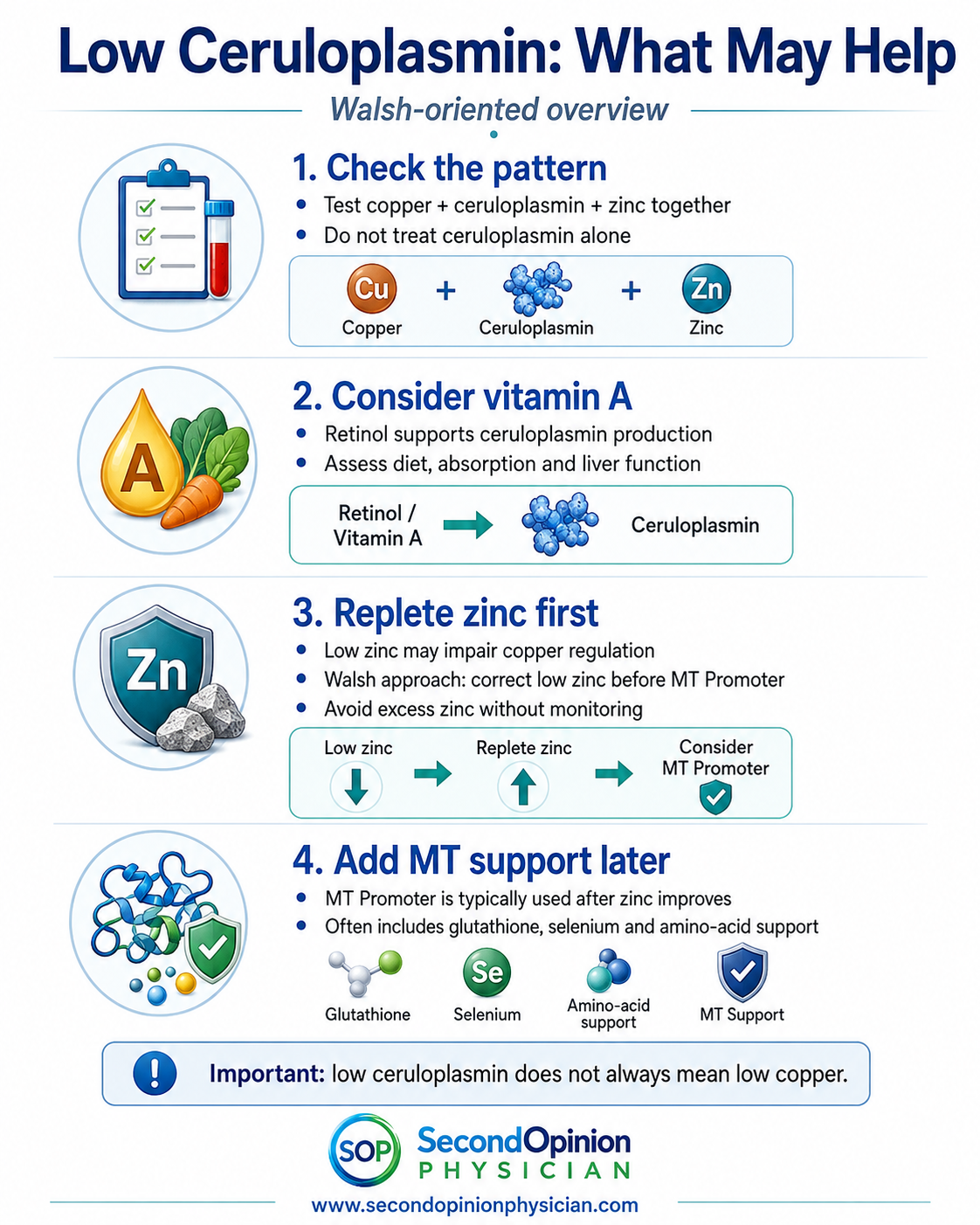
Low ceruloplasmin does not automatically mean you need more copper. Learning how to increase ceruloplasmin safely begins by determining whether copper is truly deficient, elevated relative to binding capacity, poorly absorbed or poorly incorporated into ceruloplasmin—and whether zinc, retinol, protein, liver function, inflammation, oxidative stress or other biochemical factors are limiting normal copper regulation.
Ceruloplasmin is produced primarily in the liver and carries most circulating copper. Its production depends on more than copper intake alone. Zinc status, vitamin A, adequate protein, liver function, copper incorporation and the surrounding metabolic environment all matter.
What Does Low Ceruloplasmin Mean?
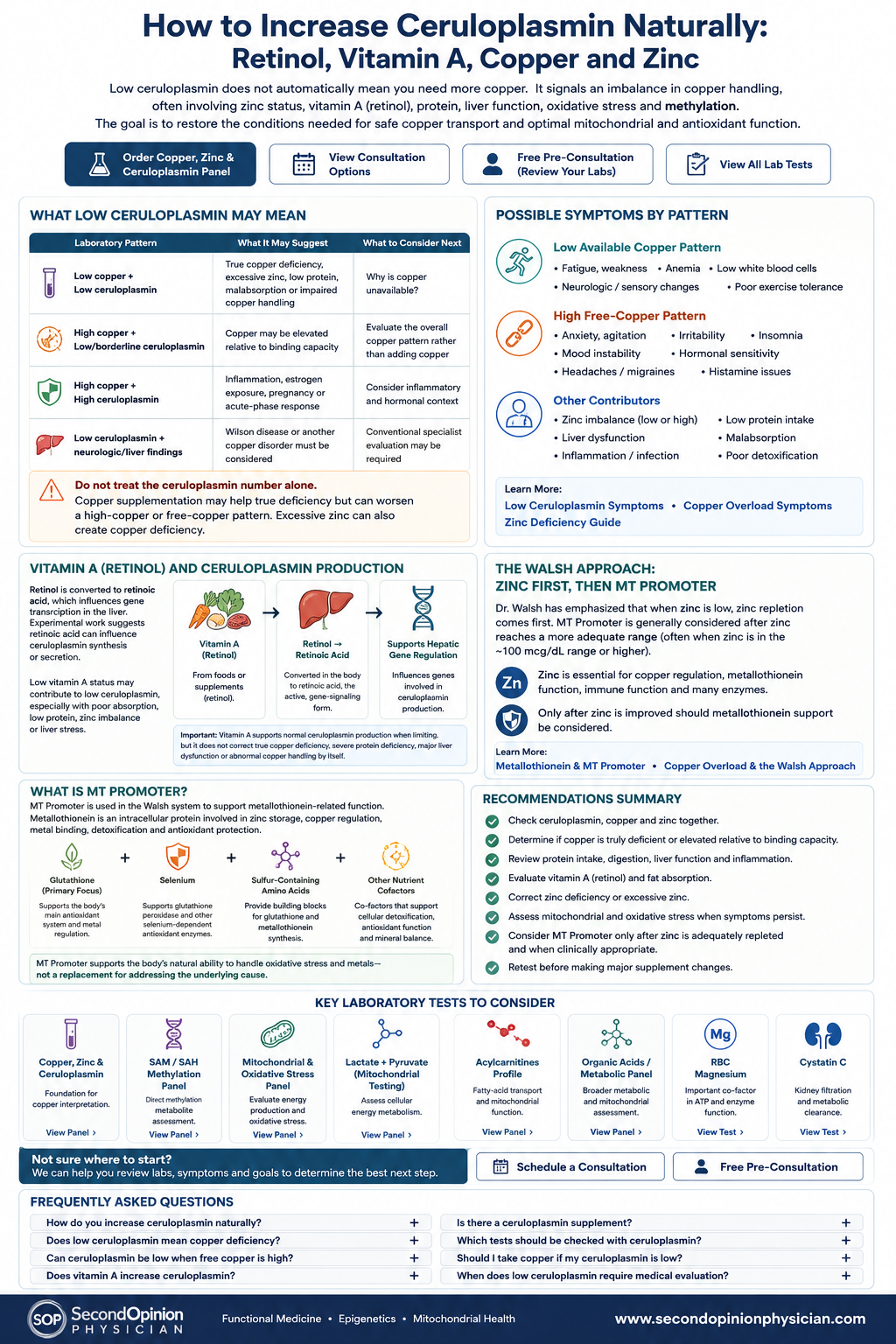
Low ceruloplasmin is a laboratory clue, not a diagnosis. The same low value can occur in very different biochemical situations.
| Laboratory Pattern | What It May Suggest | What to Consider Next |
|---|---|---|
| Low copper + low ceruloplasmin | True copper deficiency, excessive zinc, low protein, malabsorption or impaired copper handling | Why is copper unavailable? |
| High copper + low/borderline ceruloplasmin | Copper may be elevated relative to available binding capacity | Evaluate copper regulation rather than automatically adding copper |
| High copper + high ceruloplasmin | Inflammation, estrogen exposure, pregnancy or acute-phase response may contribute | Consider inflammatory and hormonal context |
| Low ceruloplasmin + neurologic/liver findings | Wilson disease or another copper disorder must be considered | Conventional specialist evaluation may be required |
Low Ceruloplasmin Symptoms Depend on the Underlying Pattern
There is no single symptom profile that proves ceruloplasmin is low. Symptoms generally arise from the associated copper, zinc, iron, neurologic, mitochondrial or nutritional abnormality.
Copper-Deficiency Pattern
- Fatigue or weakness
- Anemia
- Low white blood cells or neutropenia
- Sensory changes
- Neurologic symptoms
- Poor exercise tolerance
High Free-Copper Pattern
- Anxiety or agitation
- Irritability
- Insomnia
- Mood instability
- Hormonal sensitivity
- Headaches or migraines
Look Beyond Copper
- Low or excessive zinc
- Low protein intake
- Liver dysfunction
- Malabsorption
- Inflammation
- Oxidative stress
Vitamin A, Retinol and Ceruloplasmin Production
Vitamin A is particularly relevant to ceruloplasmin because the liver converts retinol into retinoic acid, an active signaling molecule that regulates gene transcription.
Experimental research has shown that retinoic acid can influence hepatic ceruloplasmin synthesis or secretion. This provides a biologically plausible mechanism through which inadequate vitamin A status could contribute to low ceruloplasmin in selected patients.
Nutrient Family
Vitamin A includes preformed retinoids and provitamin A carotenoids.
Storage & Transport Form
Retinol is a major circulating and stored form of preformed vitamin A and is extensively stored in the liver.
Gene-Signaling Form
Retinoic acid is formed from retinol and activates nuclear receptors involved in regulation of gene transcription.
Zinc and Ceruloplasmin: Why Zinc Comes First in the Walsh Approach
Zinc is involved in copper regulation, metallothionein biology, antioxidant protection, immune function and hundreds of enzyme systems.
The relationship between zinc and copper is also dose-dependent. Too little zinc may impair normal mineral regulation, while excessive supplemental zinc can reduce copper absorption and eventually lower both copper and ceruloplasmin.
Dr. William Walsh has emphasized correcting significant zinc deficiency before adding MT Promoter. In Walsh-oriented practice, MT Promoter has commonly been introduced only after plasma zinc has moved into a substantially improved range—often discussed around 100 µg/dL, depending on the laboratory and clinical setting.
Why Wait Until Zinc Is Repleted?
One Walsh teaching is that improving ceruloplasmin production can itself create additional zinc demand. Dr. Walsh has described a practical rule-of-thumb of approximately seven units of zinc associated with each unit increase in ceruloplasmin.
This is best understood as a clinical heuristic used in the Walsh nutrient-treatment framework, not as a literal molecular stoichiometric equation. The practical message is more important than the exact number:
If zinc is already marginal and a treatment strategy increases zinc utilization, symptoms or laboratory zinc levels may worsen. This is why Walsh treatment generally emphasizes establishing the zinc foundation first.
What Is MT Promoter?
In the Walsh Approach, MT Promoter is used after the initial mineral-correction phase to support metallothionein-related antioxidant and metal-regulation pathways.
Metallothionein is a small, cysteine-rich intracellular protein involved in:
- Intracellular zinc storage and regulation
- Copper regulation
- Binding selected metals
- Protection against oxidative stress
- Cellular response to environmental metal exposure
What Does MT Promoter Contain?
The Walsh MT Promoter strategy has emphasized glutathione support as a major component, together with selenium and additional nutrient or amino-acid substrates that support antioxidant defenses, sulfur metabolism and metallothionein-related function.
Glutathione
Glutathione is one of the body's major intracellular antioxidants and participates in redox control, detoxification and cellular handling of reactive compounds.
Selenium
Selenium is required for glutathione-peroxidase enzymes, which use glutathione to reduce damaging peroxides.
Sulfur Amino Acids & Cofactors
Cysteine and related sulfur-containing substrates contribute to glutathione synthesis and metallothionein biology. Additional cofactors support antioxidant and mineral-regulation pathways.
Ceruloplasmin and Metallothionein Are Different Proteins
Circulating Copper Transport
Ceruloplasmin is produced primarily in the liver, carries most circulating copper and participates in iron metabolism through ferroxidase activity.
Intracellular Mineral Regulation
Metallothionein functions inside cells and participates in zinc storage, copper handling, metal binding and antioxidant protection.
They perform different jobs, but both are part of the broader systems that regulate copper, zinc and oxidative stress.
How to Increase Ceruloplasmin Naturally: A Practical Sequence
The goal is not simply to force ceruloplasmin upward. The goal is to restore the nutritional and physiological conditions needed for appropriate production and safe copper transport.
Measure copper, ceruloplasmin and zinc together
These three measurements establish the basic copper-regulation pattern.
Determine whether copper is truly deficient
Low copper with low ceruloplasmin requires a different strategy from elevated copper with relatively inadequate ceruloplasmin.
Correct significant zinc deficiency first
Restore zinc when clearly deficient, while avoiding excessive dosing that could suppress copper absorption.
Review complete protein and calorie intake
Ceruloplasmin is a protein produced by the liver. Restrictive diets, inadequate protein and malnutrition can impair protein synthesis.
Evaluate vitamin A and retinol status
Review dietary retinol, fat absorption, liver health and conditions that may reduce vitamin A availability.
Address gastrointestinal and liver contributors
Consider chronic diarrhea, celiac disease, inflammatory bowel disease, pancreatic disease, biliary dysfunction and significant liver dysfunction.
Consider MT Promoter after zinc is adequately repleted
In the Walsh sequence, metallothionein support is generally introduced after the zinc foundation has improved rather than during marked zinc depletion.
Assess mitochondrial and oxidative stress when symptoms persist
Copper participates in mitochondrial energy metabolism and antioxidant defense. Persistent fatigue, weakness, neurologic symptoms or treatment nonresponse may justify broader testing.
Retest before making major supplement changes
Repeat copper, ceruloplasmin and zinc to determine whether the biochemical pattern is actually improving.
Recommended Laboratory Testing for Low Ceruloplasmin
Testing should progress from the core copper pattern outward. Broader methylation, mitochondrial and metabolic testing is most useful when the history or initial results suggest a more complex biochemical problem.
Copper, Zinc & Ceruloplasmin
The basic panel for distinguishing copper deficiency from copper overload or inadequate copper binding.
Copper, Zinc & Ceruloplasmin PanelSAM / SAH Methylation Panel
Measures current methylation-related metabolites including SAM, SAH, methionine and homocysteine.
Genova Methylation PanelAdvanced Mitochondrial Panel
Useful when fatigue, neurologic symptoms, oxidative stress or impaired cellular energy production may be contributing.
Mitochondrial & Oxidative Stress PanelLactate + Pyruvate
Provides information about glucose-derived energy metabolism and mitochondrial redox balance.
Lactate + Pyruvate TestingAcylcarnitine Profile
Evaluates mitochondrial fatty-acid transport and substrate metabolism.
Acylcarnitines ProfileOrganic Acids / Metabolic Panel
Provides a broader view of mitochondrial metabolism, organic acids and nutrient-related metabolic pathways.
Mitochondrial, Gut & Metabolic PanelRBC Magnesium
Magnesium supports ATP-dependent metabolism and hundreds of enzyme reactions.
RBC MagnesiumCystatin C
Provides additional information about kidney filtration and metabolic clearance.
Cystatin CLow Ceruloplasmin, Copper and Mitochondrial Function
Copper is required for cytochrome-c oxidase in mitochondrial complex IV, an important component of ATP production.
Copper and zinc also participate in SOD1 and SOD3 antioxidant enzymes, while mitochondrial SOD2 depends on manganese.
True copper deficiency can therefore affect energy production, iron handling, blood counts and antioxidant defenses.
Low Ceruloplasmin and the Epigenetic Biotypes
Copper regulation does not occur in isolation. Methylation, mitochondrial energy production, oxidative stress, toxic burden, nutrition and metabolic clearance can all influence the biochemical environment in which mineral regulation occurs.
Inherited Risk vs Current Biochemistry
Genetic testing may identify susceptibility, while functional biochemical testing can show whether mineral balance, methylation, mitochondrial function or oxidative stress is currently abnormal.
Genetics vs EpigeneticsFive Epigenetic Drivers
Toxic burden, mitochondrial stress, creatine demand, high methylation demand and clearance stress may contribute to acquired biochemical patterns.
Five Epigenetic BiotypesRecommendations: Where Should You Start?
For most people with low ceruloplasmin, the first step is not choosing another supplement. It is determining which biochemical pattern is actually present.
Define the Copper Pattern
Check copper, ceruloplasmin and zinc together rather than treating ceruloplasmin alone.
Correct the Limiting Factor
Address documented zinc deficiency, copper deficiency, protein inadequacy, retinol deficiency, malabsorption or liver factors.
Expand Testing When Needed
Add methylation, mitochondrial, oxidative-stress or metabolic testing when symptoms or initial findings suggest a broader problem.
When the pattern includes low zinc and poor copper regulation, the usual sequence is to establish zinc adequacy first, reassess the copper/ceruloplasmin relationship, and then consider MT Promoter or broader antioxidant support when clinically appropriate.
Frequently Asked Questions About Low Ceruloplasmin
How do you increase ceruloplasmin naturally?
Determine why it is low first. Common considerations include true copper deficiency, excessive zinc, inadequate protein, low vitamin A status, malabsorption and liver dysfunction. Copper, ceruloplasmin and zinc should be interpreted together before supplementation is changed.
Does low ceruloplasmin mean copper deficiency?
No. Low copper with low ceruloplasmin can indicate copper deficiency, while elevated copper with low or borderline ceruloplasmin may indicate a different copper-regulation problem.
What are low ceruloplasmin symptoms?
There is no symptom specific to low ceruloplasmin. Symptoms depend on the underlying pattern and may include fatigue, weakness, anemia, neurologic changes or symptoms associated with poorly regulated copper.
Does vitamin A increase ceruloplasmin?
Retinoic acid, produced from retinol, influences hepatic gene transcription and has increased ceruloplasmin synthesis or secretion in experimental research. Vitamin A support is most relevant when vitamin A status is actually inadequate.
Can too much zinc lower ceruloplasmin?
Yes. Excessive zinc can increase intestinal metallothionein and reduce copper absorption, potentially producing low copper and low ceruloplasmin.
Why does the Walsh Approach correct zinc before MT Promoter?
Dr. Walsh has emphasized correcting significant zinc deficiency first because zinc is central to metallothionein function and copper regulation. MT Promoter is generally considered after zinc has moved into a more adequate range rather than during marked zinc depletion.
Does ceruloplasmin production use zinc?
In Walsh clinical teaching, improving ceruloplasmin has been associated with increased zinc demand, and a practical rule-of-thumb of roughly seven units of zinc for each unit increase in ceruloplasmin has been discussed. This should be viewed as a clinical heuristic rather than a literal biochemical stoichiometric formula.
What is MT Promoter?
MT Promoter is a Walsh-oriented nutrient strategy intended to support metallothionein-related antioxidant and mineral-regulation pathways. It has emphasized glutathione-related support, selenium and other nutrient or amino-acid substrates involved in antioxidant defense and sulfur metabolism.
Why are glutathione and selenium included?
Glutathione is a major intracellular antioxidant involved in redox control and detoxification. Selenium is required for glutathione-peroxidase enzymes, which use glutathione to reduce damaging peroxides.
Should I take copper if my ceruloplasmin is low?
Not from the ceruloplasmin result alone. Copper may be appropriate when true deficiency is documented but can be inappropriate when total copper is already elevated relative to binding capacity.
Which tests should be checked with ceruloplasmin?
Serum copper and plasma zinc are the core companion tests. CBC, CMP and liver enzymes are also useful. Depending on symptoms, methylation, mitochondrial, oxidative-stress, mineral or renal testing may provide additional information.
When does low ceruloplasmin require conventional medical evaluation?
Very low ceruloplasmin, unexplained liver abnormalities, neurologic symptoms, anemia, neutropenia or concern for Wilson disease or another inherited copper disorder requires conventional medical evaluation.
Selected Scientific References
Educational information only. Low ceruloplasmin can occur with nutritional deficiency, liver disease, kidney or gastrointestinal protein loss, Wilson disease, Menkes disease and other medical conditions. New neurologic symptoms, unexplained anemia or neutropenia, liver abnormalities or suspected inherited copper disorders require conventional medical evaluation. Walsh-specific nutrient sequences and zinc targets described here represent a clinical framework and should be interpreted together with current laboratory findings.