
Copper Overload Symptoms: Anxiety, Dopamine, Norepinephrine and Ceruloplasmin
Copper overload is a Walsh-style biochemical pattern in which copper activity, copper retention or free copper is elevated relative to the body’s ability to bind, transport and regulate copper safely. The most useful interpretation comes from reviewing copper, zinc, ceruloplasmin and symptoms together rather than relying on serum copper alone.
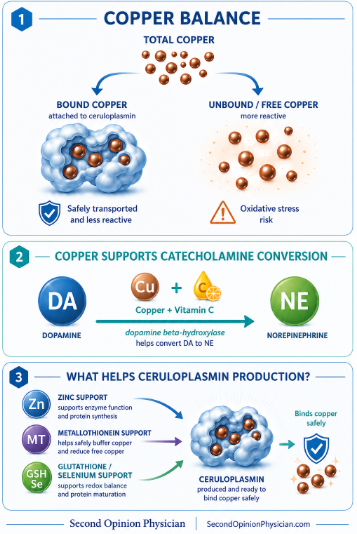
Copper overload is not defined by total copper alone. The more useful question is whether copper is adequately bound to ceruloplasmin or whether a larger reactive fraction may be contributing to oxidative stress and altered catecholamine activity.
Copper is required for normal physiology, but excess unbound copper may increase oxidative stress and promote conversion of dopamine into norepinephrine. In susceptible patients, this may contribute to anxiety, panic, irritability, insomnia or hormone-related mood changes.
How Copper Affects Dopamine and Norepinephrine
Copper is a cofactor for dopamine beta-hydroxylase, the enzyme that converts dopamine into norepinephrine. This does not mean that every high copper result causes a psychiatric symptom, but it helps explain why an activated copper pattern may be associated with anxiety, hyperarousal, irritability and poor sleep.
Lower reward and motivation
Greater dopamine conversion may leave some patients with reduced drive, diminished reward response, lower motivation or impaired focus.
More activation and tension
Higher norepinephrine activity may contribute to panic, inner tension, nighttime hyperarousal, irritability and emotional volatility.
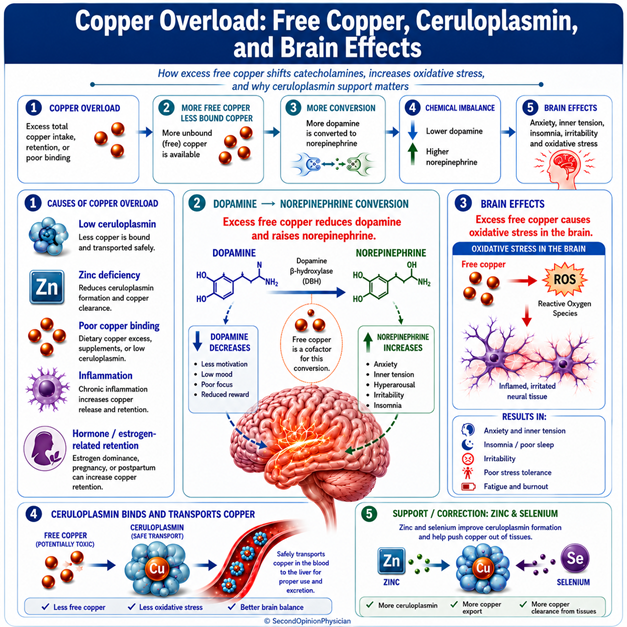
Common Copper Overload Symptoms and Patterns
Anxiety and panic
May include a wired feeling, sudden panic, rapid stress response or sensitivity to stimulants.
Insomnia
Difficulty settling, repeated waking, racing thoughts or exaggerated nighttime alertness may occur.
Irritability
Emotional intensity, anger, agitation or poor frustration tolerance may become more prominent.
Hormone sensitivity
Symptoms may worsen with estrogen exposure, oral contraceptives, pregnancy or postpartum changes.
Oxidative stress
Reactive copper may increase pressure on membranes, mitochondria and antioxidant defenses.
Pyroluria overlap
Zinc and B6 depletion may worsen copper-zinc imbalance and reduce stress tolerance.
What Causes High Copper or High Free Copper?
Copper overload may reflect excess exposure, impaired binding, low zinc, hormonal effects, inflammation, liver stress or more than one factor at the same time.
Low zinc
Zinc supports metallothionein and helps regulate copper absorption and distribution.
Low ceruloplasmin
Less copper is carried in a bound form when ceruloplasmin is inadequate relative to the copper burden.
Estrogen effects
Pregnancy, postpartum changes, estrogen therapy or oral contraceptives may alter copper handling.
Inflammation
Inflammation can raise ceruloplasmin and total copper, complicating interpretation of the baseline pattern.
Liver or gut factors
Protein synthesis, digestion, absorption and liver function may affect copper transport and regulation.
Exposure
Supplements, water, cookware, occupational sources or a high-copper diet may contribute in selected patients.
Why Ceruloplasmin Matters
Ceruloplasmin is the major copper-carrying protein in blood. More copper bound to ceruloplasmin generally means less copper circulating in a more reactive form. A ceruloplasmin result should therefore be interpreted in relation to total copper, zinc, inflammation and the clinical picture.
High copper with inadequate binding
This pattern may raise estimated non-ceruloplasmin-bound copper and increase oxidative stress concerns.
Low copper with low ceruloplasmin
This may reflect copper deficiency, excessive zinc, malabsorption, low protein, liver dysfunction or an inherited copper disorder.
Laboratory Testing for Copper Overload
Serum copper alone does not show whether copper is adequately bound, whether zinc is low or whether inflammation is influencing the result.
| Test | What it helps evaluate | Why it matters |
|---|---|---|
| Serum copper | Total circulating copper | Must be compared with ceruloplasmin, zinc and inflammatory context. |
| Ceruloplasmin | Copper-binding and transport capacity | May be low, normal or elevated depending on nutrition, liver function, estrogen and inflammation. |
| Plasma zinc | Copper-zinc balance | Low zinc may worsen copper regulation; excessive zinc can also create copper deficiency. |
| CBC and CMP | Blood counts, liver and kidney context | Useful for safety, protein status, liver function and other causes of abnormal copper handling. |
| Whole-blood histamine and urinary pyrroles | Overlapping Walsh patterns | Helpful when methylation, pyroluria or mixed biochemical patterns are suspected. |
| Hair mineral and toxic-metal analysis | Longer-term mineral patterns and selected metal exposure | May add context for copper, zinc, lead, cadmium, arsenic, mercury and overall metal burden, especially when blood testing is unavailable or metallothionein performance is being followed. |
Related Reading
These guides expand the discussion beyond the basic copper-overload pattern and provide additional context on mineral regulation, cognition and ceruloplasmin support.
When to Consider a Walsh Biotype Assessment
A broader assessment may be useful when anxiety, panic, insomnia, irritability, emotional volatility, hormone sensitivity or poor stress tolerance occur together—particularly when medication response has been inconsistent or standard treatment has not explained the pattern.
Frequently Asked Questions
What are the most common symptoms of copper overload?
Commonly reported patterns include anxiety, panic tendency, insomnia, irritability, emotional volatility, poor stress tolerance, hormone sensitivity and postpartum mood changes. Symptoms alone do not diagnose copper overload; copper, zinc and ceruloplasmin should be reviewed together.
Can high copper cause anxiety or panic attacks?
High copper or high free copper may contribute to anxiety and panic in susceptible patients because copper supports conversion of dopamine into norepinephrine and may increase oxidative stress. Anxiety has many causes, so laboratory confirmation and the full clinical history are important.
How does copper affect dopamine and norepinephrine?
Copper is a cofactor for dopamine beta-hydroxylase, the enzyme that converts dopamine into norepinephrine. Excess copper activity may therefore contribute to lower dopamine availability and a more activated norepinephrine-dominant state.
What is free copper?
Free copper is an estimate of copper not carried within ceruloplasmin. It is more reactive than ceruloplasmin-bound copper and may contribute to oxidative stress. The calculation is only an estimate and must be interpreted with serum copper, ceruloplasmin, zinc and inflammatory context.
Can ceruloplasmin be normal when free copper is high?
Yes. A ceruloplasmin result within the laboratory reference range may still be relatively inadequate when total copper is elevated. The relationship between copper and ceruloplasmin matters more than either number alone.
What causes low ceruloplasmin with high copper?
Possible contributors include inadequate protein synthesis, low vitamin A or retinol status, liver dysfunction, poor absorption, low zinc, inflammation, hormonal influences or inherited copper-handling disorders. Testing is needed before adding copper or substantially increasing zinc.
Which blood tests are used to evaluate copper overload?
The core laboratory pattern usually includes serum copper, ceruloplasmin and plasma zinc. CBC, CMP, whole-blood histamine, urinary pyrroles, vitamin D, homocysteine and direct methylation testing may be added when clinically indicated.
Can hair analysis help evaluate copper overload?
Hair analysis does not replace blood testing, but it may provide additional information about longer-term copper and zinc patterns and selected toxic metals such as lead, cadmium, arsenic and mercury. It can be especially useful when blood testing is unavailable or when overall metal burden and metallothionein performance are being followed.
Does zinc lower copper?
Zinc can reduce copper absorption and support metallothionein, which is why it may help in some high-copper patterns. Excessive zinc can also create true copper deficiency, anemia, neutropenia or neurological problems, so dosing should be guided by laboratory results and follow-up testing.
Can vitamin A or retinol increase ceruloplasmin?
Retinol may support normal hepatic ceruloplasmin production because retinoic acid influences gene transcription. Vitamin A is not a stand-alone treatment, and high-dose retinol can be toxic. Protein status, zinc, copper availability, liver function and absorption also matter.
Can copper overload affect sleep?
Yes. A copper-related increase in norepinephrine activity may contribute to hyperarousal, racing thoughts, difficulty falling asleep or repeated waking. Sleep problems can also arise from cortisol, hormones, medications, blood sugar, pain or other causes.
Should copper supplements be stopped when copper is high?
Unnecessary copper supplementation should be reviewed, but treatment decisions should not be based on serum copper alone. Pregnancy, inflammation, estrogen exposure, ceruloplasmin and zinc status can all change the interpretation. Supplement changes should be made with a clinician when abnormalities are significant.
Educational information only. Copper metabolism can be complex. Severe symptoms, pregnancy or postpartum mood changes, psychiatric instability, liver disease, anemia, neurological findings or markedly abnormal copper results require conventional medical evaluation.