
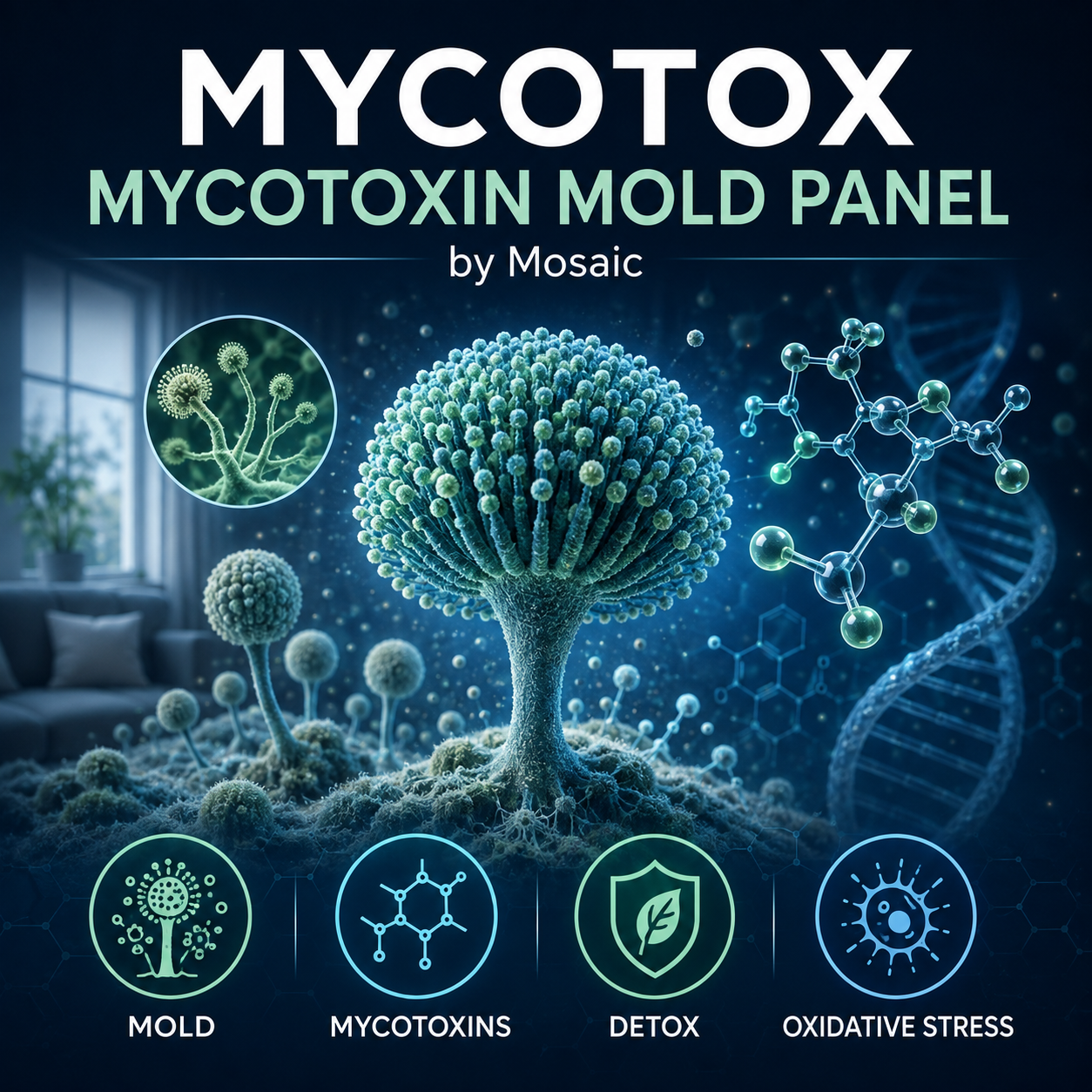
MycoTOX Test – Mold Exposure

$429.00
The MycoTOX Profile is a urine-based mold toxin test measuring 11 mycotoxins associated with water-damaged buildings, vehicles and contaminated foods. It can help identify toxic burden when mold exposure, unexplained fatigue, cognitive symptoms, inflammation, immune problems or oxidative stress are suspected.
Description
Mold exposure can be more than an allergy problem. Certain molds produce mycotoxins—small toxic compounds that can enter through food or contaminated environments and contribute to oxidative stress, immune dysfunction, neurologic symptoms, liver or kidney stress and disruption of normal cellular regulation.
The MycoTOX Profile from Mosaic Diagnostics is a urine-based mycotoxin test that measures 11 toxins or toxin metabolites. It can help answer an important question when symptoms are persistent or unexplained: Is the body excreting measurable mycotoxins that may represent a clinically relevant toxic burden?
What Causes Mold and Mycotoxin Exposure?
Mold requires an appropriate food source and, most importantly, moisture. Mold growth becomes much more likely when building materials remain damp or humidity remains elevated.
Leaks & Flooding
Roof leaks, plumbing failures, hurricanes, flooding and past water intrusion can leave drywall, wood, carpet and insulation damp enough for mold growth.
Condensation & Poor Ventilation
High indoor humidity, HVAC problems, condensation and poorly ventilated bathrooms, crawl spaces or basements can create persistent moisture.
Walls, Floors & HVAC
Mold may grow behind drywall, beneath flooring, around windows, inside HVAC systems or in other areas that are not immediately visible.
Exposure is not limited to houses. Mold and mycotoxins may also be encountered in offices, schools, vehicles and other damp enclosed environments.
Food is another important source. Grains, corn, nuts, spices, dried fruits, coffee and other agricultural products can become contaminated with mycotoxins during growth, harvesting or storage.
Mold Exposure, Mold Allergy and Mycotoxins Are Not the Same Thing
Immune Reaction to Mold
A mold allergy is an immune reaction to mold proteins or spores and may cause congestion, sneezing, wheezing, itching or asthma-like symptoms.
Toxic Metabolites
Mycotoxins are chemical compounds produced by certain molds. Their effects are toxicologic rather than simply allergic, and a person does not need to have an IgE mold allergy to be exposed to mycotoxins.
What Are the Symptoms of Mold and Mycotoxin Exposure?
One reason mold-related illness can be difficult to recognize is that symptoms are often nonspecific and can overlap with many other disorders.
Brain & Nervous System
- Brain fog
- Poor concentration
- Headaches
- Dizziness
- Memory problems
- Sleep disturbance
Energy & Mood
- Fatigue
- Poor exercise tolerance
- Anxiety or irritability
- Reduced stress tolerance
- Difficulty recovering from illness
Respiratory & Immune
- Congestion
- Cough
- Sinus symptoms
- Wheezing
- Recurrent infections
- Inflammatory symptoms
GI Symptoms
- Nausea
- Abdominal discomfort
- Altered bowel function
- Food intolerance
- Reduced appetite
Hormonal / Reproductive
- Hormonal disruption
- Menstrual changes
- Reproductive concerns
- Estrogen-like effects with selected toxins
Systemic
- General malaise
- Inflammation
- Oxidative stress
- Kidney or liver stress with selected toxins
Why Can Mycotoxins Cause So Many Different Symptoms?
Different mycotoxins affect different tissues, but several recurring mechanisms help explain their broad effects.
Oxidative Stress
Mycotoxins can increase reactive oxygen species and lipid, protein or DNA damage, placing greater demand on antioxidant systems.
Glutathione Demand
Glutathione is one of the body's major intracellular antioxidant and detoxification systems. Mycotoxin exposure may increase glutathione demand and, in experimental models, interfere with pathways involved in glutathione production.
Immune Effects
Some mycotoxins have immunotoxic or immunosuppressive effects, potentially altering normal responses to infections and inflammation.
Mitochondrial Stress
Selected toxins can disrupt mitochondrial membranes, energy metabolism and cellular redox balance.
Organ Toxicity
Depending on the toxin, the liver, kidneys, gastrointestinal tract, nervous system or reproductive system may be particularly vulnerable.
Epigenetic Regulation
Research indicates that some mycotoxins can alter DNA methylation, histone regulation and other epigenetic processes that influence gene expression.
How Can Mold and Mycotoxins Affect Methylation?
The connection between mold and methylation is important, but it needs to be described accurately.
A positive mycotoxin test does not automatically mean someone is undermethylated. Instead, toxic exposure may create biochemical pressures that make methylation less efficient or increase the demand placed on methylation-related pathways.
↓
Oxidative Stress + Detoxification Demand
↓
Glutathione / Transsulfuration Demand
↓
Mitochondrial & Cellular Stress
↓
Potential Effects on Methylation and Epigenetic Regulation
1. Increased Oxidative Stress
Methylation operates within the larger cellular redox environment. Persistent oxidative stress can increase demand for antioxidant defense, repair and detoxification.
2. Glutathione and Transsulfuration
Homocysteine can move through the transsulfuration pathway toward cysteine and ultimately glutathione. Increased need for glutathione can therefore affect how sulfur and methylation-related metabolites are utilized.
3. Increased Metabolic Demand
Toxin processing, cellular repair and antioxidant defense consume nutrients and energy. In a person who already has limited methylation capacity, this additional demand may expose an otherwise compensated weakness.
4. Direct Epigenetic Effects
Experimental research has demonstrated that several mycotoxins can alter DNA methylation, histone modification and non-coding RNA expression. In other words, toxins may affect not only cellular chemistry but also mechanisms that regulate gene expression.
Why It Is Important to Identify and Address Mold Exposure
Testing is most useful when it changes what happens next.
If the principal exposure continues every day, supplementation alone may have limited value. A useful evaluation therefore separates three questions:
Is There an Exposure?
Review the home, workplace, vehicle and food history. Water damage, musty odors, visible mold or symptoms that change by location can provide important clues.
Is the Body Excreting Mycotoxins?
Urine testing can identify measurable mycotoxins and help characterize which toxins are present.
What Has the Exposure Affected?
Depending on symptoms, evaluation may include inflammation, oxidative stress, glutathione, methylation, kidney, liver, immune, mitochondrial or gastrointestinal function.
What Does the MycoTOX Profile Test?
The Mosaic Diagnostics MycoTOX Profile currently measures 11 urinary mycotoxins or toxin metabolites.
| Mycotoxin / Group | Potential Health Relevance |
|---|---|
| Aflatoxin M1 | Aflatoxin metabolite; aflatoxins are particularly associated with liver toxicity and carcinogenic risk. |
| Ochratoxin A | Associated particularly with kidney toxicity, oxidative stress and immune effects. |
| Roridin E | A trichothecene; this toxin class can inhibit protein synthesis and produce immune, GI and neurologic effects. |
| Verrucarin A | Another trichothecene associated with protein-synthesis inhibition and systemic toxicity. |
| Zearalenone | Has estrogenic activity and is particularly relevant to endocrine and reproductive effects. |
| Chaetoglobosin A | Associated with Chaetomium species frequently found in water-damaged building materials. |
| Enniatin B | Studied for endocrine, neurologic and mitochondrial effects. |
| Gliotoxin | Produced by some Aspergillus species and associated with immunotoxic and oxidative effects. |
| Mycophenolic Acid | A fungal metabolite with immunosuppressive activity; prescription mycophenolate use can also affect interpretation. |
| Sterigmatocystin | A precursor related to aflatoxin biosynthesis and classified as a possible human carcinogen. |
| Citrinin | Associated particularly with kidney and mitochondrial toxicity. |
How Does the MycoTOX Test Work?
Urine Collection
The profile uses urine to measure mycotoxins being excreted from the body.
LC-MS/MS
Liquid chromatography–tandem mass spectrometry provides high analytical specificity and can detect very small quantities of individual mycotoxins.
Creatinine Correction
Results are adjusted for urine concentration to reduce the effect of differences in fluid intake.
Approximately 5–10 Business Days
Turnaround is estimated by Mosaic Diagnostics and may vary.
Who Should Consider Mycotoxin Testing?
The MycoTOX Profile may be particularly useful when there is:
- Known or suspected exposure to a water-damaged building
- Persistent musty odor or visible mold
- Symptoms that improve away from a particular home or workplace
- Unexplained fatigue or brain fog
- Persistent respiratory or sinus problems
- Unexplained inflammatory symptoms
- Neurologic complaints without a clear explanation
- Recurrent illness or concern about immune dysfunction
- Kidney or liver abnormalities with an appropriate exposure history
- Persistent oxidative-stress or methylation abnormalities without an obvious driver
What Other Testing May Be Useful?
A mycotoxin result provides one part of the picture. Additional testing should be guided by symptoms and the pattern of exposure.
Mold Allergy Testing
Useful when congestion, asthma, itching or respiratory reactions suggest an IgE-mediated response to mold itself.
Oxidative Stress
8-OHdG, lipid-peroxidation and related markers can help determine whether significant oxidative damage is occurring.
Oxidative Stress TestingMethylation
SAM, SAH, methionine and homocysteine may be useful when toxic burden appears to coexist with methylation dysfunction.
Genova Methylation PanelGI / Microbiome
Persistent gastrointestinal symptoms may justify stool, microbiome or organic-acid testing rather than assuming all symptoms originate from mold.
What Happens After a Positive Mycotoxin Test?
A positive result is most useful when interpreted together with the environmental history and clinical picture.
A Practical Sequence
- Identify potential ongoing exposure.
- Correct moisture or environmental sources when possible.
- Determine which toxin or toxin pattern is elevated.
- Evaluate symptoms and potentially affected organ systems.
- Address nutrition, antioxidant capacity, bowel function and other biochemical limitations when indicated.
- Consider methylation, mitochondrial or oxidative-stress testing when clinically relevant.
- Reassess symptoms and repeat testing selectively rather than treating indefinitely without objective follow-up.
Frequently Asked Questions About Mycotoxin Testing
What is a mycotoxin test?
A mycotoxin test measures toxic metabolites produced by certain molds. The MycoTOX Profile uses urine LC-MS/MS testing to assess 11 mycotoxins or toxin metabolites.
What causes mold exposure?
Indoor mold commonly grows where persistent moisture is present due to roof or plumbing leaks, flooding, high humidity, condensation, poor ventilation or damp building materials. Mycotoxins may also be encountered through contaminated foods.
What are the symptoms of mold toxicity?
Possible symptoms may include fatigue, brain fog, headaches, respiratory complaints, gastrointestinal symptoms, neurologic symptoms and inflammatory or immune problems. These symptoms are nonspecific, so mold exposure cannot be diagnosed from symptoms alone.
Can mold affect methylation?
Potentially. Mycotoxins can increase oxidative and detoxification demands, interact with glutathione-related pathways and have been shown experimentally to alter DNA methylation and other epigenetic regulatory mechanisms. A positive mycotoxin test does not by itself diagnose undermethylation.
Can mold lower glutathione?
Mycotoxin exposure can increase demand on glutathione antioxidant systems, and experimental research suggests some mycotoxins may interfere with enzymes involved in glutathione production.
Is mold allergy the same as mycotoxin exposure?
No. Mold allergy is an immune reaction to mold allergens, while mycotoxins are toxic metabolites produced by certain molds. A person may have one, both or neither.
Does a positive urine mycotoxin test prove my house has toxic mold?
No. A urine test detects mycotoxins being excreted but cannot by itself determine where the exposure originated. Buildings, vehicles and foods are all possible sources.
What does the MycoTOX Profile measure?
The current Mosaic Diagnostics profile measures 11 mycotoxins or metabolites including Aflatoxin M1, Ochratoxin A, Roridin E, Verrucarin A, Zearalenone, Chaetoglobosin A, Enniatin B, Gliotoxin, Mycophenolic Acid, Sterigmatocystin and Citrinin.
Why is identifying mold exposure important?
When exposure is ongoing, repeatedly treating downstream symptoms may have limited benefit. Identifying the potential source allows exposure reduction to occur alongside evaluation and treatment of the biochemical or organ-system effects.
The MycoTOX Profile is most useful not as an isolated “mold test,” but as part of a broader investigation into exposure, oxidative stress, immune function, mitochondrial health, glutathione capacity and methylation. Finding a toxin matters because persistent exposure can continue to generate the very biochemical abnormalities being treated.
This information is educational and does not establish that nonspecific symptoms are caused by mold or mycotoxins. Evidence for serious toxicity from contaminated foods is well established for several mycotoxins; the health significance of low-level indoor exposure is more complex and remains an area of ongoing research. Results should be interpreted in the context of exposure history, symptoms and other laboratory findings.