
Choose the Right WalshDoc Questionnaire
Choose from three primary WalshDoc assessments: a Walsh Biotype screen, an Epigenetic Drivers of Undermethylation questionnaire, or a combined assessment. Start with the option that best matches the question being evaluated. Physician-reviewed consultation options and more detailed explanations are available below.
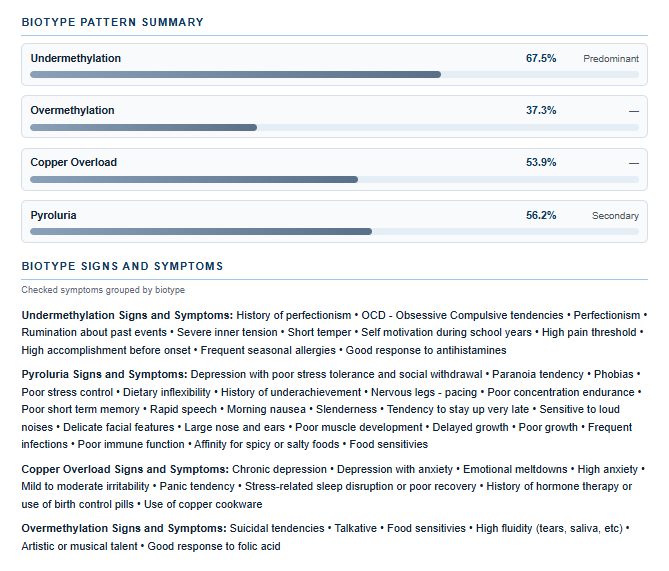
Choose one of the three primary assessments below. Each patient link includes the appropriate WalshDoc consent step before opening the questionnaire.
Biotype Assessment
Evaluates symptom patterns associated with undermethylation, overmethylation, copper overload, and pyroluria.
Epigenetic Drivers of Undermethylation Assessment
Evaluates factors that may contribute to impaired methylation activity, elevated SAH, mitochondrial stress, increased creatine demand, oxidative burden, acidic pH patterns, and environmental or metabolic stress.
Biotype + Epigenetic Drivers of Undermethylation Assessment
Combines the Walsh Biotype Assessment with the more detailed Epigenetic Drivers of Undermethylation and methylation-focused questionnaire.
Note: The Epigenetic Drivers of Undermethylation Assessment replaces the older “Toxic Burden Questionnaire” name. Older links may still use the toxic-burden wording, but they lead to the current methylation-focused assessment.
Want a Physician-Reviewed Report and Follow-Up Call?
The questionnaires can be completed independently, or paired with a Second Opinion Physician consultation for physician review and follow-up.
Biotype Report and Follow-Up Consultation
Choose this option for a physician-reviewed, symptom-based Walsh Biotype report and a follow-up phone call.
This option is intended for patients who want a Biotype screening report based on symptoms without the broader Epigenetic Drivers of Undermethylation assessment.
View Biotype Report ConsultationBiotype + Methylation Consultation
Choose this option for physician review of both the Walsh Biotype questionnaire and the Epigenetic Drivers of Undermethylation questionnaire.
This is the more comprehensive consultation when methylation activity, elevated SAH, creatine demand, mitochondrial stress, or related epigenetic factors may also need review.
View Combined ConsultationOther Questionnaires
General Functional Health Questionnaire
A broader intake covering digestion, hormones, sleep, inflammation, immune concerns, diet, medications, supplements, prior labs, and treatment goals.
Start the Functional Health AssessmentPediatric Neurodevelopment Questionnaire
For children with developmental, speech, sensory, sleep, behavior, gastrointestinal, immune, regression, autism-related, or neurodevelopmental concerns.
Start the Pediatric AssessmentFollow-Up Biotype Questionnaire
For established patients tracking changes in symptoms, supplement response, side effects, setbacks, and remaining Biotype concerns.
Update Biotype ProgressInsomnia and Anxiety Deep Dive
A focused questionnaire for persistent insomnia, anxiety, panic, rumination, medication sensitivity, nighttime overstimulation, and nervous-system dysregulation.
Start the Insomnia and Anxiety AssessmentLearn More Before Choosing
What Is WalshDoc?
Learn how WalshDoc questionnaires, symptom-pattern reports, laboratory review, physician interpretation, and follow-up assessments work together.
Read the WalshDoc ExplainerUnsure Which Assessment to Choose?
Schedule a free pre-consultation before purchasing a consultation or deciding which questionnaire and laboratory pathway is most appropriate.
Request a Free Pre-Consultation