


Walsh Biotype + Methylation Assessment | No Labs Required

$299.00
Physician-reviewed online Biotype + Methylation assessment for patients who cannot obtain specialty laboratory testing or prefer to begin without labs.
Uses the detailed WalshDoc questionnaire and clinical history to evaluate Walsh Biotype patterns plus symptom support for methylation demand, mitochondrial/energy stress, creatine demand, acidic/gut/hypoxia burden, and toxic burden.
Includes physician review, a written biochemical assessment, individualized nutrient/supplement recommendations, and a follow-up phone consultation. No laboratory testing or lab interpretation is included.
Patients may complete the Biotype + Methylation Questionnaire first and review their symptom-based scores before deciding whether to purchase the physician assessment.
Description
This online methylation assessment without labs is designed for patients who want a broader Walsh-oriented biochemical assessment but cannot obtain specialty laboratory testing, have limited access to testing, or prefer to begin with a detailed symptom- and history-based review before ordering labs.
The assessment combines the WalshDoc Biotype + Methylation Questionnaire, clinical history, medication and supplement response, and physician review to identify symptom-supported Walsh Biotype patterns and factors that may be contributing to impaired methylation, metabolic stress, or poor treatment response.
Can I Have a Methylation Assessment Without Laboratory Testing?
Yes. This consultation is specifically designed as a methylation assessment without labs.
It does not measure SAM, SAH, methionine, homocysteine, glutathione, or other methylation metabolites. Instead, it evaluates the clinical and symptom patterns that may suggest undermethylation, increased methylation demand, mitochondrial stress, creatine demand, toxic burden, or other factors that can complicate methylation.
The questionnaire is designed to organize those symptom patterns so they can be reviewed in the context of the patient's history rather than treated as isolated complaints.
Who Is an Online Walsh Biotype and Methylation Assessment Best For?
International Patients
Patients outside the United States who do not have practical access to specialized Walsh, SAM/SAH, whole blood histamine, pyrrole, or related testing.
Patients With Limited Lab Access
Useful when specialty testing is unavailable locally, blood collection is difficult, testing costs are prohibitive, or logistics make laboratory testing impractical.
Patients Wanting a Symptom-Based First Step
Appropriate for patients who want to understand likely biochemical patterns before deciding whether laboratory testing is worth pursuing.
Complex or Mixed Symptom Patterns
Especially useful when symptoms suggest more than one Walsh pattern or when undermethylation appears likely but additional metabolic contributors may also be present.
What Does the Biotype + Methylation Questionnaire Evaluate?
The questionnaire combines two related layers of assessment:
Walsh Biotype Patterns
Screens for symptom support associated with undermethylation, overmethylation, copper overload, and pyroluria.
Epigenetic / Methylation Drivers
Evaluates factors that may contribute to impaired methylation or make treatment more difficult even when the traditional Biotype appears clear.
Which Walsh Biotype Patterns Are Assessed?
Undermethylation
Reviews symptoms, personality traits, family history, physical findings, medication response, and other characteristics associated with traditional Walsh undermethylation.
Overmethylation
Evaluates symptom patterns that may be more consistent with overmethylation and helps distinguish it from undermethylation before selecting nutrients.
Copper Overload
Looks for mood, anxiety, hormonal, stress, and treatment-response patterns that may suggest copper/zinc imbalance.
Pyroluria
Evaluates symptoms associated with poor stress tolerance, zinc and B6-related patterns, cognitive symptoms, and other clinical features traditionally associated with pyroluria.
What Does the Symptom-Based Methylation Assessment Look For?
The expanded portion of the questionnaire goes beyond the basic Biotype and asks whether symptoms and history support additional factors that may impair methylation or increase biochemical demand.
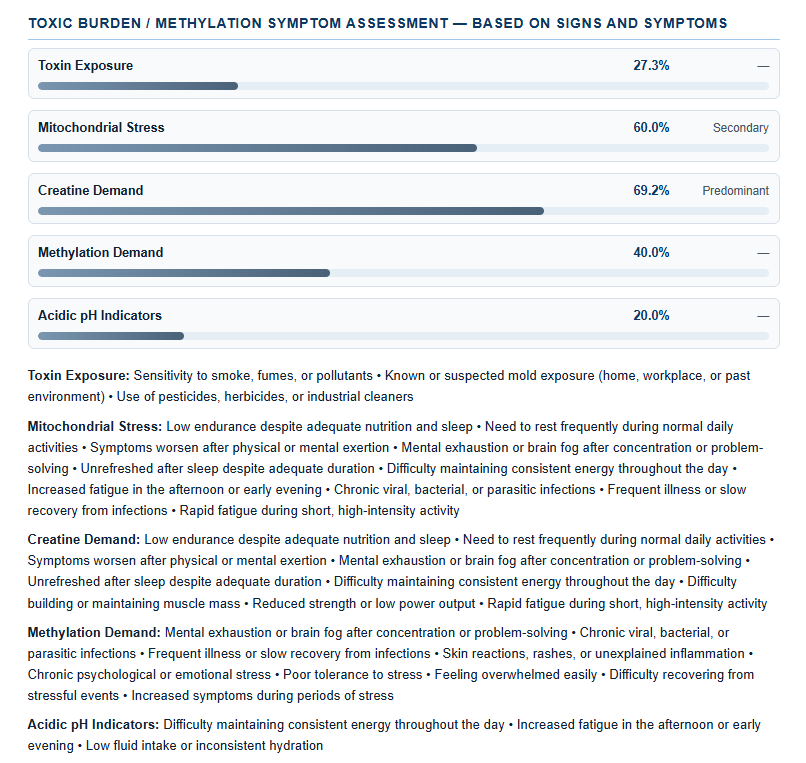
Mitochondrial / Energy Stress
Looks for findings suggesting that poor cellular energy production may be contributing to fatigue, poor resilience, or difficulty supporting metabolically demanding pathways.
Creatine / Neuromuscular Demand
Evaluates symptoms that may indicate increased creatine demand and therefore increased use of methyl groups for endogenous creatine synthesis.
Methylation Demand
Identifies factors that may increase methyl-group utilization or make a patient more vulnerable to inadequate methylation capacity.
Acidic / Gut / Hypoxia Burden
Reviews gastrointestinal, fermentation, acid-base, and oxygen-related symptoms that may contribute to metabolic stress or impaired clearance.
Toxic Burden
Identifies reported chemical, environmental, medication, or other exposure-related factors that may increase oxidative or biochemical stress.
Why Ask What Is Driving Undermethylation?
A traditional Walsh assessment may show a strong undermethylation pattern, but that does not necessarily explain why methylation is impaired or why the patient has not responded well to prior treatment.
The expanded WalshDoc questionnaire therefore asks a second question: what may be increasing methylation demand or interfering with normal methylation efficiency?
A patient may show undermethylation together with high creatine demand, mitochondrial stress, gut dysfunction, toxic exposure, oxidative stress, poor supplement tolerance, or several of these factors at the same time.
This broader pattern can help prioritize which nutrient strategies appear most appropriate even when laboratory confirmation is not yet available.
What Does Methylation Questionnaire Interpretation Add?
The questionnaire itself produces structured symptom-support scores. Ordering this consultation adds physician methylation questionnaire interpretation.
The scores are reviewed together with the patient's clinical history, treatment response, medications, supplements, diet, environmental exposures, gastrointestinal symptoms, and other reported factors.
Walsh Biotype and Epigenetic Biotype support scores are reviewed together with the individual symptoms that produced those scores.
Relevant psychiatric, medical, family, medication, supplement, diet, gastrointestinal, hormonal, environmental, and treatment-response information is considered.
Dr. Epstein reviews which symptom-supported biochemical patterns appear most clinically relevant and how they may overlap.
The Biotype findings, methylation-related drivers, clinical interpretation, and recommendations are organized into a written assessment.
An individualized nutrient and supplement strategy is developed according to the patterns most strongly supported by the questionnaire and history.
The written assessment and recommendations are reviewed with Dr. Epstein and next steps can be discussed.
Can I Complete the Questionnaire Before Purchasing?
Yes. Patients are encouraged to complete the questionnaire first.
The questionnaire provides a preliminary symptom-based view of both the traditional Walsh Biotypes and the additional methylation-related patterns. You can review those scores before deciding whether you want physician interpretation and an individualized supplement plan.
Complete the WalshDoc Biotype + Methylation Questionnaire before purchasing the physician assessment.
Complete the Biotype + Methylation QuestionnaireCan an Undermethylation Assessment Be Done Without Labs?
A symptom-based undermethylation assessment without labs can identify whether the clinical pattern strongly resembles traditional Walsh undermethylation and whether additional factors appear to be increasing methylation demand.
However, symptoms do not directly measure methylation chemistry. They cannot determine whether SAM is low, SAH is elevated, methionine is inadequate, glutathione is limited, or another metabolic factor is responsible.
The value of the questionnaire-only approach is that it provides a structured starting point when laboratory testing is not currently possible.
Can This Help When Supplements Have Been Difficult to Tolerate?
Yes. One reason patients seek a broader symptom based methylation assessment is that previous supplement programs have produced mixed, confusing, or poorly tolerated responses.
The questionnaire reviews reported sensitivity to nutrients and supplements alongside the Biotype and Epigenetic Biotype patterns. This can help identify where treatment may need to proceed more gradually or where certain nutrient strategies may deserve more caution.
What Symptoms May Lead Someone to Consider This Assessment?
Depression & Rumination
Chronic low mood, perfectionism, obsessive thinking, intrusive thoughts, low motivation, or recurrent depressive patterns.
Anxiety & Poor Stress Tolerance
Persistent anxiety, inner tension, irritability, panic tendencies, emotional sensitivity, or difficulty recovering from stress.
Fatigue & Brain Fog
Poor energy, low physical resilience, cognitive fatigue, memory problems, or difficulty sustaining concentration.
Sleep & Nervous System Symptoms
Insomnia, restless sleep, hyperarousal, poor recovery, or persistent nervous-system sensitivity.
Gut & Metabolic Symptoms
Bloating, fermentation, digestive intolerance, inconsistent bowel function, or other symptoms that may add metabolic stress.
Chemical or Supplement Sensitivity
Poor tolerance of medications, supplements, chemicals, odors, foods, or environmental exposures.
Why Is This Useful for International Patients?
An international methylation assessment can be difficult when the recommended specialty laboratory testing is not available locally or requires complex shipping, physician ordering, or specimen-handling arrangements.
The questionnaire-only pathway allows patients to begin with a detailed online biochemical assessment based on information that can be collected anywhere: symptoms, history, treatment response, medications, supplements, diet, environmental exposures, and recognizable Walsh biochemical patterns.
If laboratory access improves later, testing can then be used to confirm, challenge, or refine the initial assessment.
Does This Assessment Include Any Laboratory Review?
No. This product is specifically a questionnaire- and clinical-history based assessment.
It does not include laboratory testing or interpretation of copper, zinc, ceruloplasmin, whole blood histamine, urinary pyrroles, SAM, SAH, methionine, homocysteine, glutathione, or other laboratory markers.
That distinction allows this service to remain useful for patients who need a Walsh Protocol assessment without blood tests.
Can Laboratory Testing Be Added Later?
Yes. Laboratory testing can be added later if it becomes practical or if the questionnaire-based assessment suggests that objective biochemical confirmation would be useful.
What if I Want the Full Biotype + Methylation Laboratory Assessment?
Patients who can obtain laboratory testing and want the most complete assessment from the beginning should choose the Walsh Protocol Biotype + Methylation Assessment.
That consultation combines the WalshDoc questionnaire and clinical history with both the Comprehensive Biotype Panel and direct methylation testing, allowing symptom patterns to be compared with objective biochemical findings.
What if I Only Want a Basic Walsh Biotype Assessment Without Labs?
Patients who primarily want assessment of the traditional Walsh Biotypes and do not need the broader methylation-driver analysis may prefer the WalshDoc Questionnaire-Only Biotype Assessment + Supplement Plan.
Biotype Questionnaire-Only Assessment
Focuses primarily on undermethylation, overmethylation, copper overload, pyroluria, clinical history, and symptom-based nutrient recommendations.
Biotype + Methylation Questionnaire-Only Assessment
Adds assessment of mitochondrial/energy stress, creatine demand, methylation demand, acidic/gut/hypoxia burden, and toxic burden.
What Does the Methylation Supplement Plan Include?
The methylation supplement plan is individualized according to the patterns most strongly supported by the questionnaire and clinical history.
Recommendations may include nutrients to consider, nutrients that may deserve caution, sequencing of supplementation, and other clinically relevant considerations. The goal is not to apply a generic methylation protocol to every patient.
Because no laboratory values are available, recommendations are made more conservatively than they would be in a fully laboratory-confirmed methylation assessment.
What Are the Limitations of an Online Methylation Assessment Without Labs?
- SAM or SAH;
- SAM/SAH ratio;
- methionine;
- homocysteine;
- adenosine;
- glutathione;
- cysteine or cystathionine;
- betaine or taurine;
- copper, zinc, or ceruloplasmin;
- whole blood histamine;
- urinary pyrroles.
The questionnaire identifies symptom-supported biochemical patterns. Laboratory testing can provide additional diagnostic confidence and may modify the interpretation or nutrient strategy when it becomes available.
Not Sure Whether to Start With Symptoms or Labs?
If you are still uncertain whether you need this questionnaire-only assessment, the basic Biotype assessment, or the full laboratory-based Biotype + Methylation consultation, a free pre-consultation can help clarify the options.
Online Methylation Assessment Without Labs FAQs
Can I have a methylation assessment without blood testing?
Yes. This service uses the detailed WalshDoc Biotype + Methylation Questionnaire and clinical history to identify symptom-supported Walsh and methylation-related patterns without laboratory testing.
Is this useful for international patients?
Yes. The questionnaire-only format can be especially useful for international patients who do not have practical access to specialized Walsh or methylation laboratory testing.
Does this assessment measure SAM or SAH?
No. SAM, SAH, methionine, homocysteine, and related methylation metabolites require laboratory testing. This service evaluates symptom and history patterns only.
Can it identify undermethylation?
It can identify symptoms and history that strongly support a traditional Walsh undermethylation pattern and can also evaluate possible factors increasing methylation demand. Laboratory testing provides additional confirmation when available.
What is the difference between this and the basic Biotype questionnaire assessment?
The basic Biotype assessment focuses on traditional Walsh patterns such as undermethylation, overmethylation, copper overload, and pyroluria. This expanded assessment also evaluates mitochondrial/energy stress, creatine demand, methylation demand, acidic/gut/hypoxia burden, and toxic burden.
Does this include a supplement plan?
Yes. The physician-reviewed assessment includes individualized nutrient and supplement recommendations based on the questionnaire patterns and clinical history.
Can I add methylation laboratory testing later?
Yes. If testing becomes available, a Comprehensive Biotype Panel and detailed methylation panel can be used to confirm, challenge, or refine the symptom-based assessment.
Can I complete the questionnaire before purchasing?
Yes. Patients may complete the WalshDoc Biotype + Methylation Questionnaire first and review the symptom-based pattern scores before deciding whether to purchase the physician assessment.