
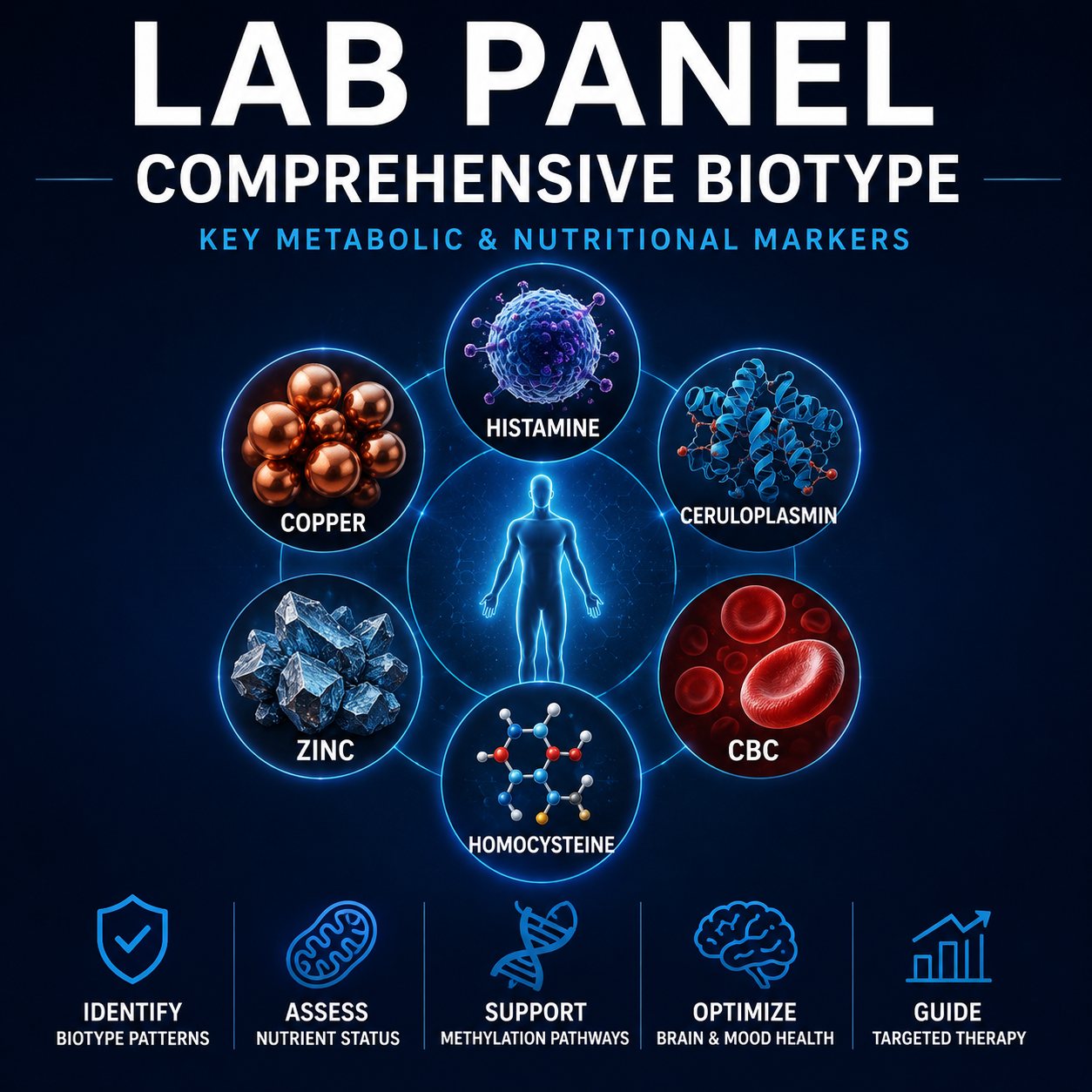
Lab Panel – Comprehensive Biotype
$425.00
This panel includes the following items and CPT codes: Histamine #83088; Copper #82525; Ceruloplasmin: #82390; Zinc: #84630; Vitamin D: #82306; Homocysteine: #83090; CBC: #85025; Metab Panel: #80053
Description
The Comprehensive Biotype Panel is the core Walsh Approach laboratory assessment offered by Second Opinion Physician. It combines methylation screening, copper and zinc assessment, vitamin D, and general metabolic testing to help identify biochemical patterns that may contribute to depression, anxiety, mood instability, behavioral symptoms, attention problems, and other neuropsychiatric concerns.
Two people with the same diagnosis can have very different underlying chemistry. The Walsh Approach looks beyond the psychiatric label to identify patterns involving methylation, copper metabolism, zinc status, nutrient balance, and related biochemical factors that may influence neurotransmitter function and nutrient needs.
What Is Included in the Comprehensive Biotype Panel?
This panel brings together the principal laboratory markers used in a Walsh biochemical assessment rather than evaluating one pathway in isolation.
Methylation Screen
Whole-Blood Histamine HomocysteineWhole-blood histamine is the traditional Walsh laboratory marker used as part of the assessment of undermethylation and overmethylation. Histamine breakdown in blood cells involves a methyl-dependent methyltransferase pathway.
Homocysteine provides additional information about methylation chemistry and can influence nutrient planning.
View Methylation ScreenCopper Overload Assessment
Copper Zinc CeruloplasminCopper, zinc, and ceruloplasmin are interpreted together to evaluate copper overload and copper/zinc balance.
This pattern can be particularly relevant to anxiety, panic, irritability, insomnia, hormonal sensitivity, postpartum mood changes, and mood instability.
View Copper Overload PanelVitamin D Status
25-OH Vitamin DVitamin D is included because inadequate levels are common and may be relevant to mood, immune regulation, inflammation, and neurological health.
It is interpreted as one part of the overall biochemical picture rather than as a stand-alone explanation for symptoms.
General Metabolic Assessment
CBC CMPThe Complete Blood Count and Comprehensive Metabolic Panel provide essential background information including red and white blood cells, glucose, electrolytes, kidney function, liver function, and protein status.
These tests can reveal other metabolic or nutritional findings that need to be considered alongside the Walsh markers.
The Five Walsh Biochemical Patterns
Dr. William Walsh's work identified recurring biochemical patterns among patients with depression and other psychiatric or behavioral conditions. These patterns help explain why individuals with similar symptoms may respond very differently to the same medication or nutrient.
A patient may show evidence of undermethylation together with copper overload, pyroluria, or another metabolic abnormality. The goal is to determine which patterns appear most important rather than forcing symptoms into a single biochemical category.
Learn More About the Walsh Approach
Understanding the biochemical patterns makes the laboratory results much more useful. Explore the educational sections below for a deeper explanation of the major Walsh patterns.
Undermethylation Overmethylation Copper Overload PyroluriaWhole-Blood Histamine vs. Direct SAM/SAH Methylation Testing
The Comprehensive Biotype Panel uses whole-blood histamine and homocysteine as the traditional Walsh methylation screen. This remains useful for identifying the clinical patterns historically described within the Walsh Approach.
However, methylation can now also be examined more directly by measuring metabolites such as SAM and SAH.
Traditional Walsh Methylation Screen
Whole-Blood Histamine + Homocysteine
Useful for evaluating the traditional Walsh undermethylation and overmethylation patterns in combination with symptoms and clinical history.
View Methylation ScreenPlasma Methylation Panel
SAM + SAH + Methionine + Homocysteine + Adenosine
Direct methylation metabolites can reveal additional problems such as low SAM, elevated SAH, impaired SAM:SAH balance, or abnormalities involving methylation-cycle clearance.
This can be particularly valuable when symptoms strongly suggest undermethylation but whole-blood histamine does not fully explain the clinical picture.
What About Pyroluria?
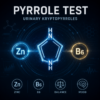
The urinary pyrrole test was previously included in the Comprehensive Biotype Panel. It is now offered separately because laboratory pricing has increased and the test is not necessary for every patient.
When symptoms and questionnaire findings suggest a significant pyroluria pattern, urinary pyrrole testing can be added to evaluate a possible zinc and vitamin B6 depletion pattern.
View Urinary Pyrroles TestShould I Order the Full Panel or Just One Test?
Methylation, copper metabolism, zinc status, nutrient status, and general metabolic health frequently overlap. Testing only histamine or only copper can miss another biochemical pattern that may be equally or more important.
Smaller panels remain useful when there is already a strong reason to investigate one particular pathway, when recent laboratory results are already available, or when cost is an important consideration.
Laboratory Results Are Only Part of the Assessment
A laboratory value by itself does not establish a Walsh biotype. Results are most useful when interpreted together with symptoms, questionnaire responses, family history, medication response, nutrient history, hormonal patterns, and other clinical information.
The Consultation with Comprehensive Biotype Report provides physician review of these findings and a detailed written assessment explaining the biochemical patterns identified, their relative importance, and potential next steps.
Consultation + Comprehensive Biotype Report 20-Minute ConsultationLaboratory Tests Included
| Test | CPT Code | Primary Role |
|---|---|---|
| Histamine, Whole Blood | 83088 | Traditional Walsh methylation marker |
| Homocysteine | 83090 | Methylation-cycle and nutrient marker |
| Copper, Serum | 82525 | Copper status and copper overload assessment |
| Ceruloplasmin | 82390 | Copper transport and interpretation |
| Zinc, Plasma | 84630 | Zinc status and copper/zinc balance |
| Vitamin D, 25-OH | 82306 | Vitamin D status |
| CBC – Complete Blood Count | 85025 | Blood-cell and general health assessment |
| Comprehensive Metabolic Panel | 80053 | Kidney, liver, glucose, protein and electrolytes |