
Walsh Protocol Training, Certification & Education for Practitioners
Physicians and clinicians searching for Walsh Protocol training, certification, or education are often looking for two things: a deeper understanding of William J. Walsh, PhD’s biochemical approach to mental health and a practical way to incorporate Walsh testing, biotype recognition, laboratory findings, and individualized nutrient therapy into clinical practice. Formal Walsh practitioner education is provided through the Walsh Research Institute. Second Opinion Physician and WalshDoc do not issue Walsh Institute certification; WalshDoc provides a structured clinician-support pathway for applying Walsh-oriented assessment within an existing practice.
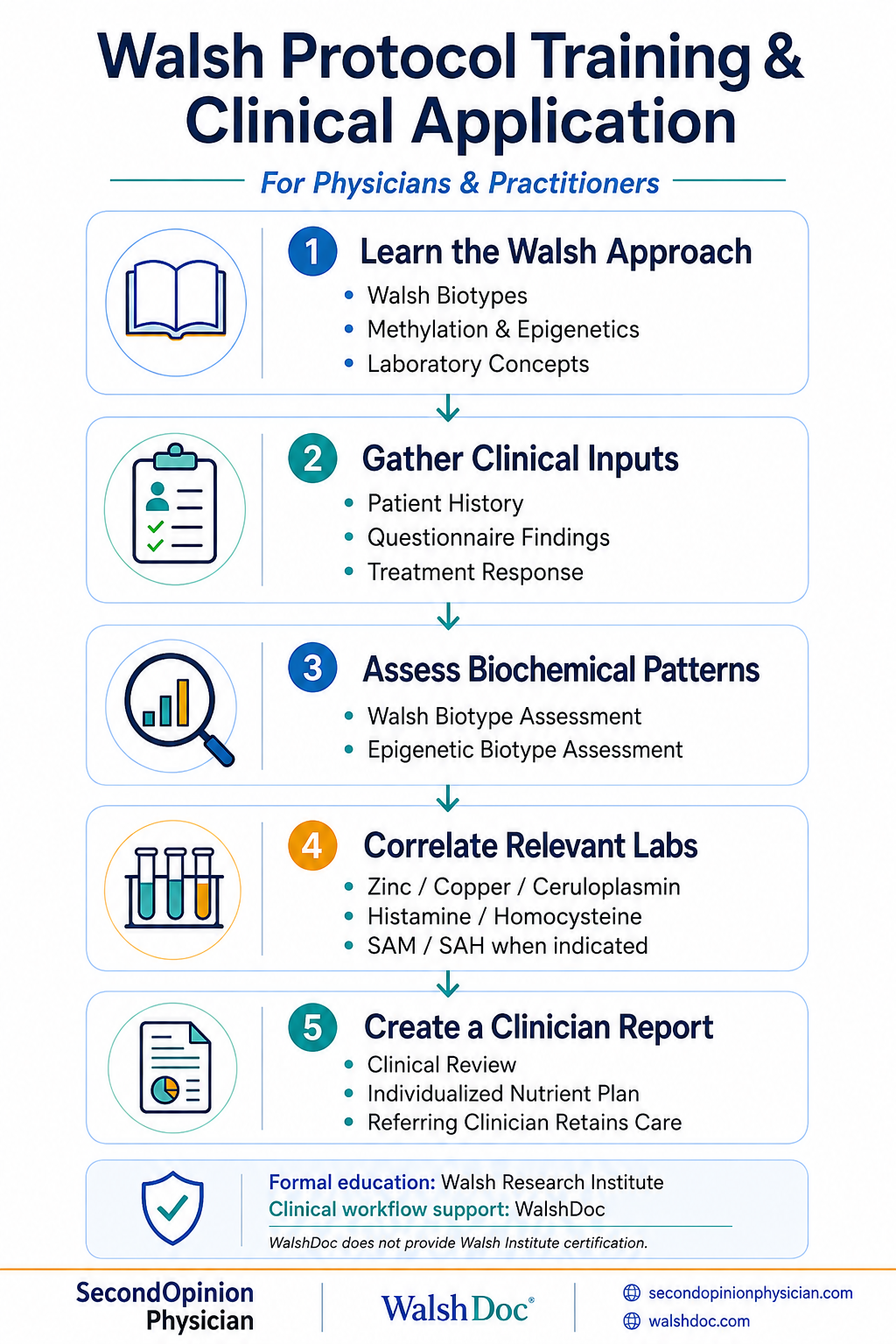
Walsh Protocol Training and Education for Physicians & Practitioners
The Walsh Approach gives physicians and other qualified clinicians a biochemical framework for understanding why patients with similar psychiatric or behavioral diagnoses may have very different nutrient needs, laboratory findings, medication responses, and treatment priorities.
For practitioners interested in this work, there are really two related steps: learning the Walsh Approach and developing a practical system for applying Walsh-oriented assessment in clinical practice.
Where Can Physicians Get Walsh Protocol Training?
Practitioners interested in receiving training directly through the Walsh Research Institute should be aware that the Institute's final practitioner training program is scheduled for October 2026.
The Mastering Brain Chemistry program, directed by William J. Walsh, PhD, provides physician and medical-practitioner education in brain biochemistry, neurotransmission, epigenetics, biochemical imbalances, laboratory testing, and advanced nutrient therapy.
According to the current Walsh Research Institute course description, the program is designed to help licensed medical professionals incorporate these protocols into clinical practice and includes self-paced education, case studies, laboratory interpretation, patient evaluations, and interactive instruction.
View the Mastering Brain Chemistry Practitioner Training Course →
Formal Walsh Protocol practitioner training and education originates with the Walsh Research Institute and the work of William J. Walsh, PhD. Practitioners seeking formal education in the Walsh methodology should review the Institute's current physician and practitioner training opportunities directly.
Neither Second Opinion Physician nor WalshDoc issues Walsh Institute certification. Clinicians seeking formal Walsh training or credentials should obtain current information directly from the Walsh Research Institute.
Is There a Walsh Protocol Certification?
Many practitioners search online for Walsh Protocol certification, Walsh practitioner certification, Walsh physician training, or information on how to become a Walsh practitioner.
Those searches generally reflect an interest in formal education in the biochemical model developed by Dr. Walsh. The Walsh Research Institute is the appropriate source for information about its current practitioner training programs and any credentials associated with those programs.
For clinicians who are already familiar with the Walsh model—or who are learning it and want a structured way to apply the concepts clinically—WalshDoc addresses a different need: clinical implementation and report preparation.
What Does Walsh Protocol Practitioner Education Help Clinicians Understand?
The Walsh Approach centers on biochemical individuality. Rather than assuming that every patient with depression, anxiety, OCD, ADHD, behavioral symptoms, or another psychiatric diagnosis has the same underlying biology, the clinician looks for recurring biochemical patterns that may help explain differences in symptoms and treatment response.
Walsh Biotypes
Recognition of recurring biochemical patterns such as undermethylation, overmethylation, copper overload, pyroluria, and toxic overload.
Biochemical Laboratory Testing
Understanding how laboratory markers such as zinc, copper, ceruloplasmin, whole-blood histamine, homocysteine, vitamin D, SAM, SAH, and related findings may add biochemical context.
Methylation & Epigenetics
Understanding methylation beyond MTHFR genetics, including methyl availability, SAM and SAH, methylation inhibition, and epigenetic regulation.
Individualized Nutrient Therapy
Selecting nutrients according to the patient's biochemical pattern rather than applying the same supplement program to every patient.
For an overview of the traditional biochemical framework, see Five Biotypes of Depression and the Walsh Protocol.
How Do Physicians Move From Walsh Protocol Training to Clinical Practice?
Learning biochemical concepts is only the beginning. Clinical application requires the practitioner to combine patient history, symptom patterns, prior treatment response, medication history, nutrient tolerance, and laboratory findings into one coherent assessment.
The process becomes more complex when a patient demonstrates overlapping Walsh patterns or when a traditional undermethylation pattern does not fully explain the clinical presentation.
WalshDoc was developed to help organize the information needed for Walsh-oriented assessment into a repeatable clinical workflow rather than leaving the practitioner to assemble every element from separate histories, questionnaires, laboratory reports, and notes.
What Is WalshDoc for Clinicians?
WalshDoc is a clinical assessment and reporting system designed to support physicians and qualified practitioners who want to incorporate the Walsh Approach into their own practices.
The clinician-facing report can bring several layers of relevant information together in one place:
Patient History
Chief concerns, relevant clinical history, previous diagnoses, medications, supplements, treatment response, family history, exposures, and other pertinent information.
Walsh Biotype Assessment
Structured questionnaire findings supporting undermethylation, overmethylation, copper overload, and pyroluria patterns.
Epigenetic Biotype Assessment
Evaluation of mitochondrial/energy stress, creatine/neuromuscular demand, methylation demand, acidic/gut/hypoxia burden, and toxic burden.
Laboratory Correlation
Relevant laboratory findings can be incorporated and reviewed alongside questionnaire findings when available.
Clinical Review
Questionnaire scores and laboratory findings are considered in the context of the patient's reported clinical history rather than treated as stand-alone diagnoses.
Nutrient & Supplement Plan
Individualized nutrient and supplement recommendations may be incorporated according to the overall biochemical assessment.
Learn more about the clinical platform at WalshDoc or review how WalshDoc uses the Walsh Protocol framework.
What Is a Walsh Biotype Assessment?
The Walsh Biotype Assessment organizes patient-reported findings according to established Walsh biochemical patterns. Its purpose is pattern recognition: identifying which biochemical possibilities deserve closer clinical consideration and laboratory correlation.
Undermethylation
Assesses reported findings associated with the traditional undermethylation pattern, including characteristic mood, behavioral, physical, family-history, and treatment-response indicators.
Overmethylation
Identifies findings that may fit the overmethylation pattern and helps distinguish this presentation from undermethylation.
Copper Overload
Identifies clinical features that may support copper dysregulation and may be correlated with zinc, copper, ceruloplasmin, and calculated free-copper findings.
Pyroluria
Organizes characteristic clinical findings associated with the pyroluria pattern, including stress intolerance and zinc/B6-related features.
The questionnaire support scores are not probabilities or diagnoses. They are designed to organize the clinical pattern for physician or clinician review.
For a deeper explanation of one of the most common patterns, see Undermethylation: Symptoms, Histamine, MTHFR, Testing & Treatment.
How Does the Epigenetic Biotype Assessment Expand the Walsh Approach?
Traditional Walsh Biotype recognition identifies the biochemical pattern. The newer Epigenetic Biotype Assessment asks an additional question: what factors may be contributing to or perpetuating impaired methylation in a particular patient?
Mitochondrial / Energy Stress
Evaluates reported findings that may support impaired energy production or increased metabolic stress.
Creatine / Neuromuscular Demand
Looks for clinical features associated with increased creatine demand and the resulting use of methyl groups for endogenous creatine synthesis.
Methylation Demand
Identifies factors that may increase methylation requirements or place additional demand on methyl-group availability.
Acidic / Gut / Hypoxia Burden
Organizes gastrointestinal, acid-base, and oxygen-related findings that may influence methylation performance or metabolic clearance.
Toxic Burden
Identifies reported environmental and exposure-related factors that may contribute additional biochemical stress.
They provide an additional analytical layer for understanding why an undermethylation pattern may persist, why methylation laboratory findings may be abnormal, or why a patient may not respond as expected.
For more detail, see What Causes Undermethylation? Low SAM vs. High SAH and Understanding the Methylation Test.
How Are Laboratory Results Used With Walsh Biotype Findings?
Questionnaire findings can suggest a biochemical pattern. Laboratory findings provide another layer of information that may support, challenge, or refine that initial impression.
Mineral Balance
Zinc, copper, ceruloplasmin, zinc/copper ratio, and calculated free copper when appropriate.
Methylation Markers
Whole-blood histamine, homocysteine, SAM, SAH, and SAM:SAH relationships when available and clinically relevant.
General Biochemical Context
Vitamin D, CBC, metabolic findings, and other laboratory results relevant to the patient's clinical presentation.
Case-Specific Testing
Additional testing may be considered when the history or biochemical pattern suggests the need for further evaluation.
Why Do Some Patients Not Respond to a Standard Walsh Protocol?
Biotype identification is an important starting point, but it may not explain every difficult or incomplete treatment response.
Persistent methylation inhibition, abnormal SAH, increased methylation demand, mitochondrial dysfunction, gastrointestinal factors, environmental burden, medication effects, or overlapping biochemical patterns may alter how a patient responds.
That is why a useful Walsh-oriented assessment may need to move beyond simply identifying a biotype.
For a more detailed discussion, see Walsh Protocol Review: Benefits, Limits & Nonresponders.
Can Clinicians Use the Walsh Protocol Without Transferring Their Patient?
Yes. WalshDoc can be used in a clinician-to-clinician support model in which the referring practitioner maintains the patient relationship.
The patient completes the appropriate history and questionnaire. Relevant laboratory information may be supplied by the referring practice. The submitted information is then organized and reviewed for preparation of the requested clinician report.
The report is prepared for the referring clinician or practice rather than functioning as a separate direct patient consultation with Second Opinion Physician.
How Does the WalshDoc Clinician Workflow Work?
The patient completes the appropriate WalshDoc intake and biochemical-pattern questions.
Reported findings are organized into the major Walsh biochemical patterns.
Possible contributors to undermethylation and impaired methylation are assessed separately.
Relevant laboratory findings are incorporated when supplied and clinically useful.
The questionnaire findings, history, and available laboratory information are reviewed together.
The referring practice receives the completed assessment and individualized nutrient/supplement recommendations.
What Does a WalshDoc Clinician Report Provide?
The objective is not simply to generate more paperwork. The report is intended to bring the major clinical elements into a format that is easier for the referring practitioner to review and use.
Structured Assessment
Patient history, questionnaire results, and biochemical-pattern support are organized into a single report.
Relevant Lab Review
Supplied laboratory findings can be displayed and correlated with the questionnaire assessment when appropriate.
Clinical Interpretation
Physician or clinician review is added where useful to place the findings into clinical context.
Individualized Recommendations
Nutrient and supplement recommendations can be developed according to the overall biochemical assessment.
The amount and type of narrative interpretation may vary according to the needs and complexity of the individual case.
How Does Patient Consent Work in a Clinician-Referred Assessment?
Patients entering the clinician-referred WalshDoc pathway complete the applicable consent and privacy acknowledgment before submitting health information.
The consent identifies the relationship between the patient, referring practice, WalshDoc, and Second Opinion Physician and permits the information needed for the assessment to be reviewed and returned to the referring clinician.
The referring clinician remains responsible for diagnosis, treatment decisions, prescribing where applicable, implementation, and ongoing patient care.
Walsh Protocol Training vs. WalshDoc Clinical Support
| Walsh Practitioner Education | WalshDoc Clinical Support |
|---|---|
| Learn Walsh biochemical principles | Organize those principles into a structured clinical assessment |
| Study biochemical individuality and Walsh Biotypes | Organize patient history and questionnaire findings |
| Learn laboratory concepts | Incorporate supplied laboratory findings when appropriate |
| Learn individualized nutrient therapy principles | Support individualized nutrient and supplement recommendations |
| Professional education | Clinical workflow and report preparation |
Who May Benefit From Walsh Protocol Practitioner Support?
WalshDoc may be useful for qualified clinicians who want to incorporate Walsh-oriented biochemical assessment into an existing practice.
Walsh-Trained Practitioners
Clinicians familiar with the Walsh Approach who want a more efficient way to organize assessment and reporting.
Practitioners Learning the Walsh Approach
Clinicians developing their understanding of biochemical patterns, methylation, laboratory testing, and nutrient therapy.
Functional Medicine Clinicians
Practitioners already using biochemical or functional laboratory testing who want to incorporate Walsh Biotype assessment.
Mental Health Practices
Practices caring for patients with complex mood, behavioral, cognitive, attention, or medication-response presentations.
How Can a Practitioner Start Using WalshDoc?
Bring Walsh-Oriented Assessment Into Your Practice
Clinicians interested in WalshDoc can begin by learning more about the clinician-referred workflow and determining whether it fits their practice.
The treating practitioner retains the patient relationship while WalshDoc provides a structured pathway for organizing patient history, Walsh Biotype findings, Epigenetic Biotype findings, relevant laboratory data, clinical review, and individualized nutrient recommendations.
WalshDoc Clinician InformationWalsh Protocol Training, Certification & Practitioner FAQs
Where can physicians receive formal Walsh Protocol training?
Practitioners seeking formal education based on the work of William J. Walsh, PhD should review current practitioner programs directly through the Walsh Research Institute.
Does Second Opinion Physician provide Walsh Protocol certification?
No. Second Opinion Physician and WalshDoc are independent of the Walsh Research Institute and do not issue Walsh Institute certification.
What is the difference between Walsh Protocol training and WalshDoc?
Walsh training teaches the biochemical concepts and clinical principles of the Walsh Approach. WalshDoc is a separate clinical workflow and reporting system designed to help practitioners organize patient history, biochemical-pattern assessments, laboratory findings, clinical review, and nutrient recommendations.
Do I need to transfer my patient to Second Opinion Physician to use WalshDoc?
No. A clinician-referred WalshDoc assessment can be structured as clinician-to-clinician support. The referring practitioner maintains the patient relationship and remains responsible for ongoing clinical care.
Can my practice provide its own laboratory results?
Yes. Relevant laboratory results ordered or obtained by the treating practice may be provided for incorporation into the assessment when appropriate.
Can WalshDoc be used before laboratory testing is complete?
Yes. Patient history and questionnaire findings can provide an initial biochemical-pattern screening assessment. Laboratory findings can subsequently be incorporated when available or clinically indicated.
Does the patient become Dr. Epstein's patient through WalshDoc?
Not through the clinician-referred assessment alone. The clinician-referred model is intended to support the referring practitioner rather than create a separate direct consultation between the patient and Second Opinion Physician.