
Walsh Approach Reports, Supplement Plans and Education for Physicians & Practitioners
The Walsh Protocol for practitioners is more than a list of laboratory tests or supplement recommendations. Applying the Walsh Approach clinically requires the practitioner to organize a patient's history, identify likely biochemical patterns, understand treatment response, correlate relevant laboratory findings, and determine which nutrient strategies fit the overall presentation. WalshDoc provides a structured clinician-support pathway that helps physicians and qualified practitioners incorporate Walsh Biotype assessment, expanded Epigenetic Biotype assessment, laboratory review, and individualized nutrient recommendations into their own practices while retaining responsibility for the patient relationship.
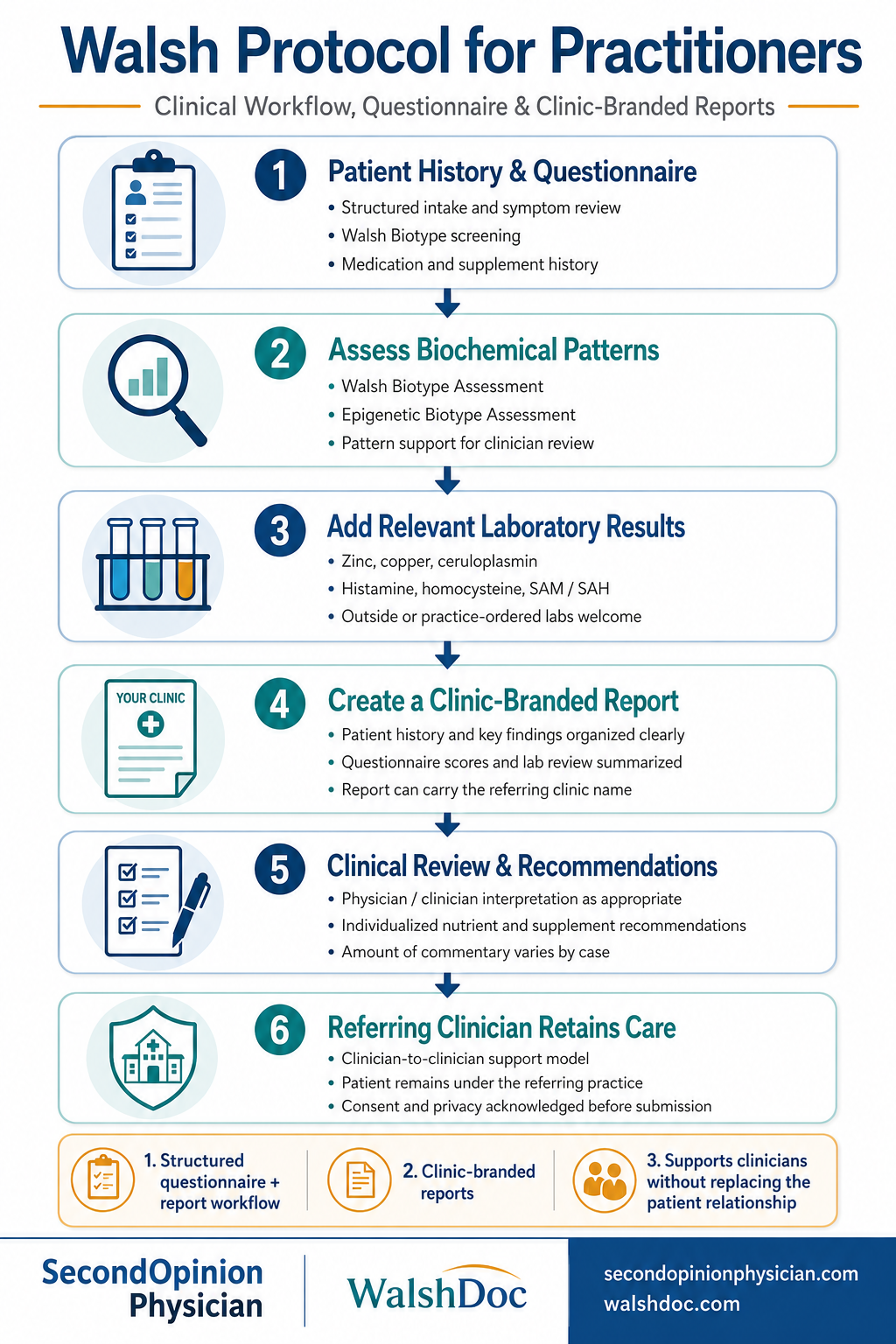
Bring the Walsh Approach Into Your Practice
The Walsh Approach gives physicians and qualified practitioners a biochemical framework for understanding why patients with similar psychiatric or behavioral diagnoses may respond very differently to medications, nutrients, supplements, and environmental stressors.
The challenge is turning those principles into a practical clinical process. A useful Walsh Protocol assessment requires more than identifying a biotype. The practitioner must connect the patient's history, symptom patterns, treatment response, laboratory findings, and nutrient tolerance into one coherent interpretation.
How Can Physicians Use the Walsh Protocol in Clinical Practice?
A Walsh-oriented evaluation begins with the clinical story. Questionnaire scores become much more useful when they are interpreted alongside the patient's medical history, psychiatric history, medications, supplement response, family patterns, environmental exposures, and laboratory findings.
Clinical History
Chief concerns, symptom history, prior diagnoses, medication exposure, treatment response, family history, hormonal factors, environmental exposures, and other relevant clinical information.
Walsh Biotype Patterns
Questionnaire findings are organized to evaluate support for undermethylation, overmethylation, copper overload, pyroluria, and related biochemical patterns.
Epigenetic & Methylation Factors
Additional factors that may increase methylation demand, impair methylation efficiency, or help explain incomplete response are considered separately.
Relevant Laboratory Findings
Laboratory results can be reviewed alongside questionnaire patterns to support, challenge, or refine the initial biochemical impression.
For a broader introduction to this framework, see The Walsh Approach and Five Biotypes of Depression.
What Is WalshDoc for Physicians and Practitioners?
WalshDoc is a structured clinical assessment and reporting system developed to make Walsh-oriented evaluation easier to organize and review.
It does not replace the clinician. Instead, it helps collect and organize information that would otherwise be spread across intake forms, questionnaires, laboratory reports, clinical notes, and treatment planning.
The referring physician or practitioner remains responsible for the patient relationship, diagnosis, treatment decisions, prescribing where applicable, implementation, and ongoing care.
The current WalshDoc system organizes structured intake, biochemical pattern scoring, laboratory information, and clinician review into a report workflow. :contentReference[oaicite:1]{index=1}
What Does the Walsh Biotype Assessment Evaluate?
The traditional Walsh Biotype framework identifies recurring biochemical patterns associated with differences in neurotransmitter activity, mineral balance, methylation, oxidative stress, and nutrient requirements.
Undermethylation
Evaluates clinical findings associated with the traditional undermethylation pattern, including characteristic mood, behavioral, physical, family-history, and treatment-response indicators.
Overmethylation
Looks for findings that may distinguish an overmethylation presentation from undermethylation and other Walsh patterns.
Copper Overload
Identifies questionnaire features that may support copper dysregulation and can be compared with zinc, copper, ceruloplasmin, and calculated free-copper findings.
Pyroluria
Organizes characteristic features associated with the pyroluria pattern, including stress intolerance, cognitive symptoms, and zinc/B6-related findings.
These questionnaire scores are intended as pattern-support measures rather than probabilities or diagnoses. WalshDoc's public questionnaire also describes its purpose as organizing symptom and biotype-related findings for clinician review rather than automatically generating a diagnosis or treatment plan. :contentReference[oaicite:2]{index=2}
How Does the Epigenetic Biotype Assessment Add to the Walsh Protocol?
The classic Walsh Biotype assessment asks which biochemical pattern appears most strongly supported. The Epigenetic Biotype Assessment adds another clinical question: what factors may be contributing to impaired methylation or increasing methylation demand?
Mitochondrial / Energy Stress
Evaluates reported findings that may support impaired energy production or increased cellular metabolic stress.
Creatine / Neuromuscular Demand
Looks for clinical features that may increase creatine demand and therefore increase use of methyl groups for endogenous creatine production.
Methylation Demand
Identifies clinical factors that may increase methyl-group utilization or place additional demand on methylation pathways.
Acidic / Gut / Hypoxia Burden
Organizes gastrointestinal, acid-base, fermentation, and oxygen-related findings that may influence metabolic clearance and methylation performance.
Toxic Burden
Identifies environmental and exposure-related findings that may contribute additional oxidative or biochemical stress.
It provides an additional layer for evaluating why methylation may be impaired, why laboratory findings may not fit a simple low-methyl-donor model, or why a patient may not respond as expected.
For the biochemical background, see What Causes Undermethylation? Low SAM vs. High SAH and Understanding the Methylation Test. SOP's current undermethylation content specifically expands assessment beyond symptoms and genetics to include whole-blood histamine, homocysteine, SAM, SAH, mineral balance, creatine demand, and related factors. :contentReference[oaicite:3]{index=3}
How Are Laboratory Results Used With Walsh Protocol Assessment?
Questionnaire findings help identify which biochemical patterns deserve investigation. Laboratory findings may then provide objective context that supports, challenges, or modifies the initial interpretation.
Zinc & Copper Balance
Plasma zinc, serum copper, ceruloplasmin, zinc/copper relationships, and calculated free copper when appropriate.
Histamine & Methylation
Whole-blood histamine, homocysteine, SAM, SAH, and SAM:SAH relationships when clinically relevant.
General Biochemical Context
Vitamin D, CBC, metabolic findings, and other results that may influence the overall clinical interpretation.
Case-Specific Testing
Other laboratory findings may be incorporated when the patient's history or biochemical pattern indicates that they are relevant.
The goal is not to treat every laboratory value in isolation. The value of the report comes from interpreting laboratory findings alongside the patient's clinical history and questionnaire patterns.
See WalshDoc Labs and Report Workflow for additional background. The current SOP workflow page emphasizes that reports are most useful when questionnaire patterns are combined with targeted labs, prior records, medication history, and supplement response. :contentReference[oaicite:4]{index=4}
What Does the WalshDoc Clinician Workflow Look Like?
The patient completes the appropriate WalshDoc intake and biochemical-pattern questions.
Questionnaire findings are organized into the major Walsh biochemical patterns for clinician review.
Additional methylation-related pressures and potential contributors are assessed separately.
Relevant laboratory findings are incorporated when available and clinically useful.
History, questionnaire patterns, previous treatment response, and available laboratory information are considered together.
The referring practice receives the completed assessment with individualized nutrient and supplement recommendations as appropriate.
What Does a WalshDoc Clinician Report Include?
The purpose of the clinician report is to consolidate the important clinical information into a format that is easier to review and use.
Patient History
Relevant clinical history and patient-reported information are organized within the report.
Biotype Assessment
Walsh Biotype scores and supporting questionnaire findings are displayed clearly.
Epigenetic Assessment
Epigenetic Biotype scores and contributing clinical findings are presented separately from the traditional Walsh patterns.
Laboratory Review
Supplied laboratory findings can be incorporated and correlated with the questionnaire assessment when available.
Clinical Interpretation
Physician or clinician interpretation may be added where useful to place the findings into clinical context.
Nutrient & Supplement Recommendations
Individualized recommendations can be developed according to the biochemical pattern and available laboratory findings.
The amount of narrative commentary may vary according to the needs and complexity of the individual case.
Does the Patient Become a Second Opinion Physician Patient?
No. A clinician-referred WalshDoc assessment is structured as a clinician-to-clinician support service, not a direct consultation between David Epstein, D.O. and the referred patient.
The referring practitioner remains responsible for diagnosis, treatment decisions, prescribing where applicable, implementation of recommendations, and ongoing follow-up.
WalshDoc / Second Opinion Physician may access the protected health information necessary to prepare the requested assessment, but that access does not itself establish an independent physician-patient relationship.
This clinician-referred structure is consistent with the current WalshDoc consent language, which describes Second Opinion Physician / WalshDoc as assisting with receiving, organizing, reviewing, and preparing assessment information depending on the service level selected. :contentReference[oaicite:5]{index=5}
Can the Report Carry the Referring Clinic's Name?
Yes. Clinician-referred reports can be prepared for the referring practice so that the assessment functions within the clinician's existing patient relationship rather than appearing as a separate Second Opinion Physician patient consultation.
The report can carry the clinic and clinician information associated with the referred case.
How Does Patient Consent Work?
Before submitting the clinician-referred WalshDoc assessment, the patient completes the applicable consent and privacy acknowledgment.
The consent explains that health information supplied through WalshDoc may be accessed by WalshDoc / Second Opinion Physician and the referring clinician for the purpose of preparing and returning the requested assessment.
The Patient
Provides clinical history, questionnaire responses, and relevant health information for assessment.
The Referring Clinician
Maintains responsibility for the treatment relationship and clinical decisions.
WalshDoc / Second Opinion Physician
Receives and reviews the information needed to organize and prepare the requested clinician assessment.
The Completed Report
Is returned to the referring practice for clinical review and use within that existing treatment relationship.
Can Practitioners Use Their Own Laboratory Testing?
Yes. Clinicians can order relevant laboratory testing through the laboratories or resources normally used by their practice and provide those findings for incorporation into the assessment.
This is particularly useful for practices outside the United States, where laboratory availability and ordering systems differ.
A report can also begin with the questionnaire and clinical-history assessment before laboratory testing is available. In that situation, the findings should be viewed as biochemical pattern recognition rather than laboratory confirmation.
Why Use WalshDoc Instead of Building a Walsh Reporting System From Scratch?
The time-consuming part of applying the Walsh Approach is often not learning that undermethylation, copper overload, pyroluria, or another pattern exists. It is repeatedly gathering and organizing all of the information required to evaluate each patient properly.
Reduce Repetitive Intake Review
Structured history and questionnaire information is already organized for clinician review.
Standardize Pattern Recognition
The same structured framework can be applied across patients rather than relying on memory or inconsistent intake forms.
Organize Lab Information
Relevant biochemical markers can be reviewed in the same report as the questionnaire findings.
Create a Usable Clinical Report
The final product can consolidate the important findings into a document that supports clinical decision-making.
WalshDoc's current public site describes this same goal: reducing repetitive intake review, scoring, formatting, and report-writing work while leaving interpretation under clinician control. :contentReference[oaicite:6]{index=6}
Who May Benefit From WalshDoc Practitioner Support?
Walsh-Trained Physicians
Practitioners who already understand the Walsh Approach but want a more efficient assessment and reporting workflow.
Clinicians Learning the Walsh Approach
Practitioners developing their understanding of biochemical pattern recognition, laboratory interpretation, and nutrient therapy.
Functional Medicine Practices
Clinicians already using biochemical or functional laboratory testing who want to incorporate Walsh-oriented pattern assessment.
Mental Health Practices
Practices managing complex depression, anxiety, OCD, attention, behavioral, cognitive, medication-response, or related presentations.
Do Practitioners Need Walsh Protocol Training Before Using WalshDoc?
A strong understanding of Walsh biochemistry makes the clinician better able to interpret the information generated by any structured assessment.
Practitioners seeking formal education should review Walsh Protocol Training & Education for Practitioners.
WalshDoc should not be viewed as a substitute for clinical education or judgment. Its purpose is to make the practical application of Walsh-oriented assessment more organized and efficient.
How Can a Practitioner Start Using WalshDoc?
Use Walsh-Oriented Assessment Within Your Existing Practice
Physicians and qualified clinicians interested in WalshDoc can begin with an individual clinician-referred case.
The treating practitioner retains the patient relationship while WalshDoc provides a structured pathway for organizing patient history, Walsh Biotype assessment, Epigenetic Biotype assessment, laboratory findings when available, clinical review, and individualized nutrient recommendations.
Explore WalshDoc for CliniciansWalsh Protocol for Practitioners FAQs
Can I use the Walsh Protocol in my own practice?
Qualified clinicians can determine how Walsh-oriented biochemical assessment fits within their scope of practice, training, licensure, and clinical responsibilities. WalshDoc provides a structured assessment and reporting workflow that can support this process.
Does WalshDoc take over care of my patient?
No. In the clinician-referred model, the referring practitioner retains responsibility for the patient relationship and treatment decisions.
Is the WalshDoc report a direct consultation between Dr. Epstein and the patient?
No. A clinician-referred WalshDoc report is prepared as clinician-to-clinician support rather than as a separate direct patient consultation.
Can the report be prepared under my clinic's name?
Yes. Clinician-referred reports can be prepared with the referring clinic and clinician information associated with the case.
Can I use laboratory results ordered through my own practice?
Yes. Relevant laboratory findings obtained through the treating practice can be provided for incorporation into the assessment.
Does every WalshDoc report require laboratory testing?
No. Patient history and questionnaire findings can provide biochemical pattern recognition before laboratory results are available. Laboratory testing can subsequently be incorporated when appropriate.
Does WalshDoc provide Walsh Protocol training or certification?
No. WalshDoc is a clinical assessment and reporting system. Practitioners seeking formal Walsh education should review the Walsh Protocol Training & Education page and available practitioner training resources.