
Statins, CoQ10 & Mitochondria: Why We Look Beyond LDL Cholesterol
An elevated cholesterol number is not a diagnosis and, by itself, does not explain why cardiovascular disease develops. At Second Opinion Physician, the first question is not “How do we lower LDL?” but “Why is this lipid pattern present, and is there evidence that it represents meaningful cardiovascular risk?”

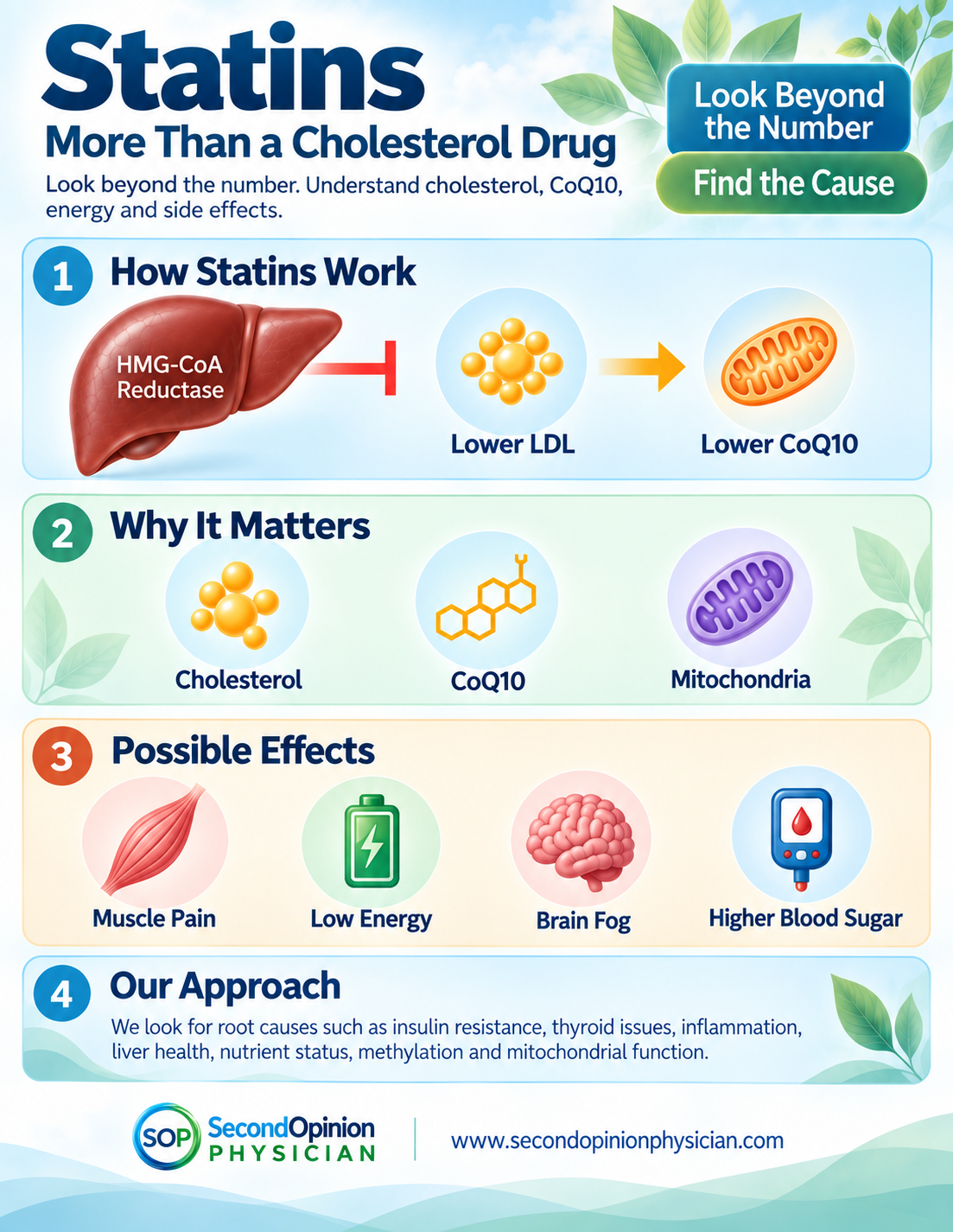
Cholesterol is required for cell membranes, myelin, steroid hormones, bile acids, vitamin D biology and normal cellular signaling. Statins interfere with the mevalonate pathway used to make cholesterol, but that pathway also contributes to CoQ10 and other compounds important for mitochondrial and muscle function. Our approach is therefore to evaluate particle burden, insulin resistance, thyroid and liver function, inflammation, oxidative stress, methylation, mitochondrial health, inherited risk and evidence of actual atherosclerosis—then address the underlying drivers rather than automatically suppressing cholesterol production.
Statins lower LDL cholesterol and can reduce cardiovascular events in people whose underlying cardiovascular risk is high enough to benefit. The problem begins when an elevated LDL number is treated as the entire diagnosis.
Cholesterol is not simply waste that needs to be driven as low as possible. It is required for cell membranes, myelin, brain function, bile acids, vitamin D production and the synthesis of steroid hormones. At the same time, excessive numbers of ApoB-containing particles can enter and become retained within artery walls and contribute to atherosclerosis.
The useful clinical question is therefore not simply, “Is LDL high?” It is:
How much cardiovascular risk is actually present, what is driving it, and can that risk be reduced without unnecessarily worsening muscle function, glucose regulation, mitochondrial energy or overall metabolic health?
Why Statin Therapy Deserves a Broader Discussion
Statins Can Lower Cardiovascular Risk
For patients with established atherosclerotic disease or sufficiently high risk, lowering ApoB-containing particles can reduce heart attacks and strokes.
The Cholesterol Pathway Does More Than Make Cholesterol
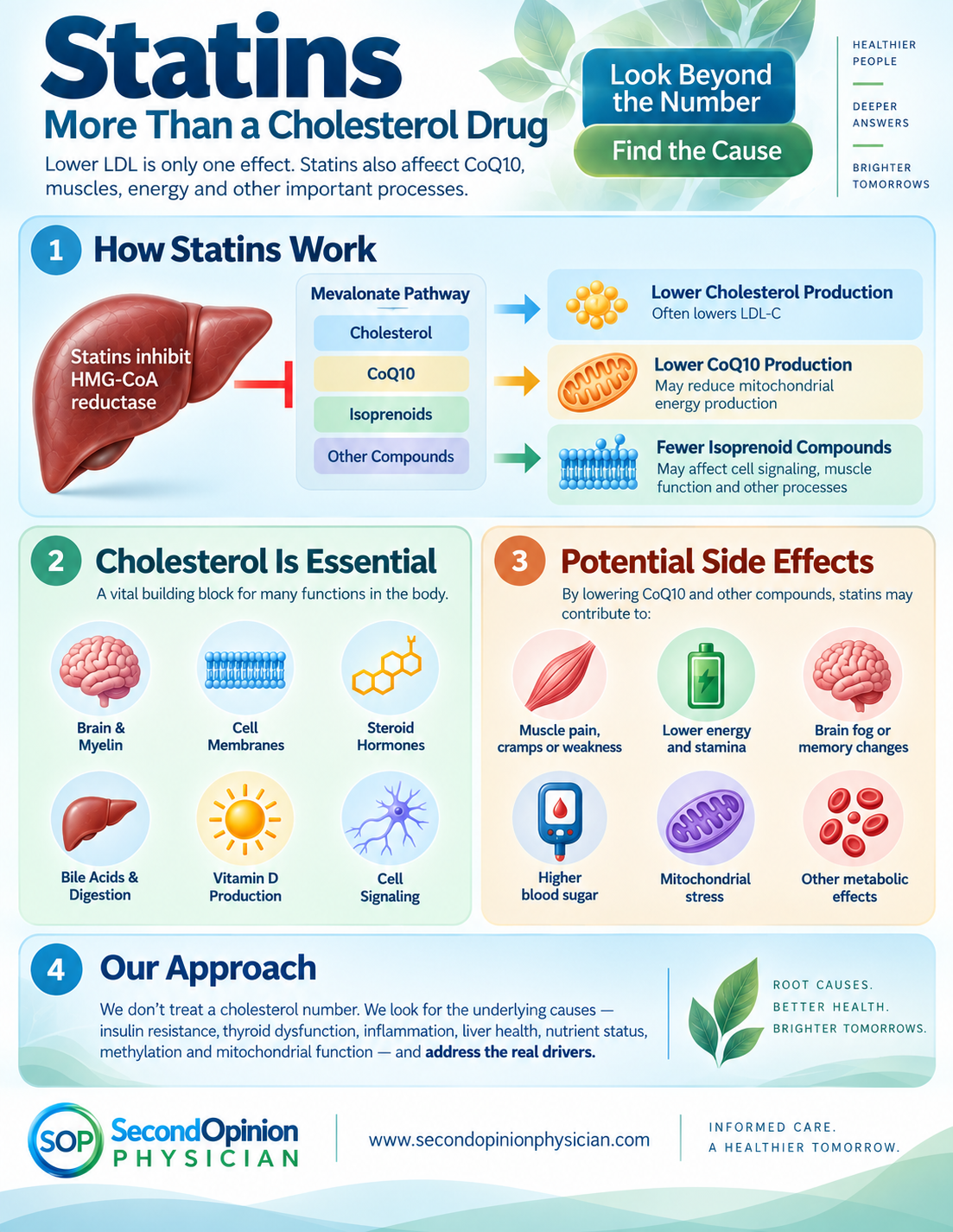
Statins inhibit HMG-CoA reductase in the mevalonate pathway. That pathway is also involved in production of CoQ10 and other compounds used in cellular signaling and mitochondrial function.
Determine Who Actually Benefits
ApoB, Lp(a), insulin resistance, triglycerides, inflammation, family history and coronary calcium can provide considerably more context than LDL-C alone.
What Statins Actually Do
Statins inhibit HMG-CoA reductase, an enzyme used early in the body's cholesterol-production pathway.
The liver responds by increasing LDL receptors and removing more circulating LDL particles from the blood. That is why LDL-C frequently drops substantially.
But this biochemical pathway also contributes to compounds involved in cellular energy and signaling.
Statin Blocks an Enzyme
HMG-CoA reductase activity falls.
Cholesterol Production Falls
The liver increases LDL clearance.
CoQ10 Production Is Also Affected
Circulating CoQ10 commonly decreases during statin therapy.
Some Patients Develop Symptoms
Muscle pain, weakness, fatigue or lower exercise tolerance may appear.
Why Cholesterol Is Important
Cholesterol is often discussed only in the context of heart disease, but the body produces large amounts of cholesterol because it is biologically essential.
Cell Membranes
Cholesterol helps regulate the stability, flexibility and permeability of every cell membrane.
Brain & Myelin
The brain contains large amounts of cholesterol. It is important for neuronal membranes, myelin, synaptic structure and communication between nerve cells.
Steroid Hormones
Cholesterol is the precursor for pregnenolone and ultimately progesterone, cortisol, aldosterone, testosterone, estrogens and DHEA-related steroid pathways.
Bile Acids
Cholesterol is used by the liver to make bile acids needed for fat digestion and absorption of vitamins A, D, E and K.
Vitamin D
Vitamin D production begins with a cholesterol-derived molecule in the skin that is activated by ultraviolet-B light.
Cell Signaling
Cholesterol-rich areas of cell membranes help organize receptors and signaling proteins used throughout the body.
Why Fat Is Also Important
Dietary fat has also been oversimplified.
Fat is essential for:
- Cell membranes
- Brain and nervous-system structure
- Hormone signaling
- Absorption of vitamins A, D, E and K
- Essential omega-3 and omega-6 fatty acids
- Energy storage
- Satiety
- Production of numerous signaling molecules
The health effect of dietary fat depends on the type of fat, degree of processing, oxidation, overall diet, carbohydrate intake, metabolic health and what the fat replaces.
Whole foods such as fish, eggs, olives, avocado, nuts and seeds should not be metabolically equated with trans fats or highly processed foods containing refined starches, sugars and damaged fats.
HDL Does More Than Carry Cholesterol
HDL is often called “good cholesterol,” but HDL is actually a complex family of particles.
HDL participates in:
- Reverse cholesterol transport
- Movement of cholesterol from tissues toward the liver
- Antioxidant activity
- Inflammatory regulation
- Endothelial function
A very high HDL-C value does not automatically prove that HDL particles are functioning normally. As with LDL, particle biology and metabolic context matter.
Statins and CoQ10: Why This Matters
One of the most relevant biochemical consequences of statin therapy is its relationship with coenzyme Q10, or CoQ10.
CoQ10 is found in mitochondrial membranes and plays a major role in electron transport and ATP production.
ATP is the energy currency used by cells to perform work.
Heart Muscle
The heart has extremely high energy requirements and contains large numbers of mitochondria.
Skeletal Muscle
Walking, exercising, maintaining posture and muscle recovery all depend heavily on mitochondrial ATP production.
Brain & Nervous System
Neurons have substantial energy requirements and are highly dependent on efficient mitochondrial function.
Statins commonly lower circulating CoQ10 concentrations. That does not prove that every statin side effect is caused by CoQ10 deficiency, but it makes CoQ10 biology highly relevant when muscle pain, weakness, fatigue or exercise intolerance appear after statin therapy.
Why Statin Muscle Symptoms Can Occur Even With a Normal CK
Creatine kinase, or CK, rises when muscle injury is substantial enough to release muscle enzymes into the bloodstream.
But many patients with statin-associated muscle symptoms have normal CK.
Symptoms may include:
- Calf pain
- Thigh aching
- Muscle heaviness
- Cramps
- Proximal weakness
- Reduced exercise tolerance
- Slower recovery after activity
- Unexplained fatigue
Other Factors That Can Make Statin Muscle Symptoms Worse
Before attributing every symptom entirely to the medication, it is worth looking for other factors that can reduce muscle resilience.
Nutritional & Metabolic Factors
- Low vitamin D
- Low magnesium
- Low CoQ10
- Poor protein intake
- Low caloric intake
- Mitochondrial dysfunction
Medical Factors
- Hypothyroidism
- Kidney dysfunction
- Liver dysfunction
- Drug interactions
- Very intense exercise
- Underlying muscle disease
Creatine, ATP and Muscle Energy
Creatine provides another useful way to understand muscle energy.
Muscle cells use the creatine-phosphocreatine system to rapidly regenerate ATP when energy demand increases.
This becomes particularly relevant when a patient has:
- Low exercise tolerance
- Muscle fatigue
- Reduced strength
- Poor recovery
- Low mitochondrial reserve
- Higher methylation demand
Creatine should not be presented as a treatment for statin toxicity, but it can be relevant when the broader picture includes low energy, muscle fatigue, mitochondrial stress or undermethylation.
Why Statins Matter in Patients With Undermethylation
Statins do not directly cause the Walsh undermethylation biotype.
However, many undermethylated patients already present with a higher biochemical demand state involving combinations of:
- High whole-blood histamine
- Low SAM or an unfavorable SAM:SAH relationship
- Oxidative stress
- Inflammation
- Low zinc
- Glutathione demand
- Poor stress tolerance
- Fatigue or reduced exercise recovery
In these patients, mitochondrial function matters because methylation, antioxidant defense, neurotransmitter metabolism and cellular repair all depend on adequate energy availability.
This is why statin side effects should be interpreted as part of the entire metabolic picture rather than as an isolated medication complaint.
Statins, Inflammation and Cardiovascular Risk
Statins can also reduce inflammatory signaling in some patients, which may contribute to their cardiovascular benefit.
But inflammation itself should still be investigated.
Common contributors include:
- Insulin resistance
- Abdominal obesity
- Smoking
- Periodontal disease
- Autoimmune disease
- Chronic infection
- Gut inflammation
- Sleep apnea
- Poor sleep
- Highly processed diets
Lowering LDL while leaving severe insulin resistance, inflammation or smoking unchanged does not address the entire disease process.
Statins and Blood Sugar
Statins can modestly raise glucose and HbA1c and can increase the likelihood of a diabetes diagnosis, particularly in people who already have metabolic risk.
The effect is especially relevant when someone already has:
- Prediabetes
- Elevated fasting insulin
- High triglycerides
- Abdominal obesity
- Fatty liver
- Metabolic syndrome
- Family history of diabetes
For these patients, it makes little sense to monitor LDL aggressively while ignoring fasting insulin, HbA1c, triglycerides and body composition.
LDL-C Is Not the Same as ApoB
This distinction is one of the most useful concepts for patients to understand.
How Much Cholesterol Is Being Carried?
LDL-C estimates the amount of cholesterol carried inside LDL particles.
How Many Atherogenic Particles Are Circulating?
Each LDL, VLDL-remnant, IDL and Lp(a) particle contains one ApoB molecule, so ApoB provides an estimate of the number of atherogenic particles.
Two patients can have a similar LDL-C while having very different ApoB particle numbers.
That difference can become especially important in insulin resistance, high triglycerides, diabetes and other metabolic conditions.
Oxidized LDL Still Matters — But It Is Only Part of the Story
Oxidation and inflammation are important in atherosclerosis, but the process begins before LDL becomes oxidized.
ApoB-containing particles can enter the arterial wall and become retained there. Once trapped, they may undergo oxidation and other chemical modifications that trigger immune and inflammatory responses.
ApoB Particles Circulate
Particle number affects how many opportunities exist for arterial entry.
Particles Enter the Arterial Wall
Some become retained within the vessel lining.
Particles Become Modified
Oxidation and glycation can make them more inflammatory.
Inflammation Builds Plaque
Immune responses contribute to progression of atherosclerosis.
The goal should therefore be both to reduce excessive particle burden and to improve the metabolic environment in which those particles circulate.
Homocysteine, Methylation and Vascular Health
Homocysteine is not part of a standard cholesterol panel, but it can provide useful information about methylation and vascular biochemistry.
Elevated homocysteine can reflect problems involving:
- Remethylation
- Vitamin B12
- Folate metabolism
- Vitamin B6
- Kidney function
- Thyroid function
- Oxidative stress
In the Walsh framework, homocysteine also helps provide context for methylation support, especially when considering SAMe, methionine, creatine or broader methylation treatment.
Lipoprotein(a): A Genetic Risk Marker Often Missed
Lipoprotein(a), or Lp(a), is largely determined genetically.
A person can have an otherwise unremarkable lipid panel and still have substantially elevated inherited cardiovascular risk from Lp(a).
This is one reason a routine LDL value does not provide the complete cardiovascular picture.
Coronary Artery Calcium: Is Plaque Already Present?
Blood tests estimate cardiovascular risk. A coronary artery calcium scan answers a somewhat different question:
For selected primary-prevention patients whose decision about medication remains uncertain, CAC scoring can provide valuable individualized information.
Someone with an isolated LDL elevation but no detectable coronary calcium may have a very different short-term risk profile from someone with substantial coronary calcification.
What Should Be Checked Before or During Statin Therapy?
| Test | Why It Matters |
|---|---|
| Standard Lipid Panel | Provides total cholesterol, LDL-C, HDL-C and triglycerides. |
| ApoB | Estimates atherogenic particle number and may identify risk that LDL-C does not show clearly. |
| NMR Lipoprotein Profile | Provides additional information about particle number and lipoprotein distribution. |
| Lp(a) | Identifies an important largely inherited cardiovascular risk factor. |
| CoQ10 | Can be useful when fatigue, muscle symptoms or mitochondrial concerns occur during statin treatment. |
| CK | Helps identify significant muscle injury when muscle symptoms are present. |
| Vitamin D | Deficiency may worsen muscle pain, weakness and poor recovery. |
| TSH / Thyroid Testing | Hypothyroidism can raise cholesterol and independently produce muscle symptoms. |
| Fasting Insulin | May identify insulin resistance before fasting glucose becomes clearly abnormal. |
| HbA1c | Provides longer-term information about glucose regulation. |
| hs-CRP | Provides information about inflammatory burden. |
| Homocysteine | Provides additional information about methylation and vascular risk. |
| CAC Score | Shows whether calcified coronary plaque is already present. |
A More Practical Functional Approach
A functional approach does not mean ignoring LDL or refusing medication.
It means asking more questions before reducing cardiovascular risk to a single laboratory number.
1. Define Actual Cardiovascular Risk
- ApoB
- Lp(a)
- Family history
- Blood pressure
- Smoking history
- CAC when appropriate
2. Identify Metabolic Drivers
- Insulin resistance
- Triglycerides
- Visceral fat
- Fatty liver
- Thyroid dysfunction
- Dietary pattern
3. Evaluate Inflammation & Oxidative Stress
- hs-CRP
- Smoking
- Sleep apnea
- Periodontal disease
- Chronic inflammation
- Mitochondrial stress
4. Monitor Treatment Tolerance
- Muscle symptoms
- Energy
- CoQ10
- CK
- Glucose / HbA1c
- Vitamin D
Who Is Most Likely to Benefit From Statins?
The strongest evidence for statin therapy is generally in people with substantial baseline cardiovascular risk.
Examples include:
- Known coronary artery disease
- Previous heart attack
- Previous atherosclerotic stroke
- Peripheral arterial disease
- Familial hypercholesterolemia
- Substantial documented plaque burden
- Selected high-risk diabetes or kidney-disease patients
In these settings, reducing ApoB-containing particle exposure may provide substantial benefit.
Where the Decision Becomes More Individual
The decision deserves more individualized discussion when someone has:
- No known cardiovascular disease
- No prior heart attack or stroke
- Good blood pressure
- No smoking
- Good insulin sensitivity
- Low inflammatory burden
- Low or absent coronary calcium
- An isolated LDL-C elevation
This is where ApoB, Lp(a), CAC, family history and the patient's absolute cardiovascular risk become much more useful than simply asking whether LDL is above a laboratory reference range.
Relative Risk vs Absolute Benefit
Statin studies often report a percentage reduction in cardiovascular risk.
But a patient should also understand absolute benefit.
This is why the same medication can make excellent sense for one patient and be a much more nuanced decision for another.
What If Statin Side Effects Occur?
Symptoms deserve evaluation rather than either automatically blaming the statin or automatically dismissing the possibility.
Depending on cardiovascular risk and symptom severity, options may include:
- Check CK when appropriate
- Evaluate thyroid function
- Correct vitamin D deficiency
- Review medication interactions
- Evaluate CoQ10
- Consider mitochondrial stress
- Reduce the dose when medically appropriate
- Try a different statin
- Adjust dosing frequency
- Consider non-statin therapy when necessary
- Improve metabolic and lifestyle risk factors aggressively
Can Cardiovascular Risk Improve Without Statins?
Many major cardiovascular risk factors respond strongly to lifestyle and metabolic treatment.
Improve Insulin Sensitivity
- Reduce refined carbohydrates
- Eliminate sweetened beverages
- Improve body composition
- Build muscle
- Exercise regularly
Reduce Inflammation
- Stop smoking
- Improve sleep
- Address sleep apnea
- Treat periodontal disease
- Reduce highly processed foods
Improve Lipid Biology
- Lower triglycerides
- Improve insulin resistance
- Reduce excess alcohol
- Use whole-food fats
- Increase omega-3-rich foods
These changes remain important whether medication is used or not.
The Bottom Line
Statins should not be viewed as either universally beneficial or universally harmful.
They can substantially reduce cardiovascular risk in appropriately selected patients, but the decision should not be based on LDL-C alone.
Cholesterol is essential biology. ApoB particle burden, Lp(a), metabolic health, inflammation, insulin resistance, blood pressure, smoking, family history and existing plaque determine far more about cardiovascular risk than a single cholesterol number.
At the same time, CoQ10 depletion, muscle symptoms, mitochondrial energy, glucose regulation and overall treatment tolerance deserve serious consideration.
For patients with undermethylation, oxidative stress, inflammation, fatigue or low mitochondrial reserve, that broader metabolic context may be especially important.
The goal is not simply to lower cholesterol. The goal is to reduce cardiovascular risk while preserving muscle, metabolic and mitochondrial health.
Frequently Asked Questions
Do statins lower CoQ10?
Yes. Statins inhibit part of the mevalonate pathway shared by cholesterol and CoQ10 synthesis, and circulating CoQ10 commonly decreases during statin therapy.
Can statins affect mitochondrial energy?
Statins have been studied for effects on CoQ10 availability, mitochondrial respiration, oxidative stress and muscle energy metabolism. These effects may be clinically relevant in susceptible patients who develop fatigue, weakness or exercise intolerance.
Can statins cause muscle pain with a normal CK?
Yes. Myalgia can occur without a major rise in creatine kinase. CK is primarily a marker of muscle injury and does not directly measure mitochondrial function or energy production.
Does CoQ10 help statin muscle symptoms?
Studies have produced mixed results. Some patients report improvement and some clinical trials suggest benefit, while others do not. CoQ10 is nevertheless biologically relevant because statins reduce circulating CoQ10 and CoQ10 is important for mitochondrial energy production.
Can statins raise blood sugar?
Yes. Statins can produce small increases in glucose and HbA1c and can increase diabetes diagnoses, especially in people who already have insulin resistance or are close to the diabetic threshold.
Is cholesterol necessary for hormone production?
Yes. Cholesterol is the precursor molecule for pregnenolone and ultimately progesterone, cortisol, aldosterone, testosterone, estrogens and other steroid hormones.
Does the brain need cholesterol?
Yes. Cholesterol is important for neuronal membranes, myelin and synaptic function. The brain largely synthesizes and regulates its own cholesterol rather than depending directly on circulating LDL.
Is ApoB better than LDL-C?
They measure different things. LDL-C estimates how much cholesterol is carried in LDL particles, while ApoB estimates the number of circulating atherogenic particles. ApoB can be particularly useful when LDL-C and particle number do not agree.
Why is creatine relevant to energy and methylation?
Creatine helps rapidly regenerate ATP through the phosphocreatine system. Producing creatine inside the body also consumes methyl groups, so supplemental creatine can reduce endogenous creatine synthesis demand while supporting cellular energy. It is not a treatment for statin toxicity but can be relevant in broader low-energy or undermethylation patterns.
Should everyone with high LDL take a statin?
No single LDL value answers that question. The decision depends on overall cardiovascular risk, including existing cardiovascular disease, ApoB, Lp(a), diabetes, kidney disease, blood pressure, smoking, family history and coronary plaque burden.
What is a coronary calcium score?
A coronary artery calcium scan is a CT study that detects calcified plaque in the coronary arteries. It can be useful in selected primary-prevention patients when the decision about long-term lipid-lowering treatment remains uncertain.
For decades, we’ve been told to fear cholesterol — that it clogs arteries and causes heart attacks. But the truth is far more interesting — and hopeful.
New research shows that cholesterol itself isn’t the problem. What really harms your heart is oxidation and inflammation inside your blood vessels. Once you understand how that works, you can take smarter steps to protect your heart without unnecessary fear — or unnecessary medication.
“Doesn’t cholesterol clog your arteries?”
That’s the biggest myth in modern medicine.
The idea came from a 1950s study that linked fat and cholesterol to heart disease — a study that’s now been widely discredited.
Since then, dozens of major studies — like the Lyon Heart Study in France and the Nurse’s Health Study in the U.S. — have shown that lowering cholesterol alone doesn’t prevent heart attacks. In fact, people with higher cholesterol often live longer, especially as they age.
“So, is cholesterol actually good for me?”
Yes — and essential.
Your body needs cholesterol to:
-
Build cell membranes and nerve tissue
-
Produce hormones like estrogen, testosterone, and cortisol
-
Support brain health and memory
Cholesterol itself doesn’t float freely in your blood — it travels in “containers” called lipoproteins, such as HDL and LDL.
Only when LDL becomes oxidized (damaged by free radicals) does it irritate and inflame artery walls, starting the process of plaque buildup.
“If cholesterol isn’t the problem, what is?”
Two main culprits: oxidation and chronic inflammation.
-
Oxidation happens when LDL particles are damaged by sugar, toxins, smoking, or processed vegetable oils.
-
Inflammation happens when your immune system tries to repair that damage over and over again — creating scar tissue (plaque).
Over time, this inflamed plaque can narrow arteries or rupture — leading to heart attacks or strokes.
“What kinds of fats are healthy?”
The fats we were told to avoid — butter, eggs, coconut oil, ghee — are often stable, natural, and protective.
The real danger lies in the “heart-healthy” imposters: processed vegetable oils (soy, canola, corn), margarine, and hydrogenated or trans fats. These easily oxidize, forming compounds that irritate your arteries and liver.
Better choices include:
-
Olive oil, avocado oil, coconut oil, grass-fed butter, ghee
-
Wild fish, walnuts, flaxseed for omega-3s
-
Avoid refined sugars, which make LDL stickier and damage arteries through insulin resistance.
“How can I lower my risk naturally?”
-
Eat fresh, unprocessed foods with plenty of antioxidants (vitamin C, zinc, selenium).
-
Avoid smoking, excess alcohol, and toxins that overload the liver.
-
Keep blood sugar steady — insulin spikes drive oxidation.
-
Exercise daily; even a brisk walk reduces inflammation.
-
Sleep well and manage stress — cortisol imbalance worsens arterial inflammation.
“So should I take a statin?”
Statins lower cholesterol — but they don’t fix oxidation or inflammation.
Many people with high cholesterol have clean arteries, while others with low cholesterol have heart attacks.
That’s why advanced testing is so important — it shows your real cardiovascular risk, not just a number on a chart.
❤️ The Bottom Line
Cholesterol isn’t the enemy — it’s a messenger.
When cholesterol becomes oxidized or inflamed, it’s signaling deeper problems like insulin resistance, toxin buildup, or chronic stress.
If you’ve been told your cholesterol is “too high,” don’t panic — get better data.
Tests available:
| Test | What It Measures | What It Indicates / Why It’s Relevant |
|---|---|---|
| NMR LipoProfile® | The size and number of LDL and HDL particles in your blood. | Small, dense LDL particles are more likely to oxidize and damage artery walls. Larger, “fluffy” particles are protective. This test shows the type of cholesterol, not just the amount. |
| Oxidized LDL (oxLDL) | How much of your LDL has been damaged by oxidation (free radicals). | Oxidized LDL causes inflammation in blood vessels and starts plaque buildup. A high level signals oxidative stress and heart-disease risk. |
| Apolipoprotein B (ApoB) | The number of lipoprotein particles that carry cholesterol. | A high ApoB means more plaque-forming particles circulating — a better predictor of risk than standard LDL. |
| Lipoprotein (a) Lp(a) | A genetic form of LDL with an extra protein that makes it stickier. | High Lp(a) increases clotting and plaque risk even if other cholesterol numbers are normal. |
| High-sensitivity CRP (hs-CRP) | A protein made by the liver in response to inflammation. | Elevated CRP reflects inflammation in blood vessels — one of the earliest warning signs of heart attack or stroke. |
| Fibrinogen Activity | The blood protein that helps form clots. | High fibrinogen makes blood thicker and more prone to clots, raising stroke and heart-attack risk. |
| Ferritin, Serum | Your body’s stored iron supply. | Excess iron promotes oxidation (like rust) and arterial damage; too little causes anemia and fatigue. |
| Homocysteine, Plasma | An amino acid formed when the body breaks down protein. | Elevated homocysteine irritates artery linings and is linked to poor methylation, B-vitamin deficiency, and heart disease. |
| Fasting Insulin / HOMA-IR | How much insulin your pancreas releases to control blood sugar. | High levels indicate insulin resistance — a major driver of inflammation, oxidation, and heart disease. |
| Calcium Score (CT Scan) | Measures calcium deposits in artery walls. | A high score means hardened plaque has formed; the lower the score, the healthier and more flexible your arteries. |