
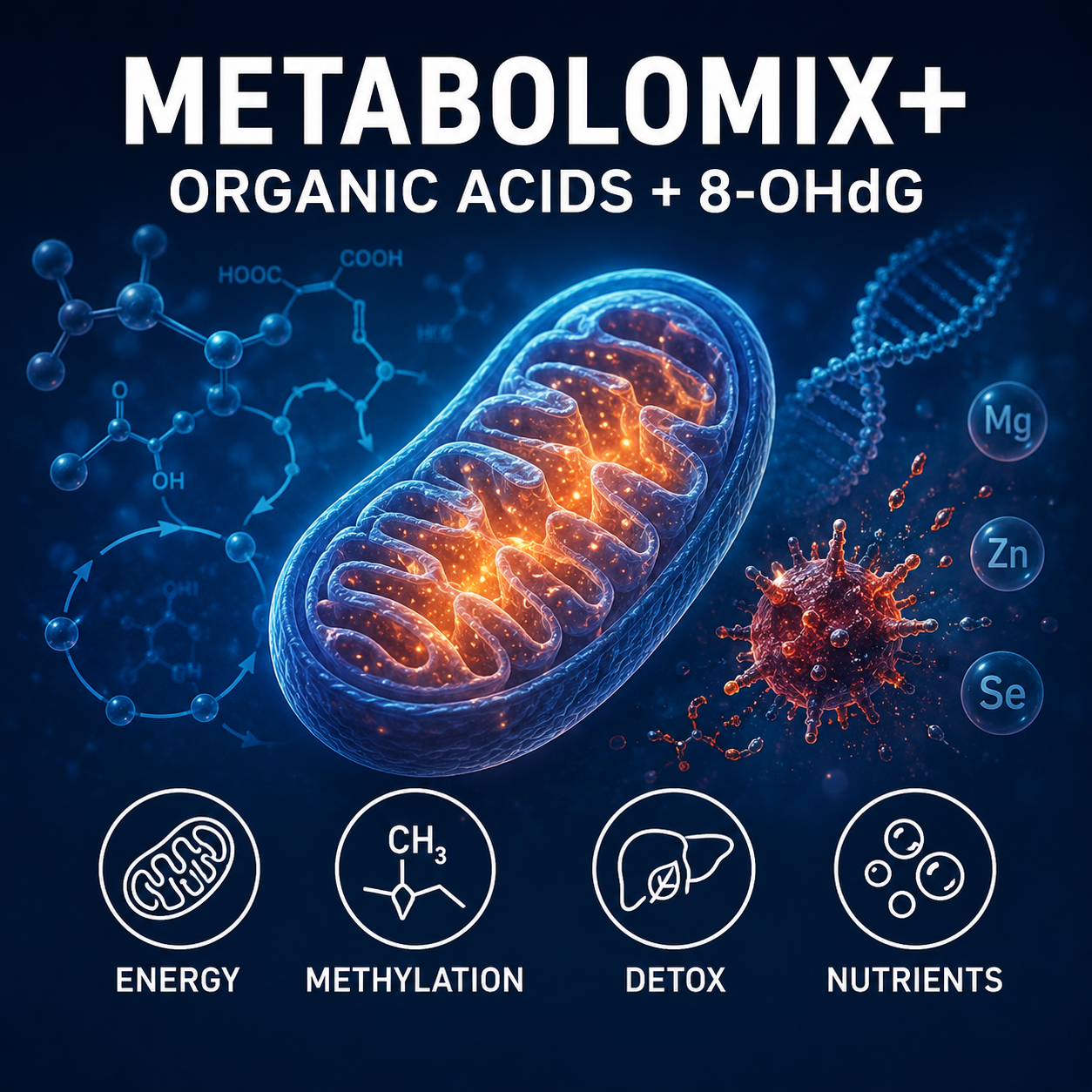
Genova Metabolomix+ Test


$395.00
The Genova Metabolomix+ Test is a comprehensive nutritional and metabolic assessment that combines organic acids, amino acids, nutrient and toxic elements, mitochondrial markers, methylation-related metabolites, digestive and dysbiosis markers, and direct measurements of oxidative cellular damage.
Unlike a standard organic acids test, Metabolomix+ evaluates multiple interconnected pathways that may contribute to fatigue, brain fog, mood or cognitive symptoms, poor stress tolerance, inflammation, impaired detoxification, digestive imbalance, mitochondrial dysfunction, and poor response to supplements.
The panel also includes 8-OHdG and urinary lipid peroxides, providing direct evidence of oxidative damage to DNA and cell-membrane lipids.
Genova Diagnostics Metabolomix+ — Test #3200.
Description
Genova Metabolomix+ is a comprehensive nutritional and metabolic assessment that combines urinary organic acids, amino-acid analysis and direct markers of oxidative cellular damage.
Instead of measuring one vitamin or one biochemical pathway at a time, Metabolomix+ evaluates interconnected systems involved in mitochondrial energy production, functional nutrient needs, amino-acid metabolism, methylation, neurotransmitter metabolism, gut microbial metabolism, oxalate metabolism, glutathione pathways and oxidative stress.
The standard profile also includes 8-OHdG and urinary lipid peroxides, providing direct evidence of oxidative damage to DNA and cellular membrane lipids.
The goal is not simply to identify abnormal laboratory values. It is to determine which biochemical pathways appear most stressed and which nutritional or metabolic interventions deserve priority.
Genova Diagnostics Metabolomix+ — Test #3200
Mitochondria & Organic Acids
Evaluates pyruvate, lactate, citric-acid-cycle metabolites and other organic acids involved in cellular energy production.
Functional Nutrient Needs
Uses nutrient-dependent metabolic pathways to identify patterns associated with B-vitamin, antioxidant and metabolic cofactor needs.
8-OHdG + Lipid Peroxides
Measures oxidative injury to DNA and cellular membrane lipids rather than simply estimating antioxidant demand.
Amino-Acid Metabolism
Evaluates urinary amino acids involved in protein metabolism, neurotransmitters, detoxification, methylation and tissue repair.
One-Carbon Pathways
Provides functional information about folate-, B12-, glycine-, serine- and related pathways that intersect with methylation.
Dysbiosis, Oxalates & Absorption
Includes organic-acid markers associated with bacterial or yeast metabolism, malabsorption, oxalates and digestive function.
What Does the Genova Metabolomix+ Test Include?
The Genova Metabolomix+ Test combines several complementary forms of functional metabolic testing into one broad assessment.
- Urinary amino-acid analysis
- Comprehensive organic-acid markers
- Pyruvic acid
- Lactic acid
- Citric-acid-cycle metabolites
- Vanilmandelic acid
- Homovanillic acid
- 5-Hydroxyindoleacetic acid
- D-Arabinitol
- Oxalate
- Creatinine for urine normalization
- 8-OHdG oxidative DNA damage
- Urinary lipid peroxides
Why this combination matters: Metabolomix+ can show how mitochondrial energy production, amino-acid metabolism, nutrient-dependent pathways, neurotransmitter metabolism, gut-related metabolites and oxidative damage interact rather than evaluating each area in isolation.
Why Metabolomix+ Goes Beyond a Standard Organic Acids Test
Organic Acids Test
Primarily evaluates metabolic byproducts related to mitochondrial function, nutrient cofactors, neurotransmitter metabolism and gut microbial activity.
Metabolomix+
Adds urinary amino-acid analysis plus direct measurements of oxidative DNA damage and lipid peroxidation to a comprehensive organic-acids assessment.
Why this matters: If symptoms involve several systems, identifying one abnormal organic acid may not explain the larger biochemical picture. Metabolomix+ can help determine whether mitochondrial stress, nutrient need, oxidative injury, dysbiosis, amino-acid imbalance or methylation-related stress are occurring together.
Metabolomix+ Organic Acids and Mitochondrial Function
A major part of the Metabolomix+ organic acids test evaluates how efficiently nutrients are moving through pathways involved in cellular energy production.
Pyruvate & Lactate
Provides information about glucose-derived energy metabolism and the transition from glycolysis into mitochondrial pathways.
Cellular Energy
Evaluates organic acids associated with the citric-acid cycle and biochemical pathways involved in ATP production.
Metabolic Fuel Utilization
Organic-acid patterns can provide indirect information about how carbohydrates, amino acids and fats are being processed through cellular energy pathways.
These pathways depend on multiple nutrients and cofactors, including magnesium, B vitamins, lipoic acid, carnitine, CoQ10, iron and antioxidant systems.
Abnormal metabolite patterns can help identify which pathways or cofactors deserve closer investigation.
Metabolomix+ and ATP Energy Production
Mitochondria convert nutrients into ATP, the primary energy currency used by cells.
ATP production depends on coordinated metabolism of carbohydrates, amino acids and fatty acids followed by Krebs-cycle activity and mitochondrial electron transport.
Metabolomix+ measures metabolites located throughout these pathways, which can help identify where energy metabolism may be under strain.
Energy Symptoms
- Persistent fatigue
- Poor exercise tolerance
- Muscle weakness
- Slow recovery
- Brain fog
- Reduced stress tolerance
Pathway Information
The test can help identify whether low cellular energy may be associated with impaired fuel metabolism, nutrient cofactor need, oxidative stress or mitochondrial pathway abnormalities.
Metabolomix+ does not directly measure ATP production or mitochondrial respiration. It evaluates metabolic intermediates and nutrient-dependent pathways that can provide evidence of where mitochondrial energy metabolism may be under stress.
Functional Nutrient Testing With Metabolomix+
Routine blood testing generally measures how much of a nutrient is circulating in the bloodstream.
Metabolomix+ asks a different question:
Are nutrient-dependent biochemical pathways functioning adequately?
Functional metabolic markers may provide information related to increased need for:
Energy & Enzymes
B1, B2, B3, B5, B6, biotin, folate and B12-related pathways can be evaluated through metabolic intermediates.
Cellular Function
Organic-acid patterns can reveal increased demand for nutrients required for ATP production, enzyme activity and cellular metabolism.
Cellular Protection
Markers help identify whether antioxidant demand may be increased and whether glutathione-related support deserves attention.
This type of testing can be especially useful when symptoms suggest nutrient insufficiency even though conventional serum measurements are within reference range.
Metabolomix+ Amino Acid Analysis
Amino acids are required for neurotransmitters, muscle, enzymes, methylation, detoxification, antioxidant defense and tissue repair.
The urinary amino-acid portion of Metabolomix+ can provide information about:
- Essential amino acids
- Nonessential amino acids
- Branched-chain amino-acid metabolism
- Glycine and serine pathways
- Urea-cycle metabolism
- Protein digestion and utilization
- Intermediary amino-acid metabolism
These findings can help identify patterns related to dietary protein intake, digestion, absorption and metabolic utilization.
Metabolomix+ and Functional Methylation Pathways
Metabolomix+ evaluates several biochemical pathways that intersect with methylation and one-carbon metabolism.
What It Evaluates
- Folate-related metabolism
- Vitamin B12-dependent metabolism
- Glycine and serine
- Choline-related pathways
- Amino-acid metabolism
What It Does Not Replace
Metabolomix+ does not directly measure SAM and SAH. When the primary question is methylation capacity, a dedicated plasma methylation panel provides a more direct assessment.
This functional methylation information may be useful when evaluating:
- Elevated homocysteine
- Low methionine
- MTHFR-related questions
- Questions about folate or B12 requirements
- Poor response to methylation supplements
- Suspected acquired undermethylation
Your existing page correctly makes this distinction between functional methylation information and direct SAM/SAH measurement. :contentReference[oaicite:1]{index=1}
Metabolomix+ and Epigenetic Drivers of Undermethylation
The breadth of the Genova Metabolomix+ Test makes it particularly useful when investigating acquired metabolic stresses that may contribute to impaired methylation efficiency.
Mitochondrial Stress
Pyruvate, lactate and Krebs-cycle metabolites can reveal patterns suggesting impaired cellular-energy pathways.
Oxidative Stress
8-OHdG and lipid peroxides determine whether DNA and cellular membranes are experiencing measurable oxidative damage.
Nutrient & Cofactor Stress
Organic-acid and amino-acid patterns can identify nutrient-dependent pathways that may be under-supported.
Increased Methylation Demand
Amino-acid, neurotransmitter and nutrient-dependent pathways can provide clues to biochemical processes increasing methyl-group demand.
Digestive and Metabolic Contributors
Dysbiosis-related metabolites, malabsorption, oxalates and metabolic stress can contribute to the larger methylation picture.
Metabolomix+ Includes 8-OHdG and Lipid Peroxides
One of the most useful features of Metabolomix+ is that it does not only identify metabolic patterns that may promote oxidative stress. It also includes two direct markers of oxidative cellular injury.
8-OHdG
8-Hydroxy-2′-deoxyguanosine reflects oxidative injury to DNA.
An elevated result suggests that free-radical activity is producing measurable oxidative DNA damage.
Lipid Peroxides
Urinary lipid peroxides reflect oxidative damage to fats and cellular membranes.
This may be relevant to mitochondrial membranes, nervous-system tissue, cardiovascular structures and general cellular integrity.
Important advantage: Metabolomix+ measures whether oxidative damage to DNA and cellular lipids is actually occurring rather than relying only on indirect estimates of oxidative stress.
These two oxidative-damage markers are specifically identified as included in the current profile. :contentReference[oaicite:2]{index=2}
Metabolomix+ vs Genova Oxidative Stress Testing
Oxidative Stress Testing
Useful when the primary clinical question is whether measurable oxidative DNA and lipid damage are present.
Metabolomix+
Includes direct oxidative-damage markers while also evaluating mitochondrial metabolism, amino acids, functional nutrient needs, gut-related metabolites, methylation-related pathways and other metabolic contributors.
Metabolomix+ Neurotransmitter Metabolites
Metabolomix+ includes downstream urinary metabolites associated with several neurotransmitter pathways.
Indole Pathways
Provides information about downstream serotonin-related metabolism.
Dopamine & Norepinephrine
Evaluates metabolites associated with catecholamine synthesis and breakdown.
Tryptophan Metabolism
Provides information about tryptophan metabolism through pathways that may intersect with inflammation and B-vitamin status.
These urinary markers do not directly measure neurotransmitter concentrations in the brain. They provide information about metabolic pathways involved in neurotransmitter production and breakdown.
Metabolomix+ for Mood, Brain Fog and Cognitive Symptoms
Brain function depends on adequate mitochondrial energy production, amino acids, B vitamins, antioxidant defenses and efficient neurotransmitter metabolism.
When It May Be Useful
- Brain fog
- Poor concentration
- Mood instability
- Anxiety
- Sleep disturbance
- Reduced stress tolerance
- Cognitive concerns
What the Test Adds
It can identify nutritional, mitochondrial, oxidative, digestive or metabolic abnormalities that may be contributing to the broader clinical picture.
Metabolomix+ does not diagnose a psychiatric or neurologic disorder. Its value is in identifying potentially modifiable biochemical factors that may be relevant to symptoms.
Metabolomix+ Digestive and Dysbiosis Markers
The organic-acids portion includes metabolites associated with:
- Bacterial dysbiosis
- Yeast-related metabolism
- Malabsorption
- Protein digestion
- Gut microbial metabolism
Gastrointestinal dysfunction can influence nutrient absorption, immune activity, inflammation, neurotransmitter metabolism and methylation.
Metabolomix+ is not a comprehensive stool analysis. If detailed information about intestinal organisms, inflammatory markers, pancreatic function or digestive capacity is required, a dedicated stool profile may still be appropriate.
Metabolomix+ and Oxalate Metabolism
The organic-acids profile includes oxalate-related markers that may provide information about glyoxylate and oxalate metabolism.
Oxalate abnormalities may be relevant to:
- Kidney stone risk
- Dietary oxalate exposure
- Vitamin B6-dependent metabolism
- Gut dysfunction
- Oxidative stress
- Metabolic abnormalities affecting glyoxylate pathways
Metabolomix+ for Fatigue and Poor Exercise Recovery
The Metabolomix+ Test for fatigue can be especially useful when low energy may involve more than one biochemical factor.
Energy Production
Evaluates pyruvate, lactate, Krebs-cycle and other fuel-utilization pathways.
Cofactor Needs
Looks for functional evidence that nutrient-dependent metabolic pathways may be under-supported.
Cellular Damage
Determines whether oxidative DNA or membrane damage accompanies metabolic abnormalities.
This can help distinguish whether poor energy may be associated with impaired mitochondrial metabolism, nutrient need, oxidative damage, poor nutrient absorption or several interacting factors.
Who May Benefit From the Genova Metabolomix+ Test?
Fatigue & Recovery
- Persistent fatigue
- Poor exercise tolerance
- Slow recovery
- Muscle weakness
Cognitive Symptoms
- Brain fog
- Poor concentration
- Mood concerns
- Sleep disturbance
Complex Nutrient Needs
- Poor supplement response
- Restricted diets
- Suspected malabsorption
- Multiple nutrient concerns
Digestive Dysfunction
- Suspected dysbiosis
- Malabsorption
- Food-related symptoms
- Gut/metabolic concerns
Cellular Burden
- Chronic inflammatory stress
- Oxidative damage concerns
- Poor stress tolerance
- Slow recovery
Complex Metabolic Stress
- Unexplained multisystem symptoms
- Mitochondrial concerns
- Suspected metabolic dysfunction
- Multiple interacting biochemical factors
What Can the Metabolomix+ Test Help Answer?
- Is mitochondrial energy metabolism under stress?
- Which nutrient-dependent pathways appear under-supported?
- Are B-vitamin-dependent pathways functioning efficiently?
- Are amino-acid abnormalities present?
- Is there evidence of dysbiosis or malabsorption?
- Are methylation-related pathways under increased stress?
- Is oxidative DNA damage present?
- Is lipid peroxidation present?
- Are oxalate-related abnormalities present?
- Which nutritional or metabolic interventions deserve priority?
How Metabolomix+ Can Help Prioritize Treatment
The goal is not to identify the largest possible list of supplements. The goal is to identify which biochemical pathways appear most stressed so treatment can be prioritized.
Targeted Repletion
B vitamins and other metabolic cofactors can be prioritized when functional findings indicate increased need.
Energy Support
Pathway-specific findings can help guide mitochondrial and metabolic support.
Cellular Protection
8-OHdG and lipid peroxide findings can help determine how strongly antioxidant support should be emphasized.
Protein Metabolism
Targeted amino-acid support may be considered when metabolic patterns indicate need.
Digestive Support
Dietary, digestive or dysbiosis strategies may be considered when gastrointestinal metabolites are abnormal.
Pathway Support
Functional methylation findings can help determine whether folate-, B12-, glycine-, serine- or related pathways deserve closer attention.
The existing page appropriately emphasizes treatment prioritization rather than indiscriminate supplementation. :contentReference[oaicite:3]{index=3}
Optional Metabolomix+ Add-On Testing
The following assessments may be ordered with Metabolomix+ when additional information is clinically useful. They are optional add-ons and are not part of the standard Metabolomix+ profile.
Essential & Metabolic Fatty Acids
A bloodspot fatty-acid assessment provides more direct information about essential fatty acids, longer-chain fatty acids and fatty-acid balance.
Toxic Elements Clearance
Urine toxic-element testing may be added when environmental or heavy-metal exposure is an important clinical question.
Comprehensive Urine Elements
A broader urine-elements assessment may be selected when more extensive mineral and toxic-element information is needed.
Add-ons should be selected according to the clinical question. The standard Metabolomix+ profile already provides broad information about organic acids, amino acids, functional nutrient pathways and oxidative damage without requiring these additional profiles.
Before Your Genova Metabolomix+ Collection
Genova Diagnostics Metabolomix+ — Test #3200
- At-home specimen collection
- The standard Metabolomix+ profile primarily uses urine specimens
- Follow the Genova kit instructions carefully
- Collection is generally performed after an overnight fast
- Water is typically allowed unless otherwise directed
- Maintain a reasonably typical diet before testing
- Avoid unusually strenuous exercise before collection
- Avoid deliberately over-consuming one particular food immediately before testing
- Excessive water intake can dilute urinary findings
- Review medications and supplements before collection
- Do not discontinue prescription medication unless instructed by the prescribing clinician
- Optional add-ons may require additional specimen types or collection instructions
Your existing collection section already identifies the standard profile as primarily urine-based and emphasizes following the kit instructions. :contentReference[oaicite:4]{index=4}
How the Genova Metabolomix+ Test Works
Receive Your Kit
Genova collection materials and instructions are sent for at-home testing.
Collect Your Samples
Complete the required urine collection according to the instructions supplied with the kit.
Laboratory Analysis
Genova analyzes metabolic pathways involving organic acids, amino acids, nutrients, mitochondria, neurotransmitter metabolism and oxidative stress.
Prioritize Findings
Results can help identify which nutritional and metabolic abnormalities deserve the most attention.
Frequently Asked Questions About Metabolomix+
How is Metabolomix+ different from a standard Organic Acids Test?
Metabolomix+ includes a comprehensive organic-acids assessment but expands the evaluation with urinary amino-acid analysis and direct oxidative-damage markers including 8-OHdG and lipid peroxides.
Does Metabolomix+ measure mitochondrial function?
It measures metabolic intermediates involved in mitochondrial energy pathways. It does not directly measure mitochondrial respiration or ATP production.
Does Metabolomix+ include 8-OHdG?
Yes. 8-OHdG is included as a marker of oxidative DNA damage.
Does Metabolomix+ include lipid peroxides?
Yes. Urinary lipid peroxides provide information about oxidative damage to cellular and mitochondrial membrane lipids.
Does Metabolomix+ measure methylation?
It evaluates several functional pathways related to methylation, but it does not directly measure SAM and SAH. A dedicated methylation panel is more appropriate when direct methylation capacity is the primary question.
Can Metabolomix+ identify vitamin deficiencies?
It uses functional metabolic markers to identify patterns that may suggest increased nutrient need. These findings provide different information from simply measuring circulating vitamin concentrations.
Does Metabolomix+ evaluate gut health?
It includes urinary metabolites associated with bacterial and yeast-related dysbiosis, malabsorption and protein digestion. It does not replace a comprehensive stool analysis when detailed assessment of intestinal inflammation, digestion or specific organisms is required.
Is Metabolomix+ useful for fatigue?
It can be especially useful when fatigue may involve several interacting factors such as mitochondrial dysfunction, B-vitamin needs, amino-acid imbalance, oxidative stress, dysbiosis or impaired nutrient utilization.
Are fatty acids included in Metabolomix+?
No. A dedicated Essential & Metabolic Fatty Acids bloodspot assessment is available as an optional add-on when more direct fatty-acid information is desired.
Are toxic elements included in the standard Metabolomix+ profile?
No. Toxic Elements Clearance and broader urine-element testing are optional add-ons rather than standard Metabolomix+ components.
Can Metabolomix+ help reduce unnecessary supplementation?
That is one of its most practical uses. The report can help identify which biochemical pathways appear to need the most support rather than relying on broad, generalized supplementation.