


Walsh Protocol Biotype + Methylation Assessment
$399.00
Physician-reviewed methylation consultation combining the Walsh Biotype assessment with detailed methylation panel interpretation.
Includes the WalshDoc Biotype + Epigenetic Questionnaire, Comprehensive Biotype Panel, and methylation testing with interpretation of SAM, SAH, methionine, homocysteine, adenosine, glutathione, cysteine, cystathionine, betaine, taurine, and related pathway findings when available.
Designed for patients who want a deeper assessment of undermethylation, copper overload, pyroluria, methylation efficiency, high SAH, low SAM, nutrient demand, and treatment response, with a written physician assessment, individualized supplement plan, and phone consultation.
Description
This methylation consultation combines a complete Walsh Biotype assessment with detailed methylation-panel interpretation for patients who need more biochemical information than the standard Biotype evaluation alone can provide.
The assessment integrates the WalshDoc Biotype + Epigenetic Questionnaire, Comprehensive Biotype Panel, methylation laboratory findings, clinical history, medication and supplement response to evaluate both the traditional Walsh biochemical patterns and factors affecting methylation efficiency.
What Is a Methylation Consultation?
A methylation consultation evaluates more than whether a patient appears clinically undermethylated. Direct laboratory testing can show whether methylation chemistry is being limited by inadequate methyl-donor availability, accumulation of SAH, altered methionine metabolism, increased methylation demand, transsulfuration abnormalities, glutathione limitations, or other pathway factors.
This is particularly useful when symptoms suggest undermethylation but the biochemical reason is unclear, when previous supplementation has produced mixed results, or when a patient wants a deeper assessment before beginning or changing a nutrient plan.
The Walsh Biotype assessment helps identify the patient's overall biochemical pattern. The methylation panel helps evaluate how the methylation and related metabolic pathways are actually functioning.
Why Combine a Walsh Biotype Assessment With Methylation Testing?
A traditional Walsh assessment may identify patterns involving undermethylation, overmethylation, copper overload, pyroluria, whole blood histamine, zinc/copper balance, homocysteine, and nutrient deficiencies.
Methylation testing adds another layer by measuring metabolites within the methylation and related pathways.
Walsh Biotype Assessment
Evaluates symptom patterns and objective biochemical findings associated with undermethylation, overmethylation, copper overload, pyroluria, mineral imbalance, and related nutrient patterns.
Methylation Panel Interpretation
Evaluates direct methylation and related metabolic markers to determine whether methylation efficiency, methyl-donor availability, SAH accumulation, transsulfuration, or antioxidant pathways require attention.
Reviewing both together can be especially useful when symptoms do not fit neatly into one Biotype or when the laboratory findings suggest that the mechanism of undermethylation is more complex than symptoms alone indicate.
What Does SAM/SAH Interpretation Tell Us?
SAM/SAH interpretation is one of the most important components of direct methylation testing.
SAM, or S-adenosylmethionine, provides methyl groups for many biochemical reactions. SAH, or S-adenosylhomocysteine, is produced after SAM donates a methyl group and can inhibit methyltransferase activity when it accumulates.
For this reason, methylation status cannot always be understood simply by looking at whether SAM is low. A patient may have inadequate methylation capacity because SAM is low, because SAH is elevated, or because both processes are contributing.
Low SAM
May suggest inadequate methyl-donor availability, insufficient methionine-to-SAM conversion, increased methylation demand, or other factors limiting SAM production.
High SAH
May indicate impaired clearance of the product of methylation reactions and can functionally inhibit methyltransferase activity even when SAM is not markedly low.
SAM/SAH Relationship
Provides additional context regarding effective methylation capacity and is interpreted together with the individual SAM and SAH values.
Clinical Pattern
Laboratory methylation findings are compared with the patient's symptoms, whole blood histamine, homocysteine, nutrient status, medication response, and broader biochemical presentation.
For additional background, see What Causes Undermethylation? Low SAM vs. High SAH.
What Does a Detailed Methylation Panel Measure?
A detailed methylation panel interpretation looks beyond a single methylation marker. Depending on the panel being used, clinically relevant findings may include:
SAM & SAH
Direct information about methyl-donor availability, methylation inhibition, and effective methylation capacity.
Methionine & Homocysteine
Help evaluate methionine-cycle function and whether methylation substrates and downstream metabolites are moving through the pathway appropriately.
Adenosine
Provides additional context when SAH clearance appears impaired because the SAH hydrolase reaction is reversible and influenced by downstream clearance.
Betaine & Related Methyl Donors
Help assess alternative remethylation pathways and methyl-donor availability.
Cysteine & Cystathionine
Provide information about transsulfuration and movement of homocysteine toward sulfur-containing metabolites.
Glutathione
Adds information about antioxidant capacity and whether methylation and transsulfuration pathways are adequately supporting glutathione production.
Taurine & Related Metabolites
May provide additional information regarding sulfur metabolism and downstream pathway function.
What Is High SAH and Why Can It Matter?
A high SAH interpretation can be particularly important because SAH is a potent product inhibitor of methylation reactions.
The reaction converting SAH toward homocysteine and adenosine is reversible. Efficient forward movement depends on the downstream products being adequately cleared. When this process is impaired, SAH may accumulate and inhibit methylation despite adequate availability of methyl donors.
This is one reason that simply adding methyl donors may not address every undermethylation pattern.
What Does Low SAM Mean?
A low SAM interpretation considers why the body's primary methyl donor may be inadequate.
Possible contributors may include inadequate methionine availability, impaired conversion of methionine to SAM, low cellular energy availability, magnesium-related factors, increased methylation demand, high endogenous creatine synthesis demand, or other metabolic pressures.
The appropriate strategy depends on the broader pattern rather than on the SAM value alone.
How Is Undermethylation Testing Different From MTHFR Testing?
Undermethylation testing should not be reduced to an MTHFR genotype.
Genetic variants may influence folate metabolism, but direct methylation chemistry provides information about what is happening metabolically at the time of testing.
This consultation considers symptoms and traditional Walsh markers alongside direct methylation findings such as SAM, SAH, methionine, homocysteine, and related metabolites.
Learn more at Understanding the Methylation Test.
Can Methylation Testing Help With Depression and Anxiety?
Patients frequently seek methylation testing for depression or methylation testing for anxiety after symptoms have persisted despite conventional treatment or after experiencing unusual responses to supplements or psychiatric medications.
The purpose is not to claim that depression or anxiety is caused by one methylation abnormality. Instead, methylation testing can help determine whether a measurable biochemical pattern may be contributing to the patient's overall presentation and whether nutrient therapy should be approached differently.
Depression & Rumination
Chronic depression, obsessive thinking, perfectionism, low motivation, or recurrent mood symptoms may occur within an undermethylation pattern.
Anxiety & Stress Sensitivity
Anxiety may occur alongside copper overload, undermethylation, pyroluria, hormonal factors, or other biochemical patterns that require differentiation.
Supplement Sensitivity
Unexpected reactions to folate, methyl donors, B vitamins, SAMe, or other supplements may indicate that the methylation pattern needs more careful evaluation.
Incomplete Treatment Response
Patients who improve only partially with a standard Biotype nutrient plan may benefit from deeper methylation-pathway analysis.
What Does the WalshDoc Biotype + Epigenetic Questionnaire Add?
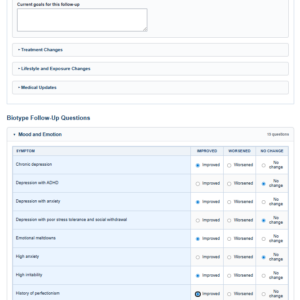
The combined questionnaire adds symptom-pattern information to the laboratory assessment.
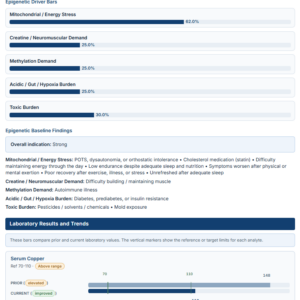
In addition to the traditional Walsh Biotypes, the Epigenetic Biotype section evaluates questionnaire support for factors that may contribute to impaired methylation:
Mitochondrial / Energy Stress
Looks for findings suggesting that impaired energy production may be limiting metabolically demanding methylation reactions.
Creatine / Neuromuscular Demand
Evaluates factors that may increase endogenous creatine synthesis and therefore increase methyl-group utilization.
Methylation Demand
Identifies clinical factors that may increase use of available methyl groups.
Acidic / Gut / Hypoxia Burden
Evaluates gastrointestinal, acid-base, fermentation, and oxygen-related factors that may influence metabolic function and clearance.
Toxic Burden
Identifies reported environmental and exposure-related factors that may add biochemical and oxidative stress.
Complete the WalshDoc Biotype + Epigenetic Questionnaire before the assessment.
Which Walsh Biotype Labs Are Also Reviewed?
This combined assessment includes the same core Biotype evaluation used in the standard Walsh Protocol Biotype Assessment.
Zinc, Copper & Ceruloplasmin
Used to evaluate copper/zinc balance, zinc status, ceruloplasmin, and calculated free copper when relevant.
Whole Blood Histamine
Provides traditional Walsh context for the clinical methylation pattern.
Homocysteine
Connects the Biotype assessment with the methionine and methylation pathways.
Vitamin D, CBC & CMP
Provide additional nutrient, hematologic, hepatic, renal, electrolyte, and metabolic context.
Urinary Pyrroles When Indicated
May be included when the questionnaire and clinical presentation support a pyroluria pattern.
View the Comprehensive Biotype Panel.
What Does the Biotype + Methylation Consultation Include?
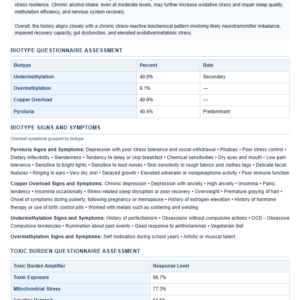
Traditional Walsh Biotype scores and the additional epigenetic/methylation-related patterns are reviewed.
Medical and psychiatric history, medications, supplements, treatment response, diet, exposures, and other relevant factors are considered.
Copper, zinc, ceruloplasmin, histamine, homocysteine, vitamin D, CBC/CMP, and other relevant Biotype findings are reviewed.
SAM, SAH, methionine, homocysteine, adenosine, glutathione, cysteine, cystathionine, betaine, taurine, and related pathway findings are interpreted when available.
The Biotype and methylation findings are integrated into a clinically coherent biochemical interpretation.
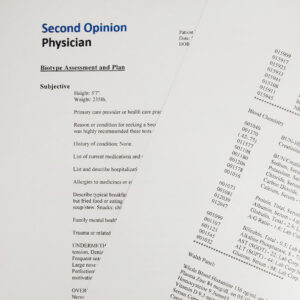
Recommendations may include nutrients to consider, nutrients to avoid, dosing and sequencing considerations, and other clinically appropriate guidance.
The written report is reviewed and focused questions about the findings and recommendations are discussed.
When Is This More Appropriate Than the Biotype-Only Assessment?
The standard Walsh Protocol Biotype Assessment is usually sufficient when the primary goal is to evaluate the traditional Walsh Biotypes and corresponding laboratory findings.
The combined Biotype + Methylation Assessment may be more appropriate when:
- undermethylation appears likely but the mechanism is unclear;
- SAM or SAH abnormalities are suspected or already known;
- homocysteine does not adequately explain the methylation pattern;
- the patient has responded poorly or unpredictably to methyl donors;
- symptoms and whole blood histamine do not fit neatly together;
- prior nutrient therapy has produced only partial improvement;
- there is concern about glutathione, transsulfuration, or methylation demand;
- the patient wants a more detailed biochemical baseline before treatment.
What if I Already Have a Methylation Panel?
Outside methylation and Biotype laboratory results can be reviewed when appropriate.
Standard Consultation — $399
Choose this option when the Biotype and methylation testing are ordered through Second Opinion Physician or provided in the expected format.
Consultation With Outside Labs — $499
Choose this option when laboratory results come from outside physicians, clinics, or laboratories and require additional organization, reconciliation, or comparison across different formats, dates, methods, or incomplete panels.
How Do I Start the Biotype + Methylation Assessment?
The combined assessment uses both symptom-pattern information and biochemical laboratory findings.
Take the Biotype + Epigenetic Questionnaire View the Biotype Panel View the Methylation PanelNot Sure Whether You Need Methylation Testing?
If you are uncertain whether the standard Biotype Assessment is sufficient or whether direct methylation testing would add useful information, a brief pre-consultation can help determine the most appropriate starting point.
Free Walsh Protocol Pre-ConsultationMethylation Consultation & SAM/SAH Interpretation FAQs
What is a methylation consultation?
A methylation consultation reviews direct methylation and related metabolic markers together with symptoms, clinical history, Walsh Biotype findings, and relevant laboratory results to develop an individualized biochemical interpretation and nutrient plan.
What does SAM/SAH interpretation show?
SAM provides methyl groups for biochemical reactions, while SAH can inhibit methyltransferase activity when it accumulates. Interpreting both values together provides more information about effective methylation capacity than either marker alone.
What can cause high SAH?
High SAH may reflect impaired clearance of methylation products or downstream factors affecting the reversible SAH hydrolase reaction. It should be interpreted with homocysteine, adenosine, clinical history, and other relevant metabolic findings.
What can cause low SAM?
Low SAM may reflect limited methionine availability, impaired SAM synthesis, inadequate energy or cofactors, increased methylation demand, increased creatine synthesis demand, or other metabolic factors.
Is undermethylation testing the same as MTHFR testing?
No. MTHFR testing evaluates genetic variants affecting folate metabolism. Direct undermethylation assessment can include symptoms, whole blood histamine, homocysteine, SAM, SAH, methionine, and other biochemical findings.
Can methylation testing be useful for depression or anxiety?
It may provide additional biochemical information in selected patients with depression, anxiety, OCD-type symptoms, unusual supplement response, or suspected undermethylation. It does not imply that all psychiatric symptoms are caused by methylation abnormalities.
Does this assessment also evaluate copper overload and pyroluria?
Yes. The combined consultation includes the Walsh Biotype assessment in addition to the methylation-panel review.
What if I only need a Walsh Biotype assessment?
If direct SAM/SAH and methylation-pathway interpretation is not needed, the standard Walsh Protocol Biotype Assessment is the simpler and less expensive option.
Physician Consultation Options

Additional information
| Consultation | Consultation, Consultation with Labs Provided by Patient |
|---|