
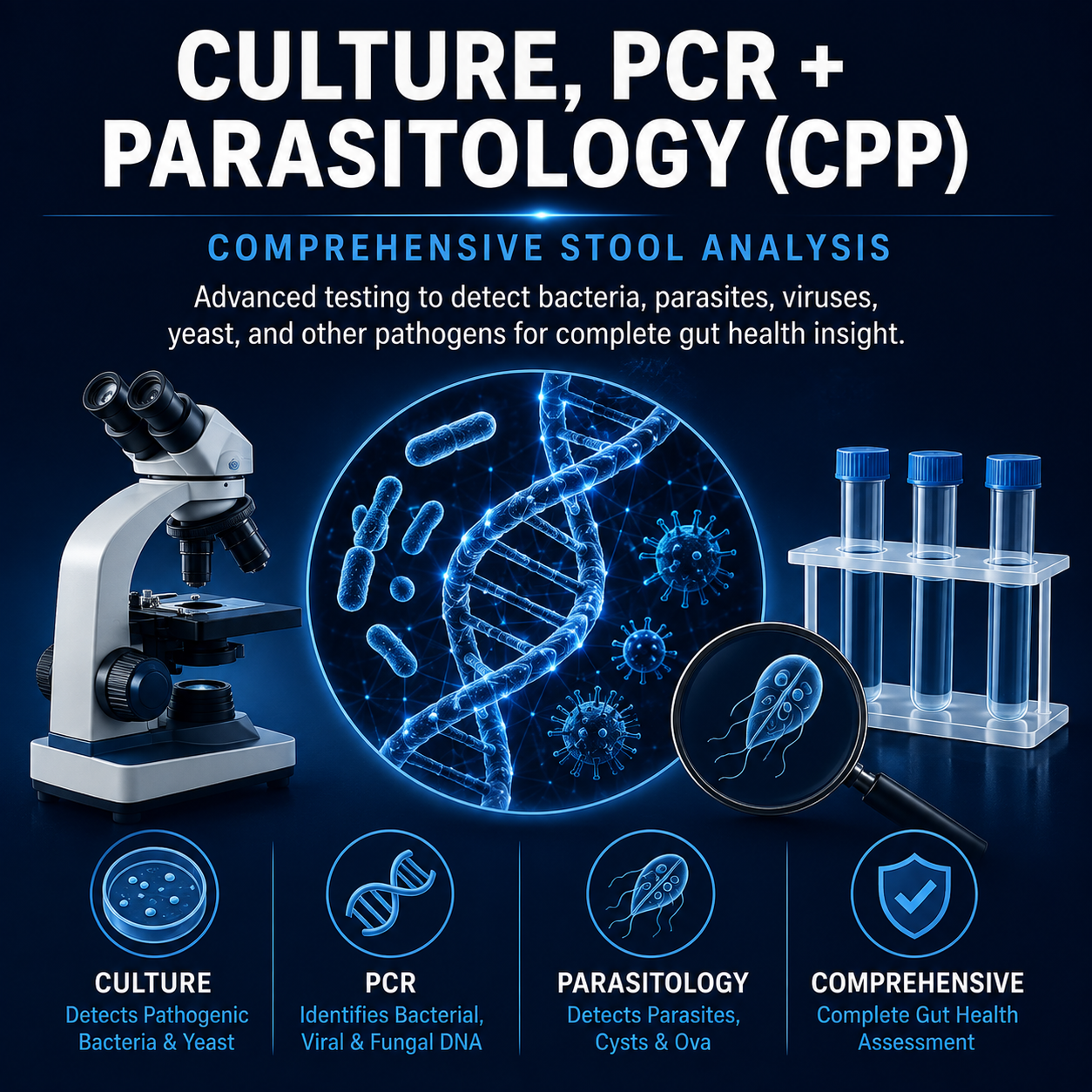
Comprehensive Stool Test | CPP

$398.00
The Culture, PCR + Parasitology (CPP) profile is an advanced stool analysis for patients with persistent digestive symptoms, suspected dysbiosis, microbial overgrowth, yeast, or intestinal parasites. It combines traditional culture, molecular PCR testing, microscopy, and antimicrobial susceptibility testing to identify organisms that may be disrupting the intestinal ecosystem.
The importance of these findings extends beyond bloating or irregular bowel movements. An unhealthy microbiome can reduce beneficial bacterial functions, weaken colonization resistance and intestinal barrier integrity, alter inflammatory and immune signaling, increase oxidative stress, and influence the gut-brain and one-carbon/methylation environment.
Description
This is more than an infection screen. The CPP profile evaluates whether potentially harmful organisms are present while also looking at the beneficial and commensal bacteria that normally help protect the intestinal environment.
Why the Gut Microbiome Matters
The intestine contains a complex microbial ecosystem that interacts continuously with the immune system, intestinal lining, nutrients, bile acids, metabolism and the nervous system.
Healthy commensal bacteria do much more than simply occupy space. They help create an environment that makes it difficult for pathogens to establish themselves—a process called colonization resistance.
Protect the Gut Lining
Beneficial microbial metabolites, particularly butyrate, help nourish colon cells and support intestinal barrier integrity.
Keep Pathogens Out
Healthy bacteria compete for nutrients and attachment sites and can produce bacteriocins, short-chain fatty acids and other substances that suppress invading organisms.
Regulate Immune Signaling
The microbiome participates in normal immune maturation and helps regulate inflammatory responses at the intestinal surface.
Produce Useful Metabolites
Microbes ferment dietary fiber into acetate, propionate and butyrate and participate in bile-acid, amino-acid and vitamin metabolism.
Support Vitamin Availability
Some intestinal bacteria synthesize B vitamins and vitamin K-related compounds and influence nutrient availability and absorption.
Influence Neuroimmune Signaling
Microbial metabolites, immune mediators and vagal signaling provide several pathways through which intestinal physiology can influence mood, cognition and stress responses.
What Happens When Unhealthy Bacteria Take Over?
Dysbiosis is not simply the presence of a “bad” organism. It can involve both a gain of harmful microbial functions and a loss of beneficial microbial functions.
Potentially harmful or overgrown organisms can:
- Compete with beneficial organisms for nutrients and intestinal niches
- Reduce microbial diversity
- Displace organisms that normally produce butyrate and other beneficial short-chain fatty acids
- Reduce normal colonization resistance against pathogens
- Alter bile-acid metabolism
- Generate inflammatory microbial products
- Increase intestinal immune activation
- Disrupt the mucus layer and epithelial barrier
- Increase oxidative stress
- Alter amino-acid and vitamin metabolism
- Produce gases and fermentation products that contribute to bloating, discomfort and altered bowel habits
- Potentially change neuroactive and immune signaling between the intestine and brain
Dysbiosis therefore creates two problems: undesirable organisms may gain functions that irritate the host while beneficial organisms—and the protective functions they normally provide—may be lost.
What Beneficial Bacteria Are Lost During Dysbiosis?
The CPP profile evaluates organisms such as Lactobacillus, Bifidobacteria and beneficial E. coli because loss of protective flora can be clinically important even when an obvious pathogen is not found.
Healthy organisms can contribute to:
Butyrate, Acetate & Propionate
Fiber-fermenting bacteria produce SCFAs that nourish the intestinal epithelium, influence immune signaling and help maintain an environment unfavorable to many pathogens.
Natural Competition
Commensal organisms consume nutrients and occupy ecological niches that otherwise become available to pathogenic or opportunistic organisms.
Metabolic Signaling
Healthy bacteria participate in bile-acid transformation, which influences digestion, metabolism and resistance to certain pathogens.
B-Vitamin Metabolism
Gut organisms participate in the synthesis and metabolism of folate, riboflavin, B6 and other nutrients relevant to one-carbon metabolism.
Gut Dysbiosis, Mood and Emotional Symptoms
Gastrointestinal dysfunction itself can be a major source of physical and emotional stress. Chronic bloating, abdominal discomfort, constipation, diarrhea, urgency, food intolerance and disrupted sleep can substantially affect quality of life.
But the gut–brain relationship is broader than discomfort alone.
Dysbiosis may influence mood and behavior through:
- Inflammatory cytokine signaling
- Intestinal barrier dysfunction
- Microbial metabolites
- Changes in short-chain fatty acids
- Immune activation
- Altered tryptophan metabolism
- Vagal and enteric nervous-system signaling
- Changes in nutrient availability
- Oxidative and metabolic stress
This does not mean that dysbiosis is the cause of every depression, anxiety or behavioral disorder. It does mean that persistent intestinal dysfunction can be an important contributor in susceptible patients.
How Dysbiosis May Affect Methylation
The relationship between the microbiome and methylation is more complex than simply “toxins use methyl groups.”
Gut bacteria interact with one-carbon metabolism through nutrient production, nutrient consumption, microbial metabolites, homocysteine metabolism and inflammatory signaling.
B-Vitamin Availability
Folate, B2, B6 and B12 participate in one-carbon and homocysteine metabolism. Gut organisms can influence the availability and metabolism of several of these nutrients.
Homocysteine Metabolism
Emerging research links microbiome composition with homocysteine metabolism, although this relationship is still being defined.
Inflammation
Chronic inflammatory signaling and oxidative stress can alter liver and cellular metabolism and increase metabolic demands that interact with methylation pathways.
Oxidative Stress
Oxidative burden increases demand on glutathione and transsulfuration-related systems that intersect with methionine and homocysteine metabolism.
In the Second Opinion Physician methylation framework, persistent dysbiosis may therefore act as an acquired metabolic stressor rather than a genetic methylation defect. When symptoms or laboratory findings suggest impaired methylation, the gut may be one of several underlying drivers worth evaluating.
What About Endotoxins?
Gram-negative bacteria contain lipopolysaccharide (LPS), commonly called endotoxin. When intestinal barrier function is impaired or microbial burden is high, increased exposure to microbial inflammatory products can stimulate immune signaling.
LPS activates innate immune pathways, particularly TLR4-related signaling, and can promote cytokine production and oxidative stress.
The body clears circulating LPS primarily through the liver and reticuloendothelial system. Methylation is therefore better viewed as part of the broader metabolic response to dysbiosis and inflammation rather than as the principal mechanism for directly eliminating endotoxin.
Dysbiosis, Oxidative Stress and Mitochondria
Persistent microbial inflammation can create an environment of increased reactive oxygen species, immune activation and metabolic demand.
For a patient already experiencing impaired mitochondrial function, this additional burden may contribute to:
- Fatigue
- Poor exercise tolerance
- Brain fog
- Slow recovery
- Higher antioxidant demand
- Reduced resilience to physiologic stress
What the CPP Panel Evaluates
Beneficial & Commensal Flora
Evaluates levels of Lactobacillus species, Bifidobacteria, beneficial E. coli and other cultured intestinal organisms.
Dysbiotic & Pathogenic Bacteria
Culture and PCR methods identify imbalanced commensals, Clostridium-related organisms and important enteric pathogens.
Yeast & Fungi
Culture can identify abnormal yeast or fungal growth, including Candida species when present.
Parasites
Concentration, staining, microscopy and molecular methods broaden detection of protozoa, helminths, ova and selected parasitic pathogens.
Antimicrobial Susceptibility
Cultured bacterial and fungal organisms may be evaluated against prescription antimicrobials and selected natural agents.
Broader Digestive Context
Findings can be interpreted with symptoms, nutrition, inflammatory patterns and other functional testing when appropriate.
Beneficial & Commensal Flora
The culture portion evaluates important organisms including:
- Lactobacillus species
- Bifidobacteria
- Beneficial E. coli
- Other commensal organisms identified by culture
Low levels of beneficial organisms may represent a loss of protective microbial functions and may create ecological space for opportunistic organisms to expand.
Dysbiotic & Pathogenic Bacteria
The combination of culture and PCR broadens detection beyond either method alone.
The panel may identify:
- Imbalanced commensal organisms
- Potentially pathogenic bacteria
- Clostridium-related abnormalities
- Important gastrointestinal pathogens targeted by PCR
Identifying the organism can allow therapy to be more targeted than empirically cycling through probiotics or antimicrobials without knowing what is present.
Antimicrobial Susceptibility Testing
When appropriate organisms grow in culture, susceptibility testing may evaluate response to:
- Prescription antibacterial agents
- Prescription antifungal agents
- Selected botanical or natural antimicrobial agents
This can provide useful treatment guidance, although laboratory susceptibility does not guarantee that an agent will be effective clinically.
Yeast and Fungal Overgrowth
Yeast such as Candida species can expand after antibiotics, dietary disruption or changes in the intestinal ecosystem.
Possible associated symptoms include:
- Bloating
- Gas
- Loose stool or altered bowel habits
- Post-antibiotic gastrointestinal symptoms
- Food-related discomfort
- Fatigue
Finding small amounts of yeast does not automatically establish disease. Quantity, symptoms and the overall microbial pattern matter.
How Important Are Intestinal Parasites?
Intestinal parasites remain clinically relevant in developed countries, but they are not present in anything close to 60% of the general population based on reliable population data.
Risk is substantially higher in selected groups, including people with:
- International travel or residence in endemic regions
- Untreated or contaminated water exposure
- Daycare exposure
- Close household exposure
- Camping or wilderness water exposure
- Immunosuppression
- Persistent diarrhea
- Unexplained eosinophilia
- Repeated gastrointestinal symptoms after travel
Protozoa such as Giardia, Cryptosporidium and Entamoeba are generally more relevant in developed countries than classic soil-transmitted helminths. Pinworm also remains common, particularly among children.
Why multi-method testing matters: parasites may be shed intermittently, and no single method detects every organism equally well. Microscopy, concentration/staining techniques and PCR can complement one another.
Possible Symptoms of Parasitic Infection
- Persistent or intermittent diarrhea
- Bloating and excessive gas
- Abdominal cramping
- Nausea
- Unexplained fatigue
- Weight loss in some infections
- Iron deficiency or anemia with selected organisms
- Eosinophilia with some helminths
- Sleep disturbance or anal itching with pinworm
- Post-travel gastrointestinal symptoms
Some infections are minimally symptomatic, while others can cause substantial illness. Symptoms alone cannot determine whether a parasite is present.
When This Test May Be Useful
Persistent Digestive Symptoms
- Bloating
- Gas
- Constipation
- Diarrhea
- Abdominal discomfort
- IBS-like symptoms
Systemic or Functional Patterns
- Chronic fatigue
- Inflammatory or immune patterns
- Food sensitivities
- Nutrient deficiencies
- Mood symptoms with gastrointestinal dysfunction
- Unexplained oxidative or metabolic stress
Infection Risk
- Travel
- Contaminated water exposure
- Persistent diarrhea
- Possible parasite exposure
- Post-antibiotic symptoms
When Empiric Treatment Has Failed
- Poor response to probiotics
- Recurring symptoms after antimicrobials
- Repeated yeast treatment without confirmation
- Unexplained relapse after temporary improvement
CPP vs Broader Functional Stool Testing
The CPP profile is particularly useful when the primary question is:
“Is there a bacterium, yeast, parasite or microbial imbalance that may need targeted treatment?”
For patients who need a broader assessment of digestion, inflammation, pancreatic function, intestinal immune markers and other aspects of gastrointestinal physiology, a more comprehensive functional stool profile may be appropriate.
View GI360 TestingCollection & Preparation
- Collection kit is shipped directly to you
- No fasting is generally required
- Follow the laboratory kit instructions carefully
- Antimicrobial agents may affect results and should be discussed before collection
- One-, two- or three-day collection may be used depending on the ordered configuration
- Samples are returned directly to the laboratory using the provided shipping materials
Turnaround Time
Typical turnaround: approximately 6–8 business days after the laboratory receives the specimens.
Culture growth, susceptibility testing, confirmatory procedures, holidays or unusual findings can extend processing time.
Test Components
| Component | CPT Code | Reference List Price |
|---|---|---|
| Bacteriology culture, aerobic | 87045 | $57 |
| Additional pathogen culture | 87046 | $40 |
| GI Pathogens PCR, 12–25 targets | 87507 | $181 |
| Yeast culture | 87102 | $46 |
| Parasitology, concentrate | 87177 | $24 |
| Parasitology, trichrome | 87209 | $33 |
| Muscle fibers | 89160 | $17 |
Total reference list price: $398
Frequently Asked Questions
What does the CPP stool test detect?
It combines bacterial culture, PCR pathogen detection, yeast culture and microscopy-based parasitology to evaluate beneficial organisms, dysbiosis, bacterial pathogens, yeast and intestinal parasites.
Can dysbiosis affect mood or anxiety?
It can contribute. Intestinal symptoms themselves can cause substantial distress, while dysbiosis can also influence inflammatory, immune, metabolic and gut–brain signaling. It should be considered one possible contributor rather than assumed to be the sole cause of a mood disorder.
Can dysbiosis affect methylation?
Potentially. Gut organisms interact with B-vitamin availability, folate and one-carbon metabolism, homocysteine metabolism and inflammatory signaling. Persistent dysbiosis and oxidative stress may therefore contribute to the metabolic environment affecting methylation.
Do bacterial endotoxins have to be methylated before they can be eliminated?
No. Lipopolysaccharide endotoxin is handled primarily through immune and hepatic clearance mechanisms. Dysbiosis may still influence methylation indirectly through inflammation, oxidative stress, nutrient metabolism and one-carbon pathways.
Do harmful bacteria replace beneficial bacteria?
They can. Dysbiosis may involve expansion of opportunistic organisms together with loss of beneficial species. This can reduce short-chain fatty-acid production, colonization resistance, barrier support and beneficial metabolic functions.
How common are intestinal parasites in developed countries?
They are clinically important but not present in 60% of the general developed-country population based on reliable epidemiologic evidence. Prevalence varies greatly by organism, geography, travel, exposure and whether the population being tested is symptomatic or high risk.
Why can parasite testing require more than one stool sample?
Some parasites are shed intermittently. Multi-day collection can improve the opportunity for detection when clinical suspicion is high.
Why combine culture and PCR?
PCR can detect selected organisms by genetic material, while culture can identify viable organisms and may permit susceptibility testing. Using more than one method can provide complementary information.
Does finding Candida mean it needs treatment?
Not automatically. Yeast can be present in the gastrointestinal tract without causing disease. The quantity, symptoms, broader microbiome pattern and clinical context should guide interpretation.
Can this test help choose an antimicrobial?
For organisms that grow in culture, susceptibility testing may provide information about prescription and selected natural agents. Clinical response still depends on many factors beyond an in-vitro susceptibility result.
The Bottom Line
A healthy microbiome does more than avoid infection. It helps defend the intestinal ecosystem, nourish the gut lining, regulate immune signaling, produce beneficial metabolites and resist colonization by pathogens.
When dysbiosis develops, the problem may therefore involve both the organisms that have appeared and the protective organisms and functions that have been lost.
The CPP profile is designed to identify that microbial pattern more clearly so treatment can be directed toward the organisms and imbalances actually present rather than treating gastrointestinal symptoms blindly.