
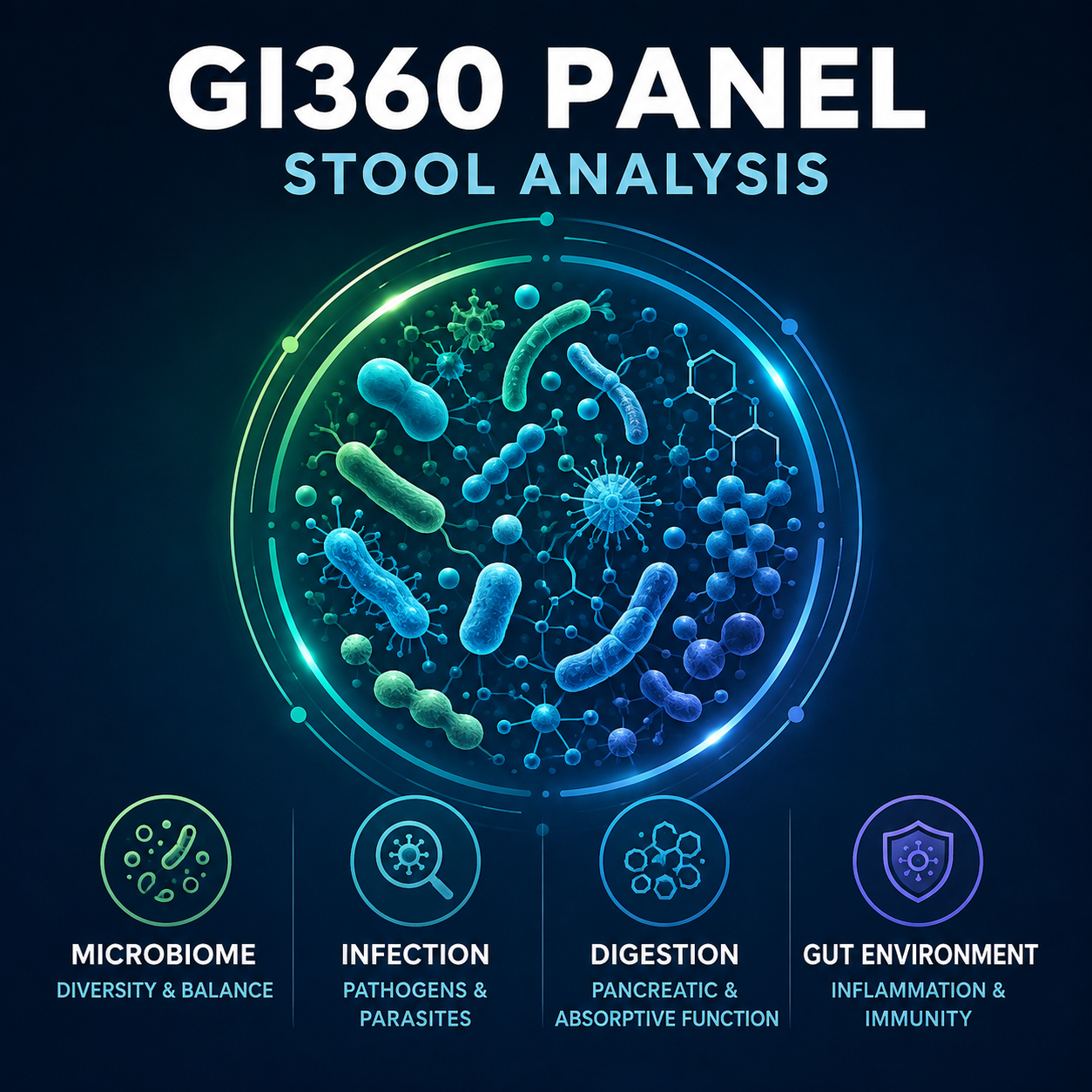
GI 360 Stool Test


$699.00
Comprehensive Doctor’s Data GI360 stool testing for microbiome balance, dysbiosis, pathogens, yeast, parasites, short-chain fatty acids, pancreatic digestion, intestinal inflammation, mucosal immunity, and gut-related metabolic stress.
Description
The Doctor’s Data GI360™ Profile is a comprehensive stool analysis that evaluates the microbiome, pathogens, parasites, digestion, intestinal inflammation, immune activity, and microbial metabolism.
Rather than looking only for one infectious organism, GI360 evaluates whether the overall intestinal ecosystem resembles a healthy, diverse state of normobiosis or shows evidence of broader dysbiosis.
It combines PCR microbiome profiling with bacterial and yeast culture, GI pathogen PCR, parasitology, short-chain fatty acids, pancreatic elastase, digestive markers, inflammatory markers, secretory IgA, occult blood, stool pH, and other functional findings.
Diversity & Balance
Evaluates bacterial abundance and how far the microbial community deviates from a healthier normobiotic pattern.
Bacteria, Yeast & Parasites
Uses PCR, culture and microscopy to look for organisms that may be contributing to symptoms.
Pancreas & Absorption
Evaluates pancreatic elastase, fat, carbohydrates, muscle fibers, vegetable fibers and other evidence of impaired digestion.
Inflammation & Immunity
Includes calprotectin, lactoferrin, lysozyme, secretory IgA, occult blood and other markers of intestinal activity.
Why a Comprehensive Stool Analysis Can Be Useful
Chronic gastrointestinal symptoms are not always caused by one infection. Bloating, constipation, diarrhea, abdominal discomfort, food intolerance, fatigue, or poor nutrient status may result from several problems occurring together.
These may include:
- Loss of beneficial bacteria
- Reduced microbiome diversity
- Overgrowth of opportunistic organisms
- Pathogenic bacterial infection
- Yeast or fungal overgrowth
- Parasitic infection
- Low short-chain fatty-acid production
- Pancreatic enzyme insufficiency
- Fat or carbohydrate malabsorption
- Intestinal inflammation
- Abnormal mucosal immune activity
GI360 Evaluates the Intestinal Ecosystem
A healthy intestine contains a diverse community of microorganisms living in a relatively stable ecological relationship.
These organisms do much more than occupy space. Beneficial bacteria can:
- Compete with pathogens for nutrients and attachment sites
- Help prevent colonization by undesirable organisms
- Produce short-chain fatty acids
- Support intestinal epithelial cells
- Influence the mucus layer and intestinal barrier
- Participate in bile-acid metabolism
- Contribute to B-vitamin and nutrient metabolism
- Interact with mucosal immunity
- Help regulate inflammatory signaling
- Participate in gut-brain communication
Dysbiosis therefore may involve both a gain of potentially harmful microbial activity and a loss of protective microbial functions.
Microbiome Abundance, Diversity and Normobiosis
The GI360 microbiome component uses PCR-based profiling to characterize the abundance of selected bacterial groups and compare the overall result with an established reference pattern.
The report includes graphical information showing bacterial abundance and diversity, helping identify whether the intestinal community has shifted away from the expected healthy pattern.
What Beneficial Bacteria Normally Provide
Colonization Resistance
Beneficial organisms consume nutrients and occupy ecological niches that might otherwise be available to pathogens and opportunistic bacteria.
Short-Chain Fatty Acids
Fermentation of dietary fiber produces acetate, propionate, butyrate and other metabolites important to intestinal physiology.
Barrier Support
Beneficial microbial metabolites help nourish intestinal epithelial cells and support normal barrier integrity.
Immune Regulation
The microbiome interacts continuously with intestinal immune tissue and helps shape normal inflammatory responses.
Nutrient Metabolism
Gut organisms participate in B-vitamin, amino-acid, bile-acid and other metabolic pathways relevant to host nutrition.
Gut-Brain Signaling
Microbial metabolites, immune mediators and neural pathways provide several routes through which gut physiology can influence mood and behavior.
Short-Chain Fatty Acids: Butyrate, Acetate, Propionate and Valerate
GI360 measures important microbial fermentation products that help show what the microbiome is actually doing metabolically.
Butyrate
Butyrate is an important fuel for colon cells and helps support intestinal barrier integrity and local immune regulation.
Acetate
Acetate is one of the most abundant microbial fermentation products and participates in both microbial and host metabolism.
Propionate
Propionate participates in microbial, metabolic and gut signaling pathways and contributes to the overall SCFA pattern.
Valerate
Valerate provides additional information about bacterial fermentation and the intestinal metabolic environment.
Gut Inflammation and Immune Activity
GI360 includes several markers that help distinguish simple microbial imbalance from a more inflammatory gastrointestinal process.
Calprotectin
A stool marker associated with neutrophilic intestinal inflammation. Significant elevation may indicate that further gastrointestinal evaluation is appropriate.
Lactoferrin
Provides additional information about inflammatory white-cell activity within the gastrointestinal tract.
Secretory IgA
sIgA is an important component of mucosal immune defense and regulates interactions between microbes and the intestinal surface.
Lysozyme
Lysozyme participates in innate antimicrobial defense and provides additional information about intestinal immune activity.
Occult Blood
Detects blood that may not be visibly apparent in stool and can identify findings requiring additional medical evaluation.
Red & White Blood Cells
Microscopic findings can provide additional evidence of bleeding or inflammatory activity.
Why Intestinal Inflammation Matters Beyond Digestion
Persistent intestinal inflammation can become a continuing source of systemic immune and metabolic stress.
Inflammatory signaling may contribute to:
- Fatigue
- Reduced stress tolerance
- Increased oxidative stress
- Greater antioxidant demand
- Immune reactivity
- Poor nutrient utilization
- Altered mitochondrial function
- Incomplete response to otherwise appropriate treatment
When barrier integrity is impaired, microbial components such as bacterial lipopolysaccharide and other inflammatory products may also interact more strongly with the immune system.
How Gut Dysfunction Can Affect Methylation
The gastrointestinal tract is highly relevant to methylation because one-carbon metabolism depends on nutrients, amino acids, cellular energy, antioxidant balance, and control of inflammatory stress.
Dysbiosis, poor digestion, malabsorption, infection or intestinal inflammation may influence methylation through several pathways.
Nutrient Availability
Folate, B12, B6 and riboflavin participate in one-carbon and homocysteine metabolism. Dysbiosis, diarrhea or malabsorption may alter nutrient availability.
Methionine & Amino Acids
Impaired digestion or absorption may reduce access to amino acids needed for methionine metabolism, glutathione production and tissue repair.
Higher Metabolic Demand
Persistent cytokine and immune signaling can increase cellular stress and alter the metabolic environment in which methylation occurs.
Glutathione Demand
Infection and dysbiosis may increase oxidative burden, increasing demand for glutathione and transsulfuration-related substrates.
ATP Requirements
Methylation, glutathione synthesis, detoxification and cellular repair require energy. Ongoing inflammatory stress may increase ATP demand while impairing metabolic resilience.
Altered Metabolites
Loss of healthy bacteria can alter SCFAs, bile acids, pH and other microbial metabolites that influence the intestinal environment.
Methylation, Homocysteine and Glutathione
The relationship becomes clearer when the methionine cycle and transsulfuration pathway are viewed together.
SAM provides methyl groups for numerous reactions. After methyl donation, SAM becomes SAH and then homocysteine.
Homocysteine can then be recycled back toward methionine or moved into transsulfuration:
When oxidative stress increases, more glutathione may be consumed. This can increase metabolic demand for:
- Cysteine
- Glycine
- Vitamin B6
- Selenium
- ATP
- Antioxidant recycling
- Homocysteine and sulfur metabolism
Why Methylation Support Alone May Not Be Enough
A patient can receive methionine, SAMe, creatine, B vitamins, minerals or other methylation support and still have an incomplete response if a major source of metabolic stress remains active.
Examples include:
- Persistent intestinal infection
- Loss of beneficial bacteria
- Chronic inflammatory signaling
- Poor pancreatic digestion
- Nutrient malabsorption
- Low butyrate production
- High oxidative stress
- Increased glutathione demand
GI360 and the Gut-Brain Connection
The relationship between intestinal dysfunction and mood is multifactorial.
There is first the direct emotional burden of chronic bloating, pain, constipation, diarrhea, urgency, restricted diets and sleep disruption.
The intestine also communicates with the nervous system through:
- Immune and cytokine signaling
- Short-chain fatty acids
- Microbial metabolites
- Tryptophan metabolism
- Vagal signaling
- Enteric nervous-system pathways
- Nutrient availability
- Oxidative and inflammatory signaling
Pancreatic Elastase: Is Food Being Digested Properly?
GI360 measures fecal pancreatic elastase, which provides information about pancreatic digestive enzyme output.
Low pancreatic elastase may help explain:
- Fatty or greasy stool
- Bloating after meals
- Poor digestion
- Unexplained weight loss
- Fat-soluble vitamin deficiency
- Multiple nutrient deficiencies
- Difficulty maintaining weight
This matters because treating dysbiosis alone may not correct symptoms if food is not being adequately digested and absorbed.
Fat, Carbohydrates, Muscle Fibers and Vegetable Fibers
Fat Stain
Excess stool fat may suggest impaired fat digestion or absorption, pancreatic insufficiency, impaired bile delivery or another digestive problem.
Carbohydrates
Undigested carbohydrates may suggest impaired digestion or absorption and can provide additional substrate for abnormal fermentation.
Muscle Fibers
Excess muscle fibers can provide additional information about incomplete protein digestion.
Vegetable Fibers
Plant-fiber findings provide additional context about dietary residue, transit and digestive function.
Stool pH and the Microbial Environment
GI360 also measures stool pH.
The colonic chemical environment is influenced by microbial fermentation, diet, transit time and short-chain fatty-acid production.
Stool pH is not diagnostic by itself, but it can add useful context when interpreted with:
- SCFA production
- Microbiome composition
- Carbohydrate fermentation
- Dietary intake
- Transit time
- Dysbiosis patterns
GI Pathogen PCR
GI360 includes molecular PCR testing for selected clinically important gastrointestinal pathogens.
PCR detects organism-specific genetic material and complements microbiome profiling and traditional culture.
Bacterial Culture
Traditional stool culture remains useful because it identifies organisms that grow under laboratory conditions and complements molecular testing.
Culture can provide additional information about:
- Potentially pathogenic bacteria
- Dysbiotic or opportunistic organisms
- Abnormal bacterial growth patterns
- Organisms suitable for susceptibility testing when available
Yeast and Fungal Overgrowth
GI360 includes yeast culture.
Yeast such as Candida may expand after antibiotic exposure, dietary changes, immune disruption or broader microbial imbalance.
Possible associated symptoms can include:
- Bloating
- Gas
- Altered bowel habits
- Post-antibiotic gastrointestinal symptoms
- Food-related discomfort
- Fatigue in some patients
Parasite Testing
GI360 includes parasitology using concentration and trichrome methods.
Testing may be especially useful with:
- Persistent or recurrent diarrhea
- International travel
- Camping or untreated water exposure
- Household or daycare exposure
- Abdominal cramping
- Unexplained anemia or nutrient depletion
- Eosinophilia when clinically appropriate
- Persistent GI symptoms following travel
Parasites are not present in most people in developed countries, but they remain clinically important and prevalence can be considerably higher in selected exposed or symptomatic populations.
Secretory IgA and Mucosal Immunity
Secretory IgA, or sIgA, is an important immune defense lining the gastrointestinal tract.
It helps:
- Bind microbes and foreign antigens
- Limit microbial attachment to intestinal surfaces
- Regulate interaction between the immune system and microbiome
- Support mucosal immune defense
Abnormal sIgA can provide useful context about the mucosal immune environment when interpreted with symptoms, inflammation and microbiome findings.
Calprotectin and Significant Gut Inflammation
Calprotectin is particularly important because significant elevation can indicate intestinal inflammation that deserves further conventional gastrointestinal evaluation.
It can help distinguish a predominantly functional symptom pattern from one in which inflammatory bowel disease or another inflammatory process should be considered.
GI360 and Intestinal Permeability / Leaky Gut
GI360 provides substantial information about the intestinal environment, but it does not directly answer every question about intestinal permeability.
Findings that may increase concern for impaired barrier function include:
- Significant dysbiosis
- Low beneficial bacteria
- Reduced butyrate
- Elevated inflammatory markers
- Abnormal secretory IgA
- Persistent food-related symptoms
- Autoimmune patterns
- Chronic gastrointestinal inflammation
When the specific clinical question involves intestinal permeability or celiac disease, separate zonulin and celiac testing may provide additional information.
View Leaky Gut / Zonulin + Celiac TestingGI360 vs Culture, PCR + Parasitology
GI360 and the Culture, PCR + Parasitology profile overlap in their evaluation of gastrointestinal organisms, but GI360 provides a substantially broader functional assessment.
Culture, PCR + Parasitology (CPP)
The CPP profile is a more focused and less expensive option when the main concern is identifying:
- Pathogenic bacteria
- Dysbiotic bacterial overgrowth
- Yeast or fungal overgrowth
- Parasitic infection
- Loss of important beneficial flora
It combines bacterial culture, GI pathogen PCR, yeast culture, parasitology and susceptibility testing without the broader SCFA, pancreatic, inflammatory and immune analysis included in GI360.
View Culture, PCR + ParasitologyGI360
GI360 adds:
- Microbiome abundance and diversity
- Short-chain fatty acids
- Pancreatic elastase
- Fat and carbohydrate digestion markers
- Calprotectin
- Lactoferrin
- Secretory IgA
- Lysozyme
- Occult blood
- Stool pH
This makes GI360 more appropriate when the goal is to understand the broader intestinal ecosystem rather than primarily screen for infection.
Which Gut Test Should You Choose?
Choose CPP
A good lower-cost starting point when bacterial infection, yeast, parasites or dysbiotic organisms are the main concern.
View CPPChoose GI360
Best when you also want microbiome diversity, SCFAs, pancreatic digestion, intestinal inflammation, immune activity and broader functional information.
Add Zonulin + Celiac Testing
Useful when intestinal permeability or celiac disease is a specific concern in addition to microbiome dysfunction.
View Zonulin + Celiac TestingWhen GI360 May Be Particularly Useful
Persistent GI Symptoms
- Bloating
- Gas
- Constipation
- Diarrhea
- Abdominal discomfort
- IBS-like symptoms
- Food-related symptoms
Digestive & Nutritional Problems
- Poor digestion
- Fatty stool
- Multiple deficiencies
- Weight loss
- Suspected malabsorption
- Poor response to supplementation
Inflammatory & Immune Patterns
- Inflammatory bowel symptoms
- Autoimmune concerns
- Food sensitivities
- Immune reactivity
- Chronic inflammation
Systemic & Biochemical Concerns
- Chronic fatigue
- Brain fog
- Mood symptoms accompanied by gut dysfunction
- Oxidative stress
- Abnormal methylation findings
- Incomplete response to treatment
What Can GI360 Help Answer?
- Is the microbiome broadly balanced or dysbiotic?
- Is bacterial diversity reduced?
- Are beneficial microbial functions being lost?
- Is a specific GI pathogen present?
- Is yeast overgrowth present?
- Is there evidence of parasitic infection?
- Are short-chain fatty acids adequate?
- Is pancreatic enzyme output adequate?
- Is there evidence of fat or carbohydrate malabsorption?
- Is intestinal inflammation present?
- Is mucosal immune activity abnormal?
- Is occult gastrointestinal bleeding present?
- Could gut dysfunction be contributing to oxidative stress or abnormal methylation?
- Would more focused CPP testing be sufficient instead?
- Should separate zonulin/celiac testing be considered?
GI360 Test Components
| Analyte | CPT | Clinical Information |
|---|---|---|
| Microbiome Abundance – PCR | 87999 | Bacterial abundance, diversity and deviation from normobiosis |
| GI Pathogens PCR | 87507 | Selected clinically important gastrointestinal pathogens |
| Bacteriology Culture | 87045 / 87046 | Culturable pathogenic, opportunistic and dysbiotic bacteria |
| Yeast Culture | 87102 | Yeast and fungal growth |
| Parasitology | 87177 / 87209 | Protozoa, ova and other parasitic findings |
| Pancreatic Elastase | 82656 | Pancreatic digestive enzyme output |
| Calprotectin | 83993 | Intestinal inflammatory activity |
| Lactoferrin | 83631 | Inflammatory white-cell activity in the gastrointestinal tract |
| Secretory IgA | 82784 | Mucosal immune defense |
| Lysozyme | 85549 | Innate intestinal immune activity |
| Butyrate | 82542 | Beneficial microbial fermentation and colon-cell support |
| Acetate, Propionate & Valerate | Varies | Short-chain fatty-acid production and microbial metabolism |
| Fat Stain | 89125 | Fat digestion and absorption |
| Carbohydrates | — | Carbohydrate digestion and malabsorption |
| Muscle Fibers | 89160 | Protein digestion |
| Occult Blood | 82272 | Hidden gastrointestinal bleeding |
| Stool pH | 83986 | Overall colonic chemical and fermentation environment |
| Red & White Blood Cells | — | Additional evidence of bleeding or inflammation |
| Mucus & Vegetable Fibers | — | Additional digestive and microscopic stool findings |
How the GI360 Test Works
Interpreting GI360 Results
GI360 is most useful when findings are interpreted together rather than treating each abnormality independently.
- Low beneficial bacteria + low butyrate: may indicate loss of protective fermenting flora.
- Elevated calprotectin + occult blood: may indicate a need for conventional gastrointestinal evaluation.
- Low pancreatic elastase + excess stool fat: may suggest impaired pancreatic digestion.
- Pathogen + elevated inflammatory markers: may indicate a more active infectious/inflammatory process.
- No major pathogen + marked dysbiosis: may indicate an ecological rather than single-organism problem.
- Dysbiosis + abnormal methylation or oxidative-stress findings: may identify gastrointestinal stress as a contributor to a broader biochemical pattern.
Frequently Asked Questions
What is the difference between GI360 and a basic stool test?
A basic stool test may focus mainly on pathogens or parasites. GI360 adds microbiome abundance and diversity, SCFAs, pancreatic function, digestive markers, intestinal inflammation, mucosal immunity, occult blood and other functional markers.
Does GI360 test for dysbiosis?
Yes. The microbiome PCR component evaluates bacterial abundance and diversity and compares the overall community with an established normobiotic reference pattern.
Can dysbiosis affect methylation?
Yes, potentially. Dysbiosis can influence B-vitamin and amino-acid availability, inflammation, oxidative stress, glutathione demand and mitochondrial energy requirements. Persistent gut dysfunction can therefore become an acquired biochemical stressor affecting methylation.
How does the gut affect glutathione?
Infection, inflammation and dysbiosis can increase oxidative stress and therefore glutathione utilization. Glutathione production is connected to homocysteine through the transsulfuration pathway, linking antioxidant demand directly with methylation chemistry.
Does GI360 test for parasites?
Yes. The profile includes stool parasitology using concentration and trichrome methods.
Does GI360 test for Candida?
Yes. The profile includes yeast culture. A positive yeast result should be interpreted with quantity, symptoms and the broader microbiome pattern.
What does low pancreatic elastase mean?
Low stool elastase may indicate reduced pancreatic digestive enzyme output and can contribute to maldigestion, fatty stools, weight loss and nutritional deficiencies.
Why is butyrate important?
Butyrate is produced by beneficial intestinal bacteria and serves as an important fuel for colon cells while supporting barrier integrity and local immune regulation.
Can gut problems affect mood?
They can contribute. Chronic gastrointestinal discomfort can directly affect sleep, stress and quality of life, while inflammatory, immune, microbial-metabolite and gut-brain signaling pathways may also play a role.
Does an abnormal GI360 mean I need antibiotics?
No. Treatment depends on the pattern. Some findings may suggest dietary change, restoration of beneficial flora, pancreatic support, treatment of a specific infection, further GI evaluation, or other targeted approaches.
When should I choose CPP instead?
The Culture, PCR + Parasitology profile is a lower-cost, more focused choice when the main question is bacterial infection, dysbiosis, yeast or parasites rather than comprehensive gut physiology.
Does GI360 measure leaky gut?
GI360 evaluates many factors associated with intestinal health but does not directly answer every question about intestinal permeability. If leaky gut or celiac disease is a specific concern, separate zonulin and celiac testing may be useful.
The Bottom Line
GI360 asks a broader question than whether an infection is present: is the intestinal ecosystem functioning normally?
It evaluates microbiome balance, pathogens, yeast, parasites, beneficial bacterial metabolites, pancreatic digestion, intestinal inflammation, mucosal immunity and other features of gastrointestinal physiology.
These findings can also be important in patients with abnormal methylation because persistent dysbiosis, inflammation, malabsorption and oxidative stress may increase glutathione demand, impair nutrient availability, increase mitochondrial stress and act as acquired Epigenetic Drivers of Undermethylation.
For patients whose primary concern is infection, yeast or parasites, the Culture, PCR + Parasitology profile provides a more focused and less expensive option. When intestinal permeability or celiac disease is a specific concern, consider adding Zonulin + Celiac testing.