
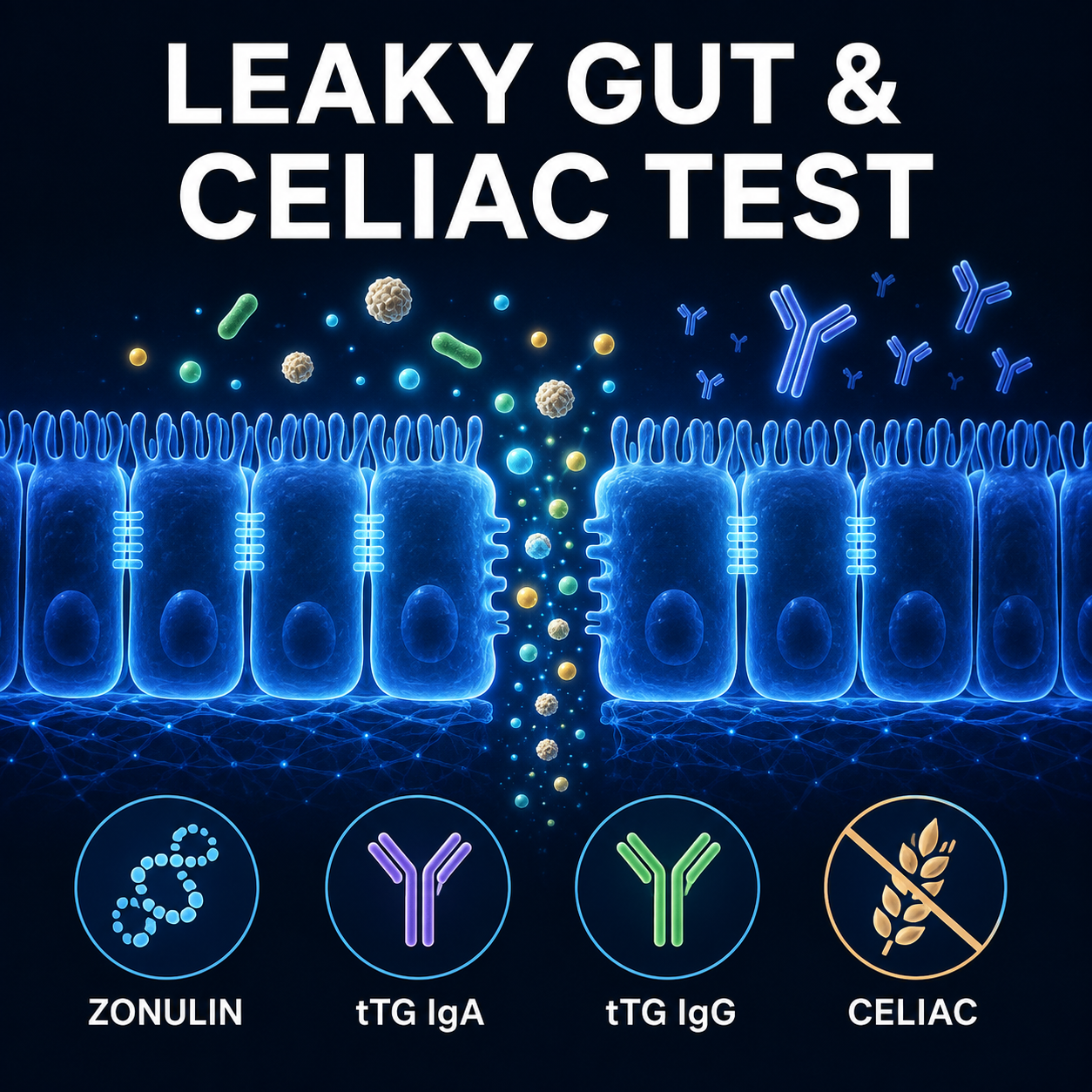
Leaky Gut, Celiac Screen

$259.00
The Leaky Gut & Celiac Screening Panel combines serum zonulin with tissue transglutaminase antibodies (tTG IgA and tTG IgG) to evaluate two related but different gastrointestinal questions: whether there may be evidence of intestinal-barrier dysfunction and whether there is serologic evidence suggesting celiac disease.
This panel is useful for patients with bloating, diarrhea, constipation, abdominal discomfort, food-related symptoms, nutrient deficiencies, fatigue, brain fog, autoimmune concerns, unexplained inflammation, anemia, mood symptoms, or suspected gluten-related illness.
Serum zonulin is best interpreted as an adjunctive marker, while tTG antibodies provide established serologic screening for celiac disease.
Description
The Leaky Gut & Celiac Screening Panel evaluates intestinal-barrier dysfunction and celiac-related immune activity in one focused blood assessment.
The panel combines serum zonulin, a marker associated with regulation of intestinal tight junctions, with tissue transglutaminase antibodies (tTG IgA and tTG IgG), which are used in the serologic evaluation of celiac disease.
The purpose is to help determine whether symptoms may involve intestinal barrier dysfunction, gluten-triggered autoimmunity, or a broader gastrointestinal inflammatory process that deserves further evaluation.
What Is Included in the Leaky Gut & Celiac Test?
Serum Zonulin — Doctors Data
Zonulin is involved in regulation of the tight junctions between intestinal cells. These junctions help control what passes from the intestinal tract into the circulation.
Higher serum zonulin measurements have been associated in some studies with disorders involving intestinal-barrier dysfunction and inflammatory or metabolic disease.
However, serum zonulin should be interpreted as an adjunctive marker rather than a stand-alone diagnosis of “leaky gut.” Commercial assays have important limitations, so results are most useful when interpreted with symptoms, history, and other gastrointestinal findings.
tTG IgA & tTG IgG
Tissue transglutaminase antibodies are used to screen for celiac disease, an autoimmune disorder in which exposure to gluten triggers an immune response that can damage the small intestine.
tTG IgA is the preferred initial serologic test for most patients being evaluated for celiac disease.
tTG IgG can provide additional information when IgA deficiency is present or when celiac disease remains strongly suspected.
Why Combine Zonulin and Celiac Testing?
These tests answer different questions.
Could Intestinal Permeability Be Abnormal?
Serum zonulin provides indirect information related to intestinal tight-junction regulation and may support further evaluation when barrier dysfunction is suspected.
Could Gluten Be Triggering Celiac Disease?
tTG antibodies look for a specific autoimmune response associated with celiac disease rather than simply measuring nonspecific gastrointestinal inflammation.
Combining the two can be useful when symptoms suggest gastrointestinal dysfunction but the underlying mechanism is unclear.
Why Intestinal Barrier Function Matters
The intestinal lining is designed to absorb nutrients while maintaining a controlled barrier between the contents of the digestive tract and the bloodstream.
Specialized proteins form tight junctions between intestinal epithelial cells. These junctions can change in response to immune signals, infections, dietary factors, inflammation, and other physiologic stresses.
When normal barrier regulation is disrupted, increased exposure to luminal antigens may contribute to immune and inflammatory signaling.
This may be relevant in patients with:
- Chronic bloating or abdominal discomfort
- Diarrhea or irregular bowel habits
- Food-related symptoms
- Autoimmune conditions
- Chronic inflammatory symptoms
- Nutrient deficiencies
- Fatigue or brain fog
- Unexplained immune activation
What Does Serum Zonulin Tell Us?
Zonulin is a protein involved in regulation of intestinal permeability through effects on tight-junction signaling.
Elevated serum zonulin has been reported in association with several conditions involving metabolic or intestinal inflammation.
However, this is an area where laboratory interpretation needs caution.
Serum zonulin should not be interpreted as proof of “leaky gut.” Commercial zonulin assays have limitations, and an abnormal result is best used as one piece of a larger gastrointestinal assessment.
Its practical role is to help determine whether intestinal-barrier dysfunction deserves more attention, particularly when symptoms and other findings point in the same direction.
What Is Celiac Disease?
Celiac disease is an autoimmune disorder triggered by gluten in genetically susceptible individuals.
Exposure to gluten can cause immune-mediated damage to the lining of the small intestine, particularly the intestinal villi responsible for nutrient absorption.
This can result in classic gastrointestinal symptoms, but celiac disease can also present with symptoms outside the digestive tract.
Symptoms That May Suggest Celiac Disease
GI Symptoms
- Chronic diarrhea
- Bloating
- Abdominal discomfort
- Constipation
- Weight loss
- Malabsorption
Symptoms Beyond the Gut
- Iron-deficiency anemia
- Fatigue
- Low vitamin D
- Folate or B12 abnormalities
- Bone loss
- Neurologic symptoms
- Dermatitis herpetiformis
Why tTG IgA Is the Main Celiac Screening Test
tTG IgA is generally the preferred first-line antibody test for celiac disease because it combines good sensitivity and specificity in most patients.
When elevated in a patient consuming gluten, the result increases suspicion for celiac disease and may lead to additional evaluation.
Depending on the result and clinical situation, follow-up can include:
- Total serum IgA
- Endomysial antibody (EMA)
- Deamidated gliadin peptide antibodies
- HLA-DQ2 / HLA-DQ8 testing in selected situations
- Gastroenterology evaluation
- Upper endoscopy with small-intestinal biopsy when appropriate
Why Include tTG IgG?
Some patients have IgA deficiency, which can make an IgA-based celiac test falsely reassuring.
Including tTG IgG can provide additional information in that setting.
However, tTG IgG is generally less useful than tTG IgA in a patient with normal IgA levels, so interpretation should take the patient's overall immunoglobulin status into account.
Important: Do Not Stop Gluten Before Celiac Testing
Celiac antibody testing is most informative while gluten is still being consumed.
Starting a gluten-free diet before testing can reduce antibody levels and potentially produce a falsely negative result.
If you have already eliminated gluten, discuss this before testing rather than intentionally restarting large amounts of gluten without clinical guidance.
Leaky Gut, Celiac Disease and Nutrient Deficiency
Small-intestinal disease can interfere with absorption of vitamins and minerals.
When celiac disease or significant malabsorption is present, abnormalities may include:
- Iron deficiency
- Low ferritin
- Folate deficiency
- Vitamin B12 abnormalities
- Low vitamin D
- Low zinc
- Magnesium insufficiency
- Calcium abnormalities
This can contribute to fatigue, cognitive symptoms, muscle problems, anemia, poor bone health, immune dysfunction, and difficulty responding to nutritional therapy.
Gut Health, Inflammation and Mood
Gastrointestinal dysfunction can affect more than digestion.
Persistent intestinal inflammation or malabsorption may influence:
- Nutrient availability
- Immune activation
- Inflammatory signaling
- Oxidative stress
- Tryptophan metabolism
- Energy production
- Sleep and stress tolerance
For patients with mood, behavioral, or cognitive symptoms, gut abnormalities should not automatically be assumed to be the cause. However, identifying significant celiac disease, malabsorption, or gastrointestinal inflammation can reveal a treatable biochemical contributor.
Leaky Gut, Oxidative Stress and Methylation
Chronic gastrointestinal inflammation may increase antioxidant, detoxification, and tissue-repair demands.
Malabsorption can also reduce availability of nutrients needed for methylation and cellular energy, including:
- Folate
- Vitamin B12
- Vitamin B6
- Zinc
- Magnesium
- Iron
- Other metabolic cofactors
Within an epigenetic assessment, persistent gut dysfunction may therefore contribute indirectly to oxidative stress, mitochondrial dysfunction, nutrient depletion, and increased methylation demand.
Who May Benefit From the Leaky Gut & Celiac Screening Panel?
This panel may be particularly useful for patients with:
- Bloating or chronic abdominal discomfort
- Diarrhea or constipation
- Suspected gluten reactions
- Unexplained iron deficiency
- Low folate or B12
- Low vitamin D
- Unexplained weight loss
- Autoimmune disease
- Family history of celiac disease
- Fatigue or brain fog associated with gastrointestinal symptoms
- Chronic inflammatory symptoms
- Suspected intestinal-barrier dysfunction
- Poor response to nutritional therapy
What Can This Leaky Gut & Celiac Test Help Answer?
- Are tTG antibodies elevated?
- Is celiac disease a reasonable concern?
- Does the pattern warrant more complete celiac testing?
- Is serum zonulin elevated?
- Could intestinal-barrier dysfunction deserve additional investigation?
- Could gastrointestinal dysfunction be contributing to nutrient deficiencies?
- Should a comprehensive stool, malabsorption, or inflammatory evaluation be considered?
What This Panel Does Not Diagnose
Not a Stand-Alone Leaky Gut Diagnosis
An abnormal serum zonulin result does not independently establish abnormal intestinal permeability or identify its cause.
Screening Is Not the Entire Diagnosis
Positive celiac serology often requires clinical correlation and, depending on circumstances, gastroenterology evaluation or biopsy confirmation.
When More Comprehensive Gut Testing May Be Appropriate
This panel is focused on intestinal-barrier and celiac questions. It does not provide a full gastrointestinal evaluation.
Broader testing may be appropriate when there is concern for:
- Bacterial or yeast dysbiosis
- Parasites
- Pancreatic insufficiency
- Intestinal inflammation
- Occult blood
- Microbiome imbalance
- Digestive enzyme insufficiency
In those situations, a comprehensive stool analysis or other targeted gastrointestinal testing may provide substantially more information.
Before Your Leaky Gut & Celiac Blood Test
- This is a blood-based assessment.
- Continue your usual gluten-containing diet before celiac antibody testing unless instructed otherwise.
- A gluten-free diet may lower celiac antibodies and make the test harder to interpret.
- Tell your clinician if you have known IgA deficiency.
- Provide information about previous celiac testing or intestinal biopsy results.
- Tell your clinician about immune-suppressing medications or corticosteroid use.
- Do not change prescription medications solely for this test unless instructed by your treating clinician.
How the Leaky Gut & Celiac Screening Panel Works
Order the Panel
The appropriate blood-test requisitions and collection instructions are provided.
Complete the Blood Draw
Blood is collected for zonulin and celiac antibody testing.
Review the Pattern
Results are interpreted together to assess celiac-related autoimmunity and possible intestinal-barrier dysfunction.
Determine Next Steps
Abnormal findings may lead to additional celiac testing, nutritional assessment, gastroenterology evaluation, or broader gastrointestinal testing.
Frequently Asked Questions About the Leaky Gut & Celiac Test
Does serum zonulin prove that I have leaky gut?
No. Serum zonulin is an adjunctive marker associated with intestinal tight-junction regulation, but commercial assays have limitations and the result should not be used by itself to diagnose increased intestinal permeability.
What is the best initial blood test for celiac disease?
tTG IgA is generally the preferred first-line serologic test in patients who are consuming gluten. Total IgA is often useful as well because IgA deficiency can interfere with interpretation.
Why include tTG IgG?
tTG IgG can provide additional information in patients with IgA deficiency or selected patients in whom celiac disease remains strongly suspected despite an IgA-based test.
Should I stop eating gluten before this test?
No. Celiac antibodies may decline after gluten is removed, potentially causing a false-negative result. Testing is generally most useful while the patient is still consuming gluten.
Can celiac disease cause fatigue or brain fog?
Yes. Celiac disease can lead to inflammation and nutrient deficiencies that may contribute to fatigue, anemia, cognitive symptoms, and other extra-intestinal problems.
Can celiac disease cause low iron, folate or vitamin D?
Yes. Damage to the small intestine can interfere with absorption and may contribute to iron, folate, vitamin B12, vitamin D, and other nutrient abnormalities.
Does this panel replace a stool test?
No. This panel focuses on celiac serology and an intestinal-barrier marker. A comprehensive stool analysis provides different information about organisms, digestion, intestinal inflammation, and other gastrointestinal functions.
What happens if my celiac antibodies are positive?
Positive results should be interpreted with symptoms and clinical history. Additional antibody testing, total IgA, gastroenterology consultation, or small-intestinal biopsy may be appropriate depending on the findings.