
Ketogenic Diet for Depression: How Ketones Affect Brain Energy, Inflammation & Mood
Ketogenic diets are being studied as a metabolic treatment for depression because they change how the brain produces and uses energy. By lowering carbohydrate intake and increasing production of ketones such as beta-hydroxybutyrate (BHB), a ketogenic diet may influence mitochondrial function, insulin signaling, inflammation, oxidative stress, glutamate/GABA balance, and neuroplasticity.
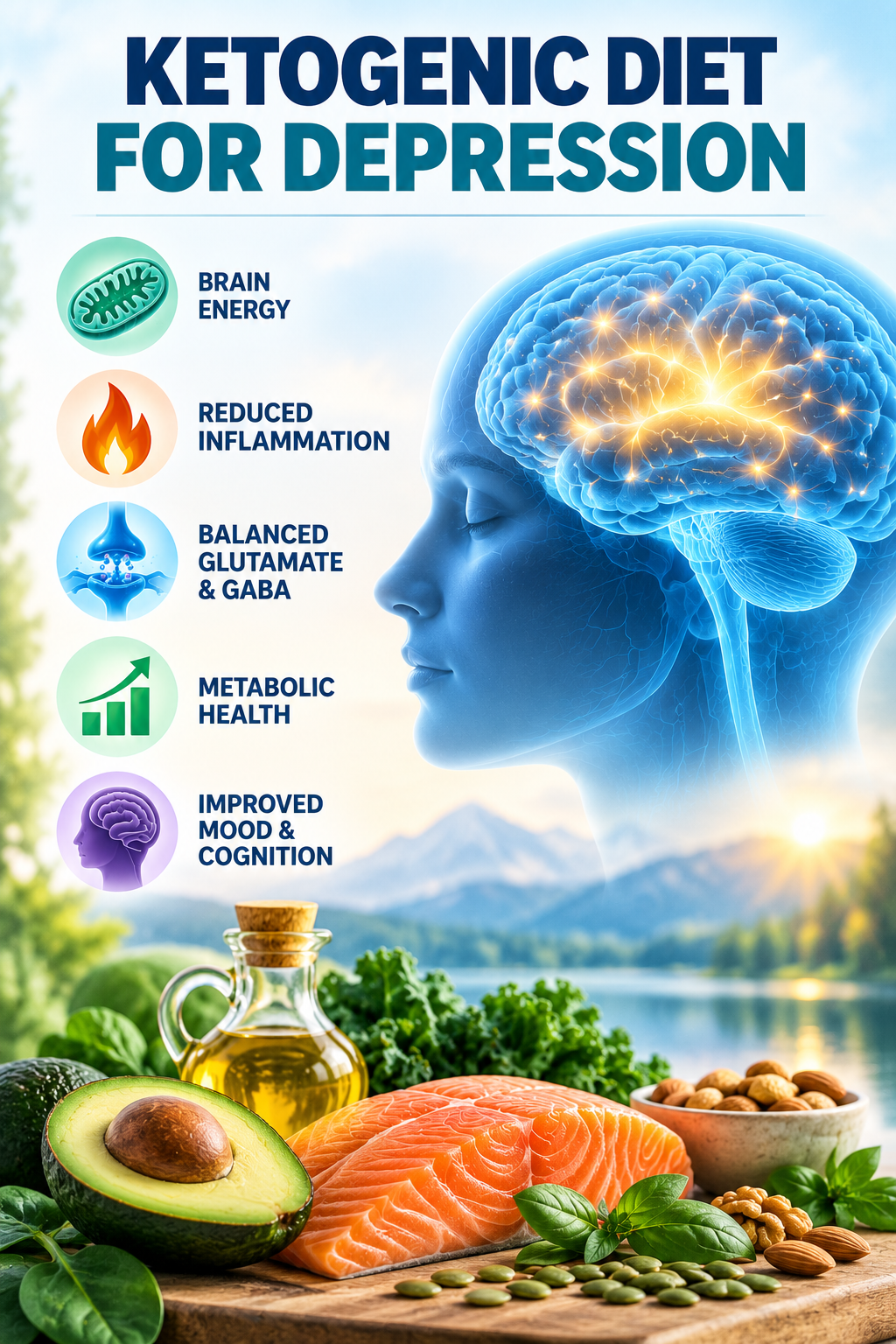
Recent evidence is stronger for depression than for anxiety or OCD: a 2026 randomized clinical trial in treatment-resistant depression found greater symptom improvement with a ketogenic diet than with a control diet at 6 weeks, and a 2025 systematic review and meta-analysis found small-to-moderate improvements in depressive symptoms across randomized trials. OCD remains promising but much earlier, with current evidence limited mainly to case reports and a small case series
Depression May Be Influenced by How the Brain Produces Energy
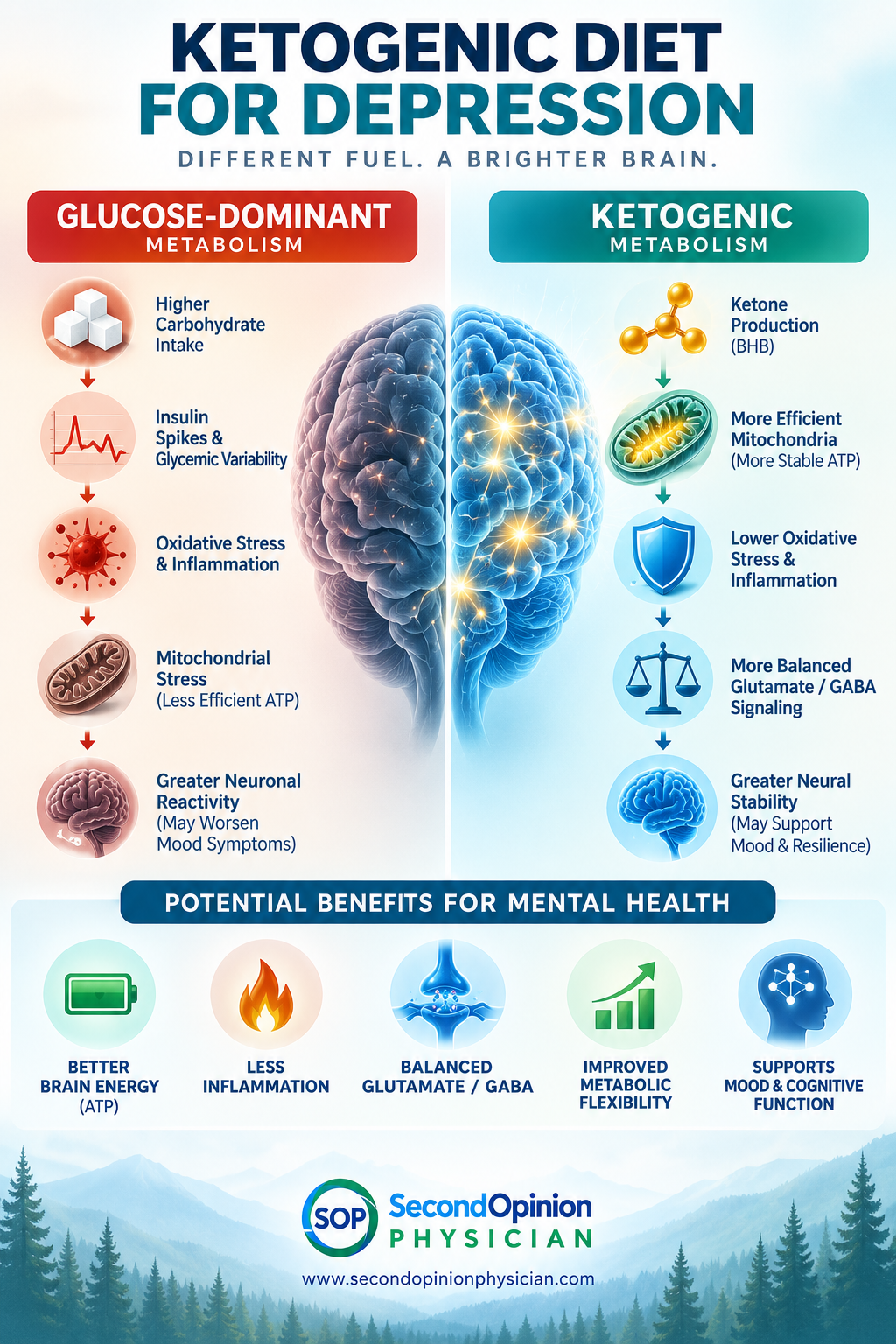
Depression is not a single biochemical disorder. In some patients, symptoms may overlap with insulin resistance, inflammation, oxidative stress, mitochondrial dysfunction, altered glutamate signaling, or impaired metabolic flexibility.
A ketogenic diet changes that metabolic environment by reducing carbohydrate intake and increasing production of ketones such as beta-hydroxybutyrate (BHB).
Rather than simply asking whether serotonin is low, metabolic psychiatry asks a broader question: Is the brain getting and using energy efficiently?
What the Research Says About Ketogenic Diets and Depression
The evidence for ketogenic diets in depression has strengthened substantially.
Treatment-Resistant Depression
A 2026 randomized clinical trial compared a ketogenic diet with a control diet in adults with treatment-resistant depression. Both groups improved, but the ketogenic group showed greater improvement in depressive symptoms at 6 weeks.
Depressive Symptoms
A 2025 systematic review and meta-analysis of 50 studies found small-to-moderate improvements in depressive symptoms in randomized ketogenic-diet trials.
Not Everyone Responds
Results vary across studies, protocols, populations, adherence levels, and duration. Ketogenic therapy is promising, but it is not established as a universal treatment for depression.
Why a Ketogenic Diet May Affect Mood
A ketogenic diet changes far more than blood ketone levels.
It can alter:
Brain Fuel
Ketones provide an alternative mitochondrial fuel when glucose metabolism is inefficient or unstable.
Insulin Signaling
Lower carbohydrate intake generally reduces insulin demand and glycemic variability.
Inflammatory Signaling
BHB also functions as a signaling molecule and can influence inflammatory pathways.
Oxidative Stress
Changes in mitochondrial substrate use and redox biology may influence oxidative stress.
Glutamate / GABA
Ketogenic metabolism may influence the balance between excitatory and inhibitory neurotransmission.
Metabolic Flexibility
The brain gains access to an additional fuel source rather than depending entirely on glucose availability.
Ketones vs Glucose: The Important Difference Is Metabolic Stability
Glucose is not inherently a harmful brain fuel. Under normal conditions, the brain uses glucose very effectively.
The concern is more relevant when glucose regulation is impaired.
When Glucose Regulation Becomes a Problem
- Insulin resistance
- Elevated fasting insulin
- High HbA1c
- Large post-meal glucose changes
- Reactive hunger or irritability
- Post-meal fatigue
- Inflammatory metabolic signaling
Alternative Energy Availability
- Higher circulating BHB
- Reduced dietary glucose load
- Lower insulin demand
- Greater fat oxidation
- Alternative mitochondrial substrate
- More stable fuel availability
Mitochondria and Brain Energy in Depression
The brain has extremely high energy requirements.
Mitochondria generate ATP that powers:
- Neuronal membrane potentials
- Neurotransmitter recycling
- Synaptic signaling
- Calcium regulation
- Neuroplasticity
- Cellular repair
When mitochondrial function is impaired, symptoms may include fatigue, brain fog, poor cognitive endurance, reduced stress tolerance, and impaired recovery.
Insulin Resistance, HbA1c and Depression
Metabolic health and mental health frequently overlap.
A person can maintain an apparently normal fasting glucose while producing excessive insulin to keep that glucose controlled.
Insulin resistance can be associated with:
- Energy instability
- Increased inflammatory signaling
- Oxidative stress
- Fatty liver
- Metabolic syndrome
- Impaired metabolic flexibility
For this reason, metabolic treatment of depression should not focus only on ketone levels.
Inflammation and Depression
Inflammation is one pathway that may connect metabolic disease with mood symptoms.
Inflammatory signaling can affect:
Mitochondria
Chronic inflammatory signaling can increase oxidative stress and interfere with cellular energy production.
Neurotransmitters
Immune activation can alter glutamate signaling and pathways involved in serotonin and kynurenine metabolism.
Insulin Sensitivity
Metabolic inflammation can worsen insulin resistance, further increasing metabolic stress.
BHB can also influence inflammatory signaling, including the NLRP3 inflammasome, although much of the detailed mechanistic evidence remains preclinical.
Glutamate, GABA and Mood Regulation
Depression is not simply a serotonin deficiency.
Glutamate and GABA are also central to brain function.
Glutamate
The brain's major excitatory neurotransmitter. It is essential for learning and neuroplasticity but can contribute to hyperexcitability when poorly regulated.
GABA
A major inhibitory neurotransmitter that helps regulate neuronal firing, anxiety, sleep, and inhibitory control.
Ketogenic metabolism has long been studied in epilepsy partly because it changes neuronal excitability and may influence glutamate/GABA handling.
Those same mechanisms are now being investigated in psychiatric disorders.
What About Anxiety?
Many people report changes in anxiety when following ketogenic diets, but the controlled research is less convincing than the depression evidence.
In the recent meta-analysis, randomized studies did not show a significant overall anxiety benefit, even though some uncontrolled studies did.
What About OCD and Intrusive Thoughts?
OCD is a smaller but particularly interesting area of metabolic psychiatry.
A 2025 case series described three patients with longstanding OCD who improved substantially after adopting ketogenic diets. The average retrospective Y-BOCS reduction was 90.5%, and symptoms returned with dietary deviations in all three cases.
That is striking, but it remains a three-patient case series rather than controlled trial evidence.
Ketogenic Diet vs Ketone Esters
A ketogenic diet and exogenous ketone supplementation are related, but they are not metabolically identical.
| Ketogenic Diet | Ketone Esters | |
|---|---|---|
| Ketone source | The liver produces ketones. | BHB is consumed directly. |
| Carbohydrate restriction | Usually substantial. | Not required. |
| Insulin effect | Typically lowers insulin exposure more substantially. | Does not reproduce the full metabolic effect of dietary carbohydrate restriction. |
| Duration | Sustained metabolic state. | Temporary increase in circulating ketones. |
| Best role | Broader metabolic therapy. | Adjunct, trial, or targeted BHB support. |
When a Mediterranean Diet May Be the Better Long-Term Strategy
Not every patient needs to remain in ketosis.
For many people, a low-glycemic Mediterranean diet may provide a more sustainable long-term foundation for:
- Insulin sensitivity
- Weight regulation
- Cardiovascular health
- Inflammatory control
- Nutrient density
- Long-term dietary adherence
The two approaches are not mutually exclusive. Some patients may use a ketogenic intervention temporarily and transition toward a lower-glycemic Mediterranean pattern once metabolic goals are achieved.
Methylation and Brain Energy
Methylation is another pathway that connects cellular energy with psychiatric symptoms.
The conversion of methionine into SAM requires ATP.
A ketogenic diet does not directly correct undermethylation.
However, poor mitochondrial ATP production can become one factor limiting SAM production in a susceptible patient.
Useful Testing Before or During Ketogenic Therapy
HbA1c
Provides a longer-term measure of glucose exposure and helps identify whether impaired glucose regulation is part of the metabolic picture.
View HbA1c TestAdvanced Mitochondrial & Oxidative Stress Panel
Useful when fatigue, cognitive symptoms, poor exercise tolerance, or oxidative stress suggest impaired cellular energy production.
View Mitochondrial PanelInsulin, HbA1c, Lipids, hs-CRP & Glutathione
Useful when glucose regulation, insulin resistance, oxidative stress, and inflammation need to be assessed together.
View Metabolic PanelSAM / SAH Testing
Helps determine whether methylation problems involve low substrate, elevated SAH, or another biochemical bottleneck.
View Methylation PanelMetabolomix+
Provides broader information about organic acids, nutrient status, oxidative stress, and mitochondrial metabolism.
View Metabolomix+Walsh Biotype Lab Panel
Useful when depression overlaps with undermethylation, copper imbalance, pyroluria, anxiety, OCD, or other biochemical patterns.
View Walsh PanelWho May Be Most Interested in a Metabolic Approach to Depression?
Depression + Insulin Resistance
- Elevated HbA1c
- High fasting insulin
- Metabolic syndrome
- Post-meal fatigue
Depression + Fatigue
- Low stamina
- Brain fog
- Poor exercise tolerance
- Variable energy
Depression + Inflammation
- Autoimmune disease
- Elevated hs-CRP
- Chronic inflammatory symptoms
- Symptoms worsening during illness
Depression + Cognitive Symptoms
- Slow thinking
- Poor concentration
- Cognitive fatigue
- Reduced motivation
Depression + Methylation Issues
- Low SAM
- Elevated SAH
- High whole-blood histamine
- Undermethylation phenotype
Treatment-Resistant Depression
- Persistent symptoms despite treatment
- Metabolic comorbidity
- Strong diet-related symptom variation
- Interest in a supervised metabolic intervention
A Practical Metabolic Treatment Framework
Frequently Asked Questions
Is a ketogenic diet proven to treat depression?
Evidence is improving but is not yet definitive. A 2026 randomized trial in treatment-resistant depression found greater improvement with a ketogenic diet than a control diet at 6 weeks, and a recent meta-analysis found modest overall improvement in depressive symptoms across randomized trials.
How might ketosis affect depression?
Potential mechanisms include changes in mitochondrial energy production, insulin signaling, inflammation, oxidative stress, glutamate/GABA balance, and metabolic flexibility.
Does sugar cause depression?
No. Depression is multifactorial. However, insulin resistance, large glucose fluctuations, and poor metabolic health can contribute to inflammatory and energetic stress that may worsen symptoms in some people.
Is the evidence as strong for anxiety?
No. Randomized trials in the recent meta-analysis did not show a significant overall benefit for anxiety, although some uncontrolled studies were more encouraging.
What about OCD?
The OCD evidence is earlier. A 2025 three-patient case series reported substantial symptom improvement during ketogenic diets, but controlled clinical trials are still needed.
Are ketone esters the same as following a ketogenic diet?
No. Ketone esters raise circulating BHB directly. A ketogenic diet changes the broader metabolic environment through carbohydrate restriction, lower insulin signaling, greater fat oxidation, and endogenous ketone production.
Should HbA1c and insulin be checked?
They can be especially useful when insulin resistance or metabolic dysfunction may be contributing to the clinical picture. HbA1c provides longer-term glucose information, while fasting insulin can identify compensatory hyperinsulinemia that may occur before glucose becomes clearly abnormal.
Does everyone with depression need a ketogenic diet?
No. Some people may be better suited to a Mediterranean or other low-glycemic whole-food diet. The dietary strategy should match the metabolic problem, medical history, treatment goals, and ability to sustain the intervention.