
Hemoglobin A1c (HbA1c) Blood Test

$24.50
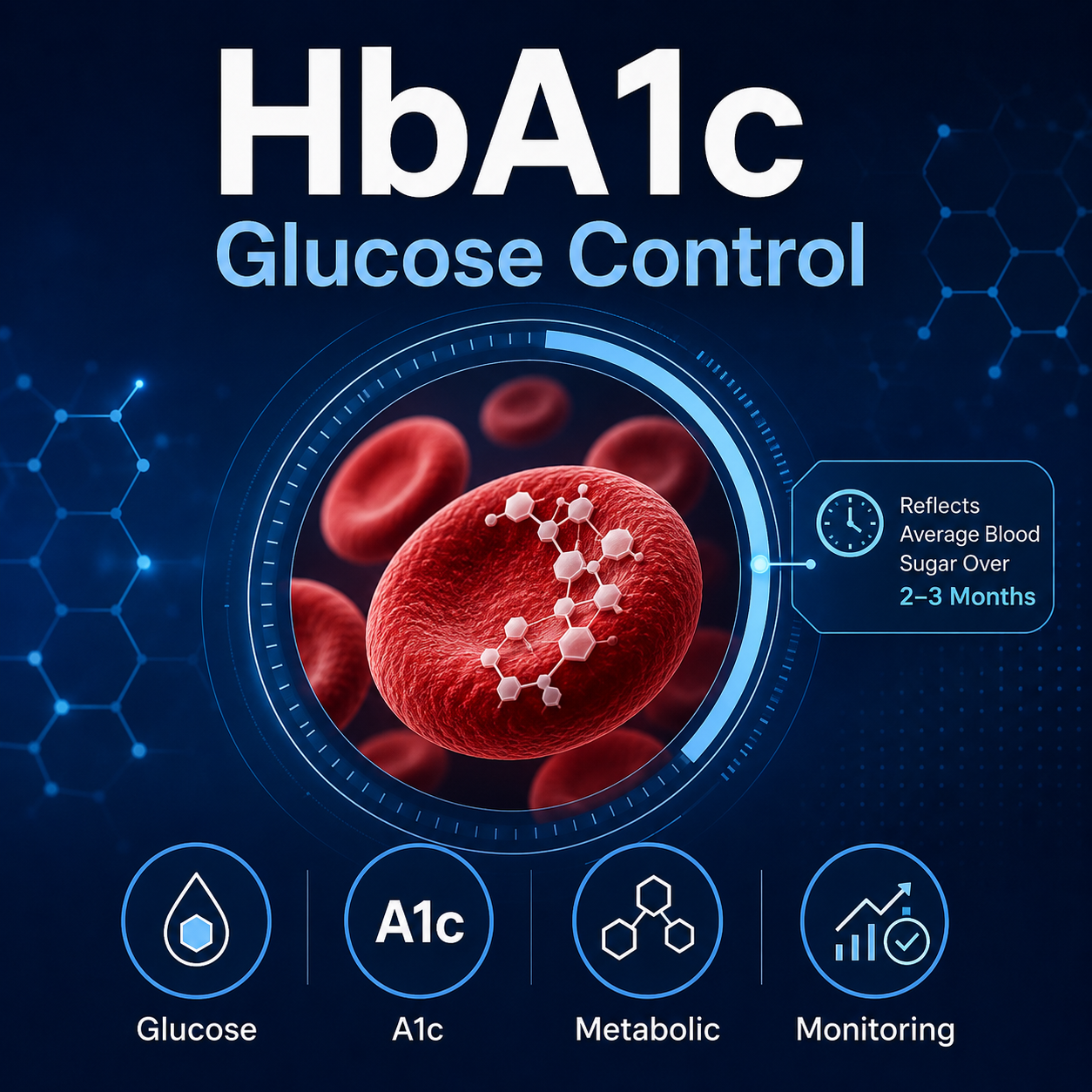
Measures Hemoglobin A1c (HbA1c), an indicator of average blood glucose over the previous 2–3 months. Useful for screening and monitoring prediabetes, diabetes and impaired glucose regulation.
Description
What Is an HbA1c Test?
Hemoglobin A1c, also called HbA1c or A1c, measures the percentage of hemoglobin in red blood cells that has glucose attached to it.
Because red blood cells circulate for several months, HbA1c provides a useful estimate of longer-term glucose regulation rather than relying on a single fasting glucose measurement.
Why Is HbA1c Important?
Blood glucose can fluctuate considerably from day to day. A single glucose measurement may therefore appear normal even when blood sugar is frequently elevated at other times.
HbA1c can help identify persistent glucose dysregulation and is commonly used to:
- Screen for prediabetes
- Screen for diabetes
- Monitor longer-term glucose control
- Track response to dietary or lifestyle changes
- Evaluate metabolic risk
Who May Benefit From HbA1c Testing?
Testing may be particularly useful when there is concern about:
- Elevated fasting glucose
- Prediabetes
- Diabetes
- Insulin resistance
- Weight gain or obesity
- Metabolic syndrome
- Family history of diabetes
- Increased thirst or urination
- Unexplained fatigue
- Monitoring dietary or lifestyle changes
HbA1c Versus a Fasting Glucose Test
Fasting Glucose
Measures the amount of glucose circulating in the blood at one particular point in time.
HbA1c
Reflects average glucose exposure over approximately the previous 2–3 months and can identify patterns that may not be apparent from a single glucose measurement.
Understanding HbA1c Results
HbA1c is typically reported as a percentage. Higher percentages generally reflect greater average blood glucose exposure.
Results should be interpreted together with medical history, fasting glucose and other metabolic findings. Certain conditions affecting red blood cell production or lifespan can also influence HbA1c interpretation.
When You May Want Broader Metabolic Testing
HbA1c answers an important question: Has blood sugar been running higher than expected over the past several months?
It does not, however, directly measure insulin resistance, cholesterol, triglycerides, inflammation or antioxidant status.
If you want a broader metabolic assessment, additional panels are available.
HbA1c + Lipid Panel
Adds cholesterol and triglycerides for a broader look at glucose regulation and cardiovascular-metabolic risk.
A1c, Lipids, Insulin, Glutathione & CRP
Adds insulin, lipid testing, hs-CRP and glutathione when insulin resistance, inflammation and oxidative stress are also concerns.
HbA1c, Metabolic Health and Epigenetics
Persistently abnormal glucose regulation can contribute to inflammation, oxidative stress and altered cellular signaling. These metabolic influences can interact with broader epigenetic mechanisms that regulate gene expression.
For people investigating more complex metabolic, cognitive or biochemical concerns, HbA1c can therefore be one useful piece of a larger epigenetic assessment.
How HbA1c Fits With the Walsh Approach
HbA1c is not one of the primary laboratory markers used to identify a Walsh biochemical biotype.
However, abnormal glucose regulation can contribute to inflammation, oxidative stress and metabolic dysfunction, making HbA1c useful background information when a broader biochemical evaluation is being performed.
HbA1c results should be interpreted in the context of medical history and other laboratory findings. Conditions affecting red blood cell lifespan, anemia, recent blood loss or transfusion and certain hemoglobin variants can alter HbA1c interpretation.