
How Kidney Detoxification May Improve Methylation
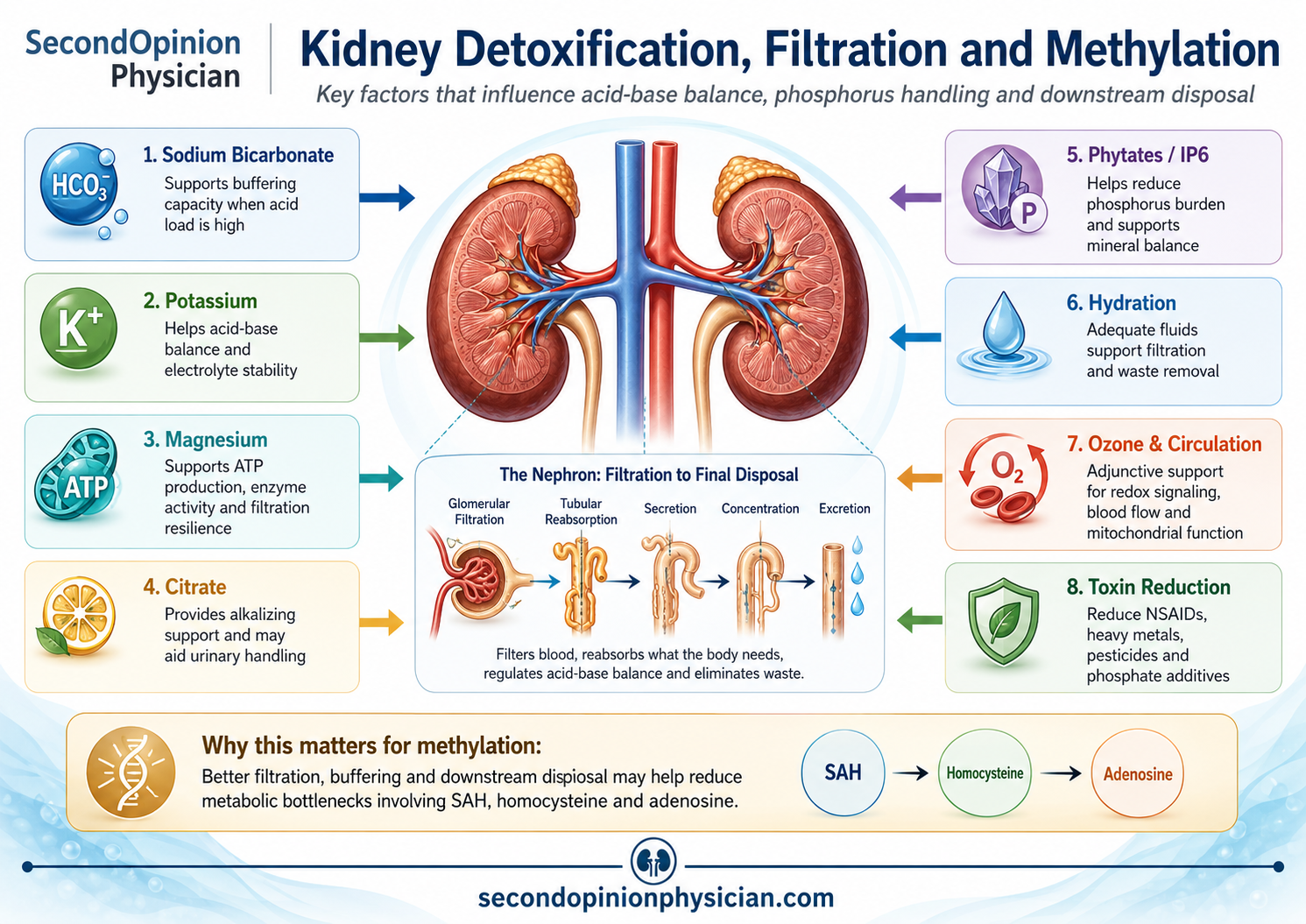
The kidneys do far more than filter blood. They regulate acid–base balance, electrolytes and the removal of metabolic waste that can interfere with methylation. When kidney filtration, buffering capacity or downstream disposal is impaired, SAH, homocysteine and adenosine may accumulate, slowing methylation and contributing to fatigue, inflammation and toxic burden.

Dr. Robin Rose and Dr. Robert Rowen discuss kidney regeneration
In this interview, Dr. Robin Rose discusses the kidney-centered approach described in Renology: Whole Body Regeneration Through the Lens of Kidney Health. She relates her experience after nephrectomy for renal cell carcinoma and describes the integrative program she used while monitoring her remaining kidney.
Kidney Disease and Renology with Dr. Robin Rose, hosted by Dr. Robert Rowen.
Why kidney detoxification matters for methylation
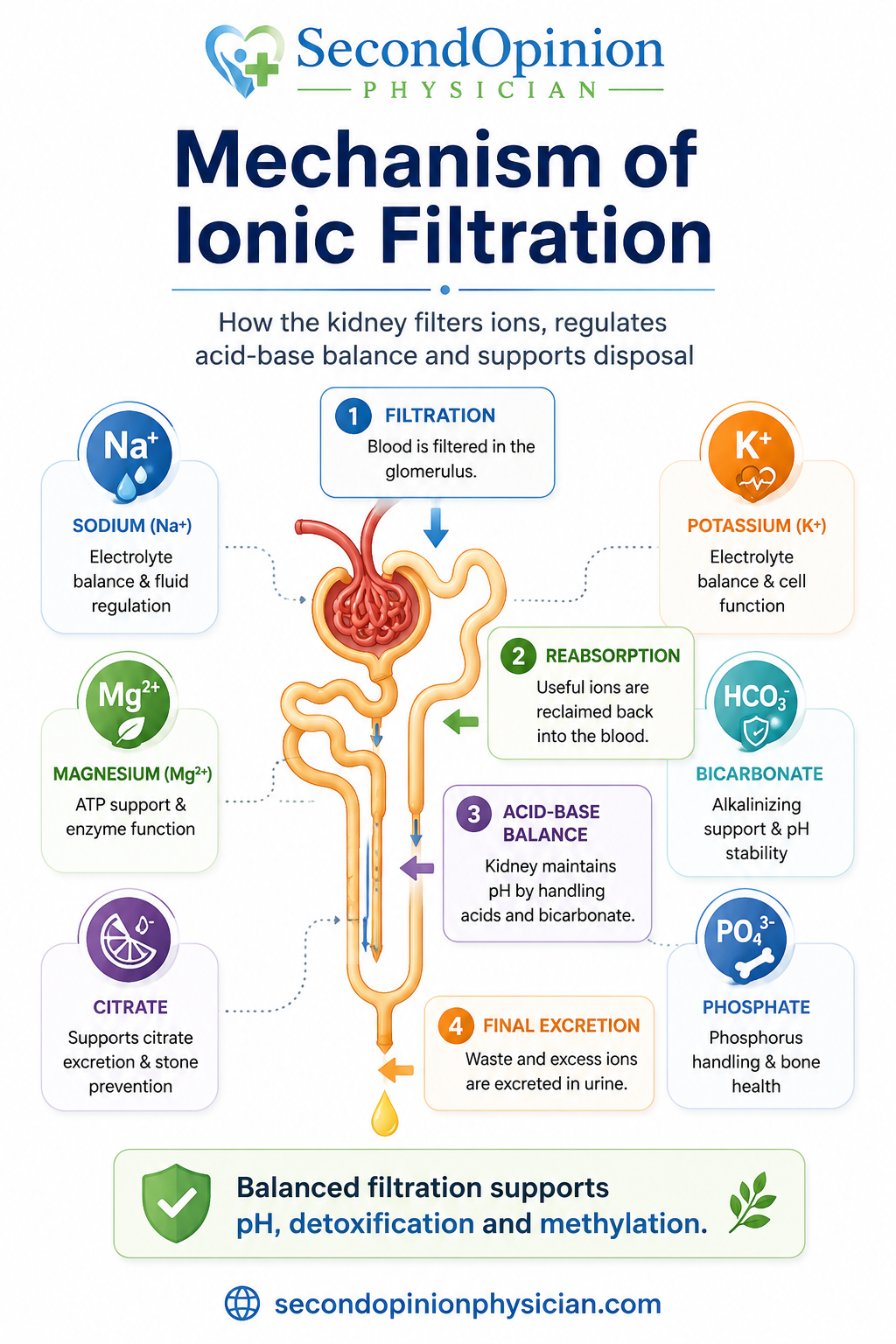
The kidneys help control the internal environment in which methylation takes place. They remove metabolic waste, regulate fluid and electrolytes, maintain bicarbonate and acid–base balance, and help clear compounds that can accumulate when detoxification pathways are under strain.
This becomes especially important when SAH is elevated. The SAH hydrolase reaction is reversible, so methylation can remain blocked when homocysteine and especially adenosine are not adequately metabolized or removed. Poor filtration, dehydration, low buffering capacity, impaired adenosine metabolism and reduced kidney reserve may all contribute to this bottleneck.
Kidney detoxification, acidic pH and adenosine disposal
The Acidic pH and Impaired Clearance Epigenetic Biotype of Undermethylation is not based on urine pH alone. It evaluates the broader physiologic conditions that affect SAH breakdown, adenosine disposal, kidney filtration and buffering capacity.
- Reduced glomerular filtration or kidney reserve
- Dehydration or inconsistent fluid intake
- Low bicarbonate or limited buffering capacity
- High dietary acid load with low vegetable intake
- Sleep apnea or impaired nighttime oxygenation
- Sedentary lifestyle and low aerobic conditioning
- Gut fermentation and dysbiosis
- Alcohol, diuretics, stimulants and selected medications
- Elevated SAH and low SAM:SAH ratio
- Elevated homocysteine
- Low serum carbon dioxide or bicarbonate
- Creatinine, cystatin C and estimated GFR
- Urinalysis and urine albumin
- Uric acid, electrolytes and phosphorus
- Adenosine and expanded methylation analytes when available
The clinical question is not simply “Is the patient acidic?”
The more useful question is whether filtration, hydration, buffering, enzyme efficiency and downstream disposal are adequate to keep SAH, homocysteine, adenosine and other metabolites moving through the pathway.
Kidney testing for elevated SAH and impaired methylation
Creatinine alone does not provide a complete picture of kidney function. Muscle mass, hydration, diet and creatine supplementation can all influence the result, so filtration, urine markers, acid–base balance and methylation findings should be interpreted together.
Filtration and kidney reserve
- Creatinine and estimated GFR
- Cystatin C
- Urine albumin-to-creatinine ratio
- Urinalysis
- BUN and hydration context
Acid–base and mineral balance
- Serum bicarbonate or carbon dioxide
- Sodium, potassium, chloride and magnesium
- Calcium and phosphorus
- Uric acid
- Dietary acid and alkali intake
Methylation and oxidative burden
- SAM, SAH and SAM:SAH ratio
- Methionine and homocysteine
- Adenosine when available
- 8-OHdG and lipid peroxides
- Glutathione and transsulfuration markers
Kidney detoxification strategies discussed by Dr. Robin Rose
Dr. Rose presents an integrative framework combining conventional monitoring with dietary, nutrient, peptide and regenerative strategies. Some are established components of kidney care; others remain experimental and require individualized supervision.
Filtration and hydration
Maintain appropriate fluid intake, monitor kidney markers and avoid repeated dehydration. Fluid recommendations must be individualized when edema, heart failure or advanced kidney disease is present.
Acid–base support
Increase vegetable-derived alkali and evaluate bicarbonate status. Sodium or potassium bicarbonate may be considered only when appropriate for blood pressure, potassium, medications and kidney function.
Toxin reduction
Reduce nephrotoxic exposures, unnecessary NSAIDs, smoking, heavy metals, pesticides, contaminated water and highly processed phosphate additives.
Mitochondrial support
Address sleep, oxygenation, movement, oxidative stress and nutrient cofactors. CoQ10, magnesium and antioxidant support may be useful when selected for the patient’s actual pattern.
Peptides and bioregulators for kidney support
Dr. Rose discusses peptides and bioregulators as potential tools for tissue signaling, repair and mitochondrial support. These therapies should be presented as investigational or clinician-directed rather than as proven methods for reversing chronic kidney disease.
Pielotax
Pielotax is discussed as a kidney-targeted peptide or bioregulator intended to support renal tissue signaling. Human evidence, product quality and regulatory status should be reviewed before use.
Carnosine
Carnosine has antioxidant, carbonyl-trapping, metal-binding and buffering properties. It may be relevant to oxidative and acid–base stress, but it should not be described as directly removing creatinine or reversing kidney failure without stronger evidence.
BPC-157
BPC-157 is discussed for vascular, endothelial and tissue-repair signaling. Kidney evidence remains limited, and it should not replace blood-pressure, diabetes, proteinuria or medication management.
Thymic and pineal peptides
Thymalin, thymosin-related compounds and Epitalon are sometimes used in regenerative medicine for immune, circadian and cellular-stress support. Their use remains specialized.
Phosphorus, phytates and IP6 for kidney health
Excess phosphorus becomes increasingly important as filtration declines. Processed foods containing phosphate additives are often more problematic than naturally occurring phosphorus in whole foods.
Reduce highly absorbable phosphate additives
- Cola and dark sodas
- Processed meats
- Commercial baked goods
- Processed cheese products
- Ingredients containing “phos”
IP6 and food-based phytates
IP6 and dietary phytates can bind phosphorus and other minerals in the intestine. They may also reduce zinc, iron and calcium absorption, so routine high-dose use requires timing and monitoring.
Food sources include legumes, seeds, bran and whole grains. Fiber may also improve bowel elimination of selected uremic metabolites.
Phosphorus treatment should be based on actual kidney status
Serum phosphorus, kidney function, diet, parathyroid hormone, vitamin D and overall mineral status should guide restriction or binding strategies.
Bicarbonate, magnesium and potassium for acid–base balance
Correcting metabolic acidosis is an established consideration when serum bicarbonate is low. Dietary alkali and bicarbonate therapy may improve bicarbonate status and may slow progression in selected patients, but treatment must account for sodium load, potassium, edema, blood pressure and medications.
| Support | Potential role | Important cautions |
|---|---|---|
| Sodium bicarbonate | Raises bicarbonate and buffering capacity when metabolic acidosis is present. | May worsen sodium load, edema or blood pressure. |
| Potassium bicarbonate or citrate | Provides alkali without sodium and may support urinary citrate. | Can cause dangerous hyperkalemia in kidney disease or with ACE inhibitors, ARBs and potassium-sparing diuretics. |
| Magnesium citrate | Supports ATP production, magnesium-dependent enzymes and bowel elimination. | Magnesium may accumulate as kidney function declines. |
| Vegetable-derived alkali | Provides potassium, magnesium, citrate and bicarbonate precursors. | Potassium and phosphorus may need adjustment in advanced CKD. |
Ozone therapy and kidney support: Dr. Rowen’s perspective
Dr. Robert Rowen discusses medical ozone as a potential adjunct for circulation, oxygen utilization, redox signaling and mitochondrial function. These mechanisms make ozone relevant when vascular and mitochondrial stress are present.
Ozone is not established as a standard treatment for chronic kidney disease, and human kidney evidence remains limited. It should be presented as a clinician-directed adjunct—not as a replacement for nephrology care, blood-pressure control, diabetes treatment, proteinuria management or removal of nephrotoxic exposures.
Circulation and nitric oxide
Ozone-related redox signaling may influence endothelial and nitric-oxide pathways that affect renal blood flow.
Mitochondrial adaptation
Controlled oxidative signaling is proposed to increase antioxidant response and improve cellular oxygen utilization.
Delivery methods
Approaches include autohemotherapy, extracorporeal blood oxygenation and ozonation, and rectal insufflation. Ozonated glycerin remains experimental.
Ozone must never be inhaled or injected as free gas
Medical ozone requires specialized equipment, correct concentrations and trained clinical supervision.
Diet and lifestyle strategies that support kidney clearance
Reduce avoidable kidney burden
- Avoid unnecessary NSAIDs and review nephrotoxic medications
- Reduce processed-food phosphate additives
- Test private well water when appropriate
- Reduce smoking, solvents, pesticides and heavy metals
- Limit alcohol and sugar-heavy diets
- Address diabetes, hypertension and sleep apnea
Improve filtration and metabolic disposal
- Maintain individualized hydration
- Use regular walking and aerobic movement when tolerated
- Increase vegetables and dietary alkali when potassium permits
- Maintain bowel regularity and address gut dysbiosis
- Preserve lean muscle without excessive protein loading
- Monitor creatinine, cystatin C, urine albumin and bicarbonate
A practical kidney–methylation evaluation
| Finding | Possible interpretation | Potential next step |
|---|---|---|
| Low SAM with adequate methionine | ATP or cofactor limitation may be impairing SAM production. | Review mitochondrial symptoms, magnesium, oxidative stress, organic acids, copper and CoQ10. |
| Elevated SAH with normal or high homocysteine | Downstream product accumulation may be inhibiting SAH breakdown. | Review adenosine disposal, hydration, pH, kidney filtration and zinc-dependent adenosine metabolism. |
| Low bicarbonate | Reduced buffering or metabolic acidosis may be present. | Confirm clinically and consider supervised dietary or bicarbonate support. |
| Reduced eGFR or elevated urine albumin | Kidney disease or reduced reserve requires medical evaluation. | Coordinate nephrology or primary-care management before aggressive detoxification or regenerative therapies. |
| Oxidative stress with mitochondrial symptoms | Kidney and systemic energy pathways may be under redox stress. | Evaluate 8-OHdG, lipid peroxides, organic acids, toxic exposure and antioxidant reserve. |
Improve methylation by supporting the pathway that is blocked
Kidney support is not a generic cleanse. The goal is to identify whether filtration, hydration, buffering, adenosine disposal, mitochondrial energy, toxic burden or another measurable bottleneck is contributing to elevated SAH and impaired methylation.
Educational information only. Chronic kidney disease, reduced eGFR, proteinuria, electrolyte abnormalities, edema and metabolic acidosis require medical evaluation. Do not begin bicarbonate, potassium, magnesium, chelation, peptides, diuretics or ozone therapy without appropriate supervision.
Frequently asked questions
Can impaired kidney function increase SAH?
Kidney dysfunction is associated with retention of many metabolites, including homocysteine and SAH. In the Second Opinion Physician model, impaired disposal of homocysteine, adenosine and related products may help maintain SAH accumulation.
Does kidney detoxification mean using a cleanse?
No. It means reducing avoidable toxic burden while improving measurable filtration, hydration, acid–base balance, bowel elimination, metabolic disposal and protection from oxidative injury.
Can sodium bicarbonate improve methylation?
Bicarbonate may improve buffering when metabolic acidosis or low bicarbonate is present. It may indirectly support methylation in selected patients but must be guided by blood pressure, electrolytes, kidney function and medications.
Is ozone therapy proven to regenerate kidneys?
No. Ozone has proposed vascular, mitochondrial and redox effects, but it remains an adjunctive and investigational therapy rather than a proven method for reversing chronic kidney disease.
Which methylation test is most useful when elevated SAH is suspected?
An expanded plasma methylation panel including SAM, SAH, methionine, homocysteine and related analytes provides more information than MTHFR testing alone. Kidney markers, bicarbonate and oxidative stress should be interpreted alongside it.
How to Detoxify the Kidneys to Improve Methylation: Insights from Dr. Robin Rose
The kidneys play a central role in detoxification, acid-base balance, and metabolic regulation, yet most people unknowingly suffer from toxic overload and impaired kidney function long before serious disease is diagnosed. As kidney function declines, the body’s ability to remove uremic waste, heavy metals, phosphorus, and acid-forming compounds is compromised, leading to inflammation, metabolic acidosis, and methylation dysfunction—including elevated SAH, homocysteine, adenosine, and uric acid.
In this discussion, kidney regeneration expert Dr. Robin Rose shares her groundbreaking integrative approach to reversing kidney dysfunction, restoring filtration capacity, and improving methylation through a combination of peptides, phytates, and pH-balancing strategies. Dr. Rose is a medical doctor (MD), family nurse practitioner (FNP), and former registered nurse (RN) with decades of experience in functional and regenerative medicine. After losing a kidney to renal cell carcinoma, her GFR dropped to stage 3 chronic kidney disease (CKD). Determined to restore her kidney health naturally, she implemented a targeted detoxification and regeneration plan, ultimately doubling her kidney function from a GFR of 30 to 68.
Her book, Renology: Whole Body Regeneration Through the Lens of Kidney Health, provides a roadmap for reversing CKD, enhancing detoxification, and preventing kidney-related aging and metabolic decline.
Key Detox Strategies Discussed in This Video:
- Peptide Therapy & Bioregulators – Regenerating kidney tissue with Pielotax (kidney-specific peptide) and Carnosine to remove uremic toxins and improve mitochondrial function.
- Carnosine for Acid-Base Balance & Methylation – Neutralizing excess acid load, buffering metabolic acidosis, and supporting methylation pathways by lowering homocysteine and SAH.
- Phytates (IP6) for Phosphorus Control – Binding and reducing phosphorus overload to prevent vascular calcification and metabolic bone disease while supporting kidney filtration.
- pH Balance & Toxin Avoidance – Using alkalizing strategies (bicarbonate, diet, hydration) to prevent metabolic acidosis and avoiding nephrotoxic compounds (heavy metals, glyphosate, processed foods).
Dr. Rose’s integrative approach to kidney detoxification challenges conventional nephrology, proving that kidney function can be restored, toxic burden reduced, and methylation pathways optimized—helping patients avoid the downward spiral toward dialysis and systemic disease.
Kidney Detoxification and Health Optimization to Improve Methylation
Improving kidney function requires a multi-faceted approach that supports toxin removal, acid-base balance, phosphorus control, and methylation efficiency. This protocol includes dietary strategies, targeted supplements, peptide therapy, ozone therapy, and detoxification techniques to optimize kidney health and prevent the progression of chronic kidney disease (CKD).
Key Peptides & Bioregulators for Kidney Regeneration
Peptides and bioregulators are small protein fragments that restore cellular function, enhance detoxification, and reduce kidney fibrosis. They work at a genetic and epigenetic level to repair tissue damage, reduce inflammation, and improve mitochondrial function.
Pielotax – Kidney-Specific Peptide
- Targets kidney tubules and glomeruli to enhance filtration and reduce fibrosis.
- Clinically studied for lowering creatinine levels and improving kidney function.
- May reverse early-stage uremia by enhancing nitrogenous waste clearance.
Carnosine – Acid-Base Buffer & Uremic Detoxifier
- Neutralizes excess acidity, preventing metabolic acidosis.
- Chelates heavy metals (lead, mercury, cadmium) to reduce toxin burden.
- Binds uremic toxins like creatinine, urea, and uric acid, lowering kidney stress.
- Improves methylation efficiency by reducing SAH (S-adenosylhomocysteine) and homocysteine.
BPC-157 – Vascular Repair & Nitric Oxide Enhancer
- Promotes blood flow to the kidneys, reducing oxidative stress.
- Enhances nitric oxide production, which supports endothelial and kidney function.
- Protects against NSAID-induced kidney damage.
Thymus Peptides (Thymalin, Thymosin Beta-4) – Immune Modulation
- Reduces autoimmune-related kidney damage (useful in lupus nephritis, glomerulonephritis).
- Supports immune balance and reduces chronic inflammation.
Pineal Peptides (Epitalon, Endoluten) – Circadian & Mitochondrial Support
- Restores melatonin levels, which protects against kidney fibrosis.
- Improves mitochondrial function and detoxification.
Phytates & Phosphorus Management
Excess phosphorus is a hidden contributor to kidney dysfunction, leading to vascular calcification and mineral imbalances. Phytates (phytic acid) act as natural phosphorus binders, reducing its absorption and protecting kidney function.
Best Phytate Sources
IP6 (Inositol Hexaphosphate) – Most concentrated phytate supplement, binds phosphorus, reduces vascular calcification, and provides antioxidant benefits.
- Dosage: 500–2,000 mg daily on an empty stomach.
Rice Bran Extract – Natural source of phytates with B vitamins and kidney-protective compounds.
Whole-Food Sources – Flaxseed, chia seeds, sprouted legumes, wheatgrass all contain phytates that moderate phosphorus absorption.
Fiber-Based Phytate Sources – Acacia fiber, psyllium husk help bind phosphorus and improve gut health.
Supplements for Kidney Detoxification & Methylation Support
These supplements enhance toxin removal, optimize acid-base balance, and support kidney filtration.
Acid-Base Balance & Detox Support
- Sodium bicarbonate – Reduces metabolic acidosis by neutralizing excess acid.
- Magnesium citrate - plays a dual role in kidney health by supporting detoxification, maintaining acid-base balance, and fueling ATP production in mitochondria
- Potassium bicarbonate - Potassium bicarbonate plays a crucial role in alkalizing the body, supporting kidney detox, and maintaining electrolyte balance. It works alongside sodium bicarbonate and magnesium citrate for optimal kidney function
Heavy Metal Chelation & Uremic Toxin Removal
- Carnosine – Chelates lead, mercury, and cadmium, binds and neutralizes creatinine, urea, and uric acid.
- Glutathione/NAC (N-Acetylcysteine) – Supports liver and kidney detoxification and protects against oxidative stress.
Mitochondrial & Nitric Oxide Support
- CoQ10 – Supports mitochondrial function and kidney energy production.
- Resveratrol & Quercetin – Reduce kidney inflammation and fibrosis.
- BPC-157 – Enhances nitric oxide to improve kidney circulation.
Vitamins & Antioxidants for Kidney Repair
- Vitamin D – Improves immune function and mineral balance.
- Vitamin C – Antioxidant that reduces oxidative stress in kidney tissue.
- Vitamin E + CoQ10 – Enhances cardiovascular and kidney protection.
Dietary & Lifestyle Strategies for Kidney Health
Dietary Adjustments
- Organic, plant-based diet to reduce glyphosate and environmental toxin exposure.
- Reduce animal protein and favor plant-based proteins (tofu, legumes).
- Avoid high-phosphorus processed foods (soda, dairy, commercial baked goods).
Hydration Optimization
- Proper water intake prevents dehydration and supports filtration.
- Herbal diuretics (like Chanca Piedra) can assist in kidney detoxification.
Exercise & Stress Management
- Regular movement maintains kidney function.
- Meditation & stress reduction techniques support kidney-adrenal balance.
Ozone Therapy for Kidney Support (Dr. Rowan's Insights)
Dr. Robert Rowan highlights ozone therapy as a powerful tool for detoxification and kidney regeneration.
Key Benefits of Ozone for Kidney Health
- Stimulates nitric oxide production – Enhances blood circulation to kidneys.
- Reduces inflammation & oxidative stress – Protects against fibrosis and scarring.
- Improves mitochondrial energy production – Restores kidney function at the cellular level.
Ozonated Glycerin: A Novel Delivery Method
Dr. Rowan discusses ozonated glycerin as a more stable and effective method for systemic ozone therapy.
- How It’s Made: Ozone gas is bubbled through glycerin to create an oxygenated compound.
- Routes of Administration:
- Intravenous (IV) administration (likely primary use).
- Rectal Insufflation – May offer similar systemic benefits.
Conclusion
This comprehensive kidney detoxification protocol combines:
- Peptides & bioregulators (Pielotax, Carnosine, BPC-157) to enhance kidney repair.
- Phytates & phosphorus binders (IP6, rice bran) to prevent vascular calcification.
- Supplements for acid-base balance & detoxification (bicarbonate, NAC, CoQ10, glutathione).
- Diet & lifestyle strategies to reduce toxic burden.
- Ozone therapy for mitochondrial and vascular support.
By implementing these evidence-based strategies, patients can restore kidney function, optimize detoxification, and improve methylation efficiency, reducing the risk of CKD progression and enhancing overall metabolic health.