
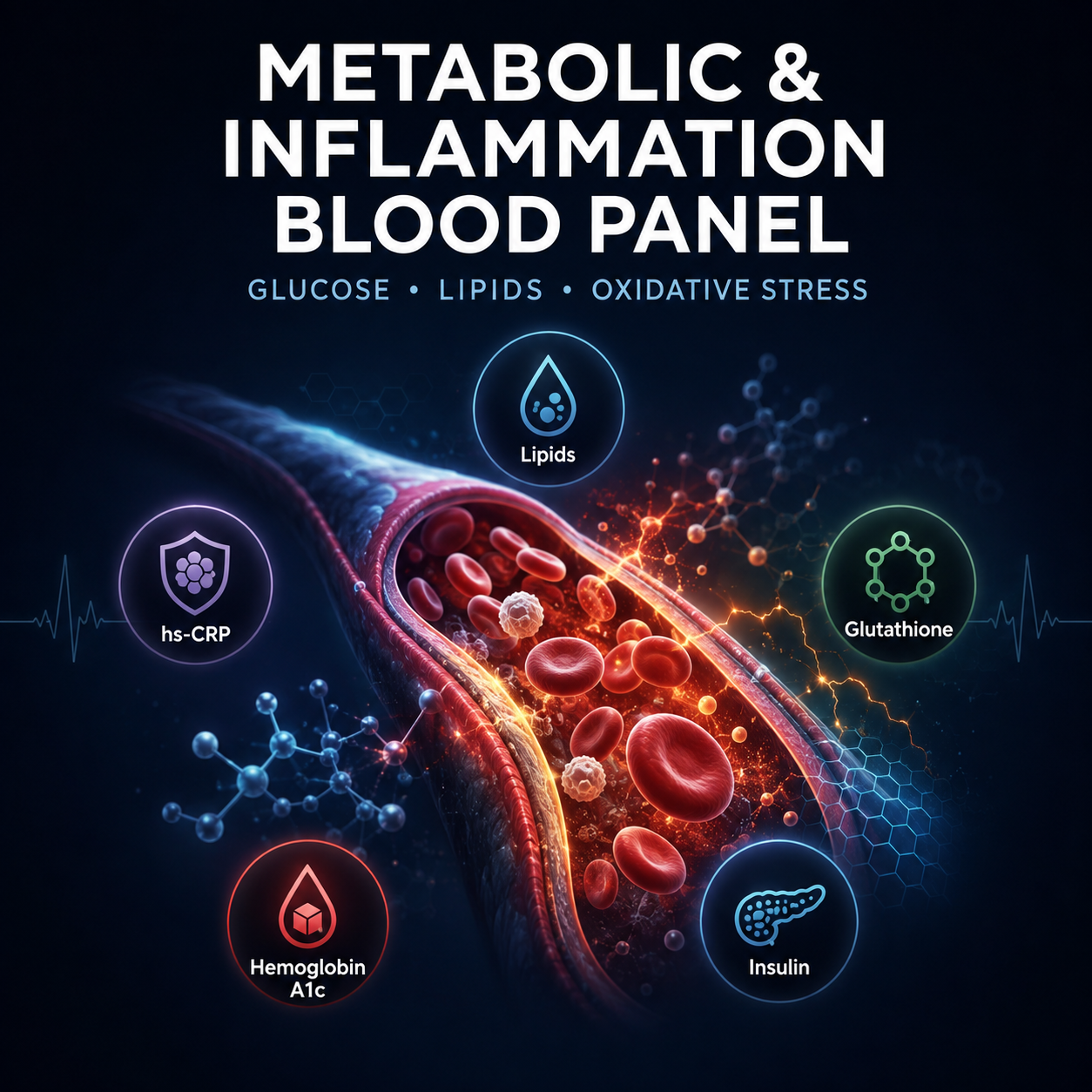
Insulin, A1c, Lipids, CRP & Glutathione


$239.00
A focused blood panel evaluating glucose regulation, insulin activity, lipids, systemic inflammation and glutathione antioxidant status. Useful for identifying metabolic and inflammatory stressors that can influence methylation, oxidative balance, epigenetic regulation and long-term cognitive and cardiovascular health.
Description
What Does the Metabolic, Inflammation & Epigenetic Panel Test?
This panel evaluates glucose control, insulin activity, cholesterol and triglycerides, systemic inflammation and glutathione antioxidant status—five interconnected areas that can influence methylation, oxidative balance, cellular signaling and epigenetic regulation.
It is particularly useful when there is concern about insulin resistance, prediabetes, metabolic syndrome, chronic inflammation, oxidative stress, abnormal lipids, cardiovascular risk or broader metabolic factors that may also affect mood, cognition and healthy aging.
Tests Included
| Test | Lab Code | CPT |
|---|---|---|
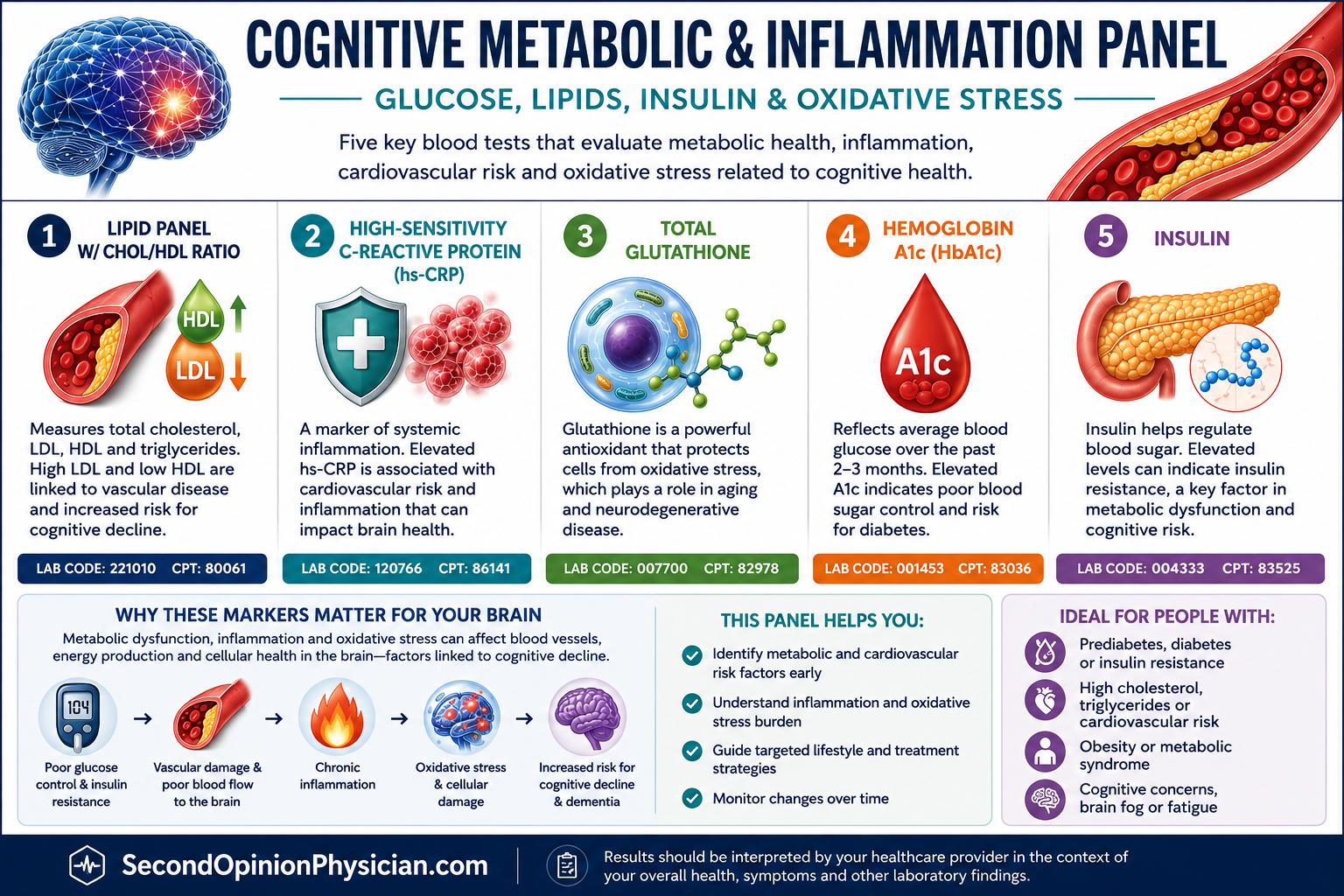
| Lipid Panel with Total Cholesterol/HDL Ratio | 221010 | 80061 |
| High-Sensitivity C-Reactive Protein — hs-CRP | 120766 | 86141 |
| Total Glutathione | 007700 | 82978 |
| Hemoglobin A1c | 001453 | 83036 |
| Insulin | 004333 | 83525 |
Why Metabolic Health Matters to Epigenetic Regulation
Epigenetics refers to biochemical processes that influence how genes are expressed without changing the underlying DNA sequence.
These regulatory systems are responsive to the body's metabolic environment. Insulin resistance, chronically elevated glucose, inflammation, oxidative stress and abnormal lipid metabolism can all change cellular signaling and create conditions that influence gene regulation.
This is why metabolic testing can be useful even when the primary concern is not diabetes or cardiovascular disease. Metabolic dysfunction can act as an upstream biological stressor affecting many downstream systems.
Hemoglobin A1c and Long-Term Glucose Exposure
Hemoglobin A1c
HbA1c reflects average blood glucose exposure over approximately the previous two to three months.
It helps identify impaired glucose regulation, prediabetes and diabetes and can reveal persistent glucose elevation that may not be obvious from a single fasting glucose measurement.
Why Chronic Glucose Matters
Persistently elevated glucose can increase glycation, oxidative stress and inflammatory signaling.
These metabolic effects can influence cellular signaling pathways and the biochemical environment in which epigenetic regulation and methylation occur.
Why Test Insulin and HbA1c Together?
HbA1c tells us what has happened to blood glucose over the preceding several months. Insulin helps answer a different question: how hard is the body working to maintain that glucose?
Normal glucose + higher insulin
The body may still be maintaining acceptable glucose by producing more insulin. This can be an earlier sign of impaired insulin sensitivity.
Higher glucose + higher HbA1c
This suggests that glucose regulation itself is becoming impaired and may indicate prediabetes or diabetes depending on the results.
Looking at insulin and HbA1c together can therefore reveal more about metabolic regulation than relying on a single glucose measurement.
Insulin Resistance, Inflammation and Epigenetic Stress
Insulin is not only a blood-sugar hormone. It is also an important metabolic signaling molecule.
When tissues become less responsive to insulin, the body often compensates by producing more of it. This state of hyperinsulinemia can exist before glucose or HbA1c becomes clearly abnormal.
Insulin resistance is frequently associated with:
- Abdominal obesity
- Elevated triglycerides
- Lower HDL
- Inflammatory signaling
- Oxidative stress
- Metabolic syndrome
- Fatty liver disease
These overlapping metabolic signals can influence transcription factors, inflammatory pathways and other mechanisms involved in gene regulation.
High-Sensitivity CRP: Measuring Inflammatory Burden
High-sensitivity C-reactive protein, or hs-CRP, measures low levels of C-reactive protein in the blood and is commonly used as part of cardiovascular and inflammatory risk assessment.
CRP is a nonspecific marker. An elevated result can occur with obesity, metabolic dysfunction, infection, autoimmune activity, vascular inflammation and many other inflammatory conditions.
From an epigenetic perspective, chronic inflammation matters because inflammatory signals can alter transcription-factor activity, cellular communication and gene expression.
Total Glutathione, Oxidative Stress and Cellular Resilience
Glutathione is one of the body's major intracellular antioxidants and plays a central role in controlling oxidative stress.
It helps neutralize reactive oxygen species, supports detoxification reactions and participates in recycling other antioxidant systems.
Oxidative stress occurs when production of reactive molecules exceeds the body's ability to neutralize and repair the resulting damage.
Glutathione
Total glutathione provides one measure related to intracellular antioxidant capacity and redox balance.
Reactive Oxygen Species
Excess oxidative stress can affect DNA, proteins, membranes, mitochondria and cellular signaling pathways involved in epigenetic regulation.
Glutathione, Methylation and Transsulfuration
Glutathione is also connected to methylation through the methionine and transsulfuration pathways.
After SAM donates a methyl group, it becomes SAH and then homocysteine. Homocysteine can either be recycled back toward methionine or enter transsulfuration toward cysteine and glutathione.
This means methylation and antioxidant defense are not completely separate systems.
High oxidative demand can increase the body's need for glutathione, while disturbances in methionine metabolism may affect the availability of sulfur-containing compounds used to support antioxidant capacity.
Lipids, Metabolic Signaling and Vascular Health
The Lipid Panel with Total Cholesterol/HDL Ratio measures total cholesterol, LDL, HDL, triglycerides and related lipid information used to evaluate cardiovascular and metabolic risk.
Lipids are not simply cardiovascular markers. Abnormal lipid patterns can also reflect insulin resistance, metabolic dysfunction and inflammatory stress.
Metabolic Signal
Elevated triglycerides frequently occur in insulin resistance and metabolic syndrome and may provide additional context when insulin or HbA1c is abnormal.
Cardiovascular Context
Cholesterol and lipoprotein patterns help evaluate the vascular environment that affects the heart, brain and other organs.
How Metabolic Stress Can Influence Methylation
Methylation depends upon an adequate supply of methyl donors, efficient SAM production and appropriate clearance of SAH.
Metabolic dysfunction does not produce one predictable methylation pattern, but several processes measured by this panel can influence the biochemical environment in which methylation occurs.
Inflammatory Signaling
Chronic inflammatory activity can affect liver metabolism, mitochondrial function and gene regulation.
Redox Pressure
Higher oxidative demand can increase glutathione utilization and place additional stress on sulfur and antioxidant pathways.
Metabolic Dysfunction
Hyperinsulinemia and abnormal glucose metabolism can alter cellular signaling and contribute to chronic inflammatory and oxidative stress.
One-Carbon Metabolism
The liver is a major site of methionine metabolism and SAM production, making metabolic and liver health relevant to overall methylation capacity.
For a more direct evaluation of methylation, SAM, SAH, methionine and homocysteine can be measured separately.
How This Fits an Epigenetic Evaluation
Epigenetic regulation is influenced by more than inherited genetics alone.
Environmental exposure, nutrient availability, inflammation, oxidative stress, metabolic dysfunction and hormonal signals can all affect gene expression.
This panel concentrates specifically on several measurable upstream influences:
- Glucose regulation
- Insulin resistance
- Lipid and metabolic health
- Systemic inflammatory burden
- Glutathione and antioxidant capacity
These findings can then be considered alongside SAM, SAH, methionine, homocysteine, nutrient status, toxic exposure and other methylation markers when a broader epigenetic assessment is needed.
Where Cognitive Health Fits In
The same metabolic, vascular, inflammatory and oxidative factors evaluated in this panel can also affect the brain.
Insulin resistance, diabetes, vascular disease, chronic inflammation and oxidative stress have all been studied as potentially modifiable contributors to cognitive decline.
For that reason, this panel can also provide useful background information when memory or cognitive concerns are present—without making cognition the only reason to order it.
Evaluate Metabolism, Inflammation and Oxidative Stress Together
By measuring insulin, HbA1c, lipids, hs-CRP and glutathione together, this panel provides a focused view of metabolic regulation, inflammatory burden and antioxidant capacity.
These are important upstream factors that can influence methylation, epigenetic signaling, cardiovascular health, cellular resilience and cognition.
Metabolic, Inflammation & Epigenetic Panel FAQs
What tests are included in this panel?
The panel includes a lipid panel with total cholesterol/HDL ratio, high-sensitivity CRP, total glutathione, hemoglobin A1c and insulin.
Why test insulin and HbA1c together?
HbA1c reflects average glucose exposure over approximately two to three months, while insulin helps show how much insulin the body is producing to maintain that glucose. Insulin can become elevated before HbA1c becomes clearly abnormal.
How is this panel related to epigenetics?
Insulin resistance, inflammation, oxidative stress and metabolic dysfunction can alter cellular signaling and gene regulation. This panel evaluates several measurable upstream factors that can influence the epigenetic environment.
Does this panel directly measure methylation?
No. It evaluates metabolic, inflammatory and antioxidant factors that may influence methylation. Direct methylation testing generally includes markers such as SAM, SAH, methionine and homocysteine.
What does glutathione testing show?
Glutathione is one of the body's major intracellular antioxidants. Total glutathione provides information related to antioxidant capacity and redox balance but should be interpreted together with other clinical findings.
What does hs-CRP measure?
High-sensitivity CRP measures low levels of systemic inflammatory activity. It is nonspecific and can become elevated with cardiovascular risk, obesity, infection, autoimmune activity and other inflammatory conditions.
Can this panel help evaluate insulin resistance?
Yes. Measuring insulin together with HbA1c and lipid patterns can provide useful information about glucose regulation and possible insulin resistance.
Is this panel useful for cognitive concerns?
It can be. Metabolic dysfunction, insulin resistance, vascular disease, inflammation and oxidative stress can also affect cognitive health. However, this panel is designed more broadly to evaluate metabolic, inflammatory and epigenetic factors rather than serving only as a cognitive-health panel.