

Neuroendocrine

$465.00
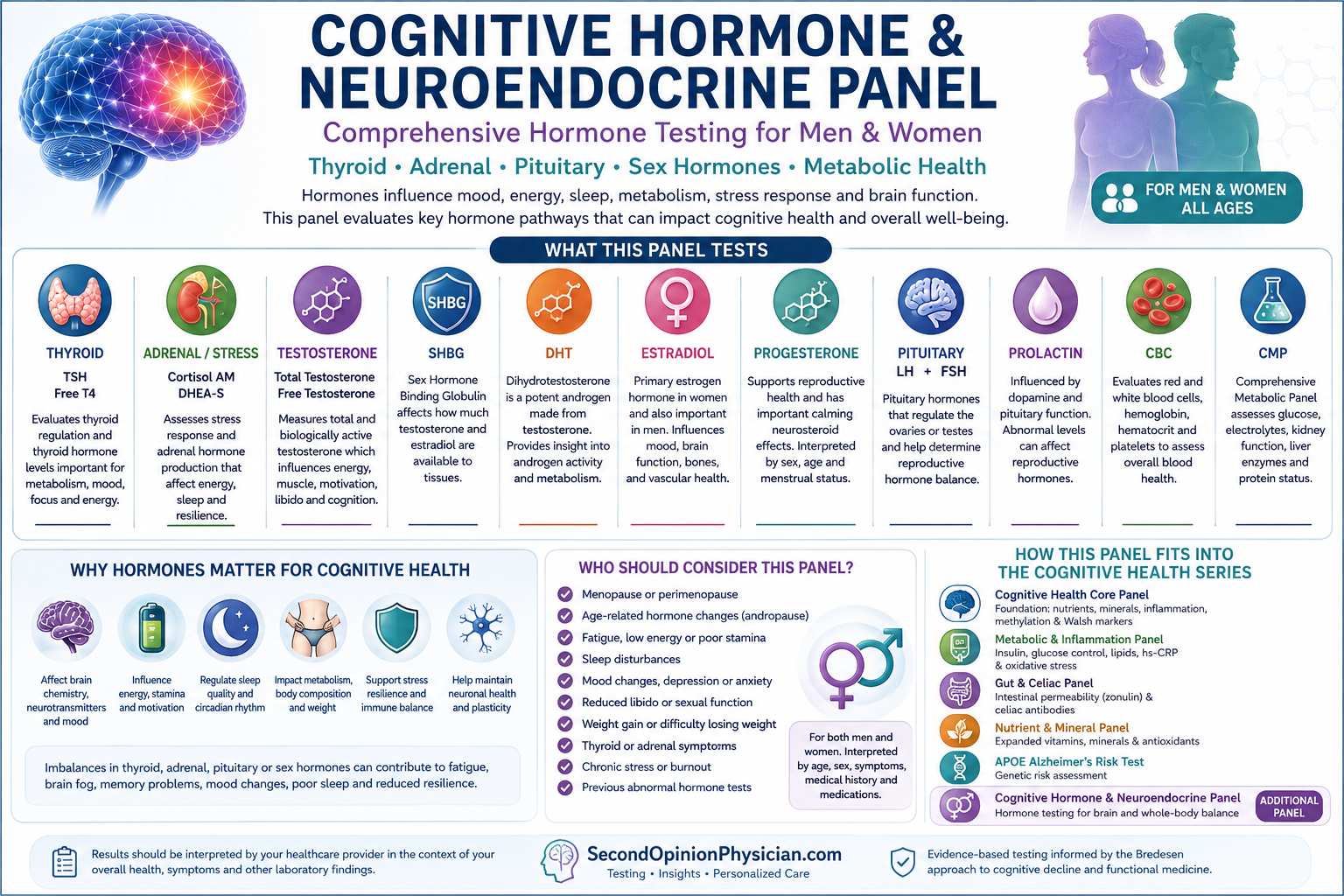
The Cognitive Hormone & Neuroendocrine Panel is a comprehensive hormone blood test for both men and women. It evaluates thyroid, adrenal, pituitary and sex-hormone pathways—including TSH, free T4, cortisol, DHEA-S, testosterone, SHBG, DHT, estradiol, progesterone, LH, FSH and prolactin—to help identify hormonal factors that may contribute to changes in cognition, mood, sleep, energy and metabolism.
Description
What Does the Cognitive Hormone & Neuroendocrine Panel Test?
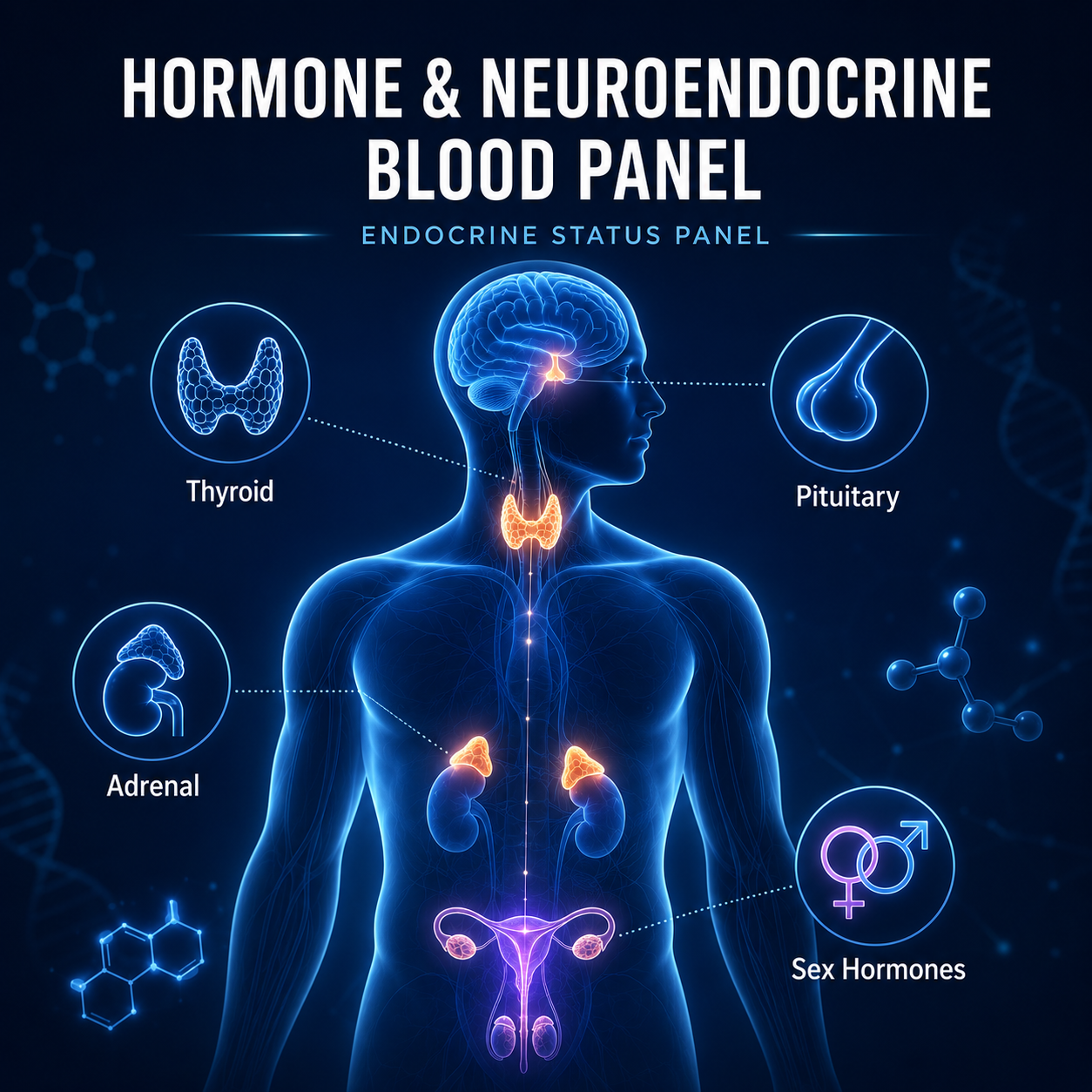
This comprehensive hormone panel evaluates thyroid function, adrenal and stress hormones, pituitary signaling and sex-hormone balance in both men and women.
It is designed for patients whose cognitive symptoms may be accompanied by fatigue, sleep disruption, mood changes, reduced motivation, menopausal or age-related hormonal changes, altered libido, unexplained weight change or signs of thyroid or adrenal dysfunction.
Hormones Included in This Panel
TSH + Free T4
Provides a basic assessment of thyroid regulation and circulating thyroid hormone. Thyroid dysfunction can affect energy, mood, concentration, memory, temperature regulation and metabolic function.
Morning Cortisol
Cortisol helps regulate the stress response, glucose metabolism, blood pressure and circadian physiology. Persistent abnormalities in stress-hormone regulation may accompany sleep disturbance, mood symptoms and cognitive complaints.
DHEA-S
DHEA-S is an adrenal androgen that changes with age and contributes to the broader balance between anabolic and stress-related hormonal signaling.
Total Testosterone + Free Testosterone
Testing total and free testosterone helps evaluate androgen production and biologically available hormone. Testosterone can influence energy, muscle maintenance, motivation, sexual function and cognition in both men and women.
SHBG
Sex hormone-binding globulin affects how much testosterone and estradiol remain biologically available to tissues. It provides important context when interpreting total hormone values.
DHT
Dihydrotestosterone is a potent androgen produced from testosterone. Measuring DHT provides additional information about androgen conversion and activity in both sexes.
Estradiol
Estradiol influences reproductive physiology, bone, vascular function, mood and neurological signaling. Levels change substantially with menopause and can also be clinically important in men.
Progesterone
Progesterone contributes to reproductive physiology and neurosteroid signaling. Interpretation depends strongly on sex, age, menstrual status and hormone therapy.
LH + FSH
Luteinizing hormone and follicle-stimulating hormone help determine how the pituitary is signaling the ovaries or testes and are particularly useful when interpreting menopause, gonadal dysfunction or abnormal sex-hormone levels.
Prolactin
Prolactin is controlled in part by hypothalamic dopamine signaling. Abnormal concentrations may affect reproductive hormones and can provide an important clue when evaluating pituitary or medication-related hormone disturbances.
Complete Blood Count — CBC
Evaluates red and white blood cells, hemoglobin, hematocrit and platelets. Anemia and other systemic abnormalities can contribute to fatigue or cognitive symptoms.
Comprehensive Metabolic Panel
Assesses glucose, electrolytes, protein status, kidney function and liver markers that provide important context for hormone metabolism and overall health.
Why Include Hormone Testing in a Cognitive Health Assessment?
Cognitive function depends upon more than neurons alone. The brain continuously responds to endocrine signals governing metabolism, stress, sleep, reproduction, energy use and tissue maintenance.
This is why the Bredesen framework includes hormone and trophic-factor status among the categories considered when investigating potentially modifiable contributors to cognitive decline. Apollo Health specifically identifies hormone and nutrient optimization as part of its cognitive-risk laboratory framework.
The goal is not to assume that low or high hormone values cause dementia. Rather, hormone testing can identify potentially important endocrine abnormalities that may contribute to symptoms or reduce overall physiological resilience.
Thyroid Function and Cognitive Symptoms
Thyroid dysfunction is one of the most important endocrine abnormalities to consider when evaluating changes in memory, concentration, energy or mood.
Both overt and subclinical thyroid abnormalities can produce symptoms that overlap with cognitive decline, including mental slowing, fatigue, depressed mood and impaired concentration.
TSH and free T4 provide a practical first assessment. More extensive thyroid testing may be appropriate when symptoms, medication history or previous results suggest autoimmune thyroid disease or abnormal thyroid conversion.
Sex Hormones, Aging and Brain Health
Sex hormones change substantially with age. Women experience a major transition in estrogen and progesterone around menopause, while testosterone and other anabolic hormones tend to decline more gradually in men.
These changes can influence sleep, mood, body composition, vascular function, energy and subjective cognitive performance. Research continues to investigate how sex-hormone physiology relates to brain aging and dementia, but hormone therapy should not be viewed simply as a dementia-prevention treatment.
Women
Estradiol, progesterone, testosterone, SHBG, LH and FSH can help characterize menopausal status and broader sex-hormone balance when cognitive symptoms accompany hot flashes, sleep changes, mood changes or altered energy.
Men
Total and free testosterone, SHBG, DHT, estradiol, LH and FSH help distinguish low androgen production from altered binding, conversion or pituitary signaling.
Cortisol, Stress and Sleep
Cortisol follows a strong circadian rhythm and interacts with sleep, blood sugar, inflammation and the stress response.
A morning cortisol measurement provides a useful screening value but represents only one moment in the daily cortisol cycle. If symptoms strongly suggest abnormal circadian cortisol regulation, more extensive timed cortisol testing may provide additional information.
How This Panel Fits the Cognitive Health Testing Series
The Cognitive Hormone & Neuroendocrine Panel is an additional targeted panel rather than the starting point for every patient.
Consider adding it when the history suggests that thyroid, adrenal, pituitary or sex-hormone dysfunction may be contributing to cognitive symptoms.
Cognitive Health Core Panel
Best general starting point for metabolic, nutritional, mineral, vascular and Walsh-related biochemical markers.
Metabolic & Inflammation Panel
Adds deeper assessment of insulin, HbA1c, lipids, hs-CRP and glutathione.
Gut & Celiac Panel
Targets intestinal barrier, malabsorption and gluten-related immune concerns.
Nutrient & Mineral Panel
Provides a deeper look at nutritional and antioxidant status.
APOE Alzheimer’s Risk Test
Evaluates inherited APOE-associated susceptibility to Alzheimer’s disease.
Who Should Consider a Cognitive Hormone Panel?
This panel may be especially useful when cognitive or mood concerns occur alongside:
- Menopause or perimenopause
- Age-related androgen changes
- Fatigue or reduced stamina
- Sleep disruption
- Reduced libido
- Loss of muscle mass or strength
- Unexplained weight or metabolic changes
- Cold intolerance or other thyroid symptoms
- Chronic stress
- Abnormal previous thyroid or hormone testing
- Medication-related endocrine concerns
- Possible pituitary dysfunction
Look Beyond a Single Hormone Value
Hormones function as interconnected systems. Measuring testosterone without SHBG, estradiol without pituitary hormones, or thyroid function without considering adrenal and metabolic context can leave important questions unanswered.
The Cognitive Hormone & Neuroendocrine Panel brings thyroid, adrenal, pituitary and sex-hormone markers together in one broad assessment for both men and women.
Cognitive Hormone & Neuroendocrine Panel FAQs
Is this hormone panel for both men and women?
Yes. The panel includes thyroid, adrenal, pituitary and sex-hormone markers that can be clinically useful in either sex. Interpretation differs according to sex, age, menstrual or menopausal status and use of hormone therapy.
Why test hormones when evaluating cognitive decline?
Hormones influence metabolism, sleep, mood, vascular physiology, energy and neurological signaling. Endocrine abnormalities can produce symptoms that overlap with or contribute to cognitive complaints.
Does low testosterone cause dementia?
No single testosterone result establishes a cause of dementia. Testosterone is one part of a broader endocrine and metabolic picture and should be interpreted together with symptoms, SHBG, pituitary hormones and other clinical findings.
Does low estrogen cause Alzheimer’s disease?
No. Estrogen physiology changes substantially with menopause and has important effects throughout the body, including the brain, but dementia risk is multifactorial. Hormone therapy should not be prescribed solely for prevention of dementia.
Why are LH and FSH included?
LH and FSH help determine how the pituitary is signaling the ovaries or testes and can distinguish primary gonadal changes from altered pituitary signaling.
Why test prolactin?
Prolactin can affect reproductive hormone function and may become abnormal because of medications, endocrine disorders or pituitary conditions. It can therefore add useful context to a broad neuroendocrine assessment.
Is one morning cortisol level enough?
Morning cortisol is useful as a screening measurement but does not show the entire daily cortisol rhythm. More extensive timed testing may be appropriate when circadian or stress-response dysfunction is strongly suspected.
Does this panel diagnose Alzheimer’s disease?
No. This panel evaluates endocrine factors that may contribute to symptoms or overall cognitive resilience. Alzheimer’s disease requires appropriate neurological and clinical assessment.