
Medicine Blog: Walsh Biotypes, Epigenetic Drivers, Mood Disorders & Functional Testing
Second Opinion Physician articles explore the biochemical patterns that may contribute to mood, behavior, cognition, fatigue, inflammation, mitochondrial dysfunction, and other complex health problems. The emphasis is not simply on naming a diagnosis, but on identifying measurable pathways that may help explain why symptoms develop and why people with the same diagnosis can respond very differently to medications, nutrients, hormones, and environmental stressors.
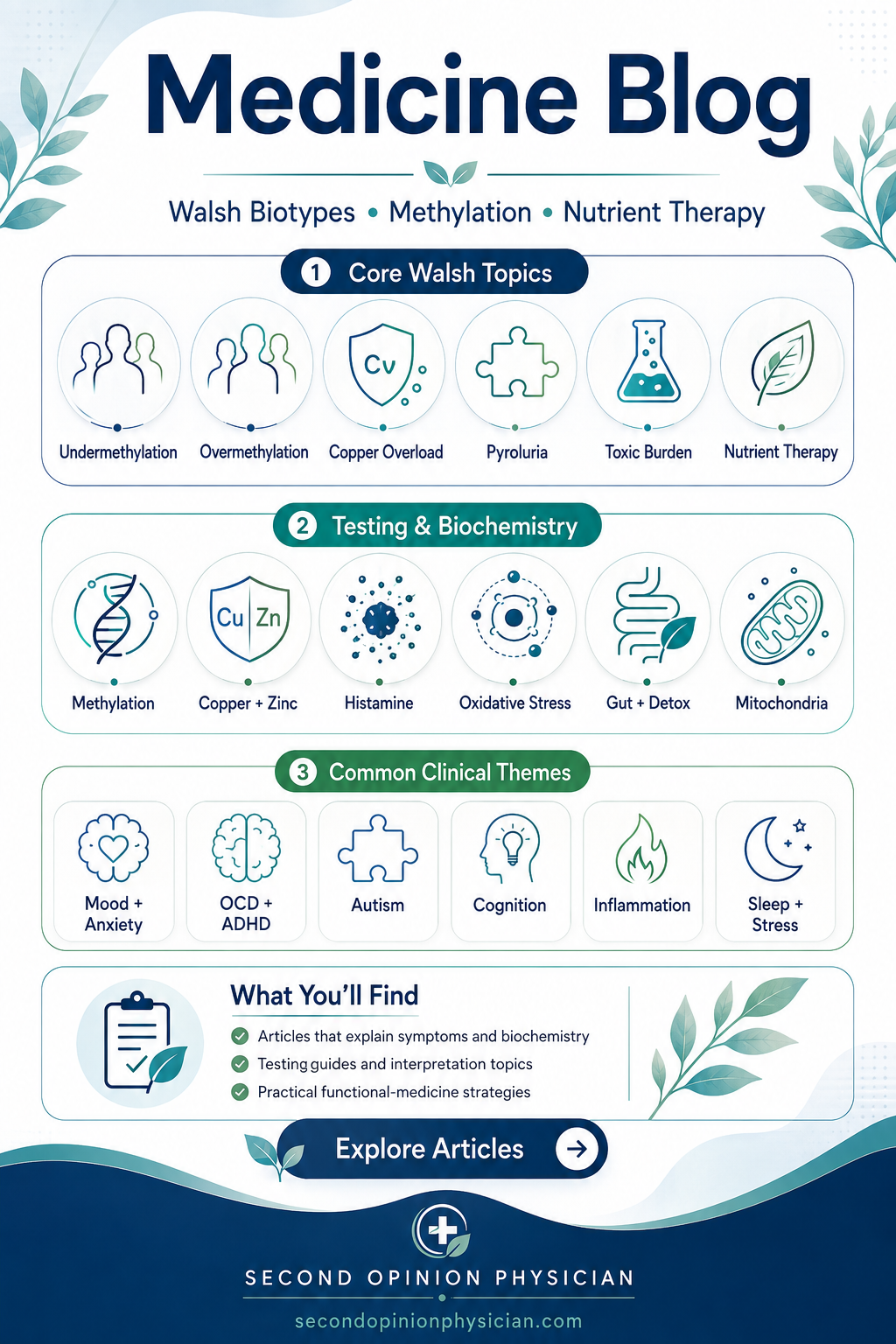
The blog is organized around the Walsh Biotypes, the Epigenetic Drivers of Undermethylation, biochemical imbalances associated with mood and neurodevelopmental disorders, condition-specific discussions, and relevant laboratory testing for methylation, mitochondria, copper and zinc, oxidative stress, minerals, gut function, kidney function, and broader metabolic health.
Biochemical individuality is the central theme of this blog. A diagnosis such as depression, anxiety, ADHD, autism or cognitive decline does not identify a single biochemical cause. The same symptoms can arise from very different combinations of methylation, copper and zinc, mitochondrial energy, oxidative stress, nutrient status, hormones, inflammation, gut function and environmental exposures.
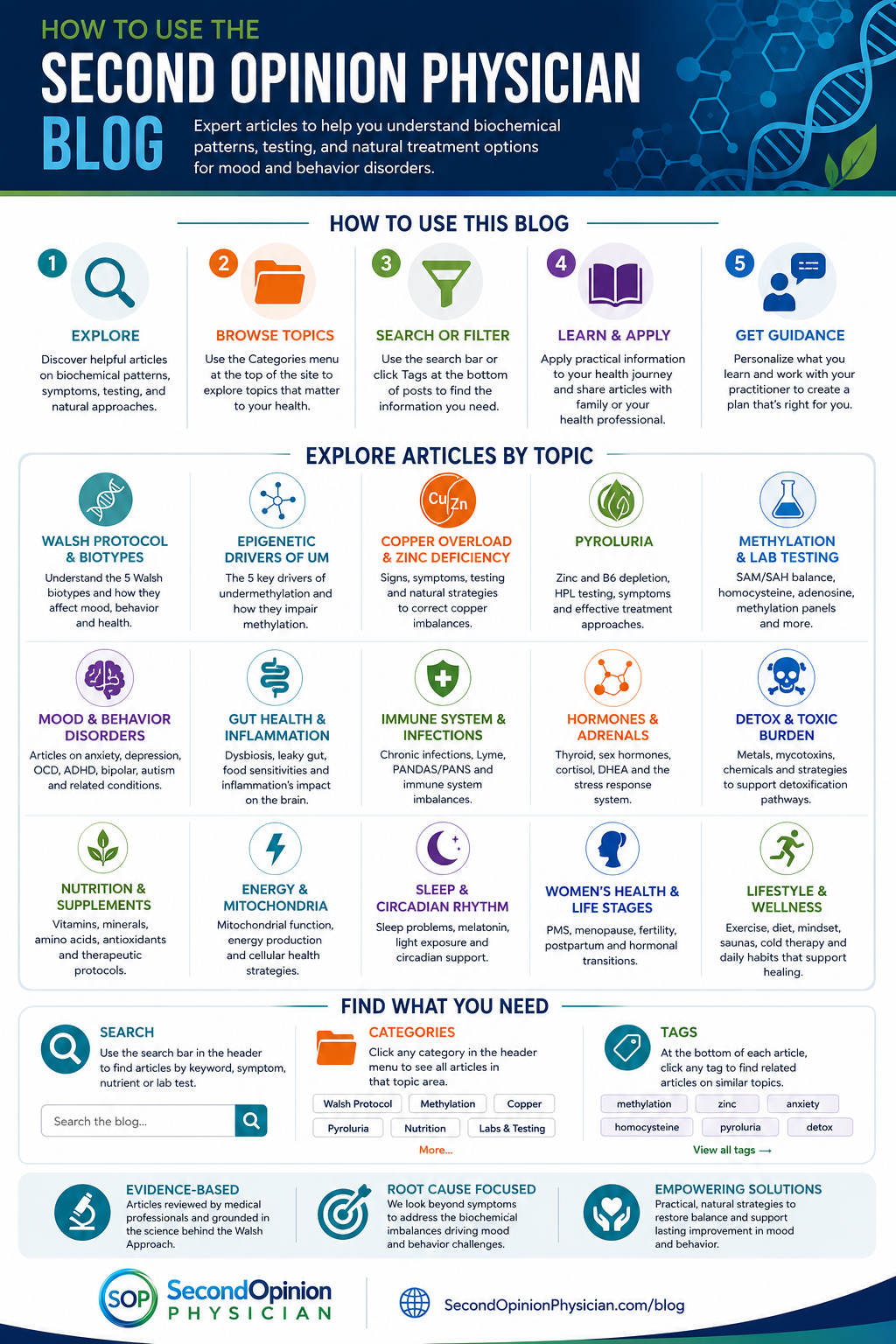
Walsh Biotypes
The Walsh Biotypes provide a biochemical framework for understanding recurring patterns found in people with mood, behavioral, cognitive and neurodevelopmental symptoms.
The traditional Walsh model emphasizes several major biochemical patterns:
Undermethylation
Undermethylation is commonly associated in the Walsh model with elevated whole-blood histamine, obsessive or perfectionistic tendencies, seasonal allergies, high achievement, compulsive traits and characteristic responses to folate and methyl-donor nutrients.
Undermethylation ArticlesOvermethylation
Overmethylation describes a different biochemical and clinical pattern that may include anxiety, chemical or food sensitivities, cognitive overstimulation, unusual medication responses and low whole-blood histamine.
Overmethylation ArticlesCopper Overload
Copper, ceruloplasmin and zinc can affect catecholamine metabolism, oxidative stress and hormonal physiology. Copper overload is especially relevant to anxiety, panic, irritability, insomnia and postpartum or estrogen-related mood symptoms.
Copper Overload ArticlesPyroluria
Within the Walsh framework, pyroluria is associated with increased nutritional requirements for zinc and vitamin B6 and may become more clinically apparent during periods of physical or emotional stress.
Toxic Burden
Environmental metals and other toxic exposures may increase oxidative stress, antioxidant demand, mitochondrial stress and the biochemical burden placed on methylation and detoxification pathways.
Biotype Testing
The Walsh approach uses symptoms together with laboratory markers such as whole-blood histamine, copper, ceruloplasmin, plasma zinc, urinary pyrroles, vitamin D, homocysteine, CBC and CMP to help define the biochemical pattern.
Explore the Walsh ApproachEpigenetic Drivers of Undermethylation
Not all undermethylation is adequately explained by inherited genetics or MTHFR variants.
The Epigenetic Drivers of Undermethylation framework examines acquired metabolic pressures that may reduce methylation capacity, increase methylation demand or interfere with the normal recycling and clearance of methylation metabolites.
Toxic Burden
Metals, pollutants and other exposures may increase oxidative stress, repair demand, glutathione demand and the biochemical workload placed on methylation pathways.
Mitochondrial Stress
Methionine must be converted to SAM using ATP. Reduced cellular energy may therefore interfere with SAM production while simultaneously increasing oxidative and repair demands.
Creatine Demand
Endogenous creatine synthesis consumes a substantial amount of SAM-dependent methylation. Increased creatine demand can therefore add significantly to total methylation demand.
High Methylation Demand
Neurotransmitter metabolism, cellular repair, phospholipid metabolism and many other processes use methyl groups. Increased biochemical demand may contribute to a low-SAM pattern.
SAH, pH & Metabolic Clearance
SAH is a potent inhibitor of methyltransferase reactions. Homocysteine, adenosine, kidney function, metabolic clearance and acid-base physiology can therefore become important parts of the methylation picture.
SAM / SAH Testing
Direct methylation-related testing measures SAM, SAH, methionine and homocysteine rather than attempting to infer current methylation solely from genetics.
Methylation PanelBiochemical Imbalances Associated With Mood Disorders
Mood and behavioral diagnoses describe recognizable collections of symptoms. They do not necessarily identify the biochemical reason those symptoms developed.
Articles in this section examine how different biochemical patterns may overlap with psychiatric and behavioral conditions.
Depression & Methylation
Depression may occur with undermethylation, overmethylation, copper imbalance, nutrient deficiency, mitochondrial dysfunction, oxidative stress, inflammation or hormonal changes.
These patterns may also help explain why people with the same diagnosis respond differently to antidepressants, folate, SAMe and other interventions.
Anxiety & Panic
Anxiety and panic may be associated with copper overload, low zinc, pyroluria, overmethylation, altered catecholamine metabolism, cortisol abnormalities and mitochondrial stress.
Obsessive & Compulsive Symptoms
Obsessive thinking, perfectionism and compulsive traits are prominent features in many undermethylated patients and may intersect with serotonin regulation, histamine and methylation biology.
ADHD, Irritability & Aggression
Copper, zinc, pyroluria, methylation, oxidative stress, nutrient status and environmental burden may all contribute to different ADHD and behavioral phenotypes.
Mood Instability & Psychosis
Articles explore methylation patterns, copper and zinc, oxidative stress, nutritional imbalances and medication response in patients with severe mood instability or psychotic vulnerability.
Postpartum Depression
Pregnancy produces a major physiologic rise in copper and ceruloplasmin. Within the Walsh model, difficulty normalizing copper after delivery may contribute to an activated postpartum pattern involving anxiety, panic, insomnia, irritability and depression.
The same diagnosis can have different biochemical drivers. The purpose of biochemical assessment is not to replace psychiatric diagnosis, but to identify potentially modifiable metabolic patterns that may influence symptoms, treatment response and long-term stability.
Autism, Developmental Regression & Neurodevelopment
Autism and developmental disorders represent another area in which biochemical individuality can be important.
Articles examine:
- Methylation patterns
- Oxidative stress
- Mitochondrial function
- Copper and zinc balance
- Pyroluria
- Folate receptor antibodies
- Gut dysfunction and dysbiosis
- Inflammatory and immune patterns
- Nutritional deficiencies
- Environmental and toxic exposures
The emphasis is on identifying measurable abnormalities in the individual rather than assuming every child with the same diagnosis has the same biochemical problem.
Cognitive Decline, Dementia & Alzheimer’s Disease
Cognitive decline is influenced by genetics, vascular health, inflammation, metabolism, mitochondrial function, nutrition, hormones, toxic burden and methylation.
Articles integrate Walsh biochemistry with broader approaches to cognitive decline, including concepts emphasized in the Bredesen Cognoscopy model.
APOE4
APOE4 can identify increased inherited susceptibility to Alzheimer’s disease but cannot determine which modifiable metabolic abnormalities are present today.
What Can Be Measured?
Inflammation, insulin resistance, homocysteine, methylation, oxidative stress, mitochondrial function, copper and zinc, vitamins, minerals and other metabolic factors can be assessed directly.
Conditions: Mechanisms and Relevant Laboratory Testing
Beyond mood disorders, the blog discusses common clinical problems through the biochemical pathways that may contribute to them.
Fatigue & Exercise Intolerance
Relevant mechanisms include mitochondrial ATP production, CoQ10, carnitine, fatty-acid metabolism, lactate, pyruvate, magnesium, thyroid physiology, oxidative stress and muscle metabolism.
Gut Dysfunction & Malabsorption
Dysbiosis, inflammation and malabsorption may alter amino acids, vitamins, minerals, copper, zinc and other nutrients required for normal biochemical function.
Kidney Function & pH
Cystatin C, creatinine, bicarbonate, electrolytes and renal clearance can provide important context when metabolic waste, acid-base physiology, SAH or adenosine metabolism are concerns.
Hormonal & Postpartum Patterns
Estrogen, progesterone, cortisol, thyroid function and pregnancy-related changes in copper can interact with mood, sleep, stress tolerance and biochemical regulation.
Inflammation & Oxidative Stress
Inflammatory signaling and oxidative damage can affect mitochondria, methylation, cellular repair, nutrient demand and neurologic function.
Environmental & Metal Exposure
Toxic metals and environmental exposures may increase oxidative stress, glutathione demand, metallothionein demand and mitochondrial burden.
Methylation Tests: What Is Happening Now?
Genetic tests such as MTHFR can identify inherited potential. Direct biochemical testing asks whether methylation is actually abnormal now.
SAM
S-adenosylmethionine is the principal methyl donor used in hundreds of methylation reactions.
SAH
S-adenosylhomocysteine inhibits methyltransferase reactions when it accumulates.
Methionine & Homocysteine
Methionine and homocysteine provide additional information about methylation, remethylation and transsulfuration pathways.
Mitochondrial Tests: Energy Production, Fatty-Acid Metabolism & Oxidative Stress
Mitochondrial testing evaluates current energy metabolism rather than simply genetic susceptibility to mitochondrial dysfunction.
| Marker | What It Helps Evaluate |
|---|---|
| CoQ10 | Electron transport, ATP production and antioxidant support |
| Lactate | Glucose-derived energy metabolism |
| Pyruvate | Energy substrate metabolism and cellular redox context |
| Lactate : Pyruvate | Additional information about redox and mitochondrial metabolism |
| Carnitine | Fatty-acid transport into mitochondria |
| Acylcarnitines | Fatty-acid and mitochondrial substrate metabolism |
| Organic Acids | Broader metabolic and mitochondrial pathway information |
| Creatine Kinase | Muscle-cell stress or injury |
| 8-OHdG | Oxidative DNA damage |
| Lipid Peroxides | Oxidative damage involving lipids and membranes |
Walsh Biochemistry Tests
The core Walsh biochemical assessment uses a relatively focused group of laboratory markers interpreted together with symptoms and history.
- Whole-blood histamine
- Serum copper
- Ceruloplasmin
- Plasma zinc
- Urinary pyrroles
- 25-OH vitamin D
- Homocysteine
- CBC
- CMP
These tests help evaluate traditional Walsh patterns such as undermethylation, overmethylation, copper overload and pyroluria.
Copper, Zinc & Ceruloplasmin TestingFunctional Tests: Nutrients, Gut, Kidney & Metabolic Health
Functional laboratory testing can broaden the evaluation when symptoms suggest a problem beyond the traditional Walsh panel.
RBC Magnesium
Magnesium is closely involved with ATP-dependent reactions, muscle function, neurologic function and hundreds of enzyme systems.
RBC MagnesiumCystatin C
Cystatin C provides additional information about current kidney filtration and can add context when metabolic clearance is a concern.
Cystatin CGI360
GI testing may be useful when dysbiosis, gastrointestinal inflammation, malabsorption or altered microbial metabolism may be contributing to nutrient and metabolic abnormalities.
GI360Metabolomix+
Organic acids, amino acids, nutritional markers, mitochondrial metabolites and oxidative-stress markers can reveal a broader functional biochemical pattern.
Metabolomix+Creatine Kinase
Creatine kinase can provide information about current muscle stress or injury in the appropriate clinical setting.
Creatine KinaseChoose Testing by Clinical Question
The most useful test is the one that answers the current question: methylation, mitochondrial function, oxidative stress, copper balance, nutrient status, gut dysfunction or metabolic clearance.
Why Measure Current Biochemistry?
One recurring theme throughout these articles is the difference between inherited susceptibility and current biochemical function.
Genes may tell us where to look. Laboratory testing can tell us what we actually find there.
A genetic result may suggest altered methylation, antioxidant capacity, mitochondrial vulnerability or nutrient handling. Functional testing can ask whether the predicted abnormality is actually present.
Many biochemical abnormalities can also be retested.
Measure → Interpret → Intervene → Retest.
Frequently Asked Questions
What are the Walsh Biotypes?
The traditional Walsh biochemical patterns include undermethylation, overmethylation, copper overload, pyroluria and toxic burden. Symptoms and laboratory testing are interpreted together to identify which pattern or combination of patterns may be present.
What are the Epigenetic Drivers of Undermethylation?
The Epigenetic Drivers framework examines acquired contributors to impaired methylation, including mitochondrial stress, toxic burden, creatine demand, increased methylation demand and problems involving SAH, metabolic clearance and acid-base physiology.
Can the same mood disorder have different biochemical causes?
Yes. Depression, anxiety, ADHD, irritability and other symptoms can occur with different combinations of methylation, copper and zinc, nutrient status, mitochondrial dysfunction, oxidative stress, hormones and other metabolic factors.
Can methylation be tested?
Yes. SAM, SAH, methionine and homocysteine provide current biochemical information related to methylation. This is different from predicting methylation from a genetic variant such as MTHFR.
What tests evaluate mitochondrial function?
CoQ10, lactate, pyruvate, carnitine, acylcarnitines, organic acids and oxidative-stress markers can provide information about current mitochondrial metabolism and cellular energy pathways.
What are the main Walsh laboratory tests?
Common Walsh markers include whole-blood histamine, serum copper, ceruloplasmin, plasma zinc, urinary pyrroles, vitamin D, homocysteine, CBC and CMP.
What functional tests are discussed in the blog?
Articles discuss methylation panels, mitochondrial testing, oxidative-stress markers, organic acids, amino acids, copper and zinc, RBC magnesium, cystatin C, GI testing, CoQ10, lactate and pyruvate, acylcarnitines and other relevant laboratory studies.
Does a genetic variant prove a biochemical problem is present?
No. Some genetic findings are diagnostic, but many common variants indicate susceptibility rather than current dysfunction. Measuring the relevant biochemical pathway can provide additional information about whether the predicted abnormality is actually present.
Why repeat laboratory testing?
Many biochemical abnormalities can change with treatment, nutrition, medication, illness and environmental exposure. Repeat testing can help determine whether the physiology itself has improved.
Where should I start?
Start with the clinical question. The major pathways covered here include Walsh biotypes, methylation, copper and zinc, mitochondrial function, oxidative stress, gut health, cognition, mood disorders, nutrient status and metabolic clearance.
Latest Articles
This hub provides the framework. The newest Second Opinion Physician articles continue below, with the most recent posts covering Walsh biochemistry, methylation, mitochondria, mood and behavioral disorders, cognitive health, nutrition, gut function and functional laboratory testing.