
Alkali Supplementation, Kidney Function & Methylation: Bicarbonate, Acid Load, SAH & Toxic Burden
Sodium bicarbonate and other alkalizing strategies do more than simply “raise pH.” Bicarbonate is part of the body’s primary buffering system, helping neutralize hydrogen ions while reducing the amount of acid the kidneys must process and excrete. In chronic kidney disease, metabolic acidosis and increased single-nephron acid handling may contribute to inflammation and progressive kidney stress. Alkali therapy has therefore been studied as a way to correct low bicarbonate and potentially protect kidney function.
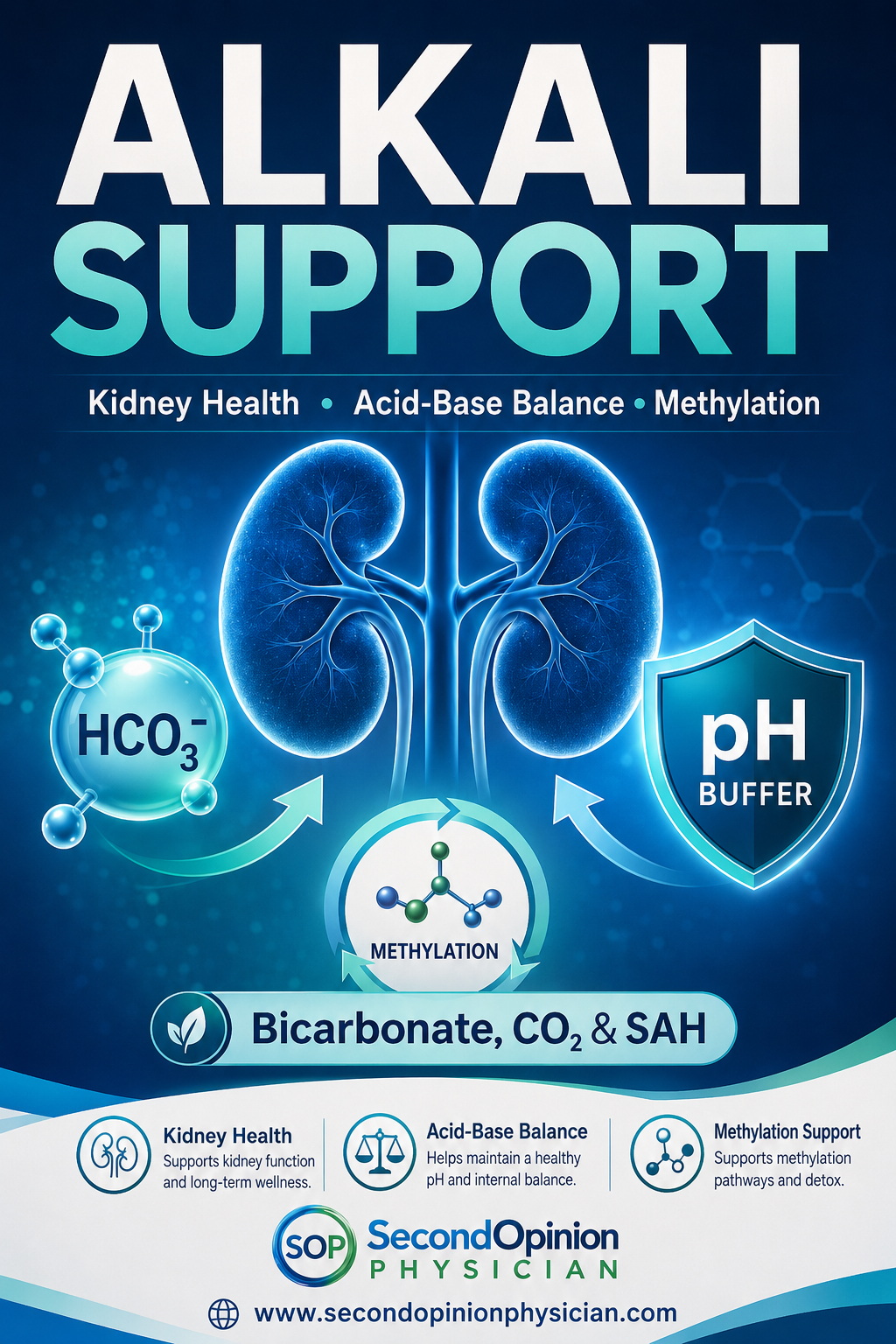
For Second Opinion Physician, acid-base balance is also relevant to the Epigenetic Drivers of Undermethylation. Elevated SAH inhibits methylation, and the SAH hydrolase reaction depends on downstream handling of homocysteine and adenosine. Kidney dysfunction, low bicarbonate, inflammation, oxidative stress, gut-derived acids and impaired metabolic clearance may create an environment that makes this pathway less efficient. Alkali does not simply “flush SAH out,” but improving documented acid-base stress, kidney function and buffering capacity may help remove one of the physiologic barriers keeping methylation impaired.
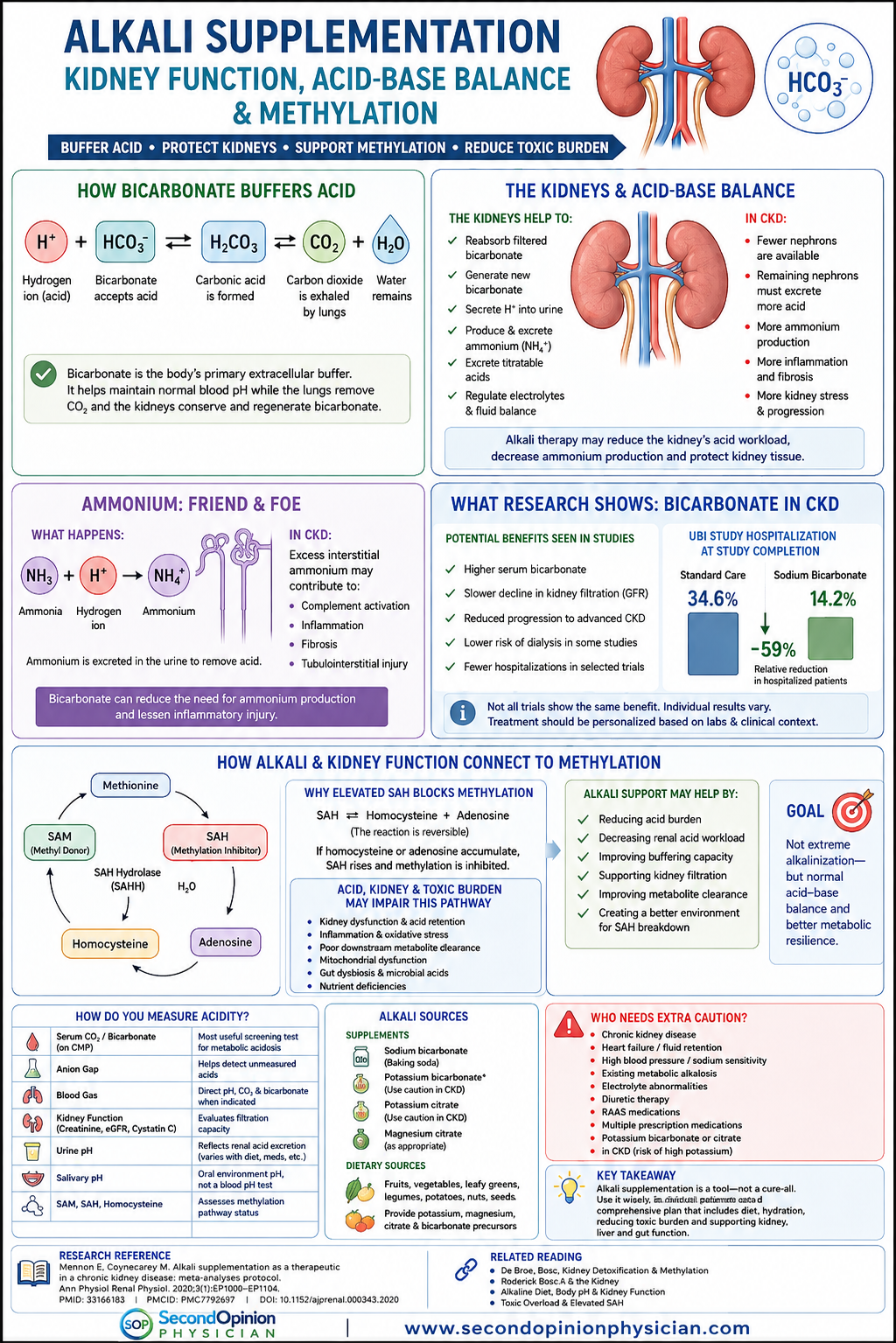
Clinical CKD studies have reported slower kidney-function decline with bicarbonate in selected patients, although trials have not all shown the same benefit and the exact protective mechanism remains unresolved. The UBI trial also reported a reduction in the proportion hospitalized from 34.6% with standard care to 14.2% with bicarbonate at study completion—about a 59% relative reduction in that measure
Alkali supplementation uses bicarbonate, citrate, mineral-rich foods, or related strategies to reduce acid load and support the body's normal buffering systems.
The goal is not to make the blood unusually alkaline. Blood pH is tightly regulated. The practical goal is to maintain adequate bicarbonate, reduce excessive acid-retention stress, and decrease the work required of the kidneys to maintain acid-base balance.
This becomes particularly important when kidney function is impaired, serum bicarbonate or CO₂ is low, dietary acid load is high, or elevated SAH and impaired metabolic clearance are being evaluated as part of an undermethylation or toxic-burden pattern.
Neutralizes Acid
Bicarbonate accepts hydrogen ions and helps convert acid into carbon dioxide and water.
Reduces Acid Workload
Alkali can decrease the amount of ammonium, hydrogen ion and net acid the kidneys must generate and excrete.
SAH & Clearance
Acid-base and kidney function may influence the metabolic environment in which SAH, homocysteine and adenosine are handled.
Improves Resilience
Reducing acid stress may lessen one component of the broader inflammatory, oxidative and metabolic burden.
What Is Alkali Supplementation?
Alkali supplementation means providing substances that increase the body's available base or reduce net acid load.
Examples can include:
- Sodium bicarbonate
- Potassium bicarbonate when medically appropriate
- Potassium citrate in selected patients
- Magnesium citrate or other mineral sources when appropriate
- Fruits and vegetables that provide potassium, magnesium, citrate and bicarbonate precursors
- Reduction of excessive dietary acid load
The most extensively studied direct alkali treatment in chronic kidney disease is sodium bicarbonate—ordinary baking soda in pharmaceutical form.
How Does Sodium Bicarbonate Buffer Acid?
Bicarbonate is part of the body's principal extracellular acid-buffering system.
A hydrogen ion combines with bicarbonate to form carbonic acid. Carbonic acid can then become carbon dioxide and water. The lungs remove carbon dioxide while the kidneys regenerate and conserve bicarbonate.
This cooperation between the lungs, kidneys and bicarbonate buffering system allows blood pH to remain within a very narrow range despite continuous production of acids during metabolism.
Why Are the Kidneys So Important for Acid-Base Balance?
Every day, metabolism generates acids that cannot simply be exhaled through the lungs.
The kidneys help manage this acid load by:
- Reabsorbing filtered bicarbonate
- Generating new bicarbonate
- Secreting hydrogen ions into the urine
- Producing and excreting ammonium
- Excreting titratable acids
- Regulating sodium, potassium and other electrolytes
When kidney function declines, fewer functioning nephrons are available to perform this work.
The remaining nephrons compensate by increasing acid secretion and ammonium production. This adaptation helps preserve blood pH, but increased single-nephron acid handling may itself create local kidney stress.
What Is Ammonium and Why Does It Matter?
The kidney uses ammonia/ammonium metabolism as an important mechanism for eliminating acid.
Hydrogen ions are incorporated into ammonium:
The ammonium can then be excreted in urine, allowing the body to dispose of acid without making urine pH impossibly low.
In chronic kidney disease, however, each surviving nephron may need to generate larger amounts of ammonia/ammonium.
Experimental research has proposed that excessive interstitial ammonium may contribute to:
- Complement activation
- Tubulointerstitial inflammation
- Fibrotic signaling
- Progressive nephron injury
What Does CKD Research Say About Sodium Bicarbonate?
A number of clinical trials have investigated sodium bicarbonate in patients with chronic kidney disease and metabolic acidosis.
Several studies have reported:
- Higher serum bicarbonate
- Slower decline in kidney filtration
- Reduced progression to advanced kidney disease in selected populations
- Reduced need for dialysis in some trials
- Possible reductions in mortality or hospitalization in selected studies
However, not every trial has demonstrated a meaningful improvement in kidney outcomes. The evidence therefore supports continued clinical use for appropriate acid-base indications while research continues into the broader renoprotective effects.
How Could Alkali Protect the Kidney?
The American Journal of Physiology review by Mannon and O'Connor describes several possible mechanisms.
Less Interstitial Ammonium
Reducing the renal acid load may decrease ammonium production and potentially reduce complement-mediated inflammatory injury.
Less Interstitial Acidity
Reducing local acid retention may decrease signaling through pathways involving endothelin-1 and angiotensin II.
Less Tubular H⁺ Secretion
Reducing the intensity of tubular acid secretion may lessen tubular stress and possibly reduce cast formation in experimental models.
Inflammatory Signaling
Experimental studies have proposed activation of the cholinergic anti-inflammatory pathway following bicarbonate exposure.
Glucose Regulation
Correcting metabolic acidosis may improve insulin sensitivity and metabolic regulation in selected patients.
Acid Retention Before CO₂ Falls
Early kidney impairment may permit tissue acid retention even while serum bicarbonate remains within the laboratory reference range.
Can Acid Retention Exist With a Normal Serum Bicarbonate?
Possibly. Researchers have described subclinical or eubicarbonatemic metabolic acidosis, in which acid retention increases before serum bicarbonate clearly falls below the reference range.
The kidneys may initially compensate sufficiently to maintain serum bicarbonate while requiring progressively greater acid secretion by the remaining nephrons.
This helps explain why a normal blood CO₂ value does not necessarily provide a complete picture of renal acid handling.
How Does Alkali Supplementation Relate to Methylation?
The connection between alkali and methylation is most relevant in patients with elevated SAH.
SAM is the body's principal methyl donor. Once SAM donates its methyl group, it becomes S-adenosylhomocysteine, or SAH.
SAH is important because it is a potent inhibitor of many methyltransferase enzymes. Even when SAM is adequate, excessive SAH can reduce effective methylation.
Why Elevated SAH Can Block Methylation
SAH is metabolized by SAH hydrolase (SAHH).
The reaction is reversible:
The reaction can move forward efficiently only when its downstream products—particularly adenosine and homocysteine—are adequately metabolized or removed.
If they accumulate, the equilibrium can favor SAH formation again.
Can Bicarbonate Lower SAH?
There is not yet clinical evidence showing that sodium bicarbonate reliably lowers SAH in patients simply by raising bicarbonate.
The Second Opinion Physician model is more specific: acid-base stress, impaired filtration, inflammation, mitochondrial dysfunction and poor downstream metabolite handling may create a biochemical environment that favors elevated SAH.
Correcting documented low bicarbonate or excessive acid burden may therefore remove one possible barrier to normal methylation flow.
This is different from claiming that baking soda directly removes SAH from the blood or urine.
Acidic Burden as an Epigenetic Driver of Undermethylation
Within the expanded WalshDoc framework, Gut, Acidic & Hypoxia Burden is one of the acquired Epigenetic Drivers that may worsen undermethylation.
Potential contributors include:
- Low serum bicarbonate / CO₂
- Kidney dysfunction
- Dehydration
- High dietary acid load
- Chronic diarrhea with bicarbonate loss
- Gut dysbiosis and microbial metabolites
- Chronic inflammation
- Oxidative stress
- Mitochondrial dysfunction
- Sleep apnea or intermittent hypoxia
- Diabetes and metabolic dysfunction
- Toxic environmental exposure
These factors can overlap rather than occurring independently.
Acid Load, Toxic Burden and Metabolic Waste
The kidneys are major clearance organs for water-soluble metabolic by-products, electrolytes, drugs and other compounds.
When filtration is impaired, metabolic waste can accumulate and inflammation and oxidative stress may increase.
Bicarbonate can reduce acid burden, but it should not be viewed as a universal "detoxifier."
Urinary alkalinization can increase renal elimination of certain weak organic acids by changing their ionization within urine. This principle is used medically for selected compounds. It does not mean that every environmental toxin or metabolic waste product is removed more effectively simply because urine becomes alkaline.
How Gut Dysbiosis Can Add to Acid and Methylation Burden
The gastrointestinal tract can become an important source of metabolic stress.
Dysbiosis may contribute through:
- Microbial organic acids and metabolites
- Endotoxin and immune activation
- Greater oxidative stress
- Increased glutathione demand
- Poor B-vitamin availability
- Impaired nutrient absorption
- Inflammatory cytokine signaling
- Mitochondrial stress
This is one reason acidic burden, gut dysfunction and toxic overload often overlap in patients with elevated SAH.
How Do You Measure Metabolic Acidity?
No single measurement completely describes acid-base physiology. The most useful evaluation combines blood chemistry, kidney function, symptoms, diet and sometimes urine measurements.
| Measurement | What It Shows | Important Limitation |
|---|---|---|
| Serum CO₂ / Bicarbonate | Routine CMP measurement that usually provides a useful estimate of circulating bicarbonate. | Low values can occur for several reasons and should be interpreted with electrolytes, kidney function and clinical context. |
| Anion Gap | Helps identify accumulation of unmeasured acids when interpreted with electrolytes. | A normal anion gap does not rule out every acid-base disturbance. |
| Blood Gas | Direct assessment of pH, PCO₂ and bicarbonate when a significant acid-base disorder is suspected. | Generally unnecessary for routine screening when chemistry results and clinical status are stable. |
| Creatinine & eGFR | Provides an estimate of kidney filtration. | Influenced by muscle mass, hydration, diet and creatine intake. |
| Cystatin C | Provides another estimate of filtration that is less dependent on muscle mass. | Still requires clinical interpretation and can be affected by nonrenal factors. |
| Urine pH | Shows how acidic or alkaline the urine is at that moment. | Strongly affected by meals, diet, medications, infection and renal acid excretion. It is not equivalent to blood pH. |
| Salivary pH | May provide a simple trend measurement of the oral environment. | Does not reliably measure systemic blood acid-base status. |
| SAM, SAH & Homocysteine | Helps determine whether methylation impairment involves low donor availability, elevated SAH or downstream pathway problems. | These are methylation markers, not direct measures of systemic pH. |
Why Serum CO₂ Is One of the Most Useful Screening Tests
The "CO₂" value reported on a comprehensive metabolic panel largely reflects serum bicarbonate and is one of the simplest laboratory clues to metabolic acid-base status.
A low CO₂ result can occur with:
- Chronic kidney disease
- Metabolic acidosis
- Chronic diarrhea and gastrointestinal bicarbonate loss
- Diabetic or starvation ketoacidosis
- Lactic acidosis
- Selected medication effects
- Compensation for respiratory alkalosis
Therefore, a low CO₂ should not automatically lead to bicarbonate supplementation. The cause should first be understood.
Are Salivary pH Strips Useful?
Salivary pH paper is inexpensive and can identify changes in the oral environment, but it should not be used as a substitute for serum bicarbonate, electrolytes or a blood gas.
Salivary pH varies with:
- Food and beverages
- Salivary flow
- Oral bacteria
- Dental disease
- Hydration
- Time of day
Is Urine pH More Useful?
Urine pH is more directly related to kidney acid excretion, but it also requires careful interpretation.
An acidic urine can simply indicate that functioning kidneys are successfully removing acid.
An alkaline urine may result from:
- Bicarbonate or citrate supplementation
- Plant-rich diet
- Recent meals
- Certain medications
- Urinary infection with selected organisms
For this reason, urine pH should be used as part of a pattern rather than as a stand-alone target.
Which Tests Are Most Useful When Acidity and Elevated SAH Are Suspected?
CMP + CO₂
- Serum CO₂ / bicarbonate
- Sodium
- Potassium
- Chloride
- Creatinine
- BUN
- Glucose
- Liver markers
Creatinine, eGFR & Cystatin C
Kidney filtration should be interpreted as a trend and may be strengthened by adding cystatin C when creatinine could be misleading.
View Cystatin C TestingSAM, SAH & Related Metabolites
Direct methylation testing helps distinguish low SAM from elevated SAH and provides information about methionine and homocysteine metabolism.
View Methylation TestingOxidative & Toxic Burden
When abnormalities persist, mitochondrial function, oxidative stress, toxic elements, gut dysfunction and inflammatory burden may also need evaluation.
Alkali Supplementation and the Dr. Robin Rose Kidney Model
Kidney function is also central to the broader detoxification model discussed by Dr. Robin Rose.
That approach emphasizes filtration, hydration, acid-base balance, mitochondrial support, phosphorus control and reducing ongoing kidney stress rather than viewing the kidney simply as a passive filter.
For patients with elevated SAH, the important overlap is that impaired renal function can simultaneously affect:
- Acid handling
- Electrolyte balance
- Metabolic waste clearance
- Inflammatory burden
- Oxidative stress
- Overall metabolic resilience
Alkaline Diet vs Sodium Bicarbonate
An alkaline-forming diet and sodium bicarbonate are not interchangeable.
Alkaline-Forming Diet
A plant-rich diet can reduce net dietary acid load and provide potassium, magnesium, citrate and other base precursors without directly forcing blood pH upward.
This is often the most physiologic long-term strategy when appropriate.
Sodium Bicarbonate
Provides bicarbonate directly and can raise serum bicarbonate and urinary pH. It is used medically in selected patients with documented metabolic acidosis and has been studied in CKD.
Its sodium content and stronger pharmacologic effect make monitoring more important.
Sodium Bicarbonate, SAH and Methylation
Second Opinion Physician has previously discussed bicarbonate as part of a broader strategy for patients with elevated SAH and impaired downstream methylation flow.
The clinical reasoning is:
This remains a developing clinical model rather than proof that bicarbonate directly lowers SAH in every patient.
Baking Soda, SAH & Methylation What Causes Undermethylation?When Alkali Supplementation Requires Extra Caution
Baking soda is inexpensive, but that does not make unrestricted supplementation safe.
Sodium bicarbonate can alter sodium load, blood pressure, fluid balance, potassium, bicarbonate and medication handling.
Extra caution is appropriate with:
- Chronic kidney disease
- Heart failure
- Edema or fluid retention
- Uncontrolled hypertension
- High sodium sensitivity
- Existing metabolic alkalosis
- Significant electrolyte abnormalities
- Diuretic therapy
- Renin-angiotensin-aldosterone system medications
- Multiple prescription medications
Potassium bicarbonate or potassium citrate requires particular caution in kidney disease because impaired potassium excretion can result in dangerous hyperkalemia.
Why More Alkali Is Not Necessarily Better
Acid-base physiology has an optimal range. Both low and excessively high bicarbonate can be problematic.
The objective is therefore:
not:
This distinction is especially important because blood pH is one of the most tightly regulated physiologic variables in the body.
Who May Benefit From an Acid-Base and Methylation Evaluation?
Evaluation may be useful when there is:
- Low serum CO₂ / bicarbonate
- Chronic kidney disease
- Reduced eGFR
- Persistent dehydration
- Chronic diarrhea
- Elevated SAH
- Low SAM:SAH relationship
- Abnormal homocysteine
- Gut dysbiosis
- High oxidative stress
- Mitochondrial dysfunction
- Toxic burden
- Fatigue and poor recovery
- Incomplete response to conventional undermethylation support
Frequently Asked Questions
Does baking soda make the body alkaline?
Sodium bicarbonate provides bicarbonate and can raise serum bicarbonate when it is low, but blood pH is tightly regulated. The objective is normal acid-base balance rather than making the blood unusually alkaline.
Why does chronic kidney disease cause metabolic acidosis?
As functioning nephron mass declines, the kidneys become less able to excrete the daily nonvolatile acid load and regenerate sufficient bicarbonate. Acid retention can eventually lower serum bicarbonate.
How might bicarbonate protect the kidneys?
Proposed mechanisms include reducing renal ammonium production, decreasing interstitial acid stress, reducing tubular hydrogen-ion secretion, modifying inflammatory signaling and correcting metabolic acidosis. The dominant mechanism remains uncertain.
Does bicarbonate slow chronic kidney disease?
Several clinical trials have reported slower kidney-function decline in patients with CKD and metabolic acidosis, but not all trials have shown the same benefit. Treatment should therefore be individualized according to kidney function, serum bicarbonate and the broader clinical picture.
Can bicarbonate reduce hospitalizations?
The UBI study reported fewer patients hospitalized at study completion in the bicarbonate group than with standard care. This was an important study finding but should not be assumed to occur in every patient or every CKD population.
How does bicarbonate affect methylation?
Bicarbonate has not been proven to directly lower SAH. The clinical hypothesis is that correcting acid-base stress and supporting kidney handling may improve the metabolic environment in which SAH, homocysteine and adenosine are processed.
Why is SAH important?
SAH is produced after SAM donates a methyl group and is a strong inhibitor of methyltransferase enzymes. Elevated SAH can therefore impair effective methylation even when SAM is present.
Can acidic physiology increase SAH?
A direct cause-and-effect relationship has not been established clinically. However, kidney dysfunction, acid retention, inflammation, oxidative stress and impaired downstream metabolite handling can coexist with elevated SAH and may contribute to an unfavorable methylation environment.
Does alkaline urine mean my blood is alkaline?
No. Urine pH reflects renal handling of acid and is strongly influenced by diet, medications and supplementation. Blood pH is regulated separately and cannot be determined from urine pH.
Can I use saliva pH strips to measure systemic acidity?
Not reliably. Saliva strips can measure the oral environment and may be useful for trends, but they do not substitute for serum bicarbonate, electrolytes or blood-gas testing when systemic acid-base status is clinically important.
What blood test measures bicarbonate?
The serum CO₂ value on a comprehensive metabolic panel largely represents circulating bicarbonate and is a useful routine screening measurement. Abnormal results should be interpreted with electrolytes, kidney function and clinical history.
Is sodium bicarbonate a detox treatment?
Not in the broad sense. Bicarbonate buffers acid and can alter urinary handling of certain weak acids, but it does not universally remove environmental toxins. Hydration, kidney filtration, liver function, bowel elimination, exposure reduction and compound-specific treatment remain more important.
Related Reading
Dr. Robin Rose: Kidney Detoxification
How kidney filtration, acid-base balance, metabolic waste and mitochondrial health may interact with methylation.
Read ArticleBaking Soda & Methylation
The Second Opinion Physician model connecting bicarbonate, elevated SAH, kidney function and methylation efficiency.
Read ArticleAlkaline Diet & Kidney Function
How dietary acid load, bicarbonate precursors, kidney filtration and methylation may interact.
Read ArticleToxic Overload & Elevated SAH
Why toxic burden, inflammation, kidney stress and metabolic clearance may contribute to an elevated-SAH pattern.
Read ArticleThe Bottom Line
Bicarbonate is not simply a substance that "makes the body alkaline." It is part of a tightly regulated physiological system connecting the lungs, kidneys, electrolytes, metabolism and acid elimination.
In chronic kidney disease, alkali supplementation has been studied because reducing acid load may do more than normalize serum bicarbonate. It may reduce ammonium production, tubular acid secretion, local inflammatory signaling and other compensatory stresses placed on the remaining nephrons.
For methylation, the connection is less established but clinically important. Elevated SAH inhibits methylation, and its reversible breakdown depends on downstream metabolism of homocysteine and adenosine. Acid-base stress, kidney dysfunction, inflammation, oxidative stress and toxic burden may collectively create an environment in which that pathway functions less efficiently.
The practical goal is therefore not extreme alkalinization. It is to identify and correct documented problems with buffering, acid load, kidney filtration and metabolic clearance when they appear to be contributing to toxic burden or an elevated-SAH undermethylation pattern.
Research Reference
Mannon EC, O'Connor PM. Alkali supplementation as a therapeutic in chronic kidney disease: what mediates protection? American Journal of Physiology – Renal Physiology. 2020;319:F1090–F1104. PMID 33166183.
View Full Research Article