
Alkaline Diet, Body pH and Kidney Function: How Acid Load May Affect Filtration and Methylation
An alkaline-forming diet does not directly change blood pH, which is tightly regulated by the lungs and kidneys. It can, however, reduce dietary acid load and increase the supply of potassium, magnesium, citrate and bicarbonate precursors used for buffering. In people with chronic kidney disease or low serum bicarbonate, medical-journal studies have evaluated fruits and vegetables and prescribed bicarbonate therapy for metabolic acidosis, kidney protection and slower loss of filtration. This page explains what increasing alkalinity can—and cannot—do for kidney function, creatinine, eGFR, toxic burden, elevated SAH and methylation.
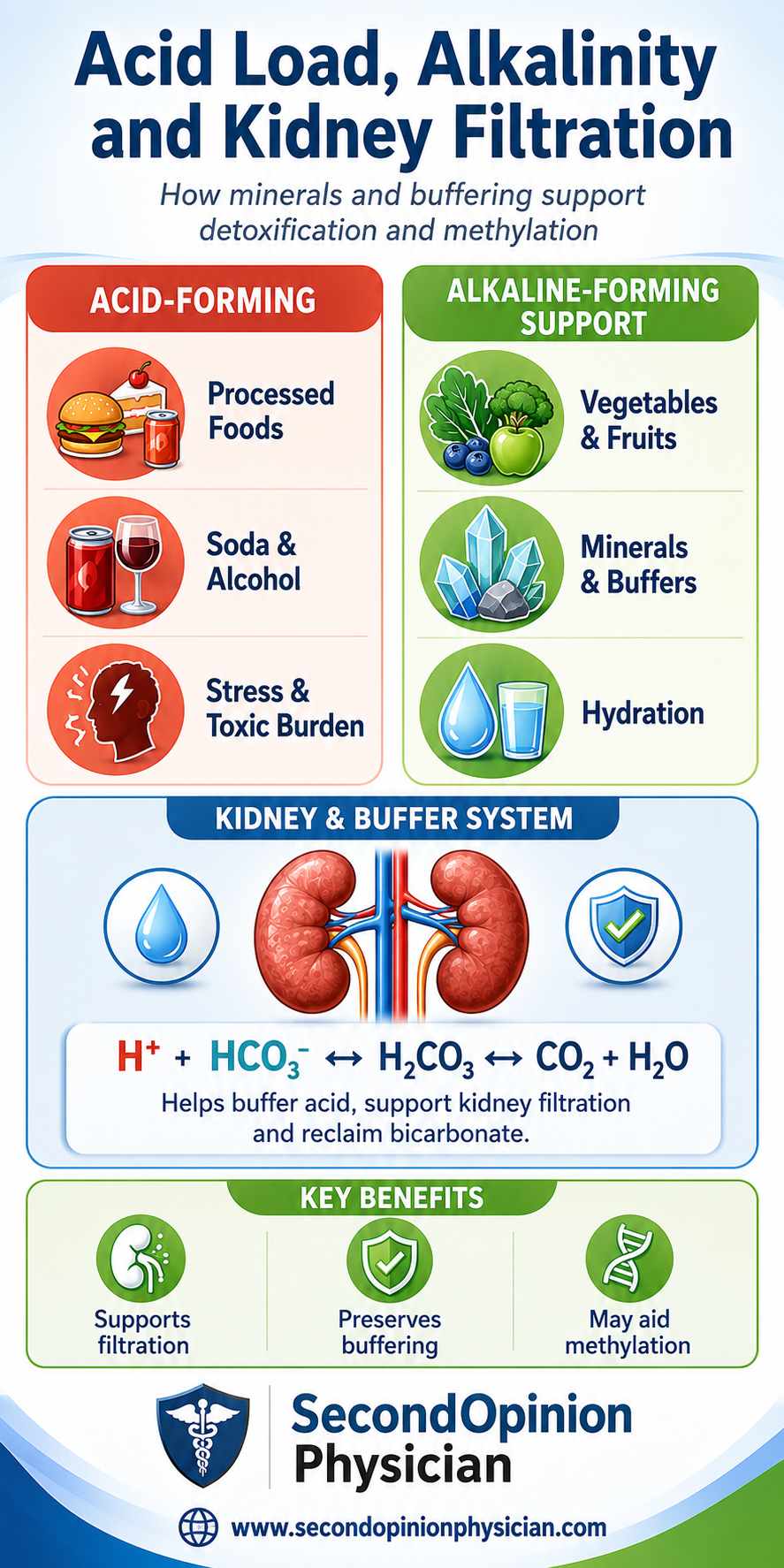
Can an alkaline diet increase body pH or improve methylation?
An alkaline diet cannot force the blood into a substantially higher pH. Blood pH is tightly controlled by the lungs, kidneys and buffering systems. The clinically useful goal is to reduce net dietary acid load, increase mineral and bicarbonate precursors and reduce the amount of acid the kidneys must process and excrete.
This distinction is important for patients searching for ways to “increase body pH,” improve kidney detoxification, lower creatinine or improve eGFR. Diet and alkali therapy are not universal kidney cures, but they may improve serum bicarbonate and reduce acid stress in selected patients, particularly those with chronic kidney disease and metabolic acidosis.
Second Opinion Physician also considers acid–base balance when SAH is elevated. Reduced buffering, impaired kidney function, inflammation and other metabolic stressors may create a less favorable environment for downstream homocysteine and adenosine handling and therefore for maintaining a healthy SAM:SAH relationship.
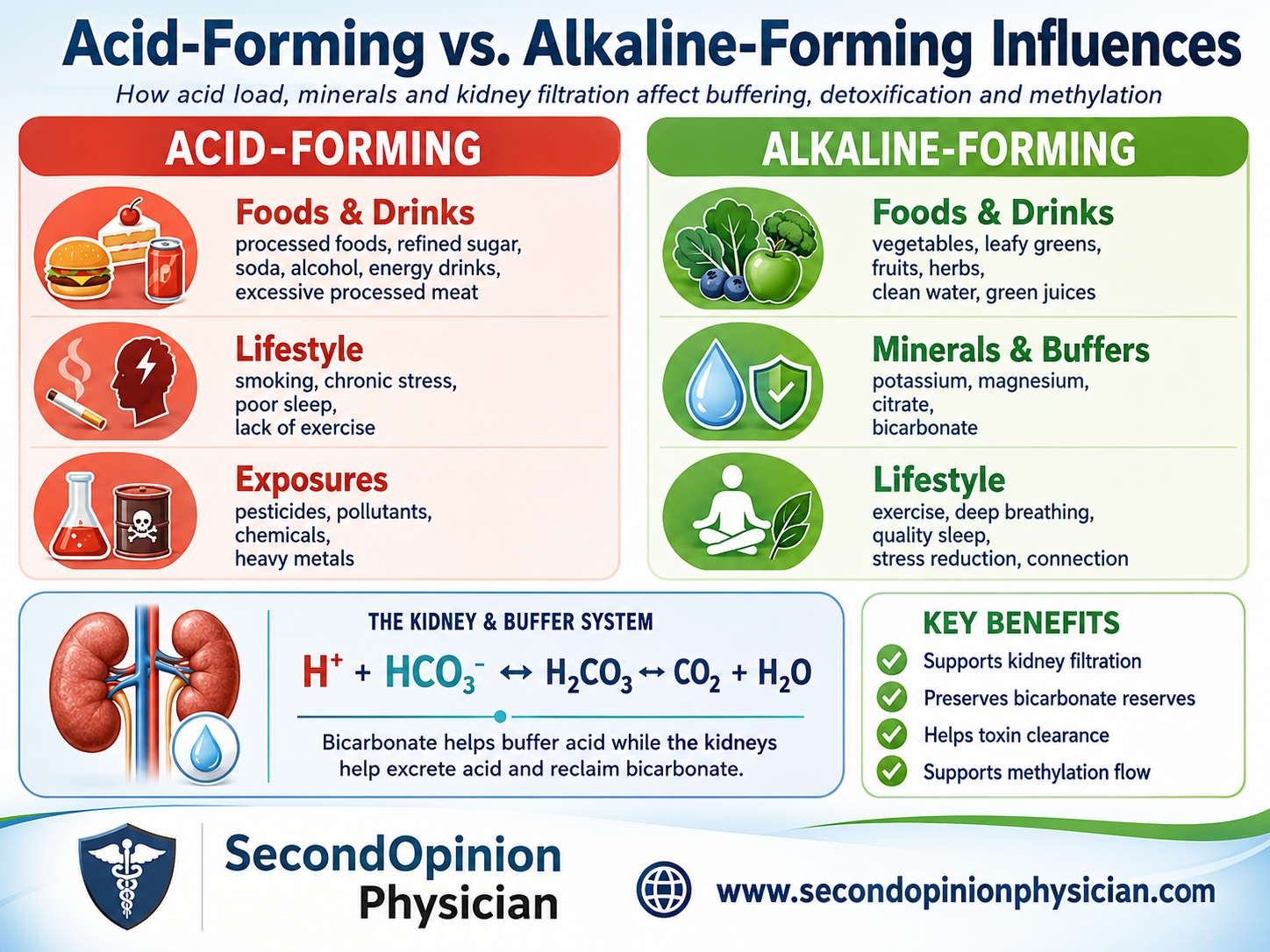
Acid-forming and alkaline-forming influences can affect buffering demand, kidney workload and the physiologic environment in which methylation operates.
What is metabolic acidosis in kidney disease?
Metabolic acidosis is a recognized complication of chronic kidney disease because declining kidney function reduces the ability to excrete the daily acid load and regenerate bicarbonate.
Serum bicarbonate may fall as CKD advances, but acid retention can begin before a clearly low bicarbonate result appears. This has led researchers to study both dietary acid reduction and alkali therapy in patients with kidney disease.
This page also discusses a broader pattern of high dietary acid load and limited buffering capacity. That is not the same as clinically significant metabolic acidosis and should not be diagnosed from symptoms, saliva pH or urine pH alone.
Common contributors
- Reduced kidney acid excretion
- Low vegetable and mineral intake
- High processed-food intake
- High dietary acid load
- Low hydration
- Selected gastrointestinal bicarbonate losses
Possible consequences
- Reduced bicarbonate reserve
- Greater kidney acid-handling demand
- Muscle catabolism
- Bone mineral stress
- Higher metabolic stress
- Potential contribution to faster CKD progression
What to evaluate
- Serum carbon dioxide or bicarbonate
- Electrolytes and anion gap
- Creatinine and eGFR
- Cystatin C when appropriate
- Urinalysis and urine albumin
- Dietary and medication history
Want the deeper bicarbonate discussion?
Our newer Bicarbonate, Kidney Function, SAH & Methylation review looks specifically at sodium bicarbonate therapy, kidney acid handling, ammonium, CKD progression, serum CO2, SAH and the possible relationship between acid–base stress and methylation.
Which foods and lifestyle factors increase dietary acid load?
“Acid-forming” does not mean a food is bad or that it literally makes the blood acidic. Instead, certain dietary patterns can increase net endogenous acid production and therefore increase the amount of acid that must be buffered and excreted.
- High intake of processed foods
- Refined carbohydrates and sugary drinks
- Heavy reliance on phosphate additives
- Low intake of fruits and vegetables
- Low potassium, magnesium and citrate intake
- Very high animal-protein intake without adequate plant-food balance
- Smoking
- Chronic inflammation
- Poor sleep and sleep apnea
- Physical inactivity
- Heavy-metal or chemical exposure
- Mitochondrial dysfunction and oxidative stress
Toxic overload and acid–base stress may overlap
Toxic exposures do not simply “acidify the blood,” but they can increase oxidative stress, impair mitochondrial function and increase metabolic and antioxidant demand. In susceptible patients, this can overlap with impaired kidney clearance, low bicarbonate and an elevated-SAH or undermethylation pattern.
What foods are alkaline-forming and support buffering?
Alkaline-forming strategies are not about forcing the body into an unrealistic pH state. The goal is to reduce excessive net acid load while improving mineral intake, hydration and the substrates the body uses to generate bicarbonate.
- Leafy greens and mineral-rich vegetables
- Avocado and cucumber
- Many fruits
- Legumes when tolerated
- Seeds and whole foods
- Vegetable-forward meals
- Reduced processed-food intake
- Appropriate hydration
- Regular movement and aerobic conditioning
- Improved sleep
- Sleep-apnea evaluation when indicated
- Stress reduction
- Regular bowel elimination
- Reduction of avoidable toxic exposures
Alkalinity should not be oversimplified
Some nutritious foods may be acid-forming yet still be beneficial. Protein is essential for muscle, immune function, neurotransmitters, glutathione synthesis and tissue repair. The goal is an appropriate overall balance rather than an extreme alkaline diet.
Can bicarbonate, potassium, magnesium or citrate improve kidney function?
When serum bicarbonate is low or metabolic acidosis is present, clinicians may consider more base-producing foods, prescribed bicarbonate or correction of mineral deficiencies.
These approaches have been studied because chronic metabolic acidosis can contribute to muscle loss, bone stress and progression of kidney disease. For a detailed discussion of the clinical research and the relationship between bicarbonate, kidney acid handling, elevated SAH and methylation, see Sodium Bicarbonate, Kidney Function & Methylation.
Alkali therapy must be individualized. A compound that is useful in one patient may produce sodium retention, hyperkalemia or mineral accumulation in another.
| Support | Potential role | Important cautions |
|---|---|---|
| Sodium bicarbonate | Provides bicarbonate and can correct low serum bicarbonate or metabolic acidosis. | May increase sodium load and worsen edema, hypertension or heart failure in susceptible patients. |
| Potassium bicarbonate or citrate | Provides alkali while also supplying potassium. | Potentially dangerous in impaired kidney function or when using potassium-retaining medications. |
| Magnesium citrate | Provides magnesium and citrate and may support ATP-dependent enzymes and bowel regularity. | Magnesium may accumulate when kidney function is substantially reduced. |
| Citrate-rich foods | Provide organic anions that can contribute bicarbonate precursors after metabolism. | Potassium and carbohydrate intake may need to be individualized. |
Can an alkaline diet or sodium bicarbonate improve creatinine or eGFR?
Patients often search for an alkaline diet to lower creatinine, increase GFR or reverse kidney disease. The evidence is more specific.
Reducing dietary acid load or correcting metabolic acidosis may help selected patients preserve kidney function, but neither diet nor bicarbonate should be described as a way to “flush the kidneys” or immediately normalize creatinine.
Clinical trials in selected patients with chronic kidney disease have found that increased fruits and vegetables can improve metabolic acidosis and some markers of kidney injury while lowering dietary acid load.
This approach also provides potassium, magnesium, citrate, fiber and plant nutrients. Potassium must be monitored when kidney function is impaired or medications increase potassium.
Oral sodium bicarbonate has been studied for CKD-associated metabolic acidosis. Some trials and meta-analyses suggest slower kidney-function decline, although results are not uniform across all studies.
Blood pressure, sodium load, edema and heart-failure risk must be considered.
Changing creatinine is not the same as changing kidney filtration
Creatinine is affected by hydration, muscle mass, meat intake and creatine supplementation. Kidney assessment is stronger when creatinine-based eGFR is interpreted together with cystatin C, urine albumin, urinalysis, blood pressure and trends over time.
Can toxins, poor water quality and pollution impair kidney detoxification?
The kidneys continuously filter blood and help regulate water, electrolytes, acid–base balance and the elimination of many metabolic products.
Heavy metals, solvents, pesticides, air pollution and other exposures can increase oxidative stress or damage kidney and mitochondrial function in susceptible individuals. These effects should not be simplified as merely “making the body acidic.”
Water
Private wells, old plumbing, agricultural runoff and industrial contamination may increase exposure to selected metals or chemicals.
Air and environment
Air pollution, smoke, solvents, volatile organic compounds and industrial particulates can increase inflammatory and oxidative burden.
Agricultural exposure
Pesticides, herbicides and fertilizers can contribute to chemical exposure and may affect mitochondrial or neurologic function depending on the compound and dose.
Plastics and manufacturing
Plasticizers, phthalates, BPA and industrial chemicals are additional sources of exposure that may add to metabolic stress.
How are body pH, bicarbonate, creatinine and eGFR evaluated?
No single test captures the full picture. Urine and saliva pH can change substantially according to diet, hydration and local physiology and should not be treated as direct measurements of blood pH.
More useful clinical context often comes from combining acid–base laboratory markers, kidney function, urine findings, symptoms and methylation results.
Acid–base context
- Serum CO2 or bicarbonate
- Electrolytes
- Anion gap
- Blood gas when clinically indicated
- Urine pH as contextual information
Kidney context
- Creatinine
- eGFR
- Cystatin C
- Urine albumin
- Urinalysis
- Blood pressure
Methylation context
- SAM
- SAH
- SAM:SAH relationship
- Homocysteine
- Adenosine when available
- Oxidative-stress markers
How to reduce acid load and support kidney health
Reduce unnecessary burden
- Reduce soda and highly processed foods
- Limit excessive alcohol
- Improve water quality when contamination is a concern
- Identify possible sleep apnea
- Reduce unnecessary toxic exposures
- Review medications and supplements that may affect kidney function
Improve buffering and metabolic support
- Increase mineral-rich whole foods
- Increase fruits and vegetables when appropriate
- Maintain appropriate hydration
- Correct documented mineral deficiencies
- Consider clinician-guided bicarbonate when indicated
- Maintain regular bowel elimination
- Use sauna or sweating therapies only when medically appropriate
How Kidney Function and Acid–Base Balance May Affect SAH and Methylation
In some patients, the problem may involve more than inadequate methyl donors. Elevated SAH, oxidative stress, impaired kidney function, inflammation and low bicarbonate may create a biochemical environment that is less favorable for efficient methylation.
SAH is a potent inhibitor of methyltransferase enzymes. The SAH hydrolase reaction is reversible:
Correcting a documented acid–base disturbance does not directly “flush out” SAH. Instead, improving bicarbonate status, kidney function and other metabolic stressors may remove one physiologic barrier that contributes to an unfavorable methylation environment.
Educational information only. Do not begin sodium bicarbonate, potassium bicarbonate, citrate, magnesium or other alkalinizing therapies without considering kidney function, blood pressure, edema, heart function, medications and electrolyte status.
Alkaline Diet and Kidney Function FAQs
Can an alkaline diet improve GFR?
A lower-acid, fruit-and-vegetable-rich diet may improve bicarbonate status and may help preserve kidney function in selected patients with CKD. It should not be promised to increase GFR in every patient, and potassium intake must be individualized.
Can baking soda lower creatinine?
Sodium bicarbonate is used to correct metabolic acidosis rather than simply to lower a creatinine number. Some studies suggest that treating acidosis may slow kidney decline, but creatinine itself can change for many reasons.
Does an acid-forming diet make the blood acidic?
Not under normal circumstances. The lungs, kidneys and buffering systems keep blood pH within a very narrow range. The clinically relevant issue is the amount of acid the body must buffer and excrete.
Why is acid–base balance relevant when SAH is elevated?
SAH inhibits methylation. Kidney dysfunction, inflammation, oxidative stress, low bicarbonate and impaired downstream homocysteine or adenosine handling may create a less favorable metabolic environment for maintaining a healthy SAM:SAH relationship.
Can baking soda or sodium bicarbonate help methylation?
Sodium bicarbonate does not directly methylate compounds or remove SAH. When serum bicarbonate is low or metabolic acidosis is present, correcting the acid–base disturbance may reduce kidney acid stress and improve the physiologic environment in which methylation operates. Read the detailed review of bicarbonate, kidney function, SAH and methylation.
Are all animal foods acid-forming and harmful?
No. Protein foods may contribute to net dietary acid production, but they also provide essential amino acids needed for muscle, glutathione, immune function and tissue repair. Overall dietary balance is more important than eliminating all acid-forming foods.
Can urine or saliva pH tell me if my body is too acidic?
Not reliably. Urine pH reflects kidney excretion and diet, while saliva pH is affected by oral and salivary factors. Neither directly measures blood pH. Serum bicarbonate, electrolytes and kidney testing provide more useful clinical information when acid–base imbalance is suspected.
How does toxic overload connect with methylation?
Selected toxic exposures can increase oxidative stress, impair mitochondrial function and increase antioxidant demand. In susceptible patients, this can overlap with impaired kidney clearance and an elevated-SAH or undermethylation pattern, but the relationship should be evaluated rather than assumed.