
How to Read a Methylation Panel Report: SAM, SAH, Homocysteine and Nutrient Needs
Learning how to read a methylation panel report begins with understanding that the test measures current biochemistry—not merely genetic potential. Functional panels from Genova Diagnostics and Doctor’s Data evaluate metabolites such as methionine, SAM, SAH, homocysteine, cystathionine and cysteine, while the broader Genova Methylation Panel also examines choline, betaine, dimethylglycine, serine, glycine, sarcosine, taurine and glutathione. Reading these markers together helps identify whether methyl groups are being produced, used, recycled or diverted toward antioxidant defense, and which nutrients may need closer evaluation before adding folate, vitamin B12, SAMe, methionine, betaine or sulfur support.
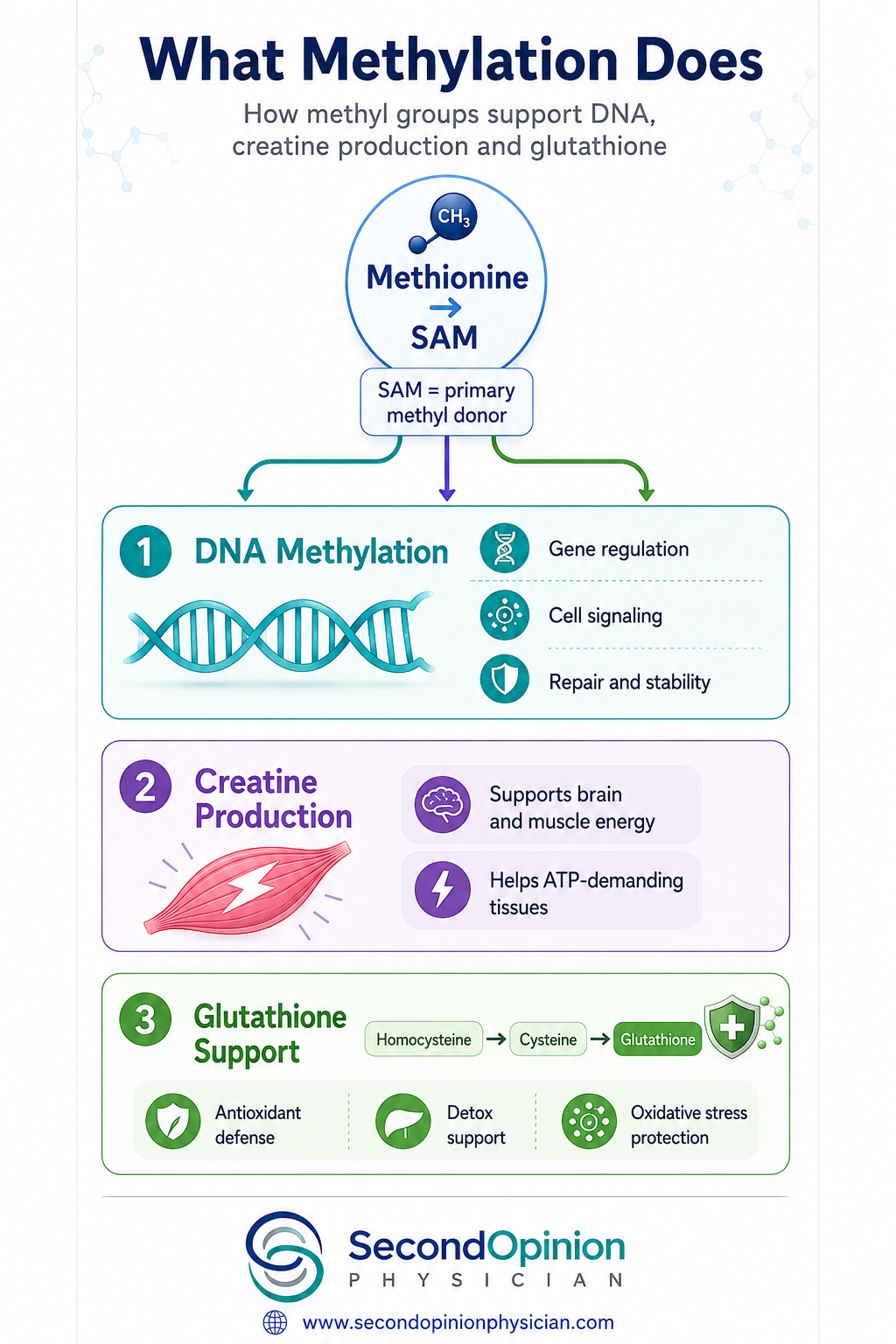

How to read a methylation panel report: start with methyl-donor supply, then assess the inhibition created by SAH, the recycling of homocysteine back to methionine, the diversion of homocysteine toward cysteine and glutathione, and the balance between choline, betaine and one-carbon metabolism. No single marker should be interpreted in isolation.
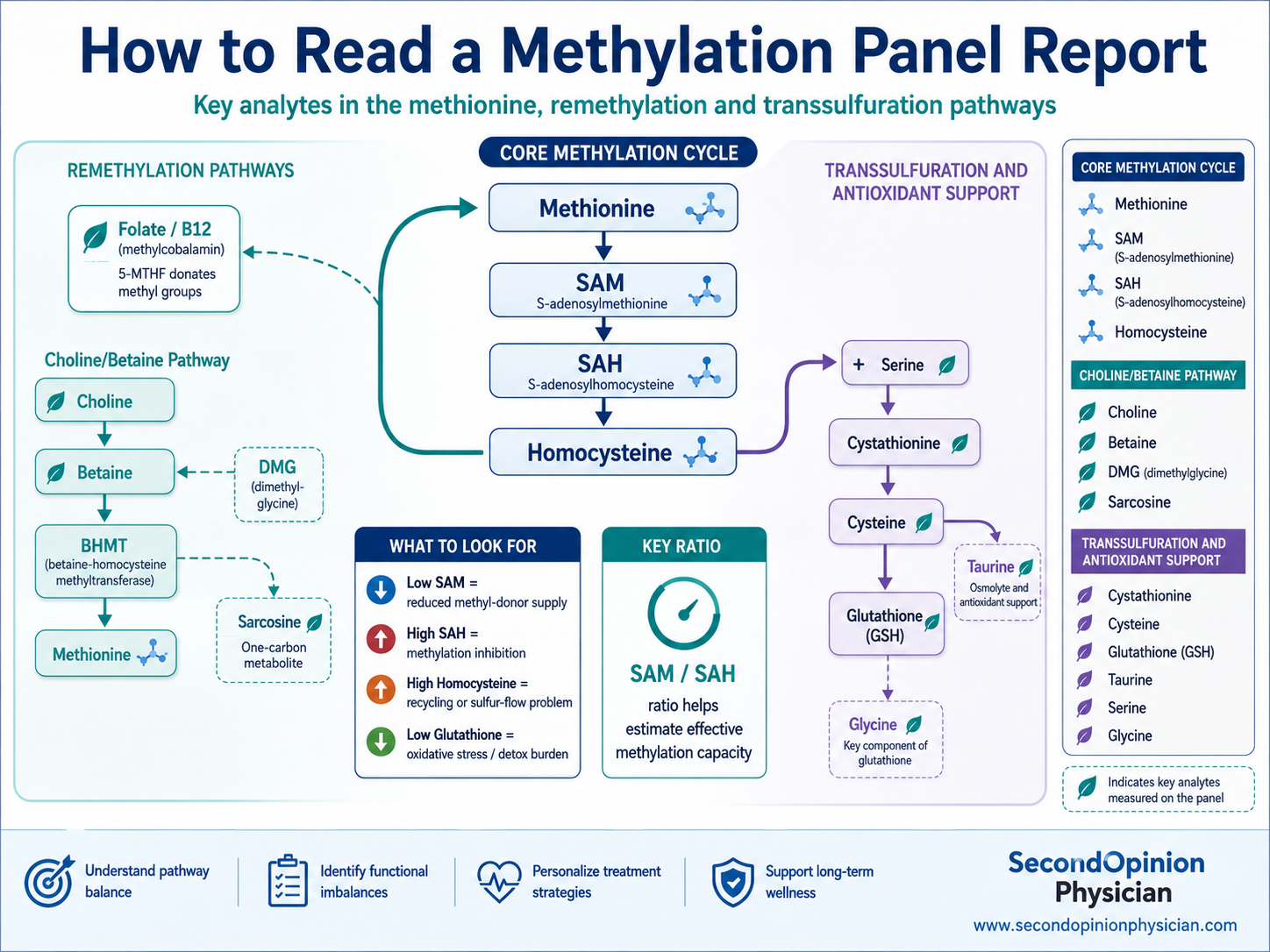
Key methylation-panel analytes show methyl-donor supply, SAH inhibition, homocysteine recycling, transsulfuration and glutathione support.
What Does a Methylation Panel Report Measure?
A functional methylation blood test measures metabolites that show how the methionine cycle and connected sulfur pathways are operating at the time of collection. This differs from a genetic report, which identifies inherited variants but cannot show whether a pathway is currently adequately supplied, congested, inhibited or compensating.
The practical question is not simply whether methylation is high or low. The report helps determine whether methyl-donor supply is adequate, whether SAH is blocking methyltransferases, whether homocysteine is being recycled, whether sulfur flow supports glutathione and whether the choline–betaine backup pathway is compensating.
Which Companies Offer Functional Methylation Testing?
Two established specialty laboratories offer biochemical methylation testing: Genova Diagnostics and Doctor’s Data. Both assess functional metabolites rather than relying only on genetic variants.
Genova Diagnostics Methylation Panel
Genova’s panel is the broader current option used by Second Opinion Physician. It measures core methionine-cycle metabolites, choline–betaine pathway markers, transsulfuration products, glutathione and several calculated ratios.
The genetics component is separate, allowing the biochemical report to stand on its own.
Doctor’s Data Plasma Methylation Profile
Doctor’s Data offers a focused plasma profile measuring methionine, SAM, SAH, homocysteine, adenosine, cystathionine and cysteine, together with the SAM-to-SAH methylation index.
It remains useful for focused evaluation of the methionine cycle, SAH clearance and transsulfuration, but it is narrower than the Genova panel.
Current SOP testing: Second Opinion Physician now uses the Genova Methylation Panel because its expanded analyte set provides more information about nutrient supply, choline–betaine recycling, glutathione status and pathway balance.
How to Read a Methylation Panel Report in Five Steps
1. Assess Methyl-Donor Supply
Review methionine, SAM, choline, betaine and serine. Low supply may reflect diet, absorption, ATP limitations, increased demand or poor recycling.
2. Assess Methylation Inhibition
Review SAH and the SAM/SAH ratio. Elevated SAH can inhibit methyltransferases even when SAM appears adequate.
3. Assess Homocysteine Recycling
Review homocysteine, methionine, betaine, DMG, choline and nutrient status to determine whether remethylation is keeping pace.
4. Assess Transsulfuration
Review cystathionine, cysteine, taurine, glutathione, serine and glycine to evaluate sulfur flow and antioxidant capacity.
5. Compare Ratios and Symptoms
Interpret the SAM/SAH ratio, methylation balance, methionine/sulfur balance and betaine/choline ratio with symptoms, diet, medications, kidney and liver function.
Do Not Treat One Number
A low analyte may reflect inadequate supply, excessive use, impaired production or rapid downstream conversion. Patterns are more useful than isolated values.
How Do You Interpret the SAM/SAH Ratio and Other Methylation Ratios?
| Ratio | What it summarizes | What a low or shifted result may suggest | What to evaluate next |
|---|---|---|---|
| SAM/SAH ratio | Methyl-donor availability relative to methylation inhibition | Low SAM, elevated SAH or both; reduced effective methylation capacity | Methionine, ATP/mitochondrial status, SAH clearance, homocysteine and adenosine handling |
| Methylation balance ratio | Broader relationship among metabolites associated with methyl-group production and use | Reduced methylation support or altered pathway demand | Folate/B12 pathways, B6, magnesium, zinc, iron, protein intake and oxidative stress |
| Methionine/sulfur balance | Relative flow toward methylation versus sulfur and antioxidant pathways | Shift toward transsulfuration, inadequate methylation status or increased oxidative demand | B6, serine, glycine, cysteine, glutathione and sulfur tolerance |
| Betaine/choline ratio | Availability and use of the liver-based BHMT backup pathway | Low betaine supply, limited choline conversion or altered backup-pathway use | Dietary choline, betaine/TMG, liver function, DMG and homocysteine recycling |
Walsh-oriented SAH interpretation: the methylation cycle is not restored simply by raising SAM. SAH must move toward homocysteine and adenosine, and the reaction is reversible. Forward flow depends on adequate removal of homocysteine and especially adenosine. Elevated SAH may therefore signal impaired clearance, oxidative stress, kidney or liver burden, mitochondrial dysfunction or inadequate zinc-dependent adenosine metabolism.
How to Read Each Analyte on the Genova Methylation Panel
| Analyte | Role | What an abnormal pattern may indicate | Nutrients or factors to evaluate |
|---|---|---|---|
| Methionine | Substrate used to produce SAM | Low intake, poor absorption, increased demand, impaired recycling or rapid utilization | Protein, digestion, B12, folate, betaine, zinc, ATP and liver function |
| SAM | Primary methyl donor for neurotransmitter, phospholipid, creatine, DNA and other reactions | Low production, inadequate ATP, high methyl demand or impaired recycling | Methionine, magnesium, mitochondria, creatine demand and methyl-donor status |
| SAH | Product of methylation and potent inhibitor of methyltransferases | Impaired conversion or inadequate clearance of homocysteine and adenosine | Zinc, B6, B12, folate, niacin-related adenosine metabolism, kidney/liver function, oxidative stress and alkalinity |
| Homocysteine | Branch point recycled to methionine or diverted toward cysteine and glutathione | Impaired remethylation, transsulfuration, kidney function or nutrient status | Folate, B12, B6, riboflavin, betaine, choline, zinc, magnesium, thyroid and kidney function |
| Cystathionine | Intermediate formed through CBS | Low sulfur flow, inadequate B6, limited serine or altered CBS activity | B6/P5P, serine, magnesium, oxidative stress and protein balance |
| Cysteine | Rate-limiting substrate for glutathione synthesis | Limited production, increased demand, poor absorption or oxidative consumption | NAC, protein, B6, glycine, selenium and antioxidant demand |
| Glutathione | Major intracellular antioxidant | High oxidative burden, limited cysteine/glycine, impaired synthesis or detoxification demand | Cysteine/NAC, glycine, selenium, riboflavin, mitochondria and toxin reduction |
| Taurine | Sulfur compound involved in bile, membranes, osmoregulation and nervous-system function | Limited sulfur flow, altered bile metabolism or increased demand | B6, cysteine, liver/bile function, magnesium and dietary taurine |
| Serine | Provides one-carbon units and combines with homocysteine to form cystathionine | Limited substrate for folate cycling or transsulfuration | Protein, B6, folate metabolism and glycine–serine balance |
| Glycine | Component of glutathione and participant in one-carbon metabolism and bile conjugation | High glutathione demand, limited intake or rapid utilization | Protein, collagen-rich foods, glycine, B6 and detoxification demand |
| Choline | Precursor for phosphatidylcholine, acetylcholine and betaine | Low intake, membrane demand, limited conversion to betaine or high acetylcholine use | Eggs, liver, meat, phosphatidylcholine, betaine and liver function |
| Betaine | Methyl donor used by BHMT to recycle homocysteine | Low dietary supply, inadequate choline conversion or underuse of backup pathway | TMG/betaine, choline, liver function, zinc and methionine |
| Dimethylglycine (DMG) | Product formed when betaine donates a methyl group | Shows whether the betaine-dependent backup pathway is active | Betaine, choline, homocysteine, liver function and BHMT genetics if needed |
| Sarcosine | Methylated glycine intermediate | Altered glycine methylation, folate cycling or downstream oxidation | Glycine, folate, B12, riboflavin and oxidative metabolism |
The report should guide nutrient evaluation, not automatic supplementation. A low analyte may be low because it is being consumed rapidly, not produced adequately or diverted into another pathway.
What Common Patterns Appear on a Methylation Panel Report?
Low Methionine + Low SAM
Suggests reduced methyl-donor supply or impaired SAM production. Consider low protein intake, malabsorption, inadequate ATP, increased methyl demand or poor homocysteine recycling.
Normal SAM + High SAH
Methyl groups may be available, but SAH is creating a functional block. Clearance and pathway support may be more important than immediately adding methyl donors.
High Homocysteine + Low Methionine
Remethylation may be inadequate. Folate, B12, betaine, choline, zinc, riboflavin, thyroid and kidney factors should be considered.
Low Cystathionine + Low Glutathione
Transsulfuration support may be inadequate, with possible need to evaluate B6, serine, cysteine, glycine and oxidative stress.
Low Betaine + Normal Choline
Choline may not be converting effectively to betaine, or the liver-based backup pathway may not be compensating adequately.
Low Glutathione + Elevated SAH
Oxidative stress and impaired clearance may be competing with methylation. Detoxification, mitochondria and SAH handling may need attention before aggressive methyl-donor therapy.
How Does a Methylation Panel Guide Nutrient Therapy?
The report should not generate a generic methylation supplement list. It helps determine which part of the pathway needs support and which interventions could be poorly tolerated.
Folate and Vitamin B12
Support MTR recycling of homocysteine to methionine. Use should consider Walsh biotype, folate sensitivity, whole-blood histamine and symptoms.
Vitamin B6 / P5P
Supports CBS and transsulfuration toward cystathionine, cysteine and glutathione.
Zinc
Supports methionine synthase and adenosine metabolism and may be relevant when SAH clearance, copper imbalance or metallothionein function is involved.
Magnesium
Supports ATP-dependent reactions and enzymes involved in methylation and energy production.
Betaine and Choline
Support the BHMT backup pathway, membrane synthesis and acetylcholine production.
Creatine
May reduce the methyl-group demand required for endogenous creatine synthesis, preserving SAM for other reactions.
NAC, Cysteine and Glycine
Provide substrates for glutathione synthesis when low glutathione or oxidative burden is identified.
Riboflavin and Niacin
Support folate/B12 recycling, redox balance and adenosine metabolism.
Antioxidant and Mitochondrial Support
May be more important than methyl donors when oxidative stress, poor ATP production or glutathione depletion limits pathway function.
Folate is not automatically the answer. In Walsh-style undermethylation, folate may worsen symptoms in some patients despite an MTHFR variant. Biochemical results, symptom pattern, medication response and whole-blood histamine provide context.
How Does a Methylation Panel Compare With MTHFR and COMT Gene Testing?
| Test type | What it tells you | What it cannot tell you | Best use |
|---|---|---|---|
| Genova or Doctor’s Data biochemical panel | Current levels of pathway metabolites and functional balance | Does not prove why a marker is abnormal without clinical context | Choosing current treatment priorities and monitoring response |
| MTHFR genetics | Inherited tendency affecting conversion of folate toward 5-MTHF | Does not show current folate status, SAM, SAH, homocysteine flow or actual methylation performance | Identifying predisposition and folate-cycle vulnerability |
| COMT genetics | Inherited variants associated with catechol and catechol-estrogen methylation | Does not measure catecholamine levels, SAM supply, SAH inhibition or actual enzyme activity | Adding context to stimulant, stress, estrogen and catecholamine sensitivity |
Genetics are stable throughout life. Biochemistry changes with diet, illness, medications, hormones, toxic exposure, kidney and liver function, sleep, inflammation and supplementation. A person can carry an MTHFR or COMT variant and still have adequate current methylation, while another person with no major variant can develop low SAM, elevated SAH or impaired glutathione production.
Best combined use: genetics can explain susceptibility; the functional methylation panel shows whether that susceptibility is currently expressed and where the pathway is actually stressed.
Can a Methylation Panel Confirm Undermethylation?
A methylation panel can identify reduced methylation capacity, elevated SAH inhibition, low methyl-donor supply and related pathway imbalances. However, the Walsh clinical biotype of undermethylation is broader than one laboratory ratio and is usually assessed with symptoms, family traits, medication response and whole-blood histamine.
The biochemical panel is especially useful when the clinical pattern and whole-blood histamine do not fully agree, when SAM and SAH need direct measurement, or when toxic burden, mitochondrial stress, creatine demand, high methylation demand or impaired clearance may be creating acquired undermethylation.
What Are the Limitations of Methylation Panel Interpretation?
- Results are affected by diet, fasting, supplements, medications, illness and sample handling.
- A single result does not establish a psychiatric diagnosis or prove a genetic defect.
- Low values may reflect rapid utilization rather than simple deficiency.
- High values may reflect increased supply, impaired clearance or reduced downstream use.
- Kidney, liver, thyroid and mitochondrial function can alter the pathway.
- Functional reference intervals are not identical to treatment thresholds.
- Calculated ratios provide context rather than absolute diagnoses.
Methionine, SAMe, methylfolate, betaine and other methyl donors may aggravate selected patients. Treatment should account for oxidative stress, SAH clearance, medication interactions, bipolar or psychotic symptoms and Walsh biotype.
Frequently Asked Questions About How to Read a Methylation Panel Report
What is the most important number on a methylation panel?
The SAM/SAH ratio is important because it reflects methyl-donor supply relative to inhibition, but it should be interpreted with SAM, SAH, homocysteine, methionine and downstream markers.
What does high SAH mean on a methylation report?
High SAH may indicate impaired movement toward homocysteine and adenosine or inadequate clearance of those products. SAH inhibits methyltransferases even when SAM is normal.
Does a low SAM/SAH ratio always mean I need methylfolate?
No. The ratio may be low because SAM is low, SAH is elevated or both. Oxidative stress, mitochondrial dysfunction or impaired clearance may need attention before adding methyl donors.
Is the Genova Methylation Panel a genetic test?
No. The core panel measures functional biochemical metabolites. A separate genomics add-on may be ordered.
What is the difference between Genova and Doctor’s Data methylation testing?
Both measure core plasma metabolites. Genova includes a broader set of choline, betaine, glycine, sarcosine, taurine, glutathione and calculated balance markers, while Doctor’s Data offers a more focused plasma profile.
Is MTHFR testing enough to diagnose undermethylation?
No. MTHFR identifies an inherited tendency affecting folate metabolism but does not measure current SAM, SAH, homocysteine recycling, transsulfuration or glutathione status.
What does COMT testing add?
COMT genetics may provide context for catecholamine and catechol-estrogen handling, but actual function also depends on SAM availability, SAH inhibition, magnesium, stress, hormones and other factors.
Order and Interpret the Genova Methylation Panel
The Genova Methylation Panel provides a functional map of methyl-donor supply, SAH inhibition, homocysteine recycling, sulfur metabolism, glutathione status and choline–betaine support. Physician interpretation can connect these findings to symptoms, Walsh biotype, medications and targeted nutrient therapy.
Selected Sources and Further Reading
Understanding the Methylation Test: How to Identify Undermethylation and Biochemical Imbalances
Many people learn about the methylation cycle through MTHFR genetics or whole blood histamine, but still struggle to understand what their results mean—and what to do next. A methylation test that measures biochemistry, not just genes, provides the clearest picture of how the methylation cycle is functioning in real time.
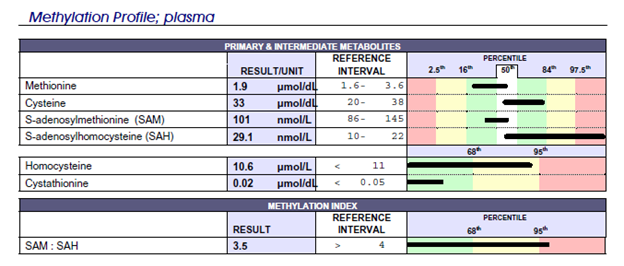
This post explains why traditional testing is often incomplete, why undermethylation requires more than folate-focused advice, and how plasma markers such as SAM, SAH, and methionine reveal patterns that drive mood, cognition, inflammation, and detoxification.
Why a Methylation Test Should Measure Chemistry, Not Just Genes
Most people arrive at methylation questions because of symptoms: anxiety, OCD traits, depression, irritability, inflammation, poor detoxification, or chronic fatigue. Others are told they have an MTHFR mutation but are given no practical guidance.
While genetic information can be helpful, genes do not tell you what is happening right now. A true methylation blood test evaluates the actual metabolic activity behind neurotransmitter synthesis, glutathione production, and SAM-dependent methylation reactions.
The Doctor’s Data Plasma Methylation Panel is a biochemical assessment designed to evaluate:
-
Methionine (the methylation substrate)
-
SAM (the primary methyl donor)
-
SAH (a potent methylation inhibitor)
-
Homocysteine
-
Cystathionine
-
Cysteine
-
The SAM:SAH ratio
These markers reveal the functional status of the pathway better than any genetic test can.
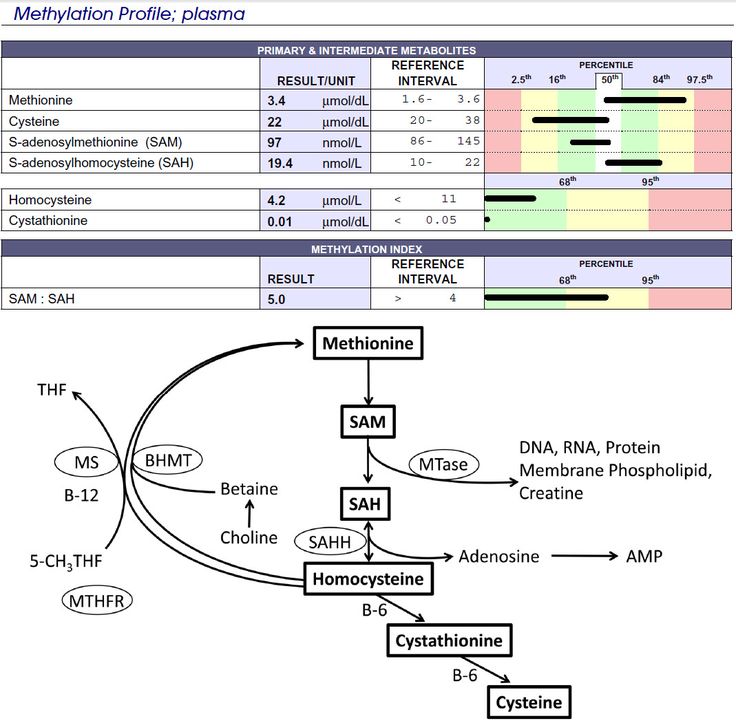
Signs You May Need an Undermethylation Test
People frequently search for an undermethylation test because symptoms and labs don’t fully align. Whole blood histamine may be elevated, or an MTHFR result may suggest risk for methylation problems, but neither of these confirm how well the pathway is working.
Functional signs that may suggest undermethylation or impaired methylation efficiency include:
-
High internal tension
-
Perfectionism, rumination, or OCD traits
-
Chronic anxiety
-
Low serotonin or low motivation
-
Poor response to SSRIs
-
Sensitivity to folate or methyl donors
-
Increased inflammation
-
Elevated homocysteine with normal or low B-vitamin status
A methylation test that measures SAM, SAH, and homocysteine helps clarify the exact biochemical pattern.
How to Test for Undermethylation: The Markers That Matter
Many patients ask how to test for undermethylation in a reliable way. The answer is: look at metabolite flow through the methylation cycle.
Here’s what the key markers show:
1. Low SAM + Low Methionine → Classical Undermethylation
This reflects low methylation capacity and reduced production of neurotransmitters such as serotonin, dopamine, and norepinephrine.
Treatment often focuses on:
-
Methionine
-
SAMe (when oxidative stress is controlled)
-
Zinc and magnesium
-
B6/P5P
-
Avoiding folate-heavy protocols that worsen symptoms in this biotype
2. High Homocysteine + High SAH → Methylation Congestion
This is one of the most important distinctions in a methylation test.
High SAH inhibits methylation reactions more strongly than low SAM ever could.
Standard labs often call SAH “normal,” but Walsh-trained clinicians consider the SAM:SAH ratio a key determinant of methylation efficiency.
If methylation is congested, the correct strategy is to:
-
Support SAH clearance
-
Reduce oxidative stress
-
Use magnesium, zinc, and B6
-
Avoid aggressive methyl donors
This pattern is common in patients with inflammation or mitochondrial impairment.
3. Low Cystathionine → Impaired Transsulfuration
This affects homocysteine methylation because homocysteine cannot efficiently convert toward glutathione.
Treatment may include:
-
B6/P5P
-
NAC, glycine, serine
-
Sulfur-rich foods
-
Mitochondrial support to reduce oxidative load
This is one of the reasons homocysteine may remain elevated despite “normal” genetics or B-vitamin levels.
Why Homocysteine Methylation Is Central to Interpretation
Homocysteine is often misunderstood as simply a heart risk marker.
In reality, homocysteine methylation is one of the best indicators of:
-
Detoxification capacity
-
Glutathione production
-
Oxidative stress
-
Cognitive function
-
Mitochondrial efficiency
A proper methylation blood test clarifies whether homocysteine is:
-
Too high because of SAH buildup
-
Too low because it cannot convert to cystathionine
-
Disproportionate to SAM (signaling blocked methylation)
Understanding these relationships prevents ineffective supplement strategies and ensures that treatment matches biochemistry, not generic protocols.
Why Interpretation by a Walsh-Trained Physician Matters
Methylation patterns are nuanced.
Standard reference ranges do not reflect optimal function, and treatment must be tailored to the individual’s biotype and symptom pattern.
A Walsh-trained physician considers:
-
Zinc/copper ratio
-
Neurotransmitter tendencies
-
Sensitivity to folate
-
Oxidative stress load
-
Inflammatory markers
-
Medication interactions
-
Genetic tendencies without being limited by them
A proper methylation test provides the biochemical map.
Expert interpretation provides the correct therapeutic route.
When a Methylation Blood Test Makes Sense
A methylation panel is recommended for:
-
Individuals previously diagnosed with undermethylation
-
Those with confusing MTHFR results
-
Patients whose symptoms don’t improve with standard functional medicine protocols
-
Anyone wanting to confirm where methylation is blocked
-
People needing a non-genetic, actionable assessment
-
Patients experiencing high homocysteine or oxidative stress with no clear cause
If you’re trying to understand how to test for undermethylation, this panel is the most accurate tool available.
Summary: Who Benefits Most from a Methylation Test
A methylation test offers clarity when symptoms are confusing, histamine levels are inconclusive, or genetic testing alone doesn’t provide direction. By measuring SAM, SAH, methionine, homocysteine, cystathionine, and the SAM:SAH ratio, patients and clinicians get a real-time picture of methylation efficiency and treatment priorities.
For individuals wondering whether they are undermethylated, struggling with elevated homocysteine, or seeking targeted nutrient therapy, a methylation blood test provides actionable insight that supports a precise and individualized approach.