
The Mark Gordon Approach to Traumatic Brain Injury: Hormones, Neuro-Inflammation, Biomarkers and Peptides
Dr. Mark Gordon’s approach to traumatic brain injury and post-concussion syndrome focuses on the biochemical consequences that may persist after a concussion, blast exposure or repetitive head trauma. Rather than viewing depression, fatigue, insomnia, irritability, cognitive decline and PTSD-like symptoms only as psychiatric problems, the protocol evaluates neuro-inflammation, hypothalamic-pituitary dysfunction, hormone deficiencies, neurosteroids, metabolic health and inflammatory signaling that may be impairing recovery. This article summarizes Gordon’s framework, his use of biomarkers and hormone testing, the role of peptides and gut health, and the practical lab options available through Second Opinion Physician.
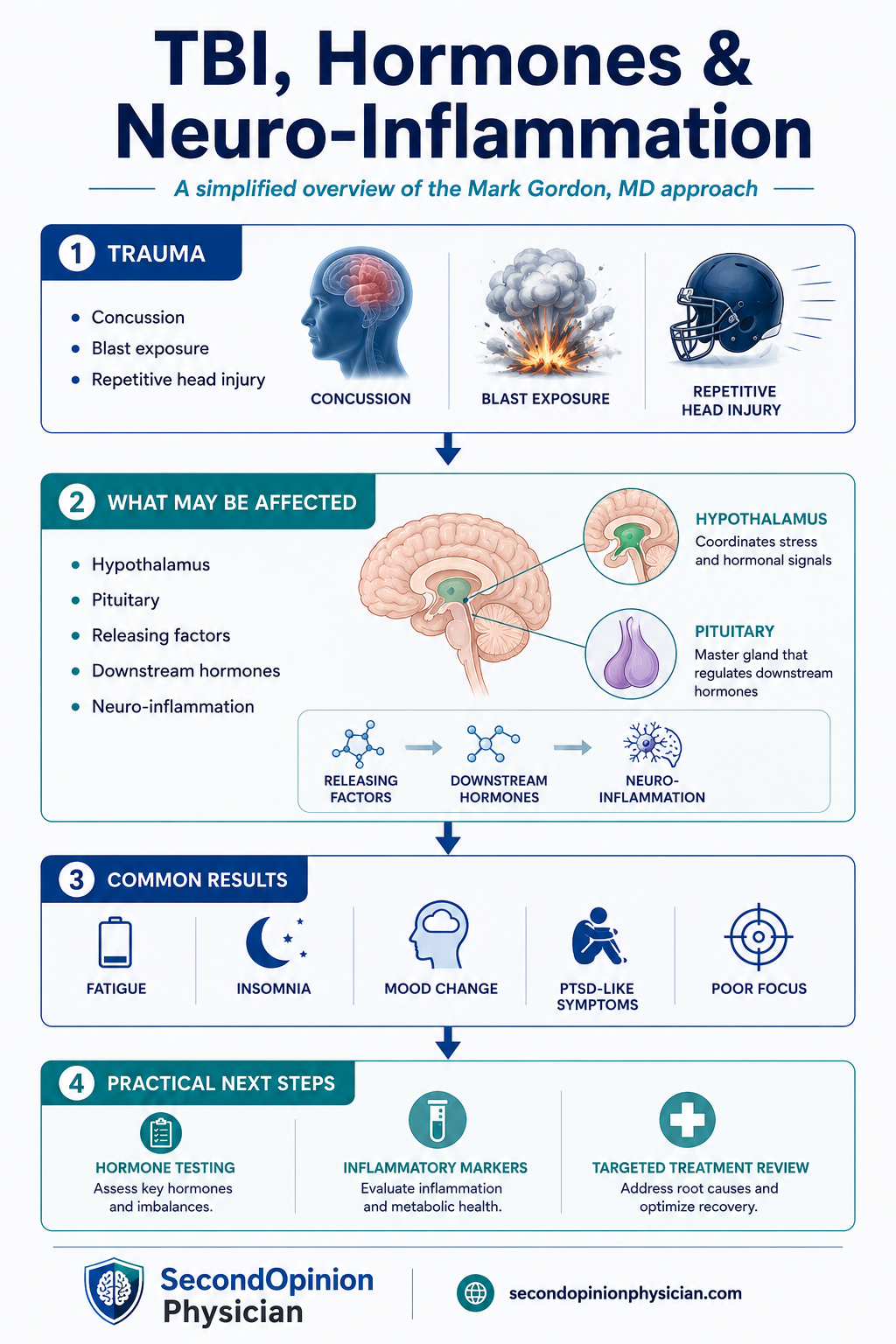

The central clinical idea: Dr. Mark Gordon views many chronic post-TBI symptoms as consequences of persistent neuro-inflammation and disruption of hypothalamic-pituitary signaling. His protocol uses broad laboratory testing to identify hormone, metabolic and inflammatory abnormalities, then targets the abnormalities rather than treating depression, fatigue, insomnia or cognitive problems only as isolated symptoms.
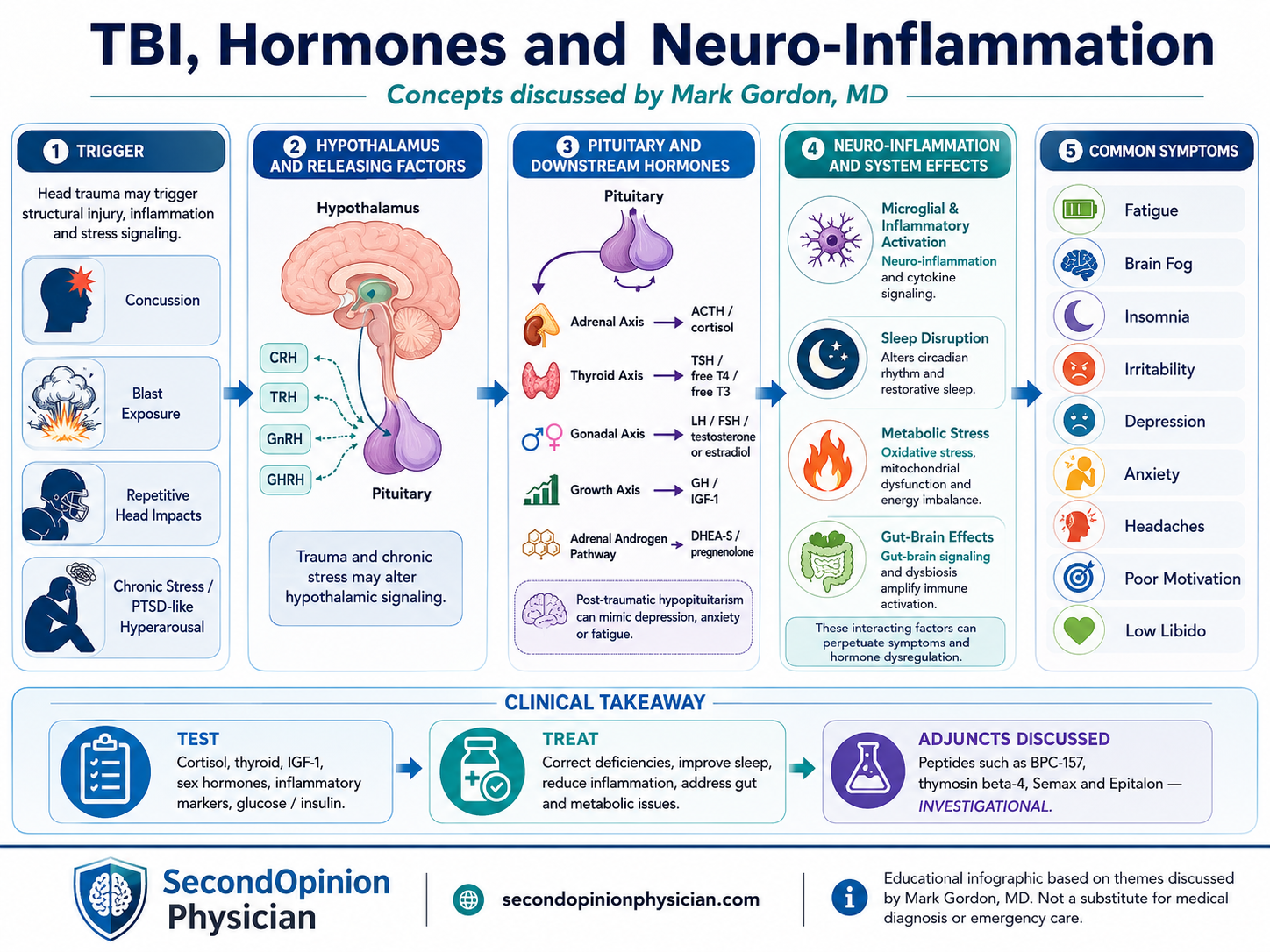
Head trauma may disrupt hypothalamic-pituitary signaling and contribute to hormone imbalance, neuro-inflammation and persistent post-concussion symptoms. Based on concepts discussed by Mark Gordon, MD.
Important distinction: screening for post-traumatic hypopituitarism is supported by endocrine literature and clinical guidance. Gordon’s broader “optimal range,” nutraceutical and peptide strategies go beyond conventional TBI guidelines. BPC-157 and thymosin beta-4 remain investigational for TBI, with most evidence coming from animal or preclinical studies.
What Is the Mark Gordon TBI Protocol for Traumatic Brain Injury and Post-Concussion Syndrome?
The Mark Gordon TBI protocol—also called the Millennium TBI approach—treats chronic traumatic brain injury and post-concussion syndrome as neuroendocrine and inflammatory disorders as well as structural injuries. The approach begins with a detailed history of concussion, blast exposure, repetitive head impacts, behavioral change, medication use and endocrine symptoms.
Gordon argues that depression, anxiety, anger, insomnia, poor concentration and loss of motivation after TBI may be diagnosed as psychiatric disorders while hypothalamic-pituitary dysfunction and neuroinflammation remain unmeasured. In the interview supplied for this article, he repeatedly contrasts symptom suppression with identifying biological causation.
How Can Traumatic Brain Injury Cause Post-Concussion Symptoms, PTSD-Like Symptoms and Neuro-Inflammation?
The hypothalamus and pituitary regulate thyroid activity, adrenal signaling, growth hormone, gonadal hormones and multiple neuroendocrine feedback loops. Shearing forces, vascular injury, edema, ischemia and inflammatory signaling may damage the pituitary, its stalk, its blood supply or hypothalamic regulation.
Post-traumatic hypopituitarism is recognized in the medical literature. Gordon extends this concept by arguing that trauma, chronic stress and PTSD-like symptom patterns may also reflect altered hypothalamic releasing factors and downstream hormone signaling, not just visible structural brain injury. Growth hormone deficiency is often reported as the most common chronic pituitary deficit, but ACTH–cortisol, thyroid and gonadal axes can also be affected. Symptoms may overlap with depression, PTSD, chronic fatigue, sleep disturbance and medication effects.
Primary Injury
Mechanical forces may cause axonal injury, vascular damage, contusions and disruption of pituitary or hypothalamic structures.
Secondary Injury
Microglial activation, cytokines, oxidative stress, excitotoxicity and blood–brain barrier disruption may continue after the initial event.
Endocrine Consequences
Growth hormone, thyroid, adrenal and gonadal signaling may become deficient, unstable or poorly coordinated.
Quick overview of the Mark Gordon, MD framework for TBI, hormones and neuro-inflammation.
Which Post-Concussion Symptoms May Reflect Hormone Problems or Neuro-Inflammation?
Mood and Behavior
Depression, anxiety, irritability, emotional volatility, panic, impulsivity or loss of motivation.
Cognition
Brain fog, slowed processing, poor memory, reduced concentration and impaired executive function.
Physical Function
Fatigue, weakness, altered body composition, reduced exercise recovery, headaches or chronic pain.
Endocrine and Sleep
Low libido, menstrual change, erectile dysfunction, insomnia, daytime sleepiness, weight gain or temperature intolerance.
Symptoms are not specific. Similar patterns may arise from sleep apnea, medication effects, primary psychiatric illness, thyroid disease, anemia, chronic infection, pain, substance use or other conditions.
Which Biomarkers and Hormone Tests Are Included in the Mark Gordon TBI Panel?
Gordon describes a broad panel of standard laboratory tests interpreted together as patterns. The Second Opinion Physician TBI Hormone Panel includes the following categories and markers.
| Category | Markers | Why they may matter after TBI |
|---|---|---|
| Pituitary signaling | ACTH, FSH, LH, prolactin, growth hormone | May identify impaired pituitary output or inappropriate signaling to target glands. |
| Growth hormone axis | IGF-1, growth hormone | Growth hormone deficiency can contribute to fatigue, poor body composition, cognitive symptoms and reduced quality of life. Dynamic testing may be required. |
| Adrenal and neurosteroid context | Morning cortisol, DHEA-S, pregnenolone, progesterone | Provides information about adrenal reserve, steroidogenesis and neuroactive steroid precursors. |
| Gonadal hormones | Total testosterone, free testosterone, SHBG, estradiol, estrone, DHT | Assesses gonadal output, binding and conversion patterns affecting mood, energy, libido, bone and muscle. |
| Thyroid axis | TSH, total and free T4, total and free T3, reverse T3, TPO and thyroglobulin antibodies | Helps distinguish central signaling problems, peripheral conversion issues and autoimmune thyroid disease. |
| Inflammation and vascular risk | hs-CRP, homocysteine, CBC, lipids | Provides systemic inflammatory, vascular and metabolic context; does not directly measure brain inflammation. |
| Glucose and metabolism | Hemoglobin A1c, free and total insulin, CMP | Glucose dysregulation and insulin resistance may worsen neuroinflammation, fatigue and recovery. |
| Nutrition and safety | Vitamin D, plasma zinc, ferritin, CBC, CMP | Identifies nutrient, hematologic, liver, kidney or electrolyte contributors and treatment-safety issues. |
| Male safety monitoring | PSA, total and percentage-free PSA | Provides context before or during selected androgen-directed treatment. |
How Does Mark Gordon Interpret TBI Hormone Testing and Biomarker Results?
A defining feature of Gordon’s approach is that he does not treat the laboratory reference interval as equivalent to an optimal physiologic level. He describes comparing relationships among markers and often aims for values in the middle-to-upper portion of the laboratory range, depending on the diagnosis and clinical context.
This differs from standard endocrinology, where treatment generally requires a recognized deficiency, consistent symptoms and—when necessary—confirmatory or dynamic testing. A result near the lower end of a reference interval may deserve attention, but it does not automatically establish pituitary failure or justify hormone treatment.
Reference range versus treatment threshold: Gordon’s “optimal quartile” interpretation is part of his clinical framework, not a universally accepted endocrine guideline. Growth hormone deficiency, central adrenal insufficiency and central hypothyroidism require careful diagnostic methods.
Which Hormones and Neurosteroids Does the Mark Gordon TBI Protocol Use?
Pregnenolone
A precursor for progesterone, allopregnanolone, DHEA and other steroids. Gordon emphasizes neurosteroid production and GABA-related calming pathways.
DHEA
A neuroactive steroid precursor that may influence mood, immune signaling, myelin biology and downstream sex-hormone production.
Testosterone and Estradiol
Both influence brain function, bone, muscle and inflammatory signaling. Gordon cautions against viewing testosterone alone as the entire steroid pathway.
Growth Hormone and IGF-1
Growth hormone deficiency after TBI may contribute to fatigue, cognition, body composition and reduced quality of life.
Thyroid Hormones
Central hypothyroidism may be missed when TSH is interpreted alone. Free T4 and the full pituitary context are important.
Cortisol
Both cortisol deficiency and stress-related dysregulation can be clinically important. Suspected adrenal insufficiency requires prompt conventional evaluation.
In the interview, Gordon favors preserving or stimulating endogenous gonadal signaling in selected younger men rather than automatically using testosterone alone. He discusses clomiphene or enclomiphene when the axis remains capable of responding. This is an individualized prescription decision, not a general TBI recommendation.
Which Neuro-Inflammation and Metabolic Markers Are Relevant After TBI?
Gordon describes a newer neuroinflammatory panel containing multiple markers, used before and after treatment to provide objective evidence that inflammatory signaling has changed. The transcript refers to a 20-marker inflammatory panel and a broader 28-point biomarker panel, but it does not provide a complete validated analyte list for the newer inflammatory test.
Clinically available markers that can provide related context include hs-CRP, IL-6, homocysteine, reduced glutathione, CBC, CMP, glucose, insulin, hemoglobin A1c, vitamin D and zinc. These are systemic biomarkers and should not be presented as direct measurements of inflammation inside the brain.
hs-CRP and IL-6
May identify systemic inflammatory signaling, though neither is specific to TBI or the brain.
Glutathione
Provides information about antioxidant reserve and redox burden relevant to oxidative stress.
Homocysteine
May reflect vascular risk, methylation balance, nutrient status and kidney function.
Why Does the Gut–Brain Connection Matter in TBI and Post-Concussion Recovery?
The interview places substantial emphasis on gut inflammation, dysbiosis and impaired serotonin-related biology. Brain injury and blast exposure may alter autonomic signaling, intestinal permeability, motility and immune activity. Conversely, microbial products and inflammatory signals from the gut may amplify neuroimmune activation.
Gordon’s clinical program therefore evaluates gastrointestinal symptoms when progress is incomplete. Depending on the history, this may include stool testing, celiac and permeability markers, dietary assessment, infection evaluation and treatment of constipation, reflux or dysbiosis.
Which Peptides Does Gordon Discuss for TBI and Neuro-Inflammation?
Gordon reports combining his laboratory-directed program with selected peptides since approximately 2019. The interview specifically discusses BPC-157 and thymosin beta-4 in the context of tissue repair and also mentions growth hormone or IGF-1 as possible enhancers of regenerative processes.
| Peptide or growth signal | Proposed role | Current evidence limitation |
|---|---|---|
| BPC-157 | Proposed anti-inflammatory, vascular, gastrointestinal and tissue-repair effects; animal studies report improved outcomes after experimental brain injury. | Human TBI efficacy and safety are not established. BPC-157 is not FDA-approved for TBI treatment. |
| Thymosin beta-4 / TB-500-related products | Animal TBI studies suggest effects on angiogenesis, neurogenesis, axonal remodeling and functional recovery. | Evidence is predominantly preclinical. Commercial TB-500 products are not equivalent to an approved TBI therapy. |
| Growth hormone / IGF-1 | May be relevant when true post-TBI growth hormone deficiency is confirmed; supports metabolism and tissue repair. | GH deficiency often requires endocrine testing beyond a single random GH or IGF-1 value. |
Peptides should not be presented as proven TBI therapy. The animal evidence for BPC-157 and thymosin beta-4 is biologically interesting, but controlled human TBI trials are lacking. Product purity, sterility, dosing, interactions and long-term safety are additional concerns.
What Is the Treatment Sequence in the Millennium TBI Protocol for Post-Concussion Recovery?
1. Establish Safety and Conventional TBI Care
Acute neurological deterioration, new weakness, seizures, repeated vomiting, severe headache, anticoagulant use or altered consciousness requires urgent evaluation. Hormone and functional testing does not replace imaging, neurology, rehabilitation or emergency care.
2. Identify Objective Deficiencies
Gordon emphasizes broad testing rather than symptom-based guessing. Deficiencies in thyroid, gonadal, adrenal or growth hormone axes are addressed according to the pattern.
3. Reduce Neuroinflammatory and Oxidative Burden
The program uses nutrition, vitamin D, omega-3 fats, antioxidants and other nutraceuticals selected from laboratory findings and clinical context.
4. Restore Sleep, Metabolic and Gut Function
Sleep apnea, insomnia, glucose dysregulation, pain, alcohol, medication burden and intestinal inflammation can perpetuate symptoms even when hormones are corrected.
5. Consider Experimental Adjuncts Selectively
Peptides and other regenerative strategies are considered adjunctive rather than substitutes for identifying endocrine dysfunction and correcting foundational problems.
Which Parts of the Mark Gordon TBI Protocol Are Evidence-Based and Which Are Experimental?
Better Established
- TBI can cause acute or chronic pituitary dysfunction.
- Moderate-to-severe TBI warrants attention to pituitary screening.
- Persistent compatible symptoms may justify endocrine evaluation after milder TBI.
- Confirmed hormone deficiencies should be treated according to endocrine standards.
- Neuroinflammation and oxidative stress contribute to secondary brain injury.
Emerging or Controversial
- Treating “low-normal” hormone values to a preferred quartile for most TBI patients.
- Using broad systemic cytokine panels as direct measures of neuroinflammation.
- Assuming psychiatric symptoms primarily reflect hormone deficiency.
- Routine pregnenolone, DHEA or hormone combinations without confirmed need.
- BPC-157, thymosin beta-4 or other peptides as established human TBI therapy.
The strongest clinical application: persistent post-concussion symptoms should not automatically be treated as only psychiatric. A careful endocrine, metabolic, sleep and inflammatory evaluation may uncover treatable contributors—but treatment still requires standard diagnostic safeguards.
Which TBI Hormone Tests and Biomarker Panels Are Available Through Second Opinion Physician?
The most direct starting point is the comprehensive TBI Hormone Panel based on Gordon’s neuroendocrine framework. Individual or supplemental tests may be appropriate when a full panel has already been completed or when the history points to a specific concern.
TBI Hormone Panel
Broad pituitary, thyroid, gonadal, adrenal, growth hormone, metabolic, inflammatory and nutrient evaluation.
View panelInflammation and Redox
hs-CRP, IL-6, reduced glutathione, homocysteine and related markers may provide systemic context.
View IL-6Cortisol and DHEA
A diurnal saliva profile may be useful when sleep, stress-response or HPA-axis timing is a major concern.
View adrenal profileGrowth Hormone Axis
IGF-1 is a useful screen, but suspected growth hormone deficiency may require endocrinology referral and dynamic testing.
Search IGF-1Gut–Brain Evaluation
Stool, celiac or intestinal-permeability testing may be considered when gastrointestinal symptoms are prominent.
View other panelsPhysician Review
Hormone replacement and peptide decisions require clinical review, contraindication screening and follow-up monitoring.
Consultation optionsFrequently Asked Questions About the Mark Gordon TBI Protocol
What is the Mark Gordon TBI protocol?
It is a laboratory-directed neuroendocrine approach that evaluates pituitary hormones, neurosteroid precursors, metabolic health and inflammatory burden after concussion, blast exposure or repetitive head impacts.
Can a mild concussion cause hormone problems?
Yes, pituitary dysfunction has been reported after mild as well as moderate or severe TBI. The likelihood and screening strategy depend on injury severity, timing and persistent symptoms.
Which hormones are commonly evaluated after TBI?
Testing may include ACTH and cortisol, thyroid hormones, FSH, LH, testosterone or estradiol, prolactin, DHEA-S, pregnenolone, growth hormone and IGF-1.
Does a normal MRI rule out the problems Gordon describes?
No. Standard imaging may be normal despite post-concussion symptoms or pituitary dysfunction.
Are BPC-157 and thymosin beta-4 proven treatments for TBI?
No. Both have encouraging preclinical findings, but controlled human evidence for TBI is insufficient.
Can hormone treatment replace rehabilitation or psychiatric care?
No. Endocrine treatment may address a confirmed deficiency, but rehabilitation, sleep care, psychotherapy, medication management and neurological evaluation may still be necessary.
Investigating Persistent Symptoms After Head Trauma
A comprehensive history and targeted laboratory assessment may help distinguish structural injury from pituitary dysfunction, hormone deficiency, metabolic stress, systemic inflammation, gut dysfunction and medication effects.
Selected Sources and Further Reading
- Mark Gordon interview: hormones, biomarkers, neuroinflammation and peptides.
- Ghigo E, et al. Consensus guidelines on screening for hypopituitarism following TBI.
- Tan CL, et al. Screening and management of pituitary dysfunction after TBI.
- Mele C, et al. Neuroinflammation and hypothalamic-pituitary dysfunction.
- Mahajan C, et al. Endocrine dysfunction after traumatic brain injury.
- Kgosidialwa O, et al. Growth hormone deficiency following TBI.
- Gordon ML, Marr A. A paradigm shift in symptomatic TBI.
- Xiong Y, et al. Thymosin beta-4 in an experimental rat TBI model.
- McGuire FP, et al. BPC-157 evidence and safety review.