
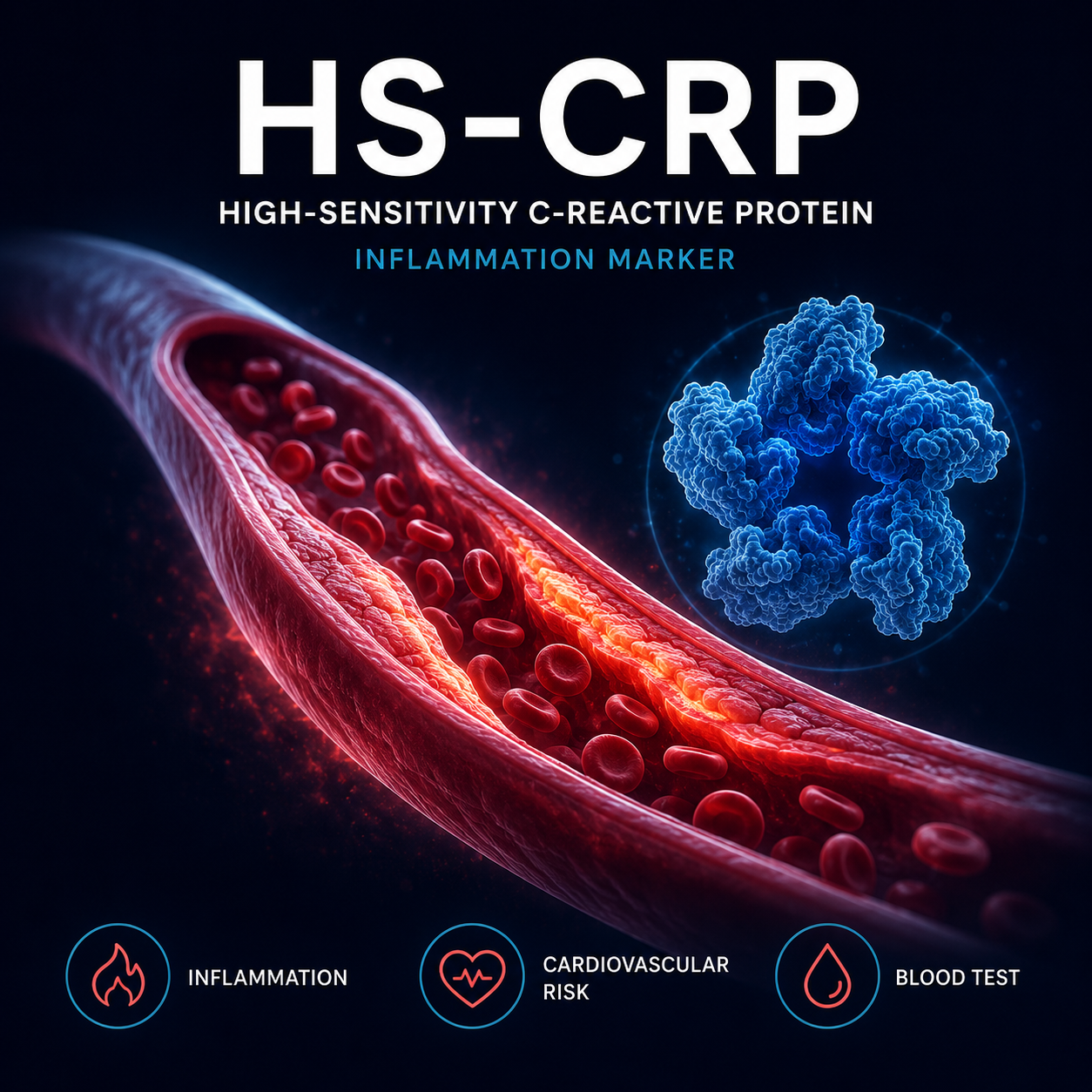
hs-CRP Test
$49.00
The hs-CRP Test measures very low levels of C-reactive protein, a liver-produced protein that rises in response to inflammation. Unlike a standard CRP test, high-sensitivity CRP (hs-CRP) is designed to detect lower levels of inflammatory activity that may be relevant to cardiovascular risk, chronic low-grade inflammation, metabolic stress, healthy aging, and broader epigenetic or inflammatory assessment.
This Labcorp blood test is particularly useful when evaluating persistent low-grade inflammation, cardiovascular risk beyond cholesterol alone, inflammatory contributions to metabolic or cognitive symptoms, and whether lifestyle or biochemical factors may be increasing long-term inflammatory burden.
Description
The hs-CRP Test is a sensitive blood test used to detect low levels of systemic inflammation.
C-reactive protein is produced by the liver in response to inflammatory signaling. While a conventional CRP test is often used when significant infection or inflammatory disease is suspected, high-sensitivity C-reactive protein (hs-CRP) can measure much lower concentrations and is commonly used to evaluate chronic low-grade inflammation and cardiovascular risk.
This makes the hs-CRP Test useful not only in cardiovascular assessment, but also when evaluating metabolic health, inflammatory burden, healthy aging, oxidative stress, and inflammatory influences on methylation and epigenetic function.
This test is performed through Labcorp as C-Reactive Protein (CRP), High Sensitivity — Test #120766.
What Does the hs-CRP Test Measure?
The hs-CRP Test measures very small amounts of C-reactive protein circulating in the blood.
CRP is an acute-phase protein produced primarily by the liver in response to inflammatory cytokines. It can increase when the immune system detects infection, tissue injury, metabolic stress, or another inflammatory stimulus.
The high-sensitivity assay is designed to measure CRP at concentrations lower than those typically emphasized by a standard CRP test, making it particularly useful when investigating subtle or chronic inflammatory activity.
hs-CRP Test vs Standard CRP Test
Both tests measure C-reactive protein, but their primary clinical uses are somewhat different.
hs-CRP Test
Measures CRP with greater sensitivity at lower concentrations. It is particularly useful for assessing low-grade inflammation and cardiovascular risk.
Standard CRP Test
Commonly used when evaluating more substantial inflammation associated with infection, autoimmune disease, tissue injury, or other inflammatory conditions.
Labcorp offers the standard quantitative CRP as Test #006627 and the high-sensitivity cardiovascular assay as Test #120766.
Why Order an hs-CRP Test?
The hs-CRP Test can provide useful information when the goal is to identify inflammatory burden that may not be obvious from symptoms or routine laboratory testing.
It may be helpful when evaluating:
- Chronic low-grade inflammation
- Cardiovascular risk
- Metabolic syndrome
- Insulin resistance
- Obesity-related inflammatory signaling
- Unexplained fatigue or poor recovery
- Inflammatory contributions to cognitive or neurologic symptoms
- Healthy-aging and longevity risk factors
- Oxidative stress
- Persistent inflammation associated with environmental or metabolic stress
hs-CRP Test and Cardiovascular Risk
One of the best-established uses for the hs-CRP Test is cardiovascular risk assessment.
Atherosclerosis is not simply a cholesterol-storage problem. It also involves inflammatory activity within blood vessel walls. hs-CRP can therefore provide information that complements traditional cardiovascular markers such as LDL cholesterol, HDL cholesterol, triglycerides, ApoB, and lipoprotein(a).
Current cardiovascular guidelines recognize persistently elevated hs-CRP as a risk-enhancing factor. An hs-CRP level of 2.0 mg/L or greater on more than one occasion can contribute to cardiovascular risk assessment when interpreted with the rest of the patient's risk profile.
hs-CRP does not replace cholesterol testing or cardiovascular risk assessment. Its value is in identifying inflammatory risk that may exist in addition to lipid-related risk.
hs-CRP Test for Chronic Inflammation
Low-grade inflammation may persist without producing the dramatic CRP elevations seen during acute infection or major inflammatory disease.
The hs-CRP Test for chronic inflammation can be useful when symptoms or metabolic findings suggest an ongoing inflammatory environment.
Potential contributors include:
- Excess visceral body fat
- Insulin resistance
- Poor glucose control
- Smoking
- Sleep disturbance
- Periodontal disease
- Chronic inflammatory disease
- Environmental exposure
- Recent infection or tissue injury
- Poor diet and metabolic stress
Because CRP is nonspecific, an elevated result indicates that inflammation is present but does not identify its source.
hs-CRP Test, Metabolic Health and Insulin Resistance
Metabolic dysfunction and inflammation frequently reinforce one another.
Visceral adipose tissue can produce inflammatory signaling molecules that contribute to higher CRP levels. Insulin resistance, elevated glucose, abnormal triglycerides, fatty liver, and excess abdominal weight may therefore occur alongside an elevated hs-CRP.
For metabolic assessment, hs-CRP can be especially useful when interpreted with:
- Fasting glucose
- Fasting insulin
- Hemoglobin A1c
- Lipid profile
- ApoB
- Triglycerides
- Liver enzymes
- Body composition and waist circumference
An elevated hs-CRP in this setting may help identify an inflammatory component of metabolic dysfunction that deserves attention in addition to glucose and lipid abnormalities.
hs-CRP Test, Epigenetics and Methylation
Chronic inflammation can affect much more than immune activity. Persistent inflammatory signaling can influence gene expression, oxidative stress, mitochondrial function, cellular repair, detoxification, and nutrient demand.
Within the WalshDoc framework, inflammation may also contribute to acquired or epigenetic pressures on methylation.
When inflammatory activity increases, the body may require additional metabolic resources for:
- Antioxidant defense
- Tissue repair
- Immune regulation
- Glutathione production
- Detoxification
- Cell membrane repair
- Methylation-dependent processes
This can be relevant in patients with:
- Undermethylation
- Elevated SAH
- Low SAM-to-SAH ratio
- Oxidative stress
- Mitochondrial dysfunction
- Toxic burden
- Poor response to methylation support
hs-CRP does not measure methylation directly. It can help identify chronic inflammation as a physiologic stress that may increase methylation demand or aggravate an existing methylation problem.
hs-CRP Test and Healthy Aging
Chronic low-grade inflammation becomes increasingly relevant with aging and is sometimes described as “inflammaging.”
Persistent inflammatory signaling has been associated with multiple processes important to long-term health, including:
- Cardiovascular disease
- Insulin resistance
- Metabolic dysfunction
- Loss of muscle and metabolic resilience
- Cognitive decline
- Vascular dysfunction
- Mitochondrial stress
The hs-CRP Test can therefore be useful as part of a broader healthy-aging assessment.
It should not be viewed as a stand-alone biological-age test. Rather, it identifies an important and potentially modifiable component of long-term health: chronic systemic inflammatory burden.
hs-CRP Test for Brain and Cognitive Health
Systemic inflammation may influence vascular health, blood-brain signaling, oxidative stress, and neurologic function.
For patients being evaluated for cognitive concerns, brain fog, mood changes, or age-related decline, hs-CRP can provide useful information about whether systemic inflammation may be part of the broader clinical picture.
It may be especially useful when combined with:
- Homocysteine
- Vitamin D
- Glucose and insulin
- Hemoglobin A1c
- ApoB and lipid testing
- IL-6
- Oxidative-stress testing
- Methylation testing
hs-CRP Test and the Walsh Approach
The traditional Walsh biotype assessment focuses heavily on methylation, copper and zinc balance, oxidative stress, pyroluria, and nutrient-related biochemical patterns.
The hs-CRP Test adds useful information when inflammation may be contributing to those biochemical patterns.
For example, persistent inflammation can increase oxidative stress and metabolic demand, potentially complicating:
- Undermethylation
- Elevated SAH
- Zinc depletion
- Antioxidant requirements
- Glutathione demand
- Mitochondrial function
hs-CRP is therefore useful as a broader context marker rather than as a Walsh biotype test by itself.
What Can Cause an Elevated hs-CRP Test?
An elevated hs-CRP does not identify one specific disease.
Levels may increase with:
- Acute infection
- Chronic inflammatory disease
- Recent injury or surgery
- Obesity and visceral fat
- Insulin resistance
- Smoking
- Periodontal inflammation
- Autoimmune activity
- Strenuous exercise
- Other inflammatory or metabolic stress
Labcorp specifically notes that recent illness, injury, infection, and other inflammatory events can elevate CRP and should be considered when interpreting results.
When Should an hs-CRP Test Be Repeated?
Because hs-CRP can change temporarily, an unexpected elevation should be interpreted in context.
If testing occurs during a respiratory infection, inflammatory flare, recent injury, or shortly after unusually strenuous exercise, repeating the test once the temporary inflammatory stimulus has resolved may provide a more representative baseline.
Cardiovascular guidelines also emphasize persistent elevation rather than relying solely on one isolated hs-CRP result.
What Information Will the hs-CRP Test Provide?
The hs-CRP Test can help answer:
- Is there evidence of low-grade systemic inflammation?
- Could inflammation be adding to cardiovascular risk?
- Is metabolic dysfunction associated with an inflammatory component?
- Could inflammation be contributing to oxidative or mitochondrial stress?
- Could inflammatory stress be increasing methylation demand?
- Is inflammation relevant to a healthy-aging or cognitive assessment?
- Should more specific inflammatory testing be considered?
hs-CRP Test: Commonly Ordered With
- Interleukin-6 (IL-6) – provides information about upstream cytokine signaling.
- Homocysteine – useful in cardiovascular and methylation assessment.
- ApoB – measures atherogenic particle burden.
- Lipoprotein(a) – evaluates an important inherited cardiovascular risk factor.
- Lipid Panel – provides traditional cholesterol and triglyceride information.
- Hemoglobin A1c – evaluates longer-term glucose control.
- Fasting Insulin – useful for detecting insulin resistance.
- Vitamin D – often assessed with immune, inflammatory, and metabolic concerns.
- CBC and CMP – provide broader information about blood counts, liver, kidney, and metabolic status.
- Methylation Testing – useful when inflammatory stress may be interacting with impaired methylation.
Before Your hs-CRP Blood Test
- This is a blood test performed through Labcorp.
- The test is Labcorp High-Sensitivity CRP #120766.
- Labcorp indicates that no special preparation is required for hs-CRP testing.
- Avoid interpreting a result as your usual baseline if you are acutely ill or recently injured.
- Strenuous exercise can temporarily increase CRP and should be considered when interpreting the result.
- Recent surgery, infection, inflammatory flare, or significant tissue injury should also be considered.
- Do not discontinue prescription medications for this test unless instructed by your treating clinician.
How the hs-CRP Test Works
1. Order the hs-CRP Test
After purchase, a Labcorp requisition and specimen-collection instructions are provided.
2. Have Your Blood Drawn
Visit an appropriate Labcorp patient service center for collection of the blood sample.
3. Review the hs-CRP Result
The result should be interpreted with recent illness, exercise, medications, metabolic health, cardiovascular risk factors, and other laboratory findings.
4. Determine Whether Additional Evaluation Is Needed
If hs-CRP is elevated, the next step is to consider the possible source of inflammation rather than treating the CRP number alone. Additional cardiovascular, metabolic, inflammatory, gastrointestinal, infectious, or biochemical testing may be appropriate depending on the clinical picture.
Frequently Asked Questions About the hs-CRP Test
What is the difference between hs-CRP and regular CRP?
Both tests measure C-reactive protein. The hs-CRP assay measures much lower concentrations and is particularly useful for evaluating chronic low-grade inflammation and cardiovascular risk. Standard quantitative CRP is more commonly used when more substantial inflammation or infection is suspected.
What does a high hs-CRP result mean?
A high hs-CRP indicates increased inflammatory activity but does not identify the cause. Infection, metabolic dysfunction, excess body fat, autoimmune disease, injury, smoking, inflammatory conditions, and other factors can increase the result.
Is hs-CRP useful even if my cholesterol is normal?
Yes. Lipids and inflammation provide different types of cardiovascular information. An individual can have relatively acceptable cholesterol values while still having increased inflammatory cardiovascular risk.
What hs-CRP level is important for cardiovascular risk?
Current cardiovascular guidelines identify persistent hs-CRP of 2.0 mg/L or greater as a cardiovascular risk-enhancing factor. It should be interpreted together with age, blood pressure, smoking status, diabetes, lipid measurements, ApoB, lipoprotein(a), family history, and other risk factors.
Can exercise raise hs-CRP?
Yes. Intense or prolonged exercise can temporarily increase inflammatory markers. If the purpose of testing is to establish a baseline, unusually strenuous exercise shortly before the blood draw should be considered when interpreting the result.
Does a normal hs-CRP mean I have no inflammation?
No. hs-CRP is a useful systemic inflammatory marker but does not detect every type or location of inflammation. More specific testing may still be appropriate when symptoms or other findings suggest inflammatory disease.
Is hs-CRP an anti-aging test?
It is not a biological-age test, but chronic low-grade inflammation is an important component of age-related metabolic and cardiovascular risk. hs-CRP can therefore provide useful information in a broader healthy-aging assessment.
Does hs-CRP measure methylation or epigenetics?
No. hs-CRP measures systemic inflammatory activity. Chronic inflammation can influence oxidative stress, mitochondrial function, methylation demand, and gene regulation, so hs-CRP may provide useful context when evaluating epigenetic and methylation-related problems.