
Category: Bipolar Disorder
Bipolar presents with episodic mood shifts—depression and mania/hypomania marked by reduced need for sleep, elevated or irritable mood, rapid speech, and risk-taking—separate from day-to-day triggers. Alongside standard care (mood stabilizers, atypical antipsychotics, circadian and stress routines, CBT/IPSRT), we review Walsh-style biotypes and nutrient factors that can shape resilience: methylation status (whole-blood histamine, homocysteine or SAM/SAH), copper/zinc balance (Zn/Cu with ceruloplasmin), glutathione/redox tone, vitamin D, and RBC magnesium. Nutrition emphasizes protein-first meals, low-fructose whole foods, magnesium- and potassium-rich plants, sulfur-supportive vegetables (as tolerated), and strict sleep regularity (light timing). Posts compile practical routines, lab literacy, and clinician videos to help patients and families navigate episodes and maintenance.
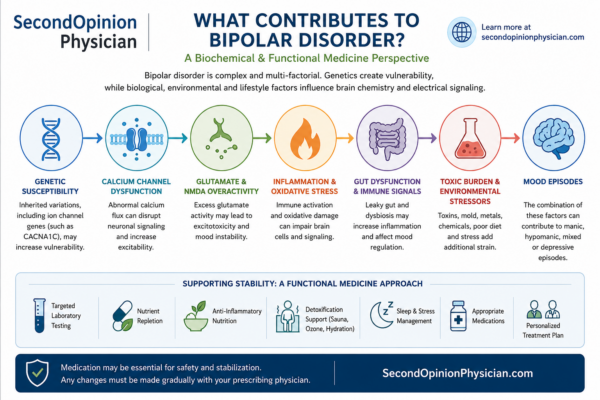
What Causes Bipolar Disorder?
Bipolar Disorder, Brain Biochemistry and the Walsh Approach What Causes Bipolar Disorder? Genetics, Calcium Channels, [...]