
Treatment of Alzheimer's with MT Promoter
How William J. Walsh’s MT Promoter Supports Metallothionein, Copper-Zinc Balance and Antioxidant Protection in Alzheimer’s Disease
MT Promoter is a nutrient formula developed by William Walsh, Ph.D. to support metallothionein—a family of proteins involved in copper and zinc regulation, antioxidant defense and protection from certain toxic metals. Dr. Walsh proposed that improving metallothionein function might reduce some of the oxidative and metal-related stress associated with Alzheimer's disease.
Why Did Dr. Walsh Develop MT Promoter?
Dr. Walsh viewed metallothionein as part of the body's defense against abnormal copper-zinc distribution, toxic-metal exposure and oxidative stress. His published protocol begins with zinc normalization and then adds a group of nutrients intended to promote metallothionein expression and function.
What Is Metallothionein?
Metallothioneins are small proteins rich in the amino acid cysteine. They are found in the liver, kidneys, intestines, brain and other tissues. They can bind zinc, copper and certain toxic metals.
Metallothionein helps cells adjust to changing mineral supply, oxidative stress and toxic-metal exposure. In the brain, MT-3 has been studied for its possible role in copper-zinc regulation and protection against abnormal metal interactions with amyloid.
There is no widely used routine clinical test that reliably measures a patient's total metallothionein function. Response must therefore be followed indirectly through symptoms, zinc, copper, ceruloplasmin, estimated free copper and related nutritional or oxidative-stress findings.
Metallothionein Is Not Ceruloplasmin
Metallothionein
Works mainly inside cells. It binds zinc, copper and some toxic metals, helps regulate minerals and contributes to antioxidant defense.
Ceruloplasmin
Is made mainly in the liver and circulates in blood. It carries most circulating copper and helps with iron transport.
Ceruloplasmin is not a direct metallothionein test. However, copper, ceruloplasmin and zinc provide practical information about the copper-zinc environment in which metallothionein works.
Read: Low Ceruloplasmin, Free Copper and Metallothionein →Alzheimer's Disease Is More Than One Pathway
Alzheimer's disease is a progressive brain disorder involving loss of memory and thinking ability. Current research does not support a single cause. The disease reflects interacting problems involving amyloid, tau, inflammation, blood-vessel health, glucose and lipid metabolism, mitochondrial dysfunction, oxidative stress and genetic susceptibility.
Amyloid and Tau
Amyloid plaques and tau tangles remain central features of Alzheimer's disease. Amyloid-directed medicines are now approved for selected patients with mild cognitive impairment or mild Alzheimer's dementia.
Oxidative Stress and Inflammation
Oxidative injury and inflammation can damage cell membranes, mitochondria, proteins and DNA and may interact with amyloid and tau.
Vascular and Metabolic Health
Blood pressure, diabetes, lipid disorders, inactivity, sleep apnea, smoking and vascular disease can influence cognitive decline.
Genetics
APOE and other genes affect risk, but risk genes do not guarantee that Alzheimer's disease will develop.
Older descriptions suggesting that the amyloid hypothesis had simply “lost favor” are no longer accurate. Amyloid remains an important treatment target, while research increasingly examines how amyloid, tau, metals, inflammation, mitochondria and vascular factors interact.
How MT Promoter Is Intended to Help
Improve Copper-Zinc Regulation
Metallothionein binds copper and zinc and helps cells manage changing mineral supply. Walsh proposed that better metallothionein function might reduce abnormal copper and zinc distribution.
Strengthen Antioxidant Defense
Metallothionein contains many cysteine groups that can respond to oxidative stress. MT Promoter also includes nutrients intended to support glutathione and selenium-dependent antioxidant pathways.
Support Intestinal and Brain Barrier Defense
Metallothionein is present in intestinal and nervous-system tissues. Walsh proposed that stronger metallothionein function could improve resistance to toxic metals and cellular stress.
Reduce Metal-Related Oxidative Stress
Copper and zinc can interact with amyloid. Copper is especially relevant because poorly regulated copper can participate in reactions that generate reactive oxygen species.
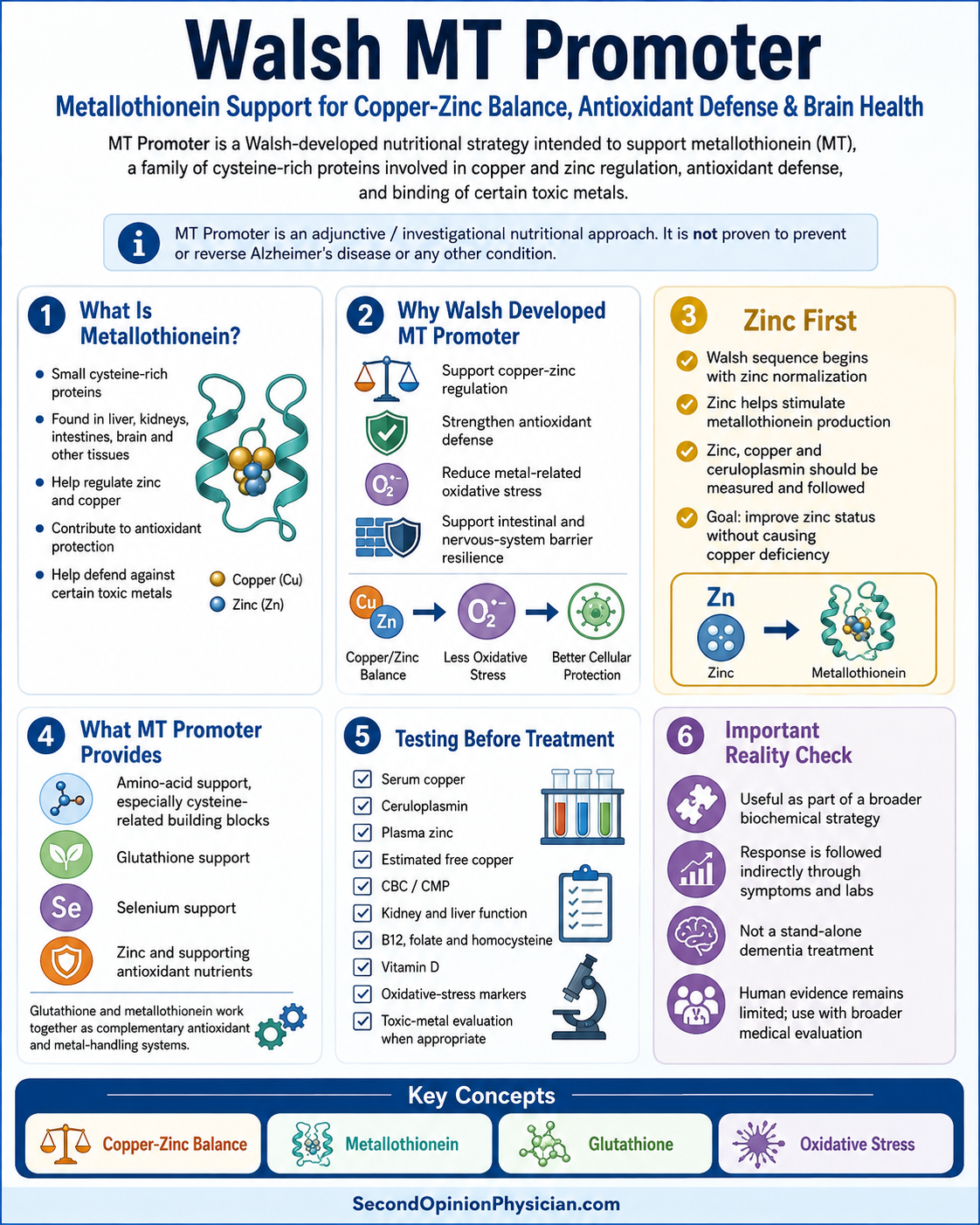
Why Zinc Is Normalized Before MT Promoter
Dr. Walsh's published sequence begins with zinc normalization. Zinc helps stimulate metallothionein production, and zinc-loaded metallothionein can bind seven zinc atoms.
Zinc should not be increased blindly. Excessive zinc can reduce copper absorption and cause copper deficiency, anemia or neurological symptoms. Zinc, copper and ceruloplasmin should therefore be measured and followed.
The goal is adequate zinc without creating copper deficiency or worsening an existing mineral imbalance.
What Is in MT Promoter?
Walsh Institute materials describe MT Promoter as a multi-nutrient strategy rather than a single amino acid or mineral. The exact commercial formula may change, so the current product label should be reviewed.
Amino-Acid Support
Amino acids provide building material for proteins, glutathione and cellular repair. Cysteine is especially relevant because metallothionein is cysteine rich.
Glutathione Support
Metallothionein and glutathione work together as antioxidant and metal-handling systems. Cysteine, glycine and glutathione support may help maintain this defense network.
Selenium
Selenium supports glutathione peroxidase, an enzyme that helps remove peroxides and limit oxidative damage.
Zinc and Supporting Nutrients
Zinc helps stimulate metallothionein. Other vitamins, minerals and antioxidants are intended to support protein production and cellular resilience.
MT Promoter should not be described as “glutathione alone,” and a lower-cost protein or antioxidant plan should not be described as identical to the full Walsh formula.
Can Similar Nutritional Foundations Be Supported More Affordably?
MT Promoter may be expensive. Some patients can address part of the same nutritional foundation through diet and selected supplements, although this does not duplicate the complete formula.
Complete Protein
Adequate protein supplies amino acids needed for metallothionein, glutathione, liver proteins and tissue repair.
Balanced Amino Acids
An amino-acid blend may help when food intake is inadequate. Collagen supplies glycine but is not a complete protein and should not be the only protein source.
NAC, Cysteine, Glycine or Glutathione
These may support glutathione production and antioxidant reserve when appropriate.
Selenium and Mineral Balance
Selenium, zinc, copper and manganese should be corrected according to laboratory findings. All can cause problems when used excessively.
Gut Health
Malabsorption, chronic diarrhea, dysbiosis and intestinal inflammation may prevent nutrients from being absorbed.
Mitochondrial Protection
CoQ10, magnesium, alpha-lipoic acid, creatine and other mitochondrial nutrients may be considered when testing or symptoms suggest impaired cellular energy or oxidative stress.
What Evidence Supports MT Promoter for Alzheimer's?
The biological rationale is plausible: metallothionein participates in copper-zinc regulation and antioxidant defense, and laboratory research has explored interactions among MT-3, copper, zinc and amyloid.
Promising laboratory or animal findings do not prove that an oral MT-promotion formula improves cognition or changes the course of Alzheimer's disease in humans.
There are no large, high-quality randomized clinical trials showing that MT Promoter prevents, reverses or substantially slows Alzheimer's disease. It should be described as experimental or adjunctive.
How Should Memory Loss and Possible Alzheimer's Be Evaluated?
A diagnosis should not be based on an odor test, online questionnaire or supplement response. Proper evaluation may include:
Medical and Medication Review
Review onset, progression, medicines, alcohol, sleep, mood, hearing, vision, falls and other neurological symptoms.
Cognitive Testing
Common tools include the MoCA, MMSE and detailed neuropsychological testing. CANTAB may provide computerized assessment but is not the single required “best” test.
Laboratory and Imaging Evaluation
Testing may include CBC, CMP, thyroid, B12, folate, metabolic markers and brain imaging. Copper, ceruloplasmin and zinc may add biochemical context in selected patients.
Alzheimer's Biomarkers
Amyloid PET, cerebrospinal-fluid biomarkers and newer blood biomarker tests may help identify Alzheimer's pathology in appropriate clinical settings.
Loss of smell is associated with cognitive decline and Alzheimer's-related changes, but smell testing is not a stand-alone diagnostic test and cannot predict with certainty who will develop dementia.
Which Tests Are Relevant Before Considering MT Promoter?
MT Promoter Should Be Part of a Broader Dementia Plan
- Proper neurological diagnosis and staging
- Medication review
- Blood pressure, glucose and vascular risk
- Sleep apnea and sleep quality
- Hearing and vision
- Exercise and resistance training
- Protein and overall nutrition
- B12, thyroid and other reversible contributors
- Depression, isolation and cognitive engagement
- Discussion of approved Alzheimer's treatments when appropriate
MT Promoter may be considered as a biochemical-support strategy after these fundamentals are addressed and copper-zinc status is known.
Frequently Asked Questions About MT Promoter
What is MT Promoter?
It is a multi-nutrient strategy developed by William Walsh, Ph.D. to support metallothionein, copper-zinc regulation and antioxidant defense.
Does MT Promoter cure Alzheimer's disease?
No. It has not been proven in large clinical trials to cure, reverse or stop Alzheimer's disease.
Why is zinc corrected first?
Zinc helps stimulate metallothionein production. Excessive zinc can also cause copper deficiency, so zinc, copper and ceruloplasmin should be monitored.
Is ceruloplasmin a metallothionein test?
No. They are different proteins, and there is no widely used routine clinical test for total metallothionein function.
Can protein and glutathione replace MT Promoter?
They may address some of the same nutritional foundations, but they do not duplicate the complete multi-nutrient formula.
Should every person with dementia take zinc?
No. Zinc can be helpful when deficient, but excessive zinc can create copper deficiency. Testing should guide treatment.
Does copper cause Alzheimer's disease?
Alzheimer's is multifactorial. Abnormal copper distribution may contribute to oxidative stress or amyloid interactions, but copper is not established as the single cause.
MT Promoter Is a Plausible but Unproven Alzheimer's Support Strategy
Dr. Walsh developed MT Promoter to support metallothionein, copper-zinc homeostasis and antioxidant protection. These pathways are relevant to brain health, and laboratory research supports continued investigation of metallothionein, copper, zinc and amyloid interactions.
The clinical evidence is not strong enough to claim that MT Promoter prevents or reverses Alzheimer's disease. Its most responsible use is as a monitored adjunct within a comprehensive medical, nutritional, vascular, mitochondrial and cognitive-care plan.
Continue the Dementia and Copper Assessment
Selected References
- Walsh Research Institute: Metallothionein Promotion Therapy — Walsh's rationale and zinc-normalization sequence.
- National Institute on Aging: What Happens to the Brain in Alzheimer's Disease — Amyloid, tau, inflammation, vascular and metabolic factors.
- Metallothionein-3, Copper, Zinc and Amyloid — Laboratory and mechanistic research.
- Copper and Zinc Dysregulation in Alzheimer's Disease — Review of copper-zinc imbalance and neurodegeneration.
- NIA: Mitochondria, Aging and Dementia — Mitochondrial dysfunction and oxidative stress.
Educational information only. Memory loss and cognitive decline require medical evaluation. MT Promoter is not an FDA-approved treatment for Alzheimer's disease and should not replace neurological care, approved therapy or treatment of reversible medical contributors.
Alzheimer's is named after the doctor who discovered it. It is characterized by the following:
- Apoptosis - spontaneous death of cells at a rate of 5000 times the normal rate.
- Severe oxidative stress - inflammation and tissue damage.
- Neurofibrillary tangles - twisted fibers inside brain cells.
- Metal problems - Initially believed to be aluminum, then brain volume, then concentration of aluminum. The theory of metal toxicity is back in favor with issues of the role of copper and zinc recognized as playing a more important role.Dr.
Walsh has developed an amino acid blend, MT Promoter, which is intended to improve metallothionein protein production. Metallothionein proteins are found in border cells of the digestive track and brain, and they are believed to be a first line of defense against free radical damage. One such protein, ceruloplasmin, is important for binding or chelating 'free metals.' Unbound copper and other metals are free radicals that cause tissue damage. To avoid this conversion and other effects of oxidative stress, increasing these binding proteins is necessary. Binding protein levels can be improved through the consumption and digestive uptake of protein.
There are two types of Alzheimer's conditions:
- Genetic - runs in some families - out of 5-6 siblings, 1-3 will get it as they get progressively older.
- ApoE - genetically expressed proteins - 50% of people 85+ have some amount.
The signs and symptoms of a progressive worsening condition are:
Early warning signs - often as early as 55-60 years old:
- MCI (Mild Cognitive Impairment).
- Moderate symptoms - inability to form new memories, years 4-6, often requiring nursing home.
- Later stage - complete loss of speech and response. Some may have some understanding of who is there but unable to respond.
- Risk factors for Alzheimer's include age, education, sedentary lifestyles, vascular Alzheimer's disease, alcohol abuse, toxic metals, and poor nutrition.
Diagnostic tests for Alzheimer's include the MMSE, but the best test is the CANTAB, which measures many cognitive functions, not just memory. Odor discrimination is another test, as the entorhinal cortex is the first to go. Scratch and sniff differentiate smells in multiple choices. Correctly telling 10+ smells indicates a low likelihood of Alzheimer's disease development. However, if only 2-4 smells are correctly identified, the chances of developing the disease within five years are much higher.
Theories surrounding Alzheimer's include:
- Ach - this neurotransmitter is believed to be important in learning and memory, and it's been suggested that a decrease in Ach levels may contribute to the memory problems seen in Alzheimer's.
- Amyloid - while the "amyloid hypothesis" was once popular, it has lost favor in recent years. Amyloid is a protein that can build up in the brains of people with Alzheimer's, but it's not clear whether this is a cause or effect of the disease.
- Tau - another protein that can build up in the brains of Alzheimer's patients, and is thought to play a role in the development of neurofibrillary tangles.
- Inflammation - there is some evidence to suggest that inflammation in the brain may contribute to the development of Alzheimer's.
- Oxidative stress - this is a process where unstable molecules called free radicals can damage cells, and it's been suggested that oxidative stress may play a role in Alzheimer's.
- Toxic metal causation - there is some research to suggest that metals like copper and aluminum may contribute to the development of Alzheimer's.
- Glial and nutrition-related factors - the health of cells called glia, which support neurons in the brain, may be important in Alzheimer's. Nutrition may also play a role in keeping neurons healthy.
There is still much to learn about Alzheimer's, but Dr. Walsh's work with MT Promoter and the metallothionein protein is one avenue of research that may offer hope for preventing or slowing the progression of the disease. Additionally, risk factors like education level, physical activity, and exposure to toxic metals may be modifiable, offering opportunities for individuals to reduce their risk of developing the disease.