
Overmethylation Symptoms: High Serotonin, Low Histamine, NMDA Activity and Copper Overload
Overmethylation is a Walsh biotype associated with low whole-blood histamine and a tendency toward excessive or poorly regulated serotonin and dopamine activity. The pattern often resembles copper overload because both may produce anxiety, panic, insomnia, racing thoughts, sensory sensitivity, irritability and poor tolerance of psychiatric medication. Testing copper, zinc and ceruloplasmin with histamine and homocysteine helps separate the patterns and identify when both are present
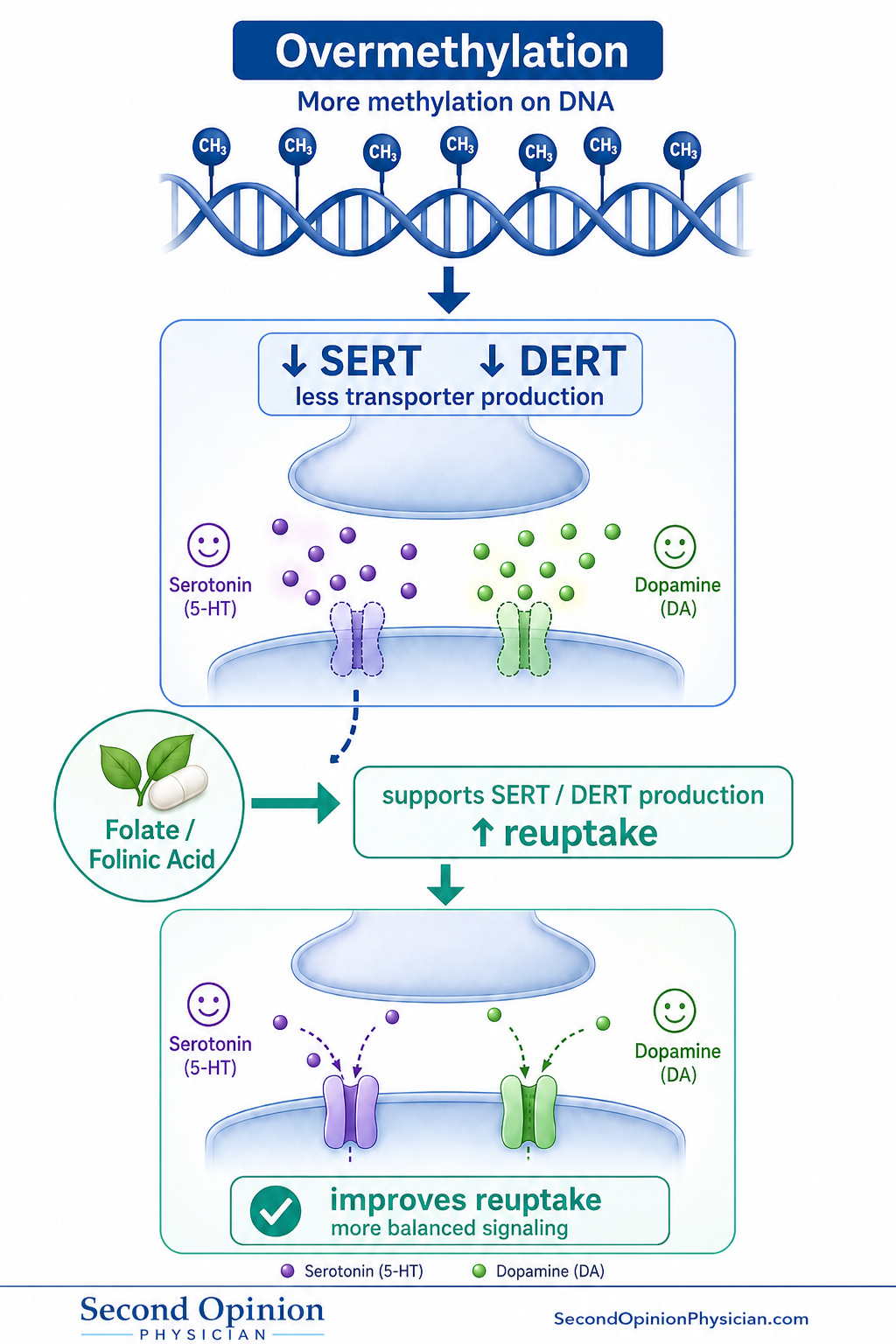
Overmethylation is often missed because it can look like generalized anxiety, panic disorder, ADHD, bipolar activation, medication sensitivity or copper overload. The distinction matters because treatments that raise serotonin, dopamine or methylation may intensify an already activated pattern.
In the Walsh model, overmethylation is commonly associated with low whole-blood histamine, reduced NMDA receptor activity, excessive or poorly regulated serotonin and dopamine activity, chemical sensitivity and a paradoxical response to many antidepressants, stimulants or methyl donors.
Classic Walsh Signs and Symptoms of Overmethylation
Anxiety, panic and inner pressure
- Anxiety or panic attacks
- Depression with agitation
- Racing thoughts
- Insomnia or restless sleep
- Emotional intensity or instability
Distractibility and underachievement
- ADHD-like distractibility
- Poor sustained attention
- Low academic or occupational follow-through
- Impulsivity
- High creativity or vivid imagination
Chemical and medication sensitivity
- Food or chemical sensitivity
- Adverse reactions to SSRIs or stimulants
- Poor tolerance of SAMe or methionine
- Strong reactions to supplements
- Low whole-blood histamine tendency
Other classic Walsh observations may include low libido, dry eyes or mouth, upper-body pain, sleep disturbance, a tendency toward seasonal worsening, and symptom activation from serotonergic or methyl-donor treatment. No single sign confirms the biotype.
The Characteristic Biochemical Pattern
Low whole-blood histamine
Histamine is used by Walsh clinicians as an indirect methylation marker. Lower levels support an overmethylation pattern when symptoms also fit.
High or poorly regulated activity
The model emphasizes reduced transporter expression and slower reuptake, leaving more serotonin active in the synapse.
High or poorly regulated activity
Reduced dopamine-transporter activity may contribute to distractibility, impulsivity, racing thoughts and unusual stimulant reactions.
Lower NMDA activity
Walsh teaching associates overmethylation with reduced NMDA receptor activity, which may influence cognition, sensory processing and psychosis vulnerability.
Why Overmethylation Frequently Looks Like Copper Overload
Both patterns can present with anxiety, panic, insomnia, racing thoughts, irritability, sensory sensitivity, poor stress tolerance and adverse medication reactions. Symptoms alone therefore cannot reliably separate them.
High serotonin and dopamine activity
Low histamine, slower neurotransmitter reuptake and reduced NMDA activity may produce agitation, distractibility, panic, sleep disruption and unusual medication sensitivity.
Higher norepinephrine and oxidative pressure
Copper supports conversion of dopamine into norepinephrine. High free copper may therefore produce anxiety, hyperarousal, irritability and insomnia while increasing oxidative stress.
Why the Combination Can Be Especially Severe
Dr. Walsh has described some of the most difficult psychiatric and behavioral cases he encountered in prison populations as involving multiple biochemical imbalances rather than a single biotype. The combination of overmethylation with copper overload is clinically concerning because it may unite several activating mechanisms:
Serotonin and dopamine activation
Reduced reuptake may increase synaptic serotonin and dopamine activity, contributing to impulsivity, agitation, altered perception or emotional instability.
Copper-driven norepinephrine
Excess copper activity may push dopamine toward norepinephrine, adding fear, hypervigilance, panic, insomnia and aggression.
Oxidative and NMDA imbalance
Free copper may increase oxidative stress while reduced NMDA activity may further disturb judgment, sensory integration and behavioral regulation.
This does not mean that every violent, psychotic or severely ill person has this pattern. It means that mixed biochemical patterns may produce greater severity and poorer treatment response than a single imbalance alone.
Why Many Antidepressants and Antipsychotics May Not Work Well
Standard medication selection is usually based on diagnosis and symptoms, not on Walsh biotype. In an overmethylated patient, a medication that raises serotonin or dopamine activity may worsen activation rather than correct a deficiency.
May increase an already activated system
Possible reactions include panic, insomnia, agitation, emotional flattening, sexual dysfunction, impulsivity or worsening mood instability.
May worsen dopamine or norepinephrine excess
Some patients experience racing thoughts, aggression, anxiety, appetite loss, insomnia or rebound instability.
May suppress symptoms without correcting the pattern
Dopamine blockade may reduce psychosis or agitation, but tolerability and long-term benefit vary, especially when copper, oxidative stress or nutrient imbalance remains unaddressed.
Medication can still be necessary and lifesaving. The point is not that antidepressants or antipsychotics never work, but that poor response, paradoxical activation or repeated treatment failure should prompt a broader biochemical assessment.
Folate, Niacin and Methyl Donors
The Walsh treatment strategy differs sharply from a generic “support methylation” approach. Folate and niacin may reduce excessive serotonin and dopamine activity by increasing transporter expression or reducing methylation pressure, while SAMe and methionine may worsen an already overmethylated patient.
| Nutrient or strategy | Why it may be considered | Main caution |
|---|---|---|
| Folate or folinic acid | May increase serotonin and dopamine reuptake and reduce excessive synaptic activity in selected overmethylated patients. | May worsen true undermethylated depression; MTHFR status alone is not enough. |
| Niacin or niacinamide | May reduce methylation pressure and promote dopamine-transporter expression in the Walsh model. | Can cause flushing, gastrointestinal symptoms or poor tolerance. |
| SAMe, methionine and TMG | Often avoided when activation and low histamine strongly suggest overmethylation. | May worsen anxiety, insomnia, panic, impulsivity or psychosis risk in susceptible patients. |
| Zinc and copper correction | Important when copper overload coexists and is amplifying norepinephrine and oxidative stress. | Requires copper, ceruloplasmin and zinc testing rather than blind supplementation. |
Testing for Overmethylation and the Copper Combination
Histamine and Homocysteine
Whole-blood histamine provides the classic Walsh methylation clue, while homocysteine adds context for methylation and nutrient planning.
View Histamine and Homocysteine ScreenComprehensive Biotype Panel
Adds copper, ceruloplasmin and plasma zinc so that a combined overmethylation and free-copper pattern is not missed.
View Comprehensive Biotype PanelWhen to Consider an Overmethylation Assessment
Testing may be useful when anxiety, panic, insomnia, chemical sensitivity, racing thoughts, ADHD-like distractibility or paradoxical reactions to antidepressants and stimulants occur together—especially when copper overload symptoms are also present.
Frequently Asked Questions
What are the classic signs of overmethylation?
Common Walsh signs include anxiety, panic, depression with agitation, chemical or food sensitivity, insomnia, distractibility, underachievement, impulsivity, vivid imagination, medication sensitivity and low whole-blood histamine.
Why does overmethylation look like copper overload?
Both may cause anxiety, panic, irritability, insomnia, racing thoughts and medication sensitivity. Overmethylation is associated with high serotonin and dopamine activity, while copper overload may increase norepinephrine and oxidative stress.
Can overmethylation and copper overload occur together?
Yes. The combined pattern may be more severe because high serotonin and dopamine activity coexist with copper-driven norepinephrine activation and oxidative stress. Copper, zinc and ceruloplasmin should be tested with histamine.
What does low NMDA activity mean in overmethylation?
Walsh teaching associates overmethylation with reduced NMDA receptor activity. This is a proposed part of the clinical model and may relate to cognition, sensory processing and psychosis vulnerability, but it is not directly measured by the standard blood tests.
Why might SSRIs worsen overmethylation?
SSRIs reduce serotonin reuptake. In a patient whose serotonin activity is already high or poorly regulated, further increasing synaptic serotonin may worsen panic, agitation, insomnia, emotional flattening or mood instability.
Why might stimulants worsen overmethylation?
Stimulants increase dopamine and norepinephrine signaling. Patients with an activated dopamine pattern or accompanying copper overload may experience anxiety, racing thoughts, irritability, aggression, insomnia or rebound symptoms.
Do antipsychotics work for overmethylation?
Antipsychotics may be necessary for psychosis, mania or dangerous instability and can reduce symptoms through dopamine blockade. They do not necessarily correct low histamine, copper overload, oxidative stress or the underlying nutrient pattern, and long-term response varies.
Does folate help overmethylation?
Folate may help selected overmethylated patients by increasing serotonin and dopamine reuptake. It may worsen undermethylated depression, so folate should not be selected from MTHFR status alone.
Which test is best for overmethylation?
The Histamine and Homocysteine Screen is the focused starting test. The Comprehensive Biotype Panel is more useful when copper overload, low zinc or mixed Walsh patterns also need to be evaluated.
Is low whole-blood histamine proof of overmethylation?
No. It is a Walsh-associated marker that should agree with symptoms, medication response and the broader laboratory pattern. Antihistamines and other medications may affect interpretation.
Educational information only. The Walsh overmethylation framework is a clinical model and does not replace psychiatric diagnosis or urgent care. Antidepressants, stimulants and antipsychotics should not be stopped abruptly. Medication and nutrient changes should be supervised, especially with psychosis, mania, severe depression, suicidal risk or dangerous behavior.