
Oxidative Stress in Autism: Mitochondria, Glutathione & the Epigenetic Connection
Oxidative stress in autism may be more than an isolated antioxidant problem. Mitochondria generate reactive oxygen species during normal energy production but are also vulnerable to oxidative damage. Glutathione helps control this burden, while its production intersects with methylation through homocysteine and the transsulfuration pathway. When oxidative demand remains high, antioxidant defense, mitochondrial energy and methylation resources can all be affected. This makes oxidative stress particularly relevant to the Five Epigenetic Biotypes of Undermethylation, where mitochondrial stress, toxic burden, increased methylation demand and impaired metabolic clearance may overlap.


Oxidative stress is best understood as part of an interconnected biochemical system. Reactive oxygen species can increase when mitochondrial energy production is stressed, while inadequate antioxidant reserve can further impair mitochondrial function. At the same time, glutathione production intersects with methylation through homocysteine and transsulfuration.
For an autistic child with evidence of oxidative stress, the more useful question is therefore not simply “Which antioxidant should be given?” but “What is creating the oxidative pressure, and how is it affecting mitochondrial and methylation function?”
What Is Oxidative Stress?
Quick Answer
Oxidative stress occurs when production of reactive oxygen species exceeds the body's ability to neutralize and repair their effects. Reactive oxygen species are normal products of metabolism and cellular signaling; the problem develops when their production and antioxidant defenses become persistently imbalanced.
Markers such as 8-OHdG, reduced and oxidized glutathione (GSH/GSSG), glutathione peroxidase and antioxidant enzyme systems can help characterize this balance. These findings do not diagnose autism, but they may identify an important metabolic stressor in an individual patient.
Oxidative Stress, Mitochondria and Methylation Are Connected
Mitochondria use oxygen to produce ATP and naturally generate reactive oxygen species in the process. Normally, antioxidant systems keep this activity in balance. When mitochondrial function becomes inefficient, oxidant production may rise. In turn, excessive oxidative stress can damage mitochondrial membranes, proteins and DNA, making cellular energy production still less efficient.
This can create a self-reinforcing cycle. It also helps explain why oxidative stress in autism should not automatically be treated as an isolated antioxidant deficiency.
Glutathione Connects Oxidative Stress With Transsulfuration
Glutathione is one of the body's principal intracellular antioxidant systems. Its reduced form, GSH, helps neutralize oxidants and is then converted to oxidized glutathione, GSSG. The balance between the two provides useful information about cellular redox status.
The methylation and glutathione pathways are also biochemically linked. After SAM donates a methyl group, it becomes SAH and ultimately connects with homocysteine. Homocysteine can then enter the transsulfuration pathway, contributing cysteine used for glutathione synthesis.
Glutathione (GSH)
A major intracellular antioxidant involved in redox balance, detoxification and protection from oxidative injury.
GSH/GSSG Ratio
Compares reduced with oxidized glutathione and can help characterize antioxidant reserve and redox balance.
Glutathione Peroxidase
A selenium-dependent enzyme system that uses glutathione to help neutralize peroxides.
Oxidative Stress Can Increase Methylation Demand
Methylation supports far more than neurotransmitter metabolism. Methyl groups are continually required for membrane phospholipids, creatine synthesis, DNA and protein regulation, cellular repair and many other biological processes.
When inflammation, oxidative damage, detoxification requirements or cellular repair increase, metabolic demand can increase as well. At the same time, mitochondrial dysfunction may reduce the ATP available for conversion of methionine to SAM.
Why this matters in undermethylation
A patient can therefore have an undermethylation pattern not simply because methyl donors are inadequate, but because methylation resources are being consumed rapidly, SAM production is constrained, SAH is inhibiting methylation, or several of these mechanisms are occurring together.
Oxidative Stress Through the Five Epigenetic Biotypes
The Five Epigenetic Biotypes framework asks what may be driving or perpetuating undermethylation. Oxidative stress can intersect with several of these pathways rather than representing a separate sixth biotype.
1. Toxic Burden
Environmental exposures and internally generated toxins may increase oxidative and detoxification demand.
2. Mitochondrial Stress
Mitochondria can both generate excessive oxidants and become targets of oxidative damage, potentially affecting ATP-dependent SAM production.
3. Creatine Demand
Endogenous creatine synthesis consumes SAM-derived methyl groups while creatine helps support cellular ATP buffering.
4. Increased Methylation Demand
Inflammation, repair, oxidative injury and other biological demands may increase methyl-group utilization.
5. Impaired SAH Clearance
Accumulated SAH can inhibit methyltransferase activity even when methyl donors are available, creating a different form of impaired methylation.
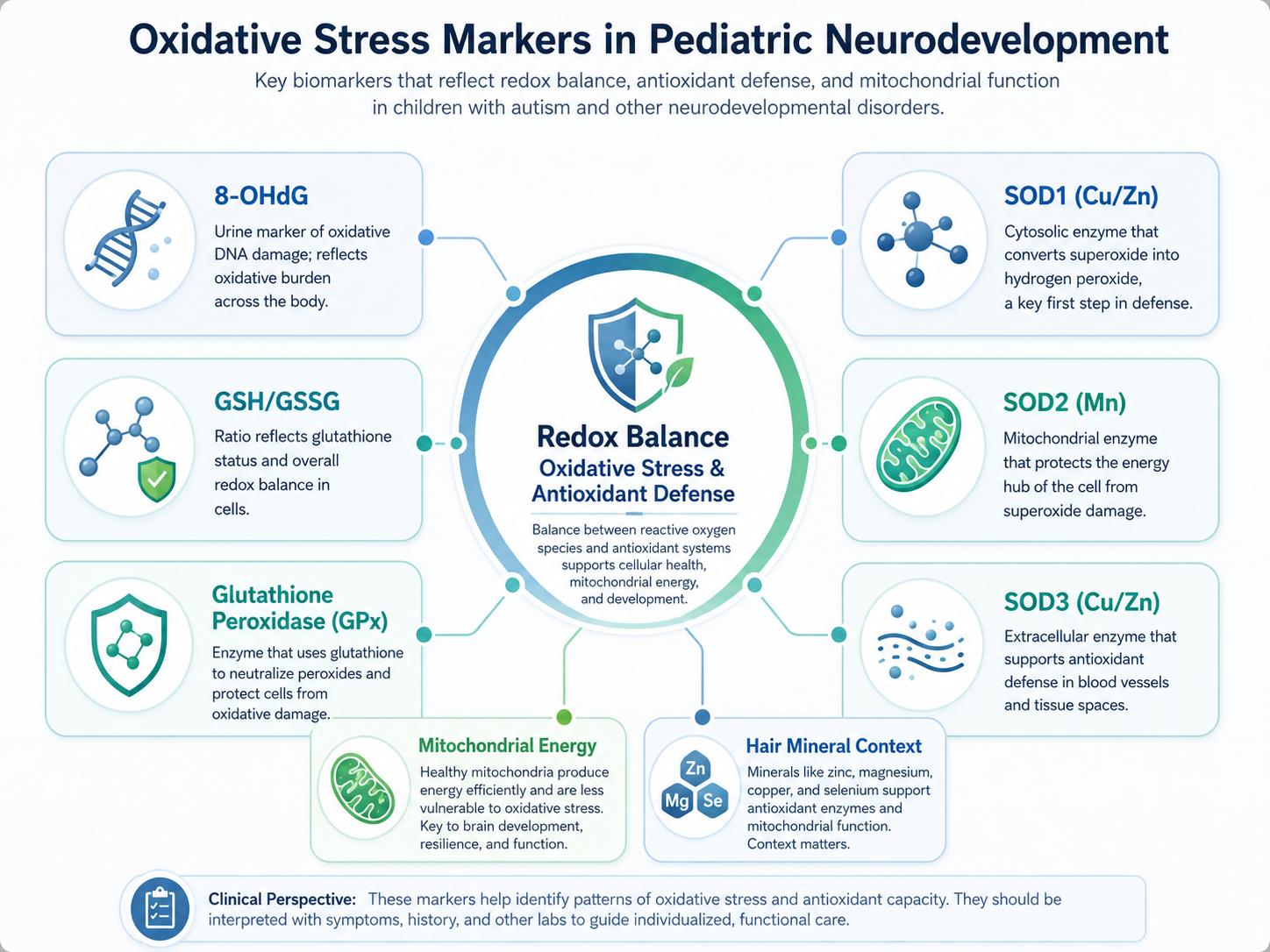
Oxidative stress markers can help organize antioxidant capacity, redox balance, mitochondrial function and mineral cofactor status.
8-OHdG and Oxidative DNA Damage
8-OHdG in plain language
8-hydroxy-2'-deoxyguanosine (8-OHdG) is a urine marker reflecting oxidative damage to DNA. It can provide evidence that oxidative injury is occurring, but it does not identify the source of that stress. An abnormal result therefore becomes a reason to investigate the driver rather than simply prescribe an antioxidant.
SOD1, SOD2 and SOD3: Where Minerals Meet Oxidative Stress
SOD1 — Copper/Zinc
Primarily cytoplasmic superoxide dismutase requiring copper and zinc.
SOD2 — Manganese
The mitochondrial form of superoxide dismutase and therefore especially relevant to mitochondrial antioxidant defense.
SOD3 — Copper/Zinc
Extracellular superoxide dismutase that also depends on copper and zinc.
These enzymes create an important connection between oxidative stress and the Walsh emphasis on mineral balance. Copper, zinc and manganese should be interpreted in biochemical context rather than supplemented solely because an antioxidant marker is abnormal.
When Oxidative and Mitochondrial Stress May Be Worth Investigating
- Fatigue disproportionate to ordinary activity
- Slow recovery after illness
- Exercise or heat intolerance
- Low muscle tone or reduced endurance
- Variable cognitive stamina
- Sensory or behavioral worsening during illness or metabolic stress
- Regression or loss of function associated with illness or physiologic stress
These findings are nonspecific and do not establish oxidative stress, mitochondrial dysfunction or autism. They can, however, help identify patients in whom objective biochemical testing deserves consideration. Sudden or progressive regression requires appropriate medical evaluation.
Testing Oxidative Stress in Autism
Testing is most useful when it answers a specific biochemical question: Is oxidative damage increased? Is glutathione reserve impaired? Is mitochondrial metabolism involved? Are mineral cofactors abnormal? Is undermethylation or another Walsh biochemical pattern present?
| Test / Category | What It May Help Clarify | Related Testing |
|---|---|---|
| Urine 8-OHdG | Evidence of oxidative DNA damage | Oxidative Stress Screen |
| GSH/GSSG | Glutathione reserve and cellular redox balance | Oxidative Stress Screen |
| Glutathione Peroxidase | Glutathione-dependent peroxide defense | Advanced Mitochondrial / Oxidative Stress Panel |
| Organic Acids / Mitochondrial Markers | Broader metabolic and mitochondrial context | Mitochondrial / Gut-Metabolic Panel |
| Copper, Zinc & Ceruloplasmin | Walsh mineral balance and SOD-related cofactor context | Copper / Zinc Testing |
| SAM, SAH, Methionine & Homocysteine | Direct methylation status, methyl-donor capacity and possible methylation inhibition | Methylation Testing |
Treatment Should Address the Source of Oxidative Pressure
When testing confirms oxidative stress, the objective is not simply to add more antioxidants. The larger goal is to identify why antioxidant demand is elevated and which biochemical systems are contributing.
- Support glutathione and antioxidant reserve when indicated
- Improve mitochondrial energy and recovery when impaired
- Correct relevant mineral and nutrient abnormalities
- Address copper-zinc imbalance when demonstrated
- Investigate inflammatory, gut or toxic contributors when appropriate
- Evaluate methylation demand and SAM/SAH abnormalities when indicated
- Retest meaningful abnormal biomarkers to document change
Look Beyond Oxidative Stress to the Biochemical Driver
Oxidative stress, mitochondrial dysfunction and undermethylation can overlap. A broader biochemical assessment can help determine which pathways deserve testing and which findings are actually relevant to the individual child.
Oxidative Stress and Autism FAQs
Does oxidative stress cause autism?
No single metabolic mechanism explains autism. Oxidative stress may be one relevant biochemical finding in some individuals and should be interpreted with developmental history, symptoms and laboratory data.
How are oxidative stress and mitochondria connected?
Mitochondria naturally generate reactive oxygen species during energy production. Mitochondrial dysfunction can increase oxidative pressure, while excessive oxidative stress can further damage mitochondria and impair cellular-energy production.
How does glutathione connect with methylation?
The pathways intersect through homocysteine. Homocysteine can enter transsulfuration and contribute cysteine needed for glutathione synthesis, linking methylation metabolism with antioxidant defense.
Can oxidative stress contribute to undermethylation?
It may contribute to the biochemical environment associated with impaired methylation by increasing repair and metabolic demand, affecting mitochondrial ATP production and interacting with transsulfuration and antioxidant requirements.
What does an elevated 8-OHdG mean?
8-OHdG reflects oxidative damage to DNA. An elevated result indicates increased oxidative injury but does not by itself identify the cause.
Why measure SAM and SAH when evaluating oxidative stress?
SAM and SAH provide information about methylation capacity and inhibition. They can help determine whether oxidative and metabolic stress is occurring alongside a measurable methylation abnormality.
Continue Reading
Five Epigenetic Biotypes
Why undermethylation may arise from several different metabolic drivers.
Undermethylation & Autism
How SAM, SAH and mitochondrial function help characterize methylation.
Autism & Mitochondrial Dysfunction
How cellular energy, creatine, glutathione and methylation intersect.
Copper, Zinc & Autism
How mineral balance intersects with antioxidant enzymes and neurobiology.
This page is educational and is intended to help families understand oxidative stress, mitochondrial and methylation markers in neurodevelopment. Laboratory findings should be interpreted with the individual patient's history, symptoms and medical care.