
Folate Receptor Antibodies, Methylation and Neurodevelopment
Folate receptor antibody autism testing, often called FRAT or FRAA testing, has become one of the most common questions parents ask when researching autism regression, speech delay, developmental delay, cerebral folate deficiency, MTHFR, methylation, and leucovorin.
This page explains how folate receptor antibodies, methylation markers, whole blood histamine, homocysteine, SAM/SAH, and nutrient status may fit into a broader pediatric neurodevelopmental evaluation.

FRAT/FRAA and methylation testing are best interpreted as part of a broader pediatric neurodevelopmental biochemical assessment.
Quick Answer
Folate receptor antibodies are antibodies that may interfere with folate transport in some children. FRAT/FRAA testing can help identify whether this pathway should be discussed with a clinician. Results should be interpreted with symptoms, developmental history, methylation markers, oxidative stress, copper-zinc balance, gut health, immune history, and other labs.
Folate Receptor Antibody Autism Testing: What Parents Are Looking For
Parents usually find FRAT/FRAA after searching for autism regression, child lost speech, leucovorin autism, cerebral folate deficiency, MTHFR autism, or nutrient-based alternatives. Often, they are not looking for a generic autism explanation. They are looking for a specific biologic pathway that could be tested.
That interest is reasonable. But FRAT/FRAA is one pathway, not the entire evaluation. A child’s folate transport pattern should be considered alongside methylation, histamine, homocysteine, oxidative stress, mitochondrial energy, copper-zinc balance, gut symptoms, immune history, and developmental timeline.
What Are FRAT and FRAA?
FRAT usually refers to folate receptor antibody testing. FRAA refers to folate receptor autoantibodies. These antibodies are commonly discussed as blocking or binding antibodies that may affect folate transport.
Folate is important for methylation, DNA repair, neurotransmitter balance, growth, and nervous system development. When parents ask about FRAT/FRAA, they are usually asking whether folate transport could be part of their child’s speech, behavior, regression, or developmental pattern.
Leucovorin Autism Questions: Where It Fits
Leucovorin is folinic acid. Parents often hear about leucovorin in connection with folate receptor antibodies, cerebral folate deficiency, speech delay, and autism regression.
Leucovorin should be framed as a clinician-directed option for specific children, especially when folate receptor antibody findings or other clinical factors support that discussion. It should not be treated as a general autism treatment or as the answer for every child.
How Folate Transport Relates to Neurodevelopment
Folate transport matters because folate is involved in the pathways that support methylation, neurotransmitter activity, DNA synthesis, antioxidant balance, and brain development. In a pediatric neurodevelopmental evaluation, folate status is not just about serum folate. It is about whether folate is being transported, activated, and used appropriately.
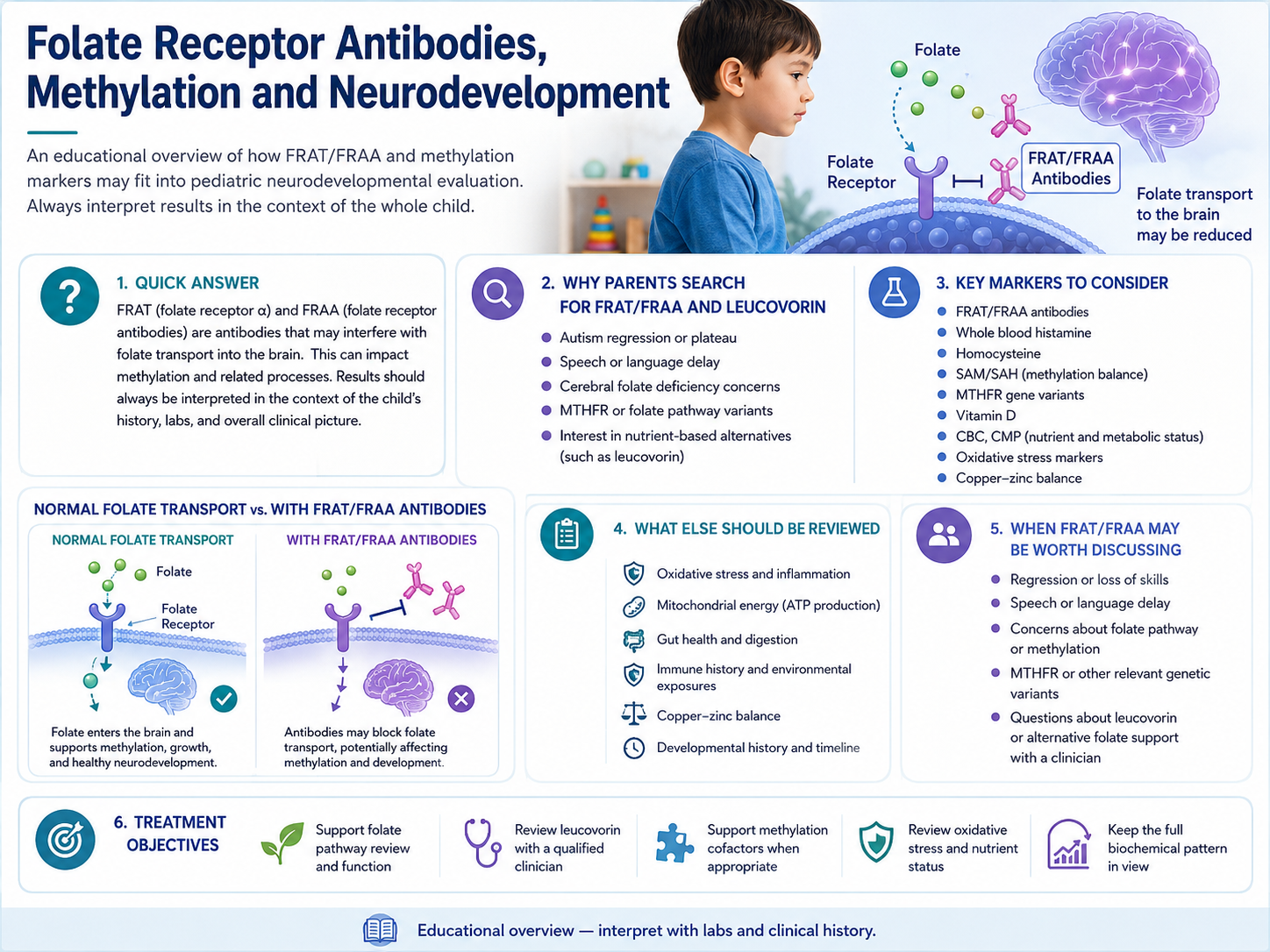
FRAT/FRAA is one part of a larger methylation and neurodevelopment picture.
FRAT/FRAA Is Important, But Not the Whole Evaluation
A positive FRAT/FRAA result may help explain why folate transport deserves attention. A negative FRAT/FRAA result does not rule out every methylation, oxidative stress, gut, immune, or nutrient issue. Either way, the result is one input.
A child with autism regression or speech delay may also have oxidative stress, mitochondrial vulnerability, copper-zinc imbalance, gut dysbiosis, immune/allergy burden, pyroluria-type zinc/B6 depletion, or sleep/autonomic dysregulation.
FRAT/FRAA
Blocking and binding folate receptor antibodies may help clarify folate transport concerns.
Methylation
Homocysteine, SAM/SAH, and nutrient status can help clarify methylation capacity.
Whole Blood Histamine
Histamine may help place methylation findings in a broader biochemical pattern.
Oxidative Stress
Glutathione, 8-OHdG, GPx, and mitochondrial markers may add important redox context.
MTHFR, Whole Blood Histamine, Homocysteine, and SAM/SAH
MTHFR is only one part of methylation. Genetic variants may affect enzyme activity, but symptoms and lab results matter more than SNPs alone. Whole blood histamine, homocysteine, SAM/SAH, vitamin status, copper-zinc balance, and oxidative stress markers can provide a more practical picture.
In the Walsh framework, histamine has historically been used as one clue related to methylation status. In younger children, the interpretation should be placed in the context of the child’s developmental history, labs, symptoms, and other support domains.
When FRAT/FRAA Testing May Be Worth Discussing
FRAT/FRAA testing may be worth discussing when a child has autism-related symptoms, speech delay, developmental regression, limited progress despite reasonable support, a history suggestive of folate pathway concerns, or family interest in leucovorin based on a biologic rationale.
- Autism regression or toddler regression
- Speech delay or loss of words
- Concerns about cerebral folate deficiency
- Questions about leucovorin or folinic acid
- MTHFR or methylation concerns
- Limited response to standard nutrition or supplement approaches
- Need to clarify folate transport as one part of a broader assessment
Lab Testing for FRAT/FRAA and Pediatric Methylation
Testing should follow the child’s history. FRAT/FRAA is often most useful when interpreted with other methylation, nutrient, oxidative stress, immune, and mineral markers.
| Area of Interest | Relevant Testing |
|---|---|
| Folate Transport | FRAT/FRAA testing for folate receptor antibodies |
| Methylation Markers | Homocysteine; SAM/SAH when deeper methylation assessment is needed |
| Histamine / Walsh Context | Whole blood histamine when age and logistics allow |
| Nutrient Status | Vitamin D, B12, folate, zinc, copper, ceruloplasmin, CBC/CMP |
| Oxidative Stress | Oxidative Stress Screen or Advanced Mitochondrial / Oxidative Stress Panel |
| Copper-Zinc Balance | Copper, zinc, ceruloplasmin, and free copper testing |
How FRAT/FRAA Fits the Pediatric Neurodevelopmental Biochemical Screen
The Pediatric Neurodevelopmental Biochemical Assessment does not ask whether one test explains everything. It organizes symptoms and history across multiple domains, then highlights where FRAT/FRAA, methylation, oxidative stress, copper-zinc balance, gut dysbiosis, immune burden, or mitochondrial energy may deserve further review.
Practical goal
Identify whether folate transport and methylation are high-priority areas to investigate, while keeping the rest of the child’s biochemical pattern in view.
Treatment Objectives: Folate, Methylation, and Leucovorin Context
Treatment decisions should be individualized. In some children, the goal may be to support folate transport, methylation cofactors, antioxidant capacity, nutrient status, sleep, gut health, immune balance, or copper-zinc regulation.
- Clarify whether FRAT/FRAA findings are present
- Review leucovorin questions in context with a clinician
- Support methylation cofactors when labs suggest that need
- Review histamine, homocysteine, SAM/SAH, and vitamin status
- Address oxidative stress and glutathione capacity when relevant
- Evaluate copper-zinc balance and gut/immune burden as part of the larger pattern
FRAT/FRAA and Methylation FAQ
What is folate receptor antibody autism testing?
It is testing for folate receptor antibodies, often called FRAT or FRAA, which may affect folate transport in some children. It is one part of a larger pediatric neurodevelopmental evaluation.
What is the difference between FRAT and FRAA?
FRAT usually refers to folate receptor antibody testing. FRAA means folate receptor autoantibodies. Parents and clinicians often use the terms together when discussing blocking and binding antibodies.
Does FRAT/FRAA explain every case of autism or regression?
No. FRAT/FRAA may be relevant for some children, but autism, speech delay, and regression are usually broader than one pathway.
Is leucovorin the same as folic acid?
No. Leucovorin is folinic acid. It is different from folic acid and is typically discussed as a clinician-directed option in selected children.
Should MTHFR testing be done first?
MTHFR can be one clue, but it is often more useful to review methylation markers, symptoms, histamine, homocysteine, nutrient status, oxidative stress, and folate transport together.
Can this be reviewed with other pediatric labs?
Yes. FRAT/FRAA is often best reviewed alongside copper-zinc balance, oxidative stress, mitochondrial, immune, gut, and methylation markers.
Continue Reading About FRAT/FRAA, Autism Regression, and Pediatric Testing
- Pediatric Neurodevelopmental Biochemical AssessmentThe full nine-domain pediatric framework.
- Developmental Regression in Children: What Should Be Evaluated?What to evaluate when speech, eye contact, or skills are lost.
- Oxidative Stress in Autism and Neurodevelopmental Disorders8-OHdG, glutathione, GPx, SOD, and antioxidant capacity.
- Copper, Zinc, Ceruloplasmin, and Brain DevelopmentCopper-zinc balance, free copper, and behavior regulation.
- Gut Dysbiosis and NeurodevelopmentConstipation, reflux, feeding, stool changes, and gut-brain connections.
Start the Pediatric Neurodevelopment Assessment
Organize FRAT/FRAA, leucovorin questions, methylation markers, oxidative stress, copper-zinc balance, gut symptoms, immune history, and developmental concerns.
Start the Assessment FRAT/FRAA Testing Full Pediatric Consultation