
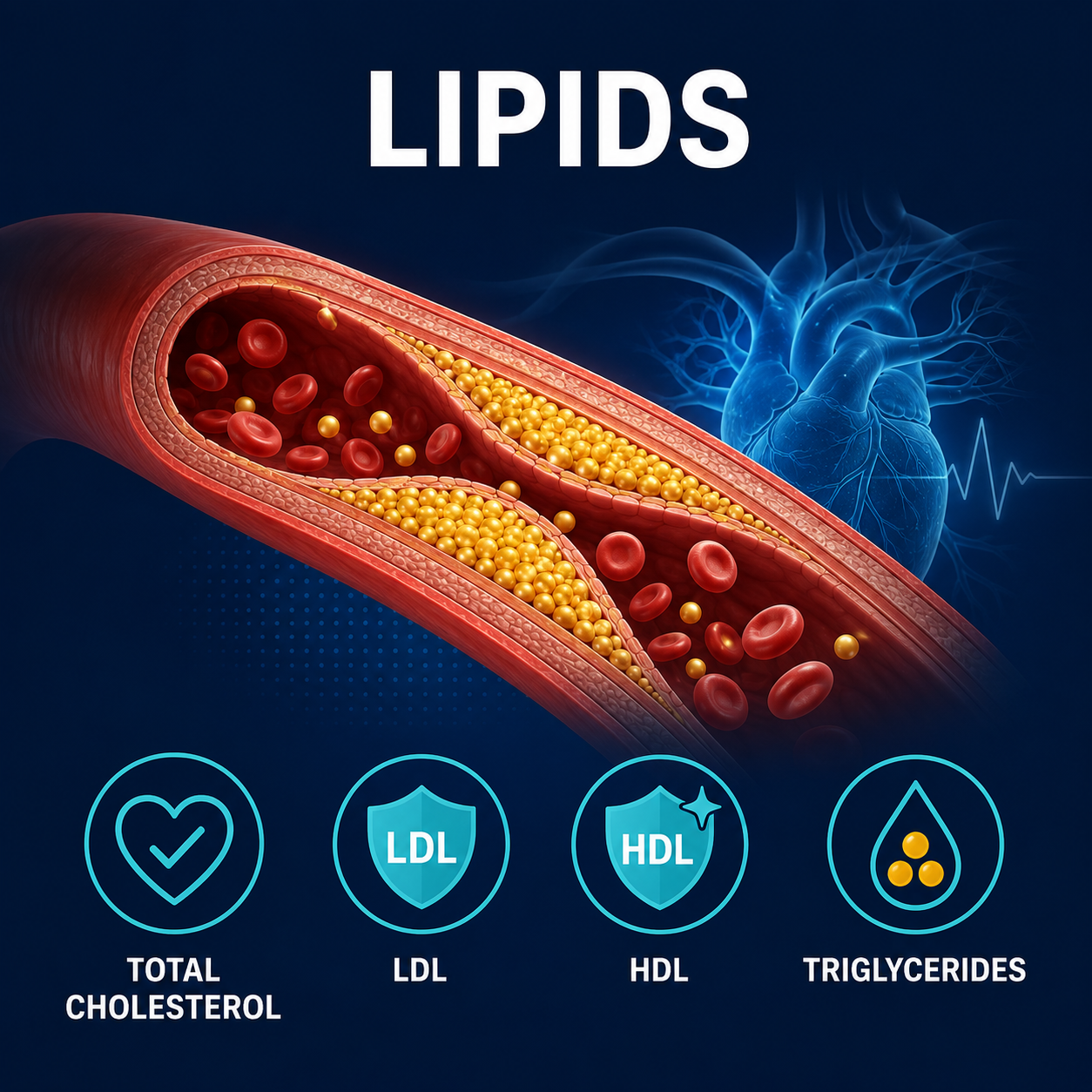
Cholesterol, LDL, HDL & Triglycerides


$39.00
A standard lipid panel measuring total cholesterol, LDL, HDL and triglycerides to evaluate cardiovascular and metabolic risk. Useful for routine screening, atherosclerosis risk assessment and monitoring response to diet, lifestyle or lipid-lowering treatment.
Description
What Does a Lipid Panel Measure?
Total Cholesterol
Measures the overall amount of cholesterol circulating in the blood and provides a broad view of lipid status.
LDL Cholesterol
Measures cholesterol carried in LDL particles. Higher LDL levels can contribute to atherosclerotic cardiovascular risk depending on the overall clinical picture.
HDL Cholesterol
Measures cholesterol carried in HDL particles. HDL is interpreted as part of the overall lipid pattern rather than simply as a stand-alone “protective” number.
Triglycerides
Measure circulating fats used for energy storage. Elevated triglycerides are frequently associated with insulin resistance, metabolic syndrome and excess carbohydrate or alcohol intake.
Why Is a Lipid Panel Important?
A lipid panel is one of the most commonly used blood tests for evaluating cardiovascular and metabolic risk.
It is useful for:
- Routine cardiovascular screening
- Atherosclerosis and coronary artery disease risk assessment
- Identifying hyperlipidemia or dyslipidemia
- Evaluating metabolic syndrome
- Monitoring response to diet and lifestyle changes
- Monitoring statins and other lipid-lowering treatments
- Establishing a baseline for long-term comparison
What Can Abnormal Results Suggest?
| Finding | What It May Suggest |
|---|---|
| Higher LDL | May indicate increased atherosclerotic cardiovascular risk, particularly when combined with other risk factors. |
| Higher Triglycerides | Can occur with insulin resistance, metabolic syndrome, diabetes, excess carbohydrate intake, obesity, fatty liver or alcohol use. |
| Lower HDL | May occur as part of an insulin-resistant or metabolically unfavorable lipid pattern. |
| Balanced Lipid Pattern | Generally supports a more favorable cardiovascular profile, particularly when glucose, blood pressure and inflammatory markers are also favorable. |
Lipids and Metabolic Health
A lipid panel provides more than cardiovascular information.
Triglycerides and HDL can also reflect the broader metabolic environment. Elevated triglycerides, especially when accompanied by lower HDL, commonly occur with insulin resistance and metabolic syndrome.
Important Limitations of a Standard Lipid Panel
A conventional lipid panel is useful, but it does not provide the complete cardiovascular risk picture.
- LDL-C measures cholesterol content rather than the number of atherogenic particles
- A normal LDL-C does not completely exclude cardiovascular risk
- The panel does not measure Apolipoprotein B particle burden
- It does not measure Lipoprotein(a)
- It does not directly measure vascular inflammation
When ApoB May Add Useful Information
LDL cholesterol tells us how much cholesterol is being carried inside LDL and related particles. It does not directly tell us how many atherogenic particles are circulating.
Apolipoprotein B, or ApoB, provides a measure related to the number of atherogenic lipoprotein particles and can add useful risk information when the standard lipid panel does not tell the whole story.
Lipids, Glucose and Insulin Resistance
Cholesterol and glucose metabolism often overlap.
Insulin resistance may contribute to:
- Higher triglycerides
- Lower HDL
- Changes in LDL patterns
- Higher fasting glucose
- Rising HbA1c
- Fatty liver
- Metabolic syndrome
For this reason, lipid testing is often more informative when interpreted together with glucose markers.
Want a Broader Metabolic and Inflammation Evaluation?
If the concern goes beyond cholesterol and includes insulin resistance, inflammation or oxidative stress, a broader panel may provide more useful information.
Lipid Panel + HbA1c
Adds long-term glucose control to the standard lipid panel for a broader metabolic screening picture.
Insulin, HbA1c, Lipids, hs-CRP & Glutathione
Adds insulin, inflammation and antioxidant status when a broader metabolic, oxidative-stress or epigenetic assessment is desired.
Lipids, Inflammation and Epigenetic Health
Abnormal lipid metabolism often occurs together with insulin resistance, inflammation and oxidative stress.
These processes can influence cellular signaling and the biochemical environment involved in epigenetic regulation.
A lipid panel does not directly measure epigenetic function or methylation, but it can provide useful metabolic context when broader biochemical concerns are being evaluated.
Preparation for a Lipid Panel
A fasting sample may be preferred when accurate triglyceride assessment is especially important.
- Fast approximately 9–12 hours when instructed
- Water is permitted
- Continue medications unless your clinician advises otherwise
- Avoid unusually heavy alcohol intake before testing because it may affect triglycerides
Nonfasting lipid testing is also commonly used for routine cardiovascular assessment, so follow the instructions provided with your laboratory order.
Specimen and Collection
This test requires a standard blood draw at a participating LabCorp location.
After ordering, you will receive the appropriate LabCorp requisition for sample collection.
Who May Benefit From a Lipid Panel?
- Adults undergoing routine health screening
- Individuals with a family history of heart disease
- People with high blood pressure
- Those with diabetes or prediabetes
- Individuals with obesity or metabolic syndrome
- Patients taking statins or other lipid-lowering medication
- Anyone monitoring response to dietary or lifestyle changes
Frequently Asked Questions
What does a standard lipid panel include?
A standard lipid panel generally includes total cholesterol, LDL cholesterol, HDL cholesterol and triglycerides.
Do I need to fast for a lipid panel?
Not always. Nonfasting lipid testing is commonly used for routine screening, but fasting may provide a more standardized triglyceride measurement. Follow the preparation instructions provided with your order.
Does a lipid panel measure cardiovascular risk?
It provides important information used in cardiovascular risk assessment, but cholesterol values should be interpreted together with blood pressure, diabetes status, smoking, family history, age and other risk factors.
Does normal LDL mean there is no cardiovascular risk?
No. LDL cholesterol is an important risk marker, but it does not measure atherogenic particle number, Lipoprotein(a), vascular inflammation or every other contributor to cardiovascular disease.
Why might ApoB be ordered with a lipid panel?
ApoB provides information related to the number of atherogenic lipoprotein particles. It can provide additional risk information when LDL cholesterol alone does not fully describe the lipid pattern.
Can a lipid panel suggest insulin resistance?
Certain lipid patterns, particularly higher triglycerides combined with lower HDL, commonly occur with insulin resistance. However, a lipid panel does not directly measure insulin.
Can I use this test while taking a statin?
Yes. Lipid panels are routinely used to monitor cholesterol and triglyceride response in people taking statins and other lipid-lowering medications.
Need More Than a Standard Lipid Panel?
Choose a broader panel when you also want to evaluate long-term glucose control, insulin resistance, inflammation or oxidative stress.
Lipid results should be interpreted in the context of age, blood pressure, glucose regulation, medications, family history and other cardiovascular risk factors. A standard lipid panel is an important screening tool but does not measure every contributor to atherosclerotic disease.